Reviewed · JERUSALEM OLD CITY TOURS
Private Walking Tour in Jerusalem’s Old City
Jerusalem’s story is packed into one small city. This private six-hour walk with licensed guide Orna Simchi brings you through all four quarters, the Temple Mount, and the major sacred sites of Judaism, Christianity, and Islam. I like the personal format and the way the tour connects famous places with local people, political tensions, and everyday life. The main concern is its ambitious schedule: six hours is a long time on foot, and several major sites deserve patience.
I also like that Orna has more than 10 years of guiding experience and can adjust the day to your interests and needs. Her style, based on the available feedback, mixes detailed historical explanation with humor and easy conversation. The drawback is that access to the Temple Mount depends on religious holidays and opening rules, while the coffee and cake stop costs extra.
In This Review
- Key points to know before booking
- Why this private Jerusalem walk can work so well
- Jaffa Gate gives you the city’s opening chapter
- The Armenian Quarter offers a quieter first turn
- The Jewish Quarter links synagogues, ruins, and messianic hopes
- The Western Wall needs careful explanation
- Temple Mount is the tour’s most sensitive stop
- The Muslim Quarter adds taste and street life
- Via Dolorosa leads to the Christian Quarter
- The Church of the Holy Sepulchre is the emotional center
- The final rooftop view puts the route together
- Orna’s guiding style and the value of a private group
- What to bring and how to dress
- Should you book this private Old City tour?
- FAQ
- How long is the private walking tour?
- How much does the tour cost?
- Is the tour private?
- Where does the tour start?
- Where does the tour end?
- Are entry fees included?
- Is food or a drink included?
- What clothing is required at holy sites?
- Can I visit the Temple Mount on any day?
- What happens to the synagogue visit on Friday?
- Can the tour be adjusted to my interests?
- Is cancellation free?
Key points to know before booking
- A private group of up to eight: You pay $650 for the whole group, not per person. At the maximum group size, that works out to $81.25 each.
- Four quarters in one walking route: The tour covers the Armenian, Jewish, Muslim, and Christian quarters, with time at each one.
- Three faiths are treated together: You visit the Western Wall, Temple Mount, Via Dolorosa, and Church of the Holy Sepulchre while learning how the sites overlap.
- Orna’s storytelling is a major strength: She uses historical characters, biblical connections, local stories, and humor to keep the walk moving.
- The Temple Mount requires careful planning: It is closed to visitors on Fridays, Saturdays, and various Muslim and Jewish holidays. A viewpoint replaces the visit when access is not possible.
- Dress rules matter: You need covered shoulders and knees at several holy sites, with stricter clothing requirements for the Temple Mount.
Why this private Jerusalem walk can work so well
A private tour changes the rhythm of an Old City visit. You are not tied to a large group’s pace or to a fixed set of interests. If your group wants more time on religious history, modern Jerusalem, archaeology, or local life, the experience can be tailored.
That flexibility matters here because Jerusalem is not a place you can understand by checking off monuments. A narrow lane may lead from a market to a shrine, while a wall or gate carries several layers of political and religious meaning. Orna’s stated aim is to explain not only the sites, but also the people who live in the city today.
The itinerary is packed, but it has a clear arc. You begin at Jaffa Gate, move through the Armenian and Jewish quarters, reach the Western Wall and Temple Mount, then cross the Muslim and Christian quarters before finishing with a rooftop view near the edge of the Old City.
The price is $650 per group of up to eight. That is not a cheap walk for one or two people. For a full group, though, the cost becomes much more reasonable, especially since entry fees are included and you get a licensed guide for about six hours. A couple paying the full amount should compare it with a shorter private tour or consider inviting family and friends.
More City Tours in Jerusalem
- Jerusalem: Guided Walking Tour of the Old City
★ 4.7 · 386 reviews - Full Day City Tour of Jerusalem
★ 4.1 · 367 reviews - From Jerusalem Small group tour Old&New City ENTRY FEES INCL
★ 4.0 · 135 reviews
Jaffa Gate gives you the city’s opening chapter
The tour starts at Jaffa Gate, a practical meeting point at the Old City walls. The first 30 minutes focus on the walls and the gate itself, rather than rushing straight toward the religious sites.
You learn who built the walls, when they were constructed, and why this entrance is called Jaffa Gate. Orna also explores how the gate looked in earlier periods, what evidence remains, and the story of the guest in whose honor part of Jerusalem’s wall was breached.
The mysterious tombs near the gate add an unexpected touch. This is a good opening because it turns the entrance into a historical question rather than a simple photo stop. You begin to notice that Jerusalem’s stones often have several explanations attached to them.
The Armenian Quarter offers a quieter first turn
The Armenian Quarter is covered in about 20 minutes, with a visit to the courtyard of St. James Cathedral. The focus is on why the Armenians have their own quarter, who James was, and who built the wall around the community.
The cathedral courtyard gives the route a calmer feel before the denser sections of the Old City. Orna also tells the story of the Armenian Patriarch’s efforts to raise money for renovating the cathedral. That detail brings the building to life as a place maintained by a community, not simply an old monument.
This stop is short, so you should not expect an extended church visit or a broad survey of Armenian culture. Its value is in setting up the quarter’s identity and showing that Jerusalem’s religious map includes communities that are easy to miss on a standard sightseeing route.
The Jewish Quarter links synagogues, ruins, and messianic hopes
The Jewish Quarter receives about an hour, making it one of the more substantial sections of the day. You visit the four Sephardic synagogues and hear who built them, when they were built, and how they connect to the story of a man who escaped a besieged Jerusalem in a coffin to preserve Judaism.
That unusual story is exactly the sort of detail that can make a long historical explanation memorable. The synagogues also offer a way to understand the long Jewish presence in Jerusalem through worship, community, and rebuilding.
The Cardo adds another layer. You learn its story and see how the ancient street fits into the Jewish Quarter today. The Hurva Synagogue brings in a different theme, the arrival of Jews from Europe who came to Jerusalem while waiting for the Jewish Messiah’s return.
The four synagogues are replaced by another synagogue on Fridays, so the exact experience depends on your day. Entry fees for the included sites are covered, which makes this hour more useful than a walk that only views buildings from outside.
More Private Tours in Jerusalem
- Private Tour Jerusalem Old City
★ 5.0 · 118 reviews - JERUSALEM private tour with ELAD VAZANA – Life in Israel & Palestine Then & Now
★ 5.0 · 115 reviews - Palestine Revealed: 2-Day Private Tour from Jerusalem
★ 5.0 · 110 reviews - Bethlehem Half Day Private Tour – Pick up from Jerusalem/Tel Aviv/Ashdod
★ 5.0 · 54 reviews
The Western Wall needs careful explanation
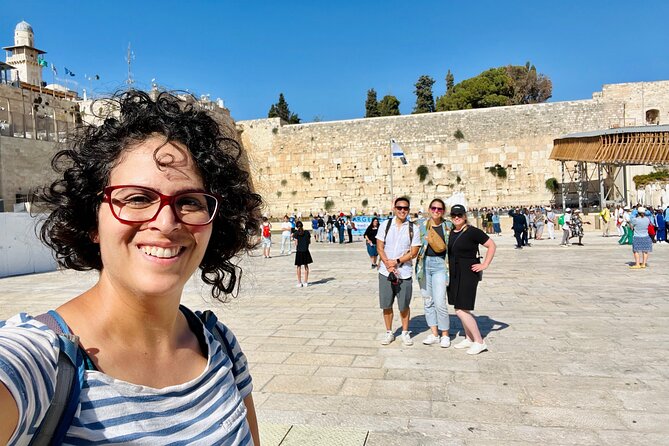
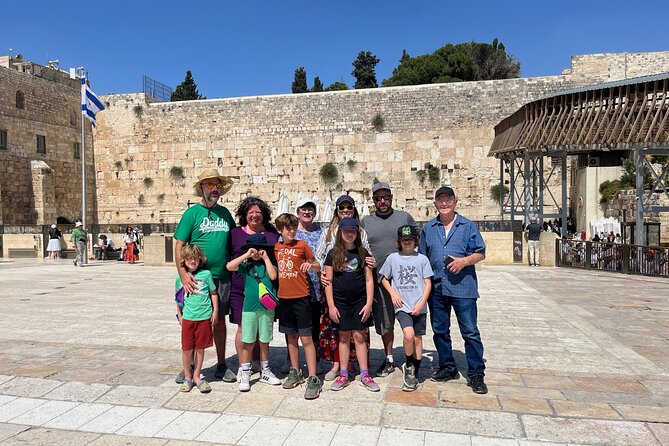
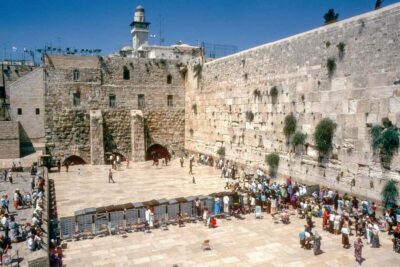
The Western Wall is allotted about 20 minutes. This is enough for an introduction and a visit, but not much time if you want to linger, pray, or observe the area at length.
Orna explains how the wall was built, who built it, and why it is not the holiest place for Jews. That last point is especially important because many first-time visitors assume the wall itself is the central sacred object. The explanation helps separate the surviving retaining wall from the Temple Mount above it.
The itinerary uses the phrase largest synagogue in the world for the Western Wall, but you should understand the site primarily as a major Jewish prayer place and a surviving part of the Temple complex. The distinction matters, and a good guide can prevent a misleading first impression.
Dress modestly here. Tank tops are not allowed, and pants or skirts should reach the knees. Plan for a respectful visit rather than a quick photograph.
Temple Mount is the tour’s most sensitive stop
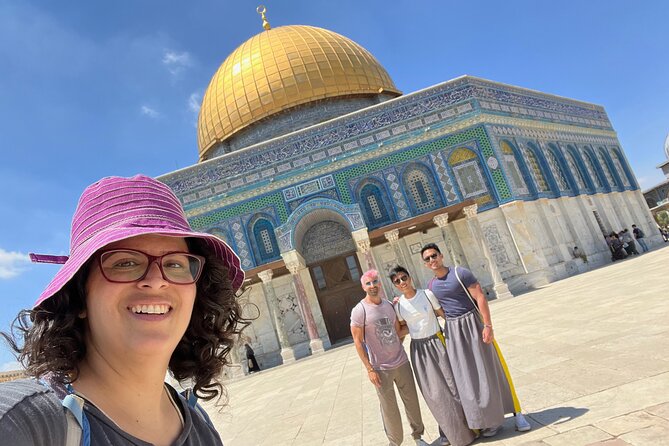
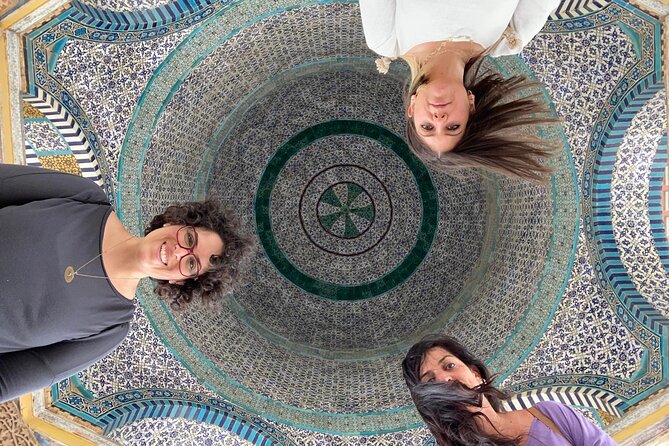
The Temple Mount receives about an hour, and this is where the religious and political themes become especially complex. The site is sacred to Judaism and Islam, and its meaning cannot be reduced to one faith’s story.
You learn how the mountain became sacred in the monotheistic religions and how control changed after the destruction of the Second Temple in 70 AD. The itinerary also addresses the shift in control after the Six Day War in 1967, along with illegal excavations and the project that sifts soil from the Temple Mount to recover archaeological finds.
Other subjects include Messianic Jews who want to build a Third Temple and Muslim graves found in a place that is considered the holiest site for Jews. These are difficult topics, but they are also central to understanding why Jerusalem remains so contested.
Access is the practical issue. The Temple Mount, including the Dome of the Rock and Al-Aqsa Mosque, is closed to visitors every Friday and Saturday and during various Muslim and Jewish holidays. On those dates, a viewpoint overlooking the Temple Mount is used instead.
The clothing rules are stricter than at the Western Wall. Men need pants below the knees and a T-shirt. Women need a long skirt or non-skinny pants, a long-sleeved shirt, and no cleavage. You should not bring holy books, sacred objects, weapons, laptops, tablets, iPads, alcohol, or musical instruments. If you lack a covering, workers provide a skirt.
The Muslim Quarter adds taste and street life
The 30-minute walk through the Muslim Quarter includes the Arab market and a stop at a local spice shop. You can try Arab sweet treats and learn who built the quarter and why.
This is one of the places where the tour moves beyond monumental history. The market offers a chance to meet local merchants and see how the Old City functions as a living neighborhood. The spice stop also gives you a small sensory break after the more formal explanations at the Western Wall and Temple Mount.
Thirty minutes is not enough to browse every lane or shop at leisure. Still, the short visit gives you a useful introduction without turning the tour into a shopping trip. If local food and market life matter to you, mention that preference when arranging the private tour.
Via Dolorosa leads to the Christian Quarter
The route follows some of the stations of the Via Dolorosa for about 20 minutes on the way to the Church of the Holy Sepulchre. This is not presented as a complete treatment of every station, so set your expectations accordingly.
The walk works best as a transition. You follow the path associated with Jesus’ final journey while moving through the same close-set streets that shape much of the Old City. The meaning of the route comes from the connection between the street, Christian devotion, and the church ahead.
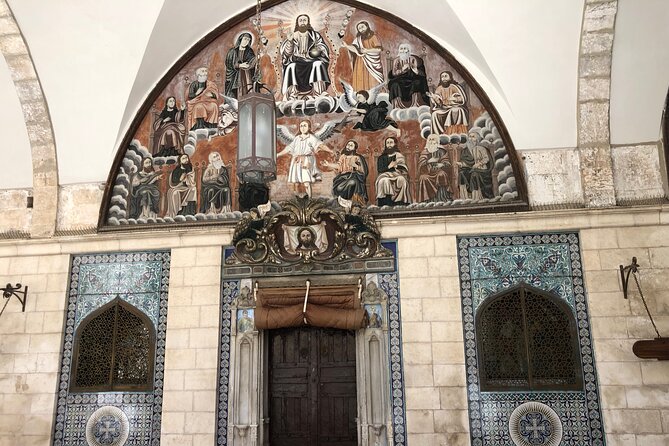
The Christian Quarter section lasts about 45 minutes. You learn about a patriarch who locked himself in his room and received food through a window, visit an Armenian ceramics shop, and hear about Jerusalem’s lowest statue. You may also meet local merchants, depending on availability.
The combination of church history, ceramics, humor, and local contact keeps this section from feeling like a list of religious facts. A coffee and cake stop at a local café is included in the plan, but the hot drink and cake are not included in the tour price. Bring a little extra money if you want to join that break.
The Church of the Holy Sepulchre is the emotional center
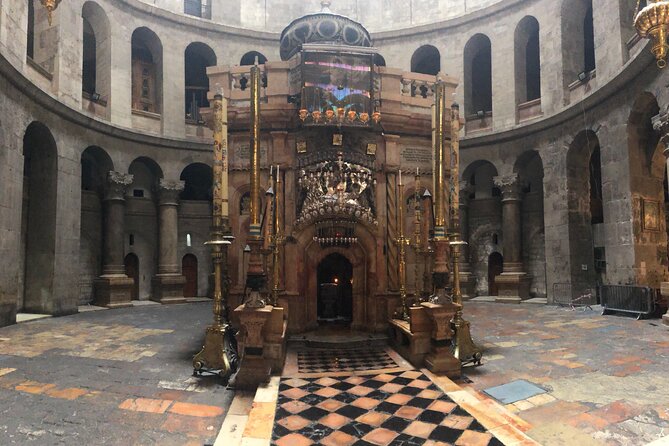
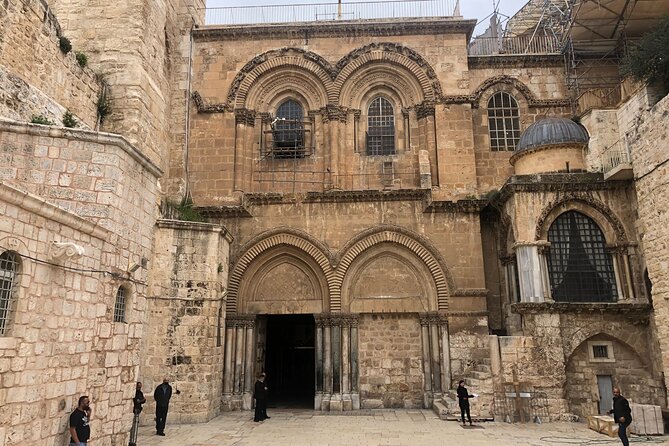
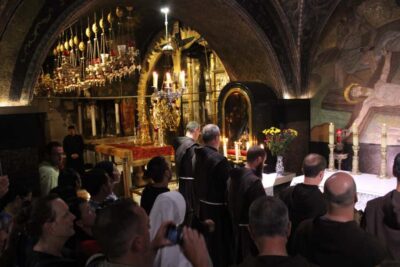
The Church of the Holy Sepulchre receives about 45 minutes. For Christians, this is the most sacred place on the route, associated with Jesus’ crucifixion and burial.
Inside, you visit the place of the crucifixion and Jesus’ tomb while learning about Christian faith. The church can be difficult to understand without context, especially because several Christian communities share responsibility for the building. The guide’s role is important here: the meaning of the spaces matters as much as their appearance.
Forty-five minutes gives you a focused visit, though the church can reward a longer stay for visitors with strong religious or historical interest. If you want extended time for prayer or quiet observation, ask Orna whether the schedule can be adjusted.
As with the Western Wall, modest clothing is required. Cover your shoulders and knees, and wear shoes suited to a long walk through the Old City.
The final rooftop view puts the route together
The final stop is called Our Lady of Peace in the itinerary, while the tour ends at the Notre Dame of Jerusalem Center on HaTsanhanim Street. The hotel visit takes about 30 minutes and includes access to the roof.
Here, you briefly leave Jerusalem in the story and visit Europe through the building’s design and past. You learn why the hotel was built, who built it, and how it connects to the Crimean War. The tour also covers who blew up the hotel and why, followed by its 19 years on the border between Jordanian Jerusalem and Israeli Jerusalem.
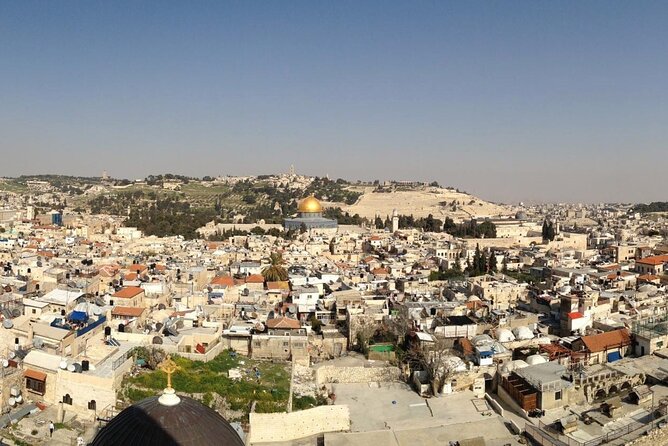
The rooftop view is a fitting finish. From there, you can see the new city, the Old City, its different quarters, the Temple Mount, and the Mount of Olives. After walking through separate religious and cultural zones, the view lets you see their physical closeness.
The tour ends at the hotel rather than returning to Jaffa Gate. That is useful if you plan to continue near the city center, but you should plan your onward route from Notre Dame of Jerusalem Center.
Orna’s guiding style and the value of a private group
The strongest praise for this experience centers on Orna’s delivery. Her background includes work with many ages and cultural and religious backgrounds, and the feedback describes her as easy to talk to, funny, and able to explain complicated material in memorable stories.
One useful sign is the range of people she has handled. A group of four women ranging from their 30s to their 70s had a good experience together, which suggests that the pace and tone can work across generations. Another account highlights her ability to combine new archaeological excavations with familiar sights, rather than repeating only the standard facts.
That matters in Jerusalem, where the same place can be biblical, archaeological, political, and personal at once. Orna’s approach appears to give you room to ask questions and connect the facts to what you are seeing.
Still, no guide can remove every challenge. The route covers a lot of ground and includes sensitive religious subjects. Some parts may feel brief, especially if your group wants long visits inside churches or synagogues. The private format helps, but six hours remains a full day.
What to bring and how to dress
Bring a hat, water, and comfortable walking shoes. The tour spends about six hours moving among gates, quarters, markets, sacred sites, and viewpoints, so practical clothing will improve the day.
Dress conservatively from the start. At the Western Wall and Church of the Holy Sepulchre, avoid tank tops and wear clothing that covers the knees. For the Temple Mount, follow the stricter requirements and avoid skinny pants, short bottoms, low necklines, and short sleeves.
Keep prohibited items out of your bag if Temple Mount access is planned. Holy books, sacred objects, weapons, laptops, tablets, iPads, alcohol, and musical instruments are not permitted there.
The tour is near public transportation, and service animals are allowed. Most people can participate, but the six-hour walking format should be considered carefully if anyone in your group needs frequent rest or has difficulty with extended walking.
Should you book this private Old City tour?
Book it if you want one guide to connect Jerusalem’s three monotheistic religions, rather than visiting each sacred site as an isolated attraction. It is especially suitable for families, mixed-age groups, and friends who want the freedom to ask questions and shape the emphasis.
The $650 price makes the best financial sense for a group of six to eight. For two people, it is a premium experience, but the included entry fees, private attention, and six-hour coverage may justify it if Jerusalem is a major part of your trip.
Think twice if you prefer a slow, unstructured day or want extended time at one church, synagogue, or shrine. The route is ambitious, and Temple Mount access is not guaranteed on every date. If you accept those limits and follow the clothing rules, Orna’s detailed storytelling, humor, and local connections make this a strong way to get oriented to the Old City.
FAQ
How long is the private walking tour?
The tour lasts approximately six hours.
How much does the tour cost?
The price is $650 per group, for up to eight people.
Is the tour private?
Yes. Only your group participates in the activity.
Where does the tour start?
The meeting point is Jaffa Gate in Jerusalem’s Old City.
Where does the tour end?
The tour ends at the Notre Dame of Jerusalem Center, HaTsanhanim Street 3, Jerusalem.
Are entry fees included?
Yes. Entry fees are included in the tour price.
Is food or a drink included?
No. A hot drink and cake at the local café are not included.
What clothing is required at holy sites?
At the Western Wall and Church of the Holy Sepulchre, tank tops are not allowed, and pants or skirts should reach the knees. The Temple Mount requires men to wear pants below the knees and a T-shirt, while women need a long skirt or non-skinny pants, a long-sleeved shirt, and no cleavage.
Can I visit the Temple Mount on any day?
No. The Temple Mount is closed to visitors every Friday and Saturday and during various Muslim and Jewish holidays. A viewpoint overlooking the site is included instead when it is closed.
What happens to the synagogue visit on Friday?
On Fridays, the four Sephardic synagogues are replaced with another synagogue.
Can the tour be adjusted to my interests?
Yes. Each tour can be tailor-made to your interests and needs.
Is cancellation free?
You can cancel up to 24 hours before the experience for a full refund. Cancellations or changes made less than 24 hours before the start time are not accepted for a refund.
More Walks through the Old City
- Best seller! Jerusalem old city four quarters tour
★ 5.0 · 123 reviews - Jerusalem Half Day Tour: Holy Sepulchre and Western Wall
★ 4.5 · 80 reviews - City of David and Underground Jerusalem Day Tour
★ 4.5 · 53 reviews - Jerusalem Old City
★ 4.5 · 43 reviews
More Walking Tours in Jerusalem
- All Inclusive Walking Tour Old City Jerusalem
★ 5.0 · 83 reviews - Jerusalem Walking Tour: In the Footsteps of Jesus
★ 4.5 · 67 reviews - Boutique Walking Tour of Jerusalem
★ 5.0 · 64 reviews - Old City of Jerusalem Guided Walking Tour
★ 5.0 · 47 reviews
Recently listed in Jerusalem
- West Bank Tour from Jerusalem and Tel-Aviv – Bethlehem & Jericho★ 5.0 · 6 reviews
- Tour of Jerusalem & Dead sea private tour★ 5.0 · 4 reviews
- One-Day Tour to Bethlehem and Jericho★ 5.0 · 2 reviews
- jerusalem classic tour★ 5.0 · 3 reviews
- full day tour Jerusalem price per van up to 6 people★ 5.0 · 8 reviews
- kosher Israel wine tour★ 5.0 · 4 reviews
- Private Silk Painting Workshop in Jerusalem – Create a scarf –★ 5.0 · 4 reviews
- Experience Shabbat With Dinner In Jerusalem★ 5.0 · 5 reviews
Jerusalem Old City Tours, compared.
Best seller! Jerusalem old city four quarters tour
Read our review →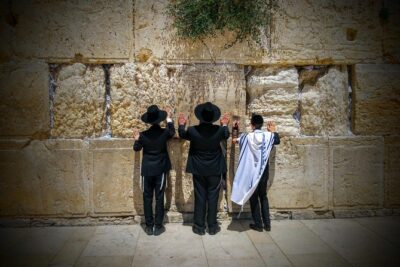
Jerusalem Half Day Tour: Holy Sepulchre and Western Wall
Read our review →
Jerusalem Half-Day Tour from Tel Aviv: Holy Sepulchre and Western Wall
Read our review →