
Reviewed · PRIVATE TOURS IN JERUSALEM
JERUSALEM private tour with ELAD VAZANA – Life in Israel & Palestine Then & Now
Jerusalem rewards patient walking. This private tour with Elad Vazana connects the city’s sacred places with its present-day tensions, customs, and daily life, rather than treating each monument as an isolated stop. I like the flexible format and the chance to ask direct questions in a small private group. I also like that the route includes both famous sites and ordinary corners, from the Western Wall and Church of the Holy Sepulchre to markets and courtyards.
The main consideration is pace. Six to seven hours on foot, with many religious sites and crowded lanes, can tire you out. The Dome of the Rock is closed on Fridays, Saturdays, and Muslim holidays, while visits to some Christian and Jewish sites require modest clothing and patience.
In This Review
- Key points at a glance
- Why this Jerusalem tour feels different
- Starting at Jaffa Gate
- The Dome of the Rock and the questions around it
- The Western Wall and the Jewish Quarter
- Via Dolorosa and the Christian Quarter
- The Church of the Holy Sepulchre, explained clearly
- The Muslim Quarter and Jerusalem’s living culture
- Mount Zion and the Roman Cardo
- Muristan Market and lunch with hummus
- How the private format changes the day
- Who will get the most from this experience
- Booking advice and final verdict
- FAQ
- How long does the Jerusalem private tour last?
- Where does the tour begin?
- Where does the tour end?
- How many people can join the private tour?
- Is lunch included?
- Is the Dome of the Rock open every day?
- What should I wear and bring?
Key points at a glance
- Elad Vazana puts current events into historical context, with a balanced approach to Israeli and Palestinian perspectives.
- The private format serves groups of up to 12, giving you room to ask questions and adjust the route.
- The route covers all three major monotheistic traditions, including the Dome of the Rock, Western Wall, and Church of the Holy Sepulchre.
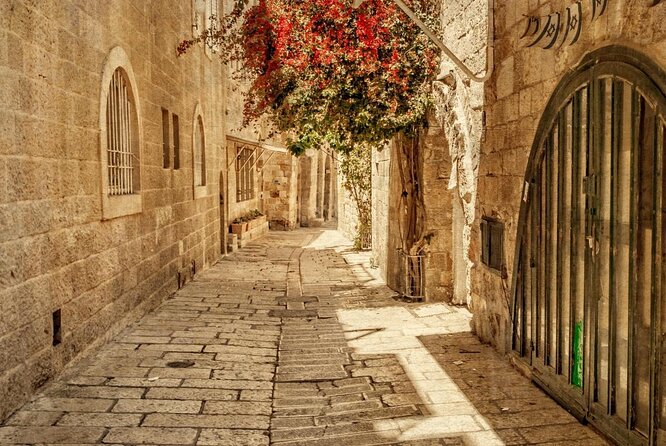
- You walk beyond the postcard sights, through the Jewish Quarter, Muslim Quarter, Cardo, Muristan Market, and Christian Quarter.
- Lunch is local and optional, with hummus and Mediterranean food available at your own expense.
- Timing matters, since the Dome of the Rock is closed on Fridays, Saturdays, and Muslim holidays.
Why this Jerusalem tour feels different
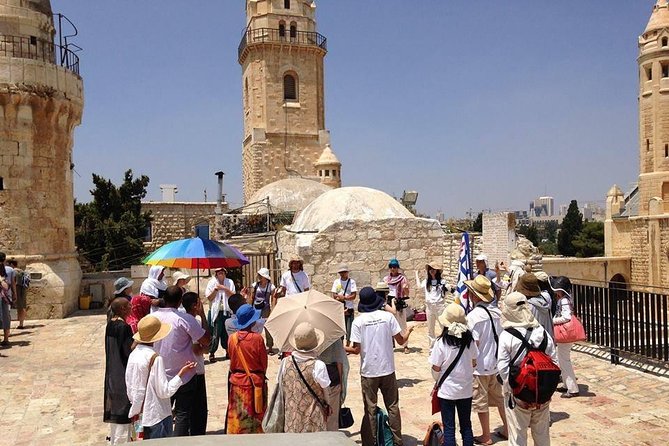
Jerusalem can be hard to understand on your own. You may walk a few minutes and pass from a Jewish prayer area to a Muslim shrine, then into a Christian pilgrimage site, all within the same ancient city. The buildings are close together, but the stories attached to them are often difficult, sensitive, and politically charged.
That is where this tour earns its keep. Elad Vazana presents Jerusalem through history, religion, and present-day life in Israel and Palestine. The strongest praise centers on his balanced style. He explains competing stories and timelines without turning the walk into a political argument or asking you to accept a single point of view.
I would choose this format over a large group if you want conversation instead of a running commentary. You can stop to ask what a symbol means, why a site matters to a particular faith, or how historical events still affect daily life. The private setup also gives you some control over the balance between religious sites, markets, architecture, and current affairs.
The tour costs $450 per group of up to 12 people. That is a serious price for one person or a couple, but a fairer deal for a family or group that can share the cost. At the maximum group size, the price works out to $37.50 per person before lunch. Private transportation is available for an additional fee, but the standard experience is built around walking.
More Private Tours in Jerusalem
- Private Tour Jerusalem Old City
★ 5.0 · 118 reviews - Palestine Revealed: 2-Day Private Tour from Jerusalem
★ 5.0 · 110 reviews - Bethlehem Half Day Private Tour – Pick up from Jerusalem/Tel Aviv/Ashdod
★ 5.0 · 54 reviews
Starting at Jaffa Gate
The tour begins at 8:30 am at Jaffa Gate, a sensible place to get your bearings. This entrance opens toward the Old City and gives Elad a natural starting point for explaining Jerusalem’s walls, basic geography, and the forces that shaped the city.
Allow about 20 minutes here. The stop is not only a meeting point. It helps you understand how the Old City is divided and why the walls matter. Jerusalem’s ancient walls are recognized as a UNESCO World Heritage site, and this first explanation gives the rest of your walk a clearer frame.
Starting in the morning is useful. You have a full six to seven hours ahead, and an early start gives you more time before fatigue sets in. Wear comfortable shoes, carry water, and bring a hat. The route passes through stone lanes and religious compounds, so this is not a polished, flat sightseeing circuit.
The Dome of the Rock and the questions around it
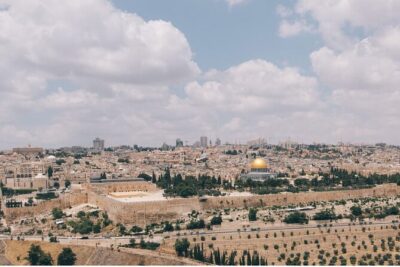
The Dome of the Rock receives about an hour and a half, making it one of the tour’s major stops. The focus is not only the building’s appearance. Elad explains why this sensitive site carries such weight and why it remains tied to conflict.
The site is especially valuable with a guide because its significance reaches across religious and political lines. You will learn about its place in Jerusalem and the reasons its status can provoke strong feelings. A private conversation gives you more room to ask for clarification when the facts become complicated.
Pay close attention to the schedule. The Dome of the Rock is closed on Fridays, Saturdays, and Muslim holidays. If you book for one of those days, the route will need to be adjusted. Morning or afternoon tours can be customized, but the site’s closure schedule still matters.
Modest clothing is required at holy sites. Dress with covered shoulders and knees to avoid an awkward interruption. The tour information does not promise entry to every part of every compound, so think of this stop as a guided explanation of the site and its significance, with access shaped by opening rules and religious requirements.
The Western Wall and the Jewish Quarter
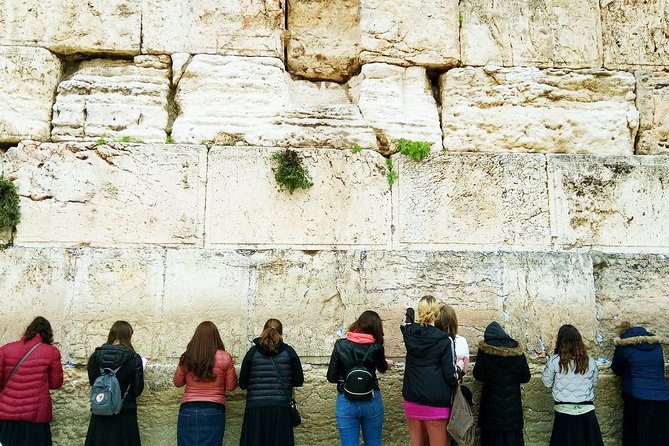
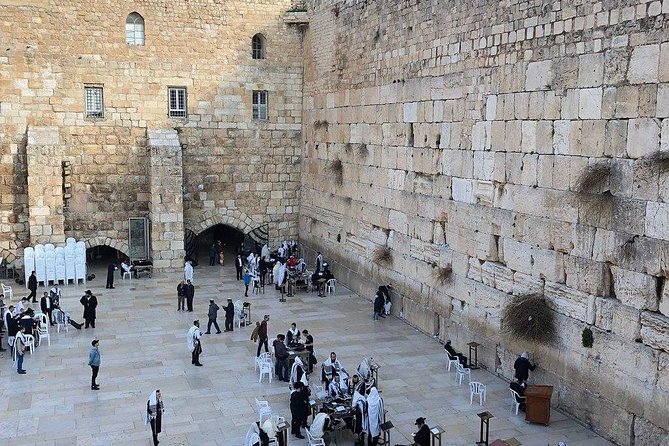
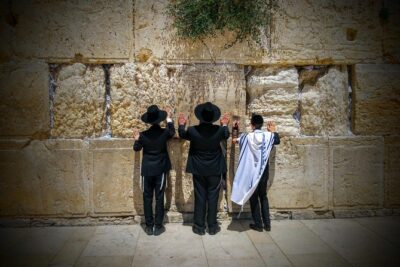
The Western Wall gets about 30 minutes. Here, Elad explains the Wall’s importance to the Jewish people and gives you the opportunity to approach it and place a written prayer in its cracks.
This is a quiet, personal part of the walk, even when the wider Old City feels busy. You do not need to be Jewish to appreciate the meaning of the ritual, but you should follow the site’s customs and behave respectfully. Your guide can explain what you are seeing without interrupting the atmosphere.
The walk continues into the Jewish Quarter for about 40 minutes. Expect discussion of Jewish customs, religious objects, artwork, and Biblical stories. This stop adds useful detail after the Western Wall. Instead of seeing the Wall as a single famous image, you begin to connect it with the people, practices, and symbols that surround it.
I particularly like this pairing because it moves from a major sacred site into the cultural setting around it. You see how faith appears in objects, art, and daily customs, not only in monumental buildings.
More Jerusalem tours worth comparing
- From Jerusalem: Masada & Dead Sea Full Day Tour with Pick Up
★ 4.5 · 815 reviews - Masada and the Dead Sea Day Trip from Jerusalem
★ 4.5 · 757 reviews - From Jerusalem: Nazareth and Sea of Galilee Tour
★ 4.5 · 588 reviews - Nazareth and the Sea of Galilee Day Trip from Jerusalem
★ 4.5 · 446 reviews
Via Dolorosa and the Christian Quarter
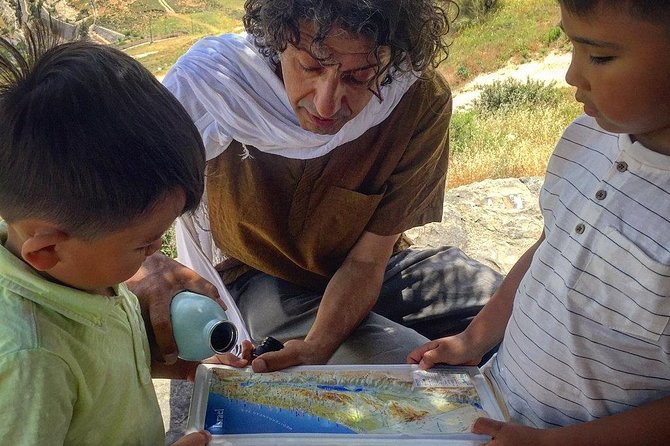
The Way of the Cross, or Via Dolorosa, is an optional 20-minute section leading toward the Church of the Holy Sepulchre. You follow the Stations of the Cross through the Old City, a route of major importance to Christian pilgrims.
The word optional matters here. If your group has limited energy or wants more time in another quarter, this section can be adjusted. If Christian history is central to your visit, you will likely want to keep it. The route makes the later visit to the Church of the Holy Sepulchre easier to follow.
The Christian Quarter receives another 30 minutes, with a walk along its main shopping street. This adds a more everyday view of the quarter, where religious items, shops, and pedestrian traffic share the same narrow setting.
Do not expect a quiet museum visit. The Christian Quarter is a working part of the Old City, and the shopping street can feel crowded. That is part of its appeal, but it also means you should stay close to your group and keep your belongings secure.
The Church of the Holy Sepulchre, explained clearly
The Church of the Holy Sepulchre takes about an hour. For many Christians, it is the holiest site in Jerusalem. It is also a place that can confuse first-time visitors because it contains roughly 20 chapels, each with its own history and religious importance.
A guide is especially useful here. Without context, the church can feel like a maze of altars, stone surfaces, chapels, and pilgrims. Elad’s role is to explain what each major area represents and how the different chapels fit into the larger story.
You should allow time for crowds, prayer, and movement through the building. This is not a stop to rush through for a quick photograph. The value comes from understanding why several Christian traditions share responsibility for the site and why each chapel has its own meaning.
The route’s decision to visit the Church after the Via Dolorosa makes sense. You approach it with the Stations of the Cross fresh in your mind, then have time to place the church’s chapels in context.
The Muslim Quarter and Jerusalem’s living culture
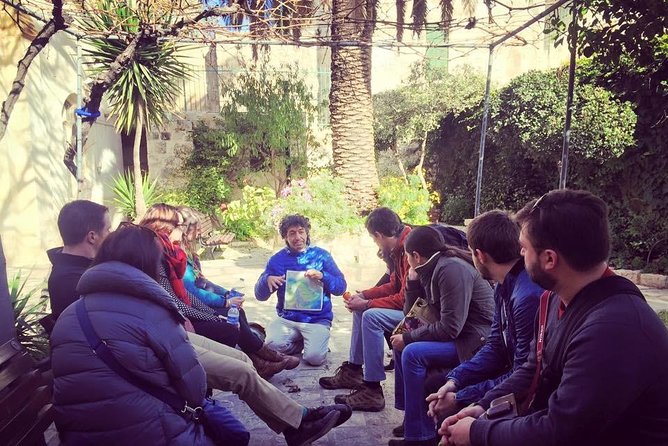
The Muslim Quarter receives about an hour, one of the longer sections of the tour. Elad discusses Islam, cultural customs, symbols, dress, architecture, codes, and the quarter’s place in Jerusalem.
This part of the walk helps correct a common mistake: treating the Old City as a collection of monuments instead of a place where people live and work. You hear about customs and symbols while moving through an active neighborhood, which gives the religious material a daily setting.
The quarter also ties back to the Dome of the Rock. The earlier stop explains the site’s wider significance, while this section gives you more context about Muslim culture and the built environment around it.
Approach this part with an open mind and respectful clothing. The tour’s value depends on asking honest questions without expecting every issue to have a simple answer. The strongest description of Elad’s style emphasizes facts, timelines, and stories from both sides, rather than finger-pointing or choosing sides for you.
Mount Zion and the Roman Cardo
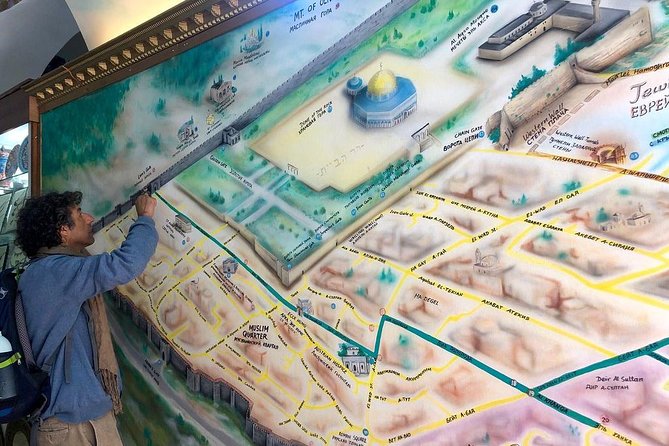
Mount Zion takes about 30 minutes. The planned sights include the Tomb of King David and, optionally, the Room of the Last Supper. These stops add another layer to Jerusalem’s religious geography and show how traditions connected with Judaism and Christianity overlap in the same city.
The optional Room of the Last Supper gives your group another chance to shape the day. If your interests lean toward Christian sites, keep it. If you are already feeling worn down, you can use the time elsewhere.
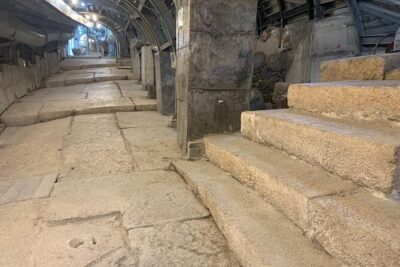
The Cardo follows, with about 20 minutes. Originally laid out by the Romans nearly 2,000 years ago, it now functions as a shopping area for Jewish art and religious items. That contrast is worth noticing. Ancient urban planning has been folded into modern commerce, and the stop lets you see history as part of the city’s current use rather than something sealed behind glass.
This is also a good place to browse without turning the tour into a shopping trip. You may find art or religious items, but the main interest is the way the old street has been reused.
Muristan Market and lunch with hummus
The Muristan Market is the tour’s lunch stop, with about 30 minutes set aside for Mediterranean food such as hummus. Lunch is not included, so bring money or a payment method for your meal.
I like that lunch is not presented as a fixed restaurant package. You can choose what appeals to you and keep the meal local and simple. Hummus and other Mediterranean dishes suit a long walking day better than a heavy meal.
Thirty minutes is fairly short for lunch, especially if the market is crowded. If you prefer a relaxed meal, ask whether the timing can be adjusted. The private format makes that kind of conversation possible, though the full route has many stops to fit into six or seven hours.
The market also gives you a break from formal religious sites. After hours of walls, chapels, shrines, and historical explanation, food and shopping bring the city back to ordinary life.
How the private format changes the day
The group limit is 12 people, but the point is not simply having fewer heads in front of you. A private tour lets you set the emphasis. You can spend more time on current events, religious customs, architecture, or the stories behind the major sites.
You can also ask questions at the moment they occur. In Jerusalem, one answer often leads to another question. A large group may need to keep moving, while a private group can pause for a brief explanation or clarify a sensitive point.
The itinerary is flexible enough for morning or afternoon departures, and private transportation can be arranged for an additional fee. Still, you should expect the core experience to involve substantial walking. The route moves between the quarters, gates, markets, and religious compounds, so comfortable shoes are essential.
Coffee or tea is included. Lunch is not. That distinction is small but useful when planning your day and budget.
Who will get the most from this experience
I would recommend this tour to you if you want Jerusalem explained rather than merely photographed. It suits first-time visitors who need a clear introduction, families who want to ask questions at their own pace, and small groups with different interests.
It is also a good fit if you want current events discussed in relation to longer historical timelines. The balanced approach is a strong reason to book, especially if you prefer a guide who explains competing perspectives without telling you what conclusion to reach.
You may want a different plan if you dislike long walks, want extended time at one religious site, or prefer a strictly devotional pilgrimage. The route covers a great deal in one day, and the six to seven-hour duration can feel full. Some stops are optional, but you still need to keep moving to reach the major sites.
The tour is accessible to most people according to the supplied details, and service animals are allowed. Nearness to public transportation helps with getting to and from the meeting point, though private transportation costs extra.
Booking advice and final verdict
This is a strong choice for a group that wants a serious first look at Jerusalem without being pushed through a standard script. The combination of Elad Vazana’s balanced explanations, the private format, and the mix of major holy places with markets and quarters gives the day real range.
The $450 price makes the most sense when shared among several people. A couple may find it expensive, while a family or group of friends can get solid value from the personal attention and flexible route. Plan for lunch separately, dress modestly, and avoid a Friday, Saturday, or Muslim holiday if the Dome of the Rock is essential.
Book it if you want context, conversation, and a broad introduction to Jerusalem’s Jewish, Muslim, and Christian communities. Skip it if you want a short sightseeing loop or a quiet day with minimal walking. For most first-time visitors with six or seven hours to spare, this private tour offers a thoughtful way to begin understanding a city that does not give up its meaning quickly.
FAQ
How long does the Jerusalem private tour last?
The tour lasts approximately six to seven hours.
Where does the tour begin?
It begins at 8:30 am at Jaffa Gate hostel, Jaffa Gate, Jerusalem.
Where does the tour end?
The tour ends back at the meeting point at Jaffa Gate.
How many people can join the private tour?
The price covers one private group of up to 12 people.
Is lunch included?
No. Lunch is not included. You can purchase Mediterranean food, including hummus, at Muristan Market.
Is the Dome of the Rock open every day?
No. The Dome of the Rock is closed on Fridays, Saturdays, and Muslim holidays.
What should I wear and bring?
Wear modest clothing for entry to holy sites, comfortable walking shoes, and a hat. Carry water as well. Coffee or tea is included.
Recently listed in Jerusalem
- Tour of Jerusalem & Dead sea private tour★ 5.0 · 4 reviews
- One-Day Tour to Bethlehem and Jericho★ 5.0 · 2 reviews
- West Bank Tour from Jerusalem and Tel-Aviv – Bethlehem & Jericho★ 5.0 · 6 reviews
- jerusalem classic tour★ 5.0 · 3 reviews
- full day tour Jerusalem price per van up to 6 people★ 5.0 · 8 reviews
- kosher Israel wine tour★ 5.0 · 4 reviews
- Private Silk Painting Workshop in Jerusalem – Create a scarf –★ 5.0 · 4 reviews
- Experience Shabbat With Dinner In Jerusalem★ 5.0 · 5 reviews
Private Tours in Jerusalem, compared.

Palestine Revealed: 2-Day Private Tour from Jerusalem
Read our review →
Bethlehem Half Day Private Tour – Pick up from Jerusalem/Tel Aviv/Ashdod
Read our review →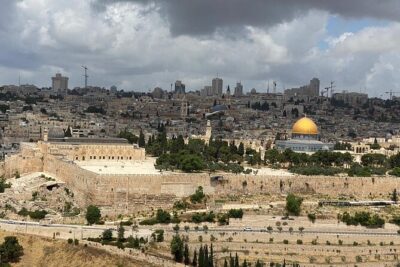
Full-Day Private and Guided Tour of the Jerusalem’s Old City
Read our review →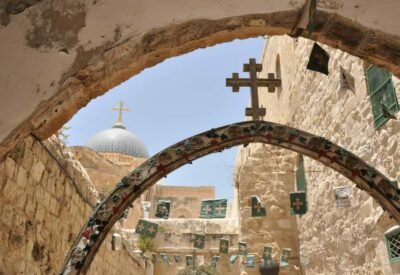
Full Day Private Christian Tour in Jerusalem with Tour Guide
Read our review →
Jerusalem to Tel Aviv Ben Gurion Airport Private Departure Transfer
Read our review →Browse the lists this tour appears in