

Reviewed · 2-DAY EXPERIENCES
Palestine Revealed: 2-Day Private Tour from Jerusalem
The West Bank changes how you see the Holy Land. This two-day private trip pairs famous biblical sites with present-day political realities, taking you from Jerusalem through Gush Etzion, Hebron, Mar Saba, Bethlehem, and Aida Camp. You get history, religion, local meetings, and a close look at the separation barrier, all with an English-speaking guide and private transport.
I especially like the personal format, since your group can ask direct questions instead of following a large coach through sensitive places. I also like the chance to hear from Palestinian families and residents, not just see monuments through a bus window. The main consideration is that this is not a light sightseeing holiday. Hebron, the settlement areas, military checkpoints, and refugee camp can be confronting, and the political discussion will shape much of the experience.
In This Review
- Key points at a glance
- What this two-day route is really about
- Day one: Gush Etzion and the story of settlements
- Kiryat Arba and Hebron’s difficult opening
- The Cave of the Patriarchs and two religious entrances
- Walking Hebron’s Old City and Shuhada Street
- Hebron glass and ceramics
- Overnight arrangements and what is included
- Day two: Mar Saba in the Judean desert
- Bethlehem’s Church of the Nativity and Manger Square
- The separation barrier, street art, and the Walled Off Hotel
- Aida Camp and direct local voices
- Guides, tone, and the value of a balanced visit
- Who should book this private Palestine tour?
- Should you book it?
- FAQ
- Where does the tour begin?
- How long does the experience last?
- Is this a private tour?
- Is a passport required?
- What type of transport is provided?
- Are meals included?
- Is accommodation included?
- Is admission to the Walled Off Hotel included?
- What should I wear?
- What is the cancellation policy?
Key points at a glance
- Hebron gives you the sharpest political context: You see Kiryat Arba, the Cave of the Patriarchs, Shuhada Street, settler compounds, checkpoints, and military presence in one concentrated visit.
- The Cave of the Patriarchs serves two faiths: Bring your passport so you can try to enter both the Muslim and Jewish sections.
- Mar Saba adds a striking desert setting: The monastery and Judean desert views provide a quieter start to the second day.
- Bethlehem combines pilgrimage with modern politics: The Church of the Nativity is followed by the separation barrier, Banksy-related art, and the Walled Off Hotel.
- Local contact is central to the tour: Meetings in Hebron and Aida Camp give you direct perspectives on daily life.
- Private transport saves time: Hotel pickup and drop-off from Jerusalem or Tel Aviv make a complicated route much easier to manage.
What this two-day route is really about
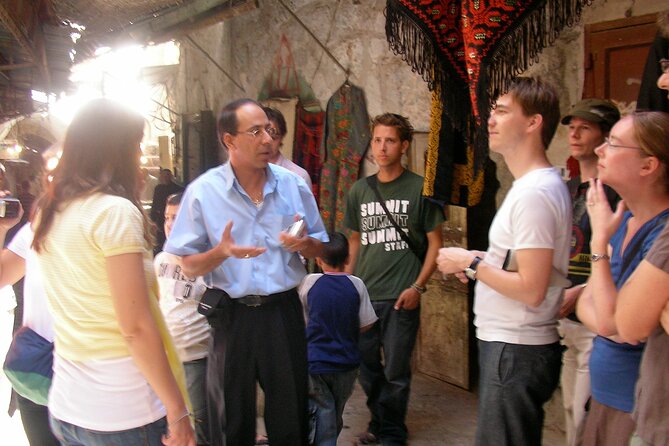
This is best understood as a history and current-affairs tour that happens to include some of the region’s most important religious sites. You will visit places connected with Abraham, Jesus, Orthodox monasticism, and Palestinian national life, but the guide will also explain settlement policy, occupation, borders, checkpoints, and the competing claims attached to the same streets.
The tour crosses between areas with different authorities and security arrangements. That is one reason going with an experienced local operator makes practical sense. You do not need to work out every border crossing, road, or access point yourself, and your guide can explain why a short distance on the map may take time to travel.
The private setup is a major advantage. Only your party participates, so you can ask for clarification, spend longer at a place that matters to you, or talk through a difficult subject without feeling rushed by a large group. It also makes the trip more comfortable for families or small groups with different levels of interest in politics and religion.
Still, private does not mean soft or easy. The schedule covers a lot of ground in two days. Expect long stretches of explanation in the vehicle, walking through old city streets, and emotionally difficult material. I would choose this trip because I want context, not because I am looking for a relaxed break from Jerusalem.
More Private Tours in Jerusalem
- Private Tour Jerusalem Old City
★ 5.0 · 118 reviews - JERUSALEM private tour with ELAD VAZANA – Life in Israel & Palestine Then & Now
★ 5.0 · 115 reviews - Bethlehem Half Day Private Tour – Pick up from Jerusalem/Tel Aviv/Ashdod
★ 5.0 · 54 reviews
Day one: Gush Etzion and the story of settlements
The first stop is Gush Etzion, the settlement bloc south of Jerusalem. Your guide explains the history and current status of the Israeli communities in the area, setting up the political themes that continue through Hebron and Bethlehem.
This is a useful beginning because the tour does not wait until Hebron to introduce the issue. You start by looking at the settlement question from the Israeli side before seeing how it affects Palestinian urban life. The stop lasts about 30 minutes and has no separate admission charge.
The area is also a reminder that this is a lived-in region, not a museum display. Roads, communities, and boundaries are part of the story. Listen carefully to the guide’s wording, and ask questions when terms such as settlement, enclave, territory, or checkpoint come up. Clear definitions matter here.
Kiryat Arba and Hebron’s difficult opening
Before entering central Hebron, you visit Kiryat Arba, an Israeli suburb and Jewish enclave at the city’s edge. The tour also includes Baruch Goldstein’s tomb, a site linked to a 1994 massacre at the Cave of the Patriarchs.
This is one of the most politically charged moments of the trip. It is not presented as a conventional attraction, and some people may find the visit upsetting or morally difficult. The value is in confronting the symbols and divisions that have shaped Hebron, rather than seeing only the polished religious sites.
The stop takes about 30 minutes. I would prepare yourself before arriving. You do not need to share every view expressed around you, but you should be ready to listen carefully and keep the setting in mind.
The Cave of the Patriarchs and two religious entrances
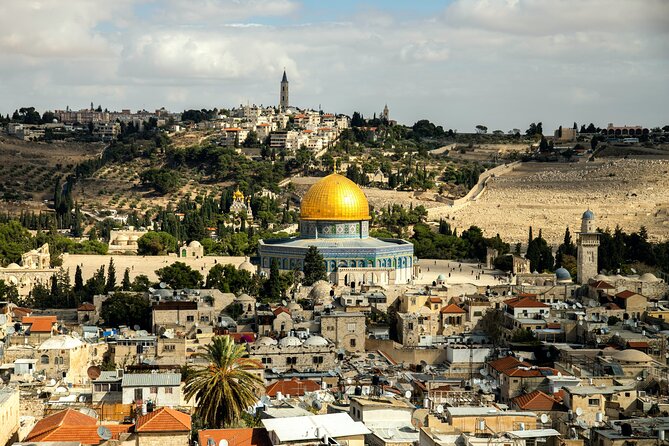
The Cave of the Patriarchs, known as Me’arat Hamachpela and Al-Haram Al-Ibrahimi, is the religious heart of the Hebron visit. The site is associated with Abraham’s tomb and is divided between Muslim and Jewish worship areas.
You have the opportunity to enter both the mosque side and the synagogue side. Access can depend on the rules in force that day, so treat the wording as an opportunity rather than a guarantee. Bring your current passport. The tour specifically requires it, and forgetting it could affect your ability to enter.
Plan on about 90 minutes here. Dress conservatively, since Hebron is a socially conservative religious city. Men and women should avoid shorts, wear trousers, and choose shirts that cover the shoulders and close reasonably high at the neck. Light, loose clothing works well in hot weather.
This stop carries both spiritual and political weight. You may come for the biblical connection, but you will also see how one sacred building has become a point of separation, security control, and competing religious claims.
More Jerusalem tours worth comparing
- From Jerusalem: Masada & Dead Sea Full Day Tour with Pick Up
★ 4.5 · 815 reviews - Masada and the Dead Sea Day Trip from Jerusalem
★ 4.5 · 757 reviews - From Jerusalem: Nazareth and Sea of Galilee Tour
★ 4.5 · 588 reviews - Nazareth and the Sea of Galilee Day Trip from Jerusalem
★ 4.5 · 446 reviews
Walking Hebron’s Old City and Shuhada Street
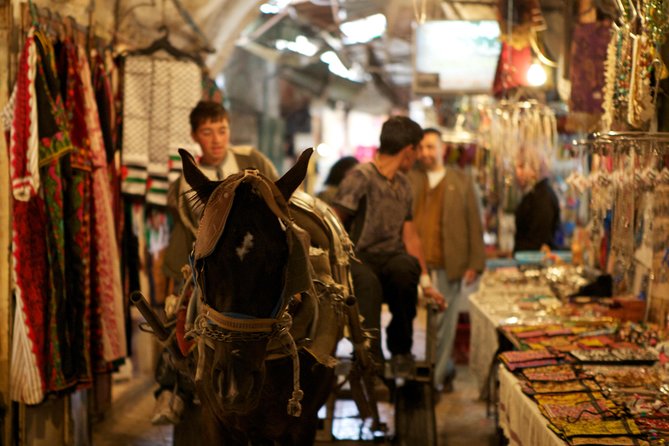
The main Hebron visit continues on foot through the Old City and along Shuhada Street. You see settler compounds, a military base, and checkpoints along the route connecting them.
The walking section is where the political situation becomes physical. A checkpoint is not just a term from a textbook when you are standing near one. Closed or restricted streets, military presence, and the close proximity of different communities help you understand why Hebron is often considered one of the hardest places in the region to interpret.
The scheduled time is about two and a half hours, including lunch in the Old City. Wear comfortable shoes and expect uneven walking surfaces. The route is not simply a photo stop followed by a return to the vehicle. You will need attention, patience, and an openness to hearing more than one layer of the story.
Lunch is in the Old City, but you should carry cash because food and drinks are not generally included unless specifically stated. Alcoholic drinks with meals are excluded. This is a good place to slow down, eat locally, and ask your guide about anything that was unclear during the walk.
Hebron glass and ceramics
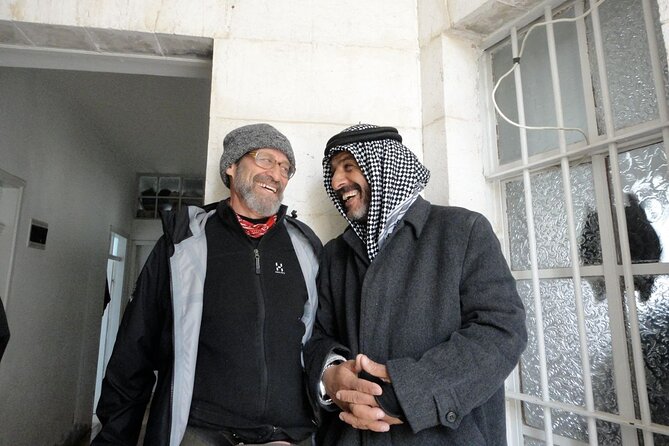
A visit to a local glass factory adds a practical, human detail to the day. Glass production is a common industry in Hebron, and the stop lasts about 30 minutes.
I like this part because it moves the focus away from conflict for a while. You see a local craft and an economic activity, not only checkpoints and political arguments. If you are interested in buying something, remember that personal purchases are your responsibility and are not covered by the tour price.
After a demanding morning and afternoon, this short stop also gives the day some balance. It connects you with ordinary work and local skill, even within a city shaped by intense division.
Overnight arrangements and what is included
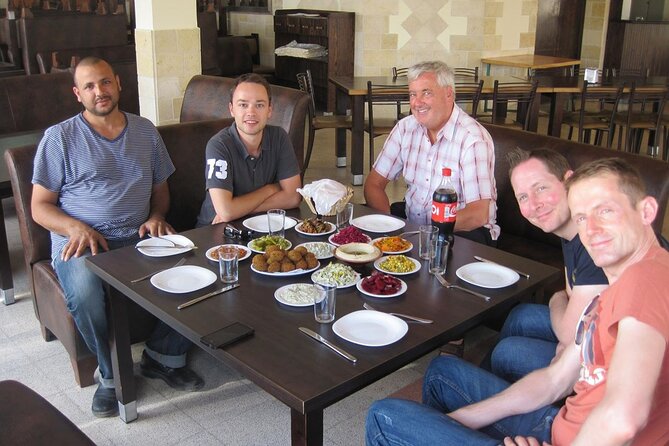
The package includes one night of accommodation, with double or triple occupancy except for a solo booking. Breakfast, dinner, coffee, and tea are included, while other food and drinks are not necessarily covered.
The standard accommodation may be basic. A three- or four-star hotel upgrade is available if needed, at an added cost. If a comfortable room matters to you, ask about the upgrade before booking rather than assuming the standard room will match your preferred hotel level.
Pickup and drop-off are included from hotels in Jerusalem or Tel Aviv. The start time is 8:30 a.m. The air-conditioned vehicle is a real help, especially in hot weather, and past experiences with the company have included clean, cool vans and, in some cases, larger luxury buses with leather seats.
Because this is a private tour, the value depends heavily on the size of your party. At $1,245.65 per person, the price is high for a two-day regional tour. It covers private transport, a personal English-speaking guide, hotel service, meals listed as included, and a route that would be difficult to arrange independently. For one person or a couple, it is a substantial expense. For a small group sharing a private vehicle, the convenience and flexibility make the price easier to justify.
Day two: Mar Saba in the Judean desert
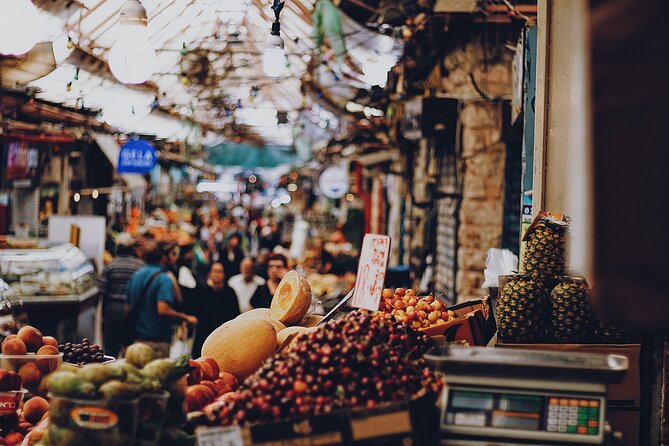
The second morning begins at Mar Saba Monastery. The stop lasts about 90 minutes and includes broad views over the Judean desert and the monastery itself.
After the intensity of Hebron, this is a welcome change of pace. The setting is stark and quiet, and the monastery gives the day a strong visual beginning. Bring water, wear sensible footwear, and dress respectfully for a religious site.
The information provided does not promise entry into every part of the monastery, so think of this mainly as a scenic and cultural stop. The desert views are an important part of the appeal. You get a sense of the region’s dry geography before moving into Bethlehem’s dense urban streets.
Bethlehem’s Church of the Nativity and Manger Square
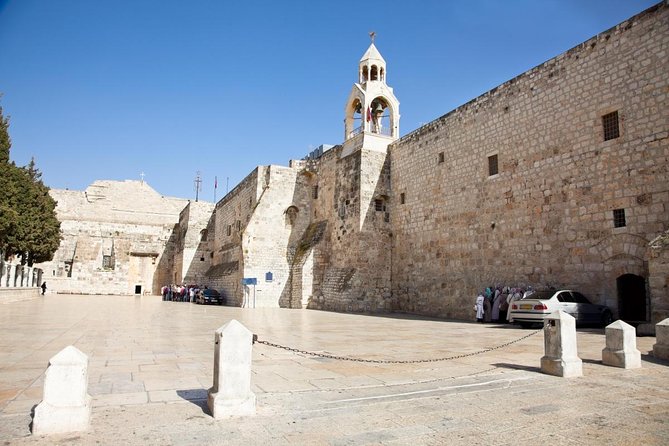
From Mar Saba, you continue to Manger Square and the Church of the Nativity. The visit lasts about two hours and includes a walk through Bethlehem’s Old City.
For Christian pilgrims, this may be the emotional centerpiece of the trip. The church is tied to the traditional site of Jesus’s birth, while the surrounding streets provide a more grounded sense of Bethlehem as a living Palestinian city.
Allow yourself time to look beyond the main religious marker. The Old City walk helps connect the church with shops, homes, streets, and local daily life. The tour’s strength is the way it places pilgrimage beside politics instead of pretending the two are separate.
As with the Cave of the Patriarchs, access and crowd conditions can affect the pace. The scheduled two hours gives you room for a proper visit, but you should not expect every moment to be under your control.
The separation barrier, street art, and the Walled Off Hotel
After lunch at a local restaurant, the guide takes you along the separation barrier surrounding Bethlehem. You learn about its effect on Palestinian residents and see how artists have used sections of the wall for graffiti and political expression, including work associated with Banksy.
This part is visually memorable, but it should not become a simple art hunt. The paintings are tied to movement, separation, and occupation. The guide’s explanation helps you read the images as part of a larger political setting rather than treating them as colorful backdrops for photographs.
The Walled Off Hotel adds another layer. It was created to attract visitors to an area that had once been abandoned and includes a museum about the occupation, a gallery for local artists, and art connected with Banksy. Admission costs 20 NIS and is not included.
You have about two hours and 15 minutes for lunch, the wall walk, and the hotel visit. That is enough time to take in the museum and gallery without making the stop feel like a rushed photo call. The hotel is unusual, but its value comes from the way it uses art to explain a political reality.
Aida Camp and direct local voices
The final stop is Aida Refugee Camp, where you have the opportunity to meet local residents and hear their stories. The visit lasts about one hour.
This is the part I would approach with the most humility. A refugee camp is not a staged attraction, and listening matters more than trying to collect dramatic photographs. Your guide can provide context, but the most valuable moments may come from the personal accounts shared by people who live there.
The tour’s emphasis on meeting families and residents is important. Religious sites tell you about ancient traditions. Aida Camp tells you how displacement, memory, and politics affect people now. You may leave with more questions than answers, which is an honest result for a subject this complex.
Guides, tone, and the value of a balanced visit
The company uses guides from different backgrounds, and names associated with its wider tours include Anas, Yamen, Moustapha, Mohammed, Mustafa, and Rami. Individual guide assignments can vary, so you should not book expecting a particular person unless the company confirms it.
The strongest guide qualities described across the company’s experiences are clear explanations, passion, humor, and a willingness to handle difficult questions. That matters here. A guide who only recites dates will not be enough. You need someone who can explain Israeli and Palestinian viewpoints without turning the day into a political lecture.
The tour is designed to present Palestinian perspectives prominently, especially through Hebron, Bethlehem, and Aida Camp. That does not make every interpretation neutral by default. I would recommend reading about the basic history before you go and listening for distinctions between established facts, political claims, and personal experience.
Several practical points deserve attention:
- Carry your passport every day.
- Dress modestly in Hebron and Bethlehem.
- Bring cash for lunch and incidental purchases.
- Budget an extra 20 NIS for the Walled Off Hotel.
- Ask about the hotel category and any upgrade before departure.
- Expect emotionally serious discussion, not just sightseeing.
- Keep your schedule flexible, since access and security conditions can affect timing.
The cancellation terms are strict close to departure. Cancel at least six full days before the start for a full refund. Cancellation two to six full days ahead receives a 50 percent refund, while cancellation less than two full days before departure is not refunded. The cut-off uses local time.
Who should book this private Palestine tour?
I would recommend it to a small group that wants a direct introduction to the West Bank and does not want to arrange complicated transport alone. It suits history students, politically curious visitors, religious pilgrims who want present-day context, and people who value local conversations as much as famous monuments.
It is also a good choice if you prefer to ask plenty of questions. The private format gives you more room to shape the discussion than a large group tour.
I would hesitate to recommend it to anyone seeking a carefree holiday, a purely biblical itinerary, or a quick collection of attractive landmarks. The visit to Goldstein’s tomb, the military presence in Hebron, the barrier, and Aida Camp can be unsettling. The route also packs a lot into two days, so it is not ideal if you need a slow pace.
Should you book it?
Book this tour if you want to connect the Bible, modern politics, local craft, religious division, and Palestinian personal stories in one carefully arranged trip. Its best feature is not any single monument. It is the contrast between sacred places, contested streets, desert monasteries, working communities, and refugee life.
At $1,245.65 per person, I would call it worthwhile mainly for a private group that values convenience and depth. Solo visitors and couples should compare the cost with a group option. If you go, arrive prepared, dress respectfully, bring your passport and cash, and expect the tour to challenge your assumptions. That is precisely its point.
FAQ
Where does the tour begin?
Pickup is offered from your hotel in Jerusalem or Tel Aviv. The stated start time is 8:30 a.m.
How long does the experience last?
The tour lasts approximately two days and includes one night of accommodation.
Is this a private tour?
Yes. Only your party participates, so the experience is private rather than shared with a larger group.
Is a passport required?
Yes. You must bring a current valid passport on the day of travel, especially for the Cave of the Patriarchs visit.
What type of transport is provided?
The tour includes air-conditioned transport, along with hotel pickup and drop-off in Jerusalem or Tel Aviv.
Are meals included?
Breakfast and dinner are included. Lunch is included in the daily schedule, but food and drinks are generally not included unless specifically stated. Alcoholic drinks are not included.
Is accommodation included?
Yes. One night is included, based on double or triple occupancy except for a solo person. A three- or four-star hotel upgrade may cost extra.
Is admission to the Walled Off Hotel included?
No. Admission costs 20 NIS and must be paid separately.
What should I wear?
Wear modest clothing suitable for socially conservative religious cities. Trousers are best, and shirts should cover the shoulders and close reasonably high at the neck. Light, loose clothing is suitable in hot weather.
What is the cancellation policy?
A full refund is available when you cancel at least six full days before the start time. Cancellation two to six full days ahead receives a 50 percent refund. Less than two full days before departure is nonrefundable.
Recently listed in Jerusalem
- West Bank Tour from Jerusalem and Tel-Aviv – Bethlehem & Jericho★ 5.0 · 6 reviews
- Tour of Jerusalem & Dead sea private tour★ 5.0 · 4 reviews
- One-Day Tour to Bethlehem and Jericho★ 5.0 · 2 reviews
- jerusalem classic tour★ 5.0 · 3 reviews
- full day tour Jerusalem price per van up to 6 people★ 5.0 · 8 reviews
- kosher Israel wine tour★ 5.0 · 4 reviews
- Experience Shabbat With Dinner In Jerusalem★ 5.0 · 5 reviews
- Private Tour: Old City of Jerusalem Christianity Tour★ 5.0 · 5 reviews
2-Day Experiences, compared.
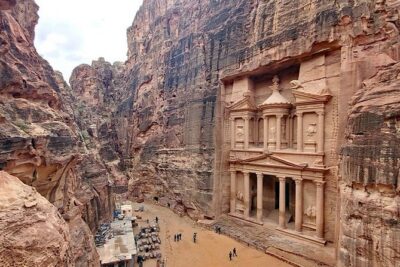
2 Day Tour to Petra and Wadi Rum from Tel Aviv
Read our review →
2-Day Best of Israel Tour from Tel Aviv: Jerusalem, Bethlehem and Masada Tour
Read our review →
Browse the lists this tour appears in