
Reviewed · GUIDED
Jerusalem: Tour with Private Guide
Jerusalem rewards a curious walker. I like the private format, which lets you ask questions, linger at meaningful places, and adjust the route instead of trailing behind a large group. I also like the chance to visit the Western Wall, walk the Via Dolorosa, and enter the Church of the Holy Sepulcher with a guide who can explain the traditions behind each site. The main drawback is the $199 per-person price, especially for larger groups, since the cost does not appear to decrease as more people join.
This is a serious history and faith tour, not a quick photo stop. Guides such as Moshe, Izzat, Alena, Hanna, and Izak have been praised for their warmth, flexibility, and command of Jerusalem’s past. Still, the Old City can be tiring, and modest clothing rules, crowds, uneven streets, and a full walking route may test your legs.
In This Review
- Key points to know before you book
- Why a private Jerusalem tour can be worth the cost
- Starting at Zion Gate and crossing the Old City
- The Byzantine Cardo and Jerusalem below street level
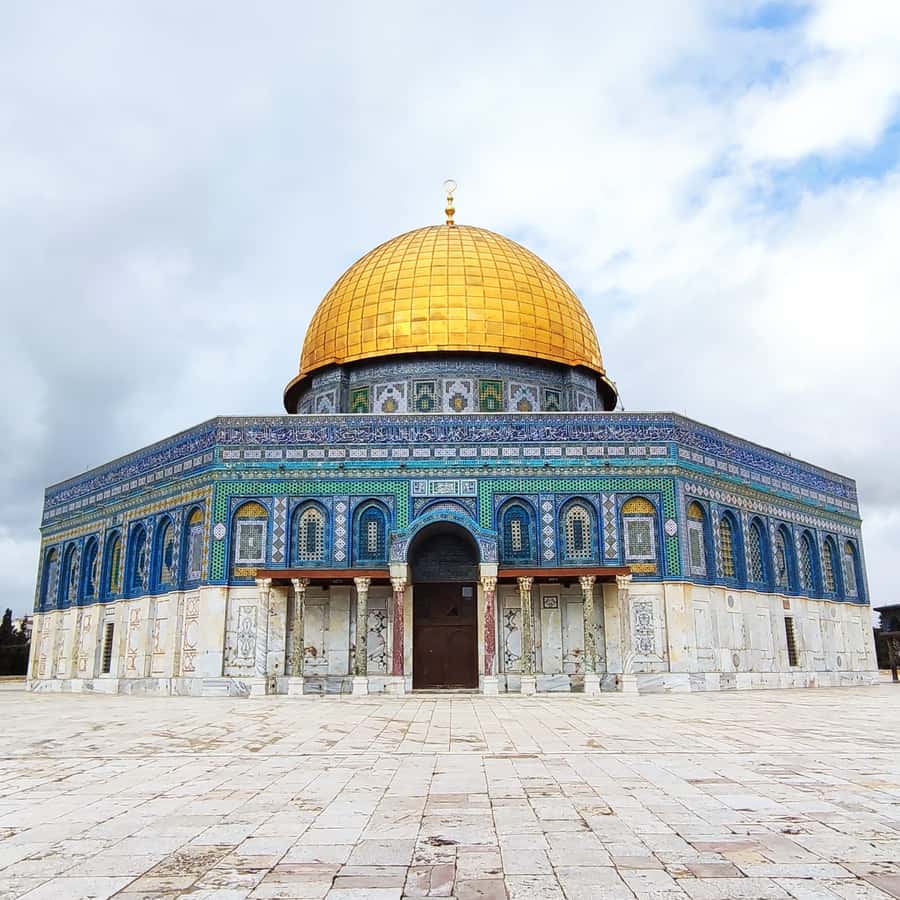
- The Western Wall and the Temple Mount story
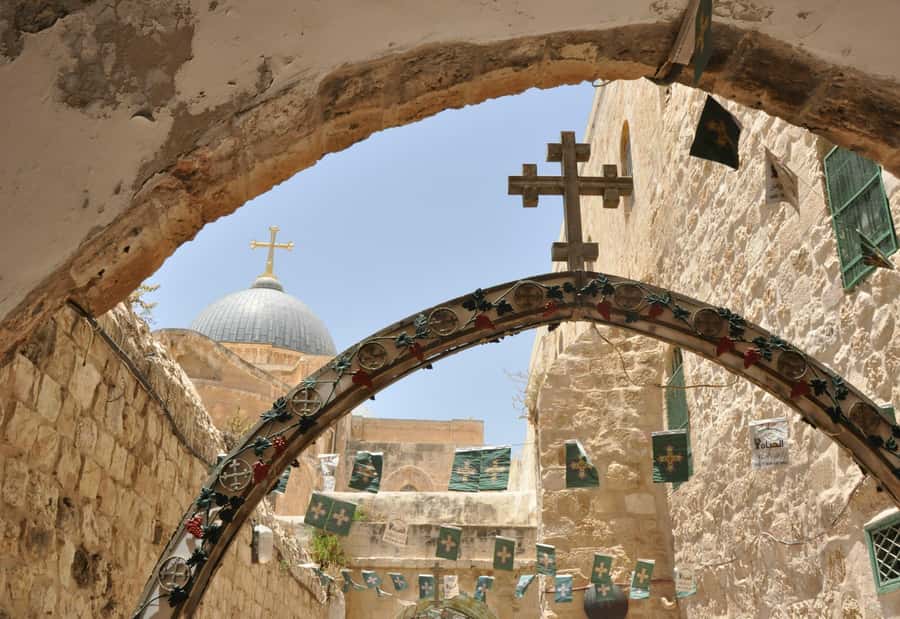
- Walking the Via Dolorosa
- Inside the Church of the Holy Sepulcher
- Ending near Jaffa Gate
- The guides are the heart of the experience
- Clothing, pace, and practical preparation
- Who should book this private walk?
- Should you book the Jerusalem private guide tour?
- FAQ
- Where does the Jerusalem private tour begin?
- Where does the tour end?
- What places are included on the route?
- Can I place a prayer in the Western Wall?
- Is the Church of the Holy Sepulcher included?
- Are entrance fees included in the price?
- What should I wear?
- Which languages are available?
Key points to know before you book
- The route crosses four historic quarters: Enter through Zion Gate, pass through the Armenian Quarter, continue into the Jewish Quarter, and see the Byzantine Cardo.
- The Western Wall is a hands-on stop: You can place a written prayer into the cracks between the stones.
- The Christian route is central to the tour: Walk sections of the Via Dolorosa before entering the Church of the Holy Sepulcher.
- Your guide can shape the day: Past guides have added places such as St. Peter in Gallicantu, the Sisters of Zion convent, and Mahane Yehuda Market.
- The meeting point is convenient: Pickup is on foot from a centrally located Jerusalem hotel or another central point.
- Dress matters at holy sites: Women need covered legs to the ankles, arms past the elbows, and a covered neckline. Men need covered knees and a sleeved shirt.
Why a private Jerusalem tour can be worth the cost
Jerusalem is not a city I would rush through with a guide holding up a flag. Its important places are close together, but their meaning is layered, and the Old City’s lanes can make orientation difficult. A private guide gives you room to stop and ask what you want to know.
The price is $199 per person. That is a substantial fee for a walking tour, particularly if you are booking for several people. The value depends heavily on your guide. A strong guide can connect archaeology, geography, scripture, architecture, and modern life in a way that makes the stones easier to understand.
The best accounts of this tour describe guides who did more than recite dates. Moshe answered questions about history and geography, waited patiently when the group wanted to enter unexpected places, and even stayed beyond the planned time to finish the route. He also introduced one group to Jerusalem bread with za’atar. I would not treat that extra time or food as guaranteed, but it shows the kind of personal service the private setup can allow.
Izzat has also been praised for going beyond the basic plan. He brought his own car for convenience, even though transportation was not part of the tour, and refused extra payment. Again, that is a personal choice by a guide, not an included feature. You should book this experience for the private guiding, not with the expectation of complimentary transport.
For one person or a small group that wants a tailored introduction, the price may feel fair. For a family of four, it becomes a much larger bill. One person also felt the pricing should fall as the group grows, since one guide does not do three times the work for three people. That is a reasonable concern.
More Private Tours in Jerusalem
- Private Tour Jerusalem Old City
★ 5.0 · 118 reviews - JERUSALEM private tour with ELAD VAZANA – Life in Israel & Palestine Then & Now
★ 5.0 · 115 reviews - Palestine Revealed: 2-Day Private Tour from Jerusalem
★ 5.0 · 110 reviews
Starting at Zion Gate and crossing the Old City
The guide meets you in the lobby of a centrally located hotel or at another central point in Jerusalem. Pickup is on foot, so this is easiest if you are already staying near the Old City. There is no drop-off service at the end, which means you should plan to continue on foot or arrange your own return.
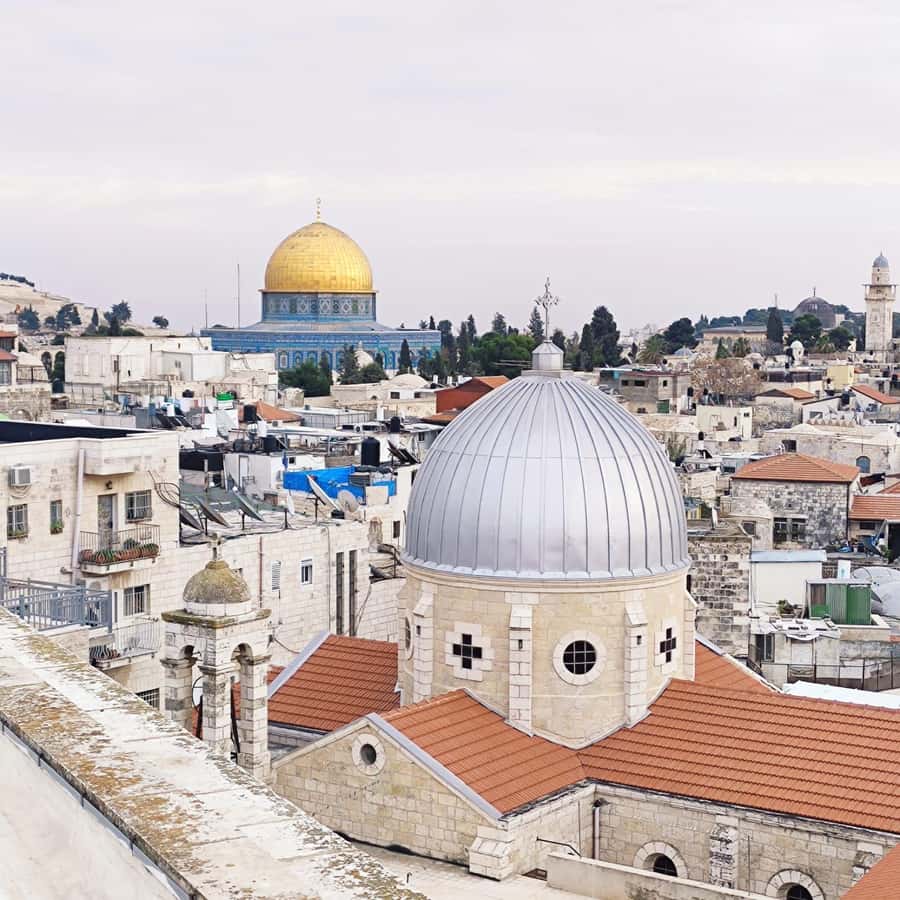
The route enters through Zion Gate, one of the Old City’s historic gateways. From here, your guide begins to orient you through the maze of quarters, religious communities, and old stone lanes. This early explanation matters because Jerusalem can seem like a collection of walls and narrow passages until someone points out how the districts fit together.
The Armenian Quarter is a quieter opening to the route. Your guide can help you notice how the quarter differs from the areas that follow, while explaining its place within the Old City. The itinerary then moves toward the Jewish Quarter, where the focus turns more directly to Jewish history and the remains of ancient Jerusalem.
You should expect walking on old paving and through narrow streets. Wear shoes with good support, and bring water. Comfortable clothing helps, but remember that the clothing suitable for the markets may not meet the rules at every holy site.
The Byzantine Cardo and Jerusalem below street level
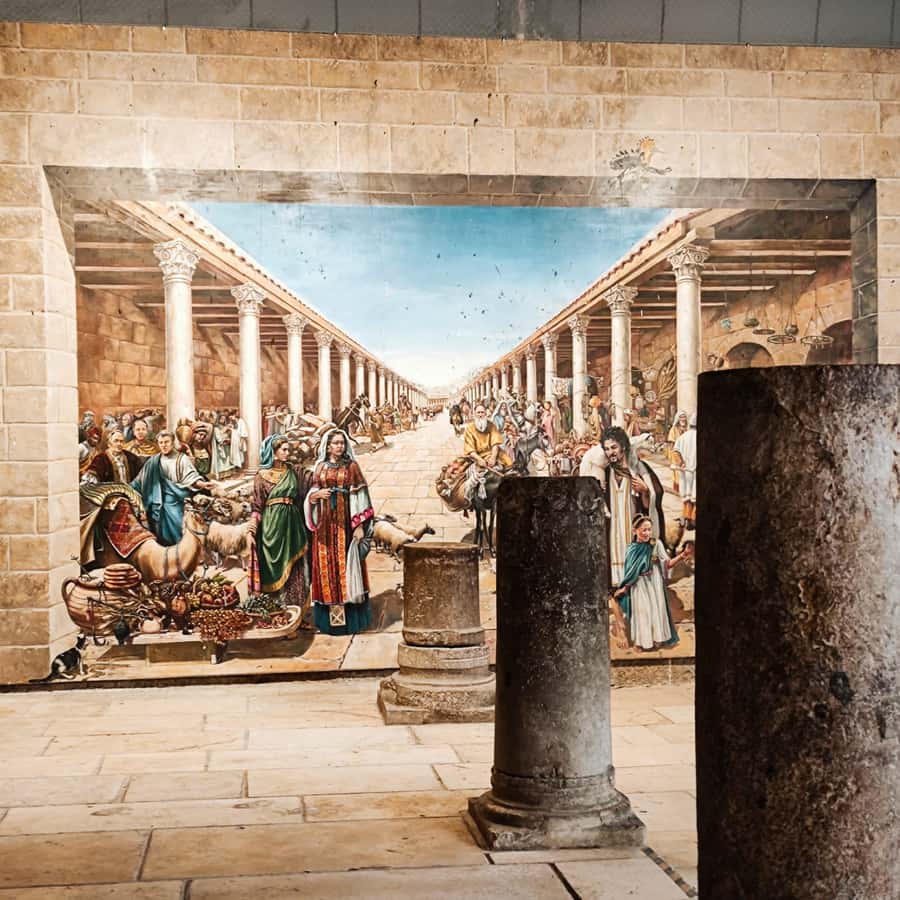
The ancient Byzantine Cardo is one of the most useful stops for understanding how Jerusalem changed over time. The Cardo was a major north-south street during the Byzantine period, and its remains offer a clearer sense of the city’s layout than the winding lanes above.
This is where a private guide can make a real difference. Rather than simply pointing to old columns or stones, the guide can explain how the street relates to earlier and later layers of Jerusalem. You will see that the Old City is not just old in one single period. It is built from successive eras, often directly on top of one another.
Past routes with Moshe have also included less standard sites, such as the original street level beneath the Convent of the Sisters of Zion and the cistern of St. Helena. These places are not guaranteed stops, but they show the advantage of being able to tell your guide what interests you. If underground archaeology appeals to you, ask early in the tour so the guide can judge what fits the route and opening conditions.
The route may also include St. Peter in Gallicantu, a church connected with the story of Peter’s denial of Jesus. One guide also showed a model of ancient Jerusalem there. These additions are valuable for returning visitors who have already seen the main sights.
The Western Wall and the Temple Mount story
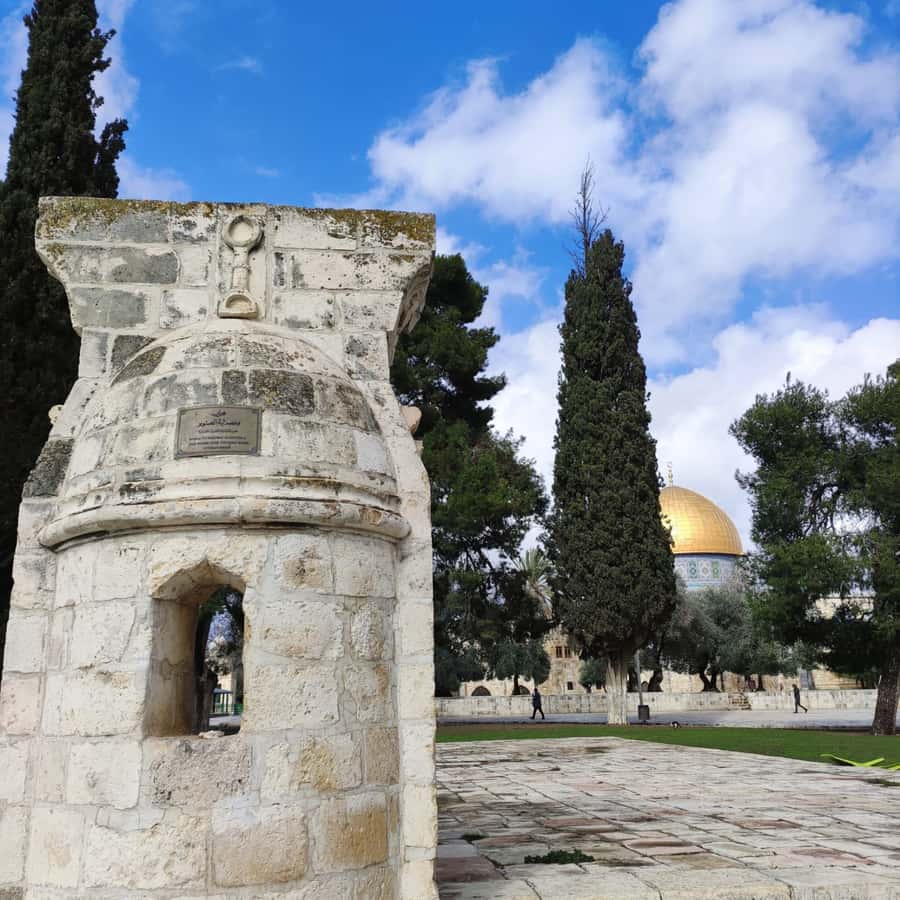
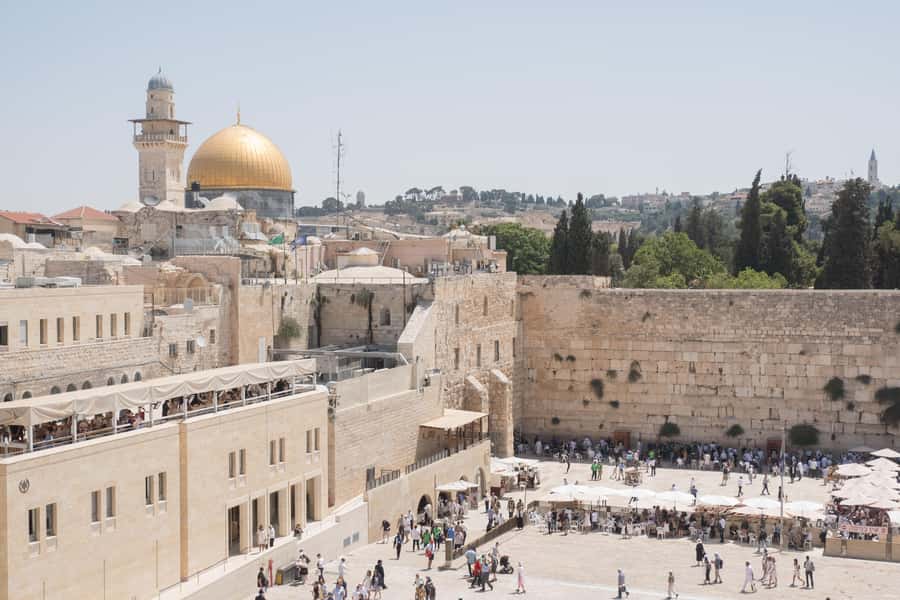
The Western Wall is likely to be one of the emotional centers of the day. It is part of the retaining wall built during Herod the Great’s expansion of the Temple Mount, begun around 20 BCE. The wall is not the surviving wall of the Temple itself, but a massive outer support connected with the Temple complex.
Your guide can explain that distinction, which is easy to miss when you hear the site described in simple terms. The stones carry both archaeological weight and living religious meaning. People come here to pray, touch the wall, and place written prayers into its cracks.
You can write a prayer before visiting, or use the moment simply to observe. The stop is open and public, so it may be busy and deeply personal at the same time. Give yourself a little quiet space, even if your guide has plenty more to explain.
The Western Wall area also requires respectful dress. Women must cover their legs to the ankles, arms past the elbows, and the front of the body up to the neckline. Men need covered knees and a shirt with sleeves. It is easiest to dress for these requirements from the start rather than trying to improvise at the entrance.
More Jerusalem tours worth comparing
- From Jerusalem: Masada & Dead Sea Full Day Tour with Pick Up
★ 4.5 · 815 reviews - Masada and the Dead Sea Day Trip from Jerusalem
★ 4.5 · 757 reviews - From Jerusalem: Nazareth and Sea of Galilee Tour
★ 4.5 · 588 reviews - Nazareth and the Sea of Galilee Day Trip from Jerusalem
★ 4.5 · 446 reviews
Walking the Via Dolorosa
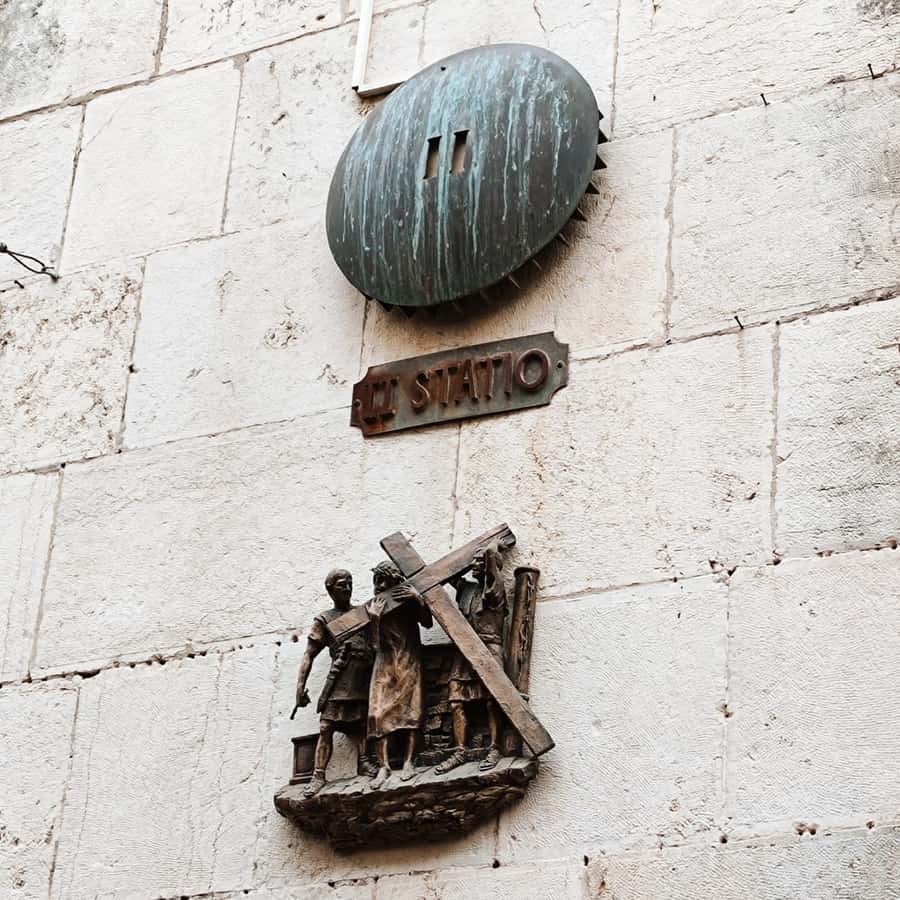
From the Jewish Quarter, the tour turns toward the Christian sites and follows the Via Dolorosa, also called the Way of the Cross. This route traces the path associated with Jesus from condemnation toward crucifixion.
The Via Dolorosa is not a quiet museum corridor. It runs through the living Old City, with shops, residents, worshippers, and everyday street activity around it. That mix is part of the experience. You are walking through a place of devotion that is also a working neighborhood.
The route includes stations linked with the final events of Jesus’s life. A guide helps you separate the biblical accounts, later traditions, church customs, and physical locations. That context is especially useful here because the route’s meaning is devotional, historical, and symbolic all at once.
The streets can be crowded, and the group may need to pause often to let people pass. If you want time for prayer or quiet reflection, say so. A private tour is best used for this kind of communication. One group found that its guide adapted well to its interests and changed the pace when unexpected holiday activity affected movement through the city.
Inside the Church of the Holy Sepulcher
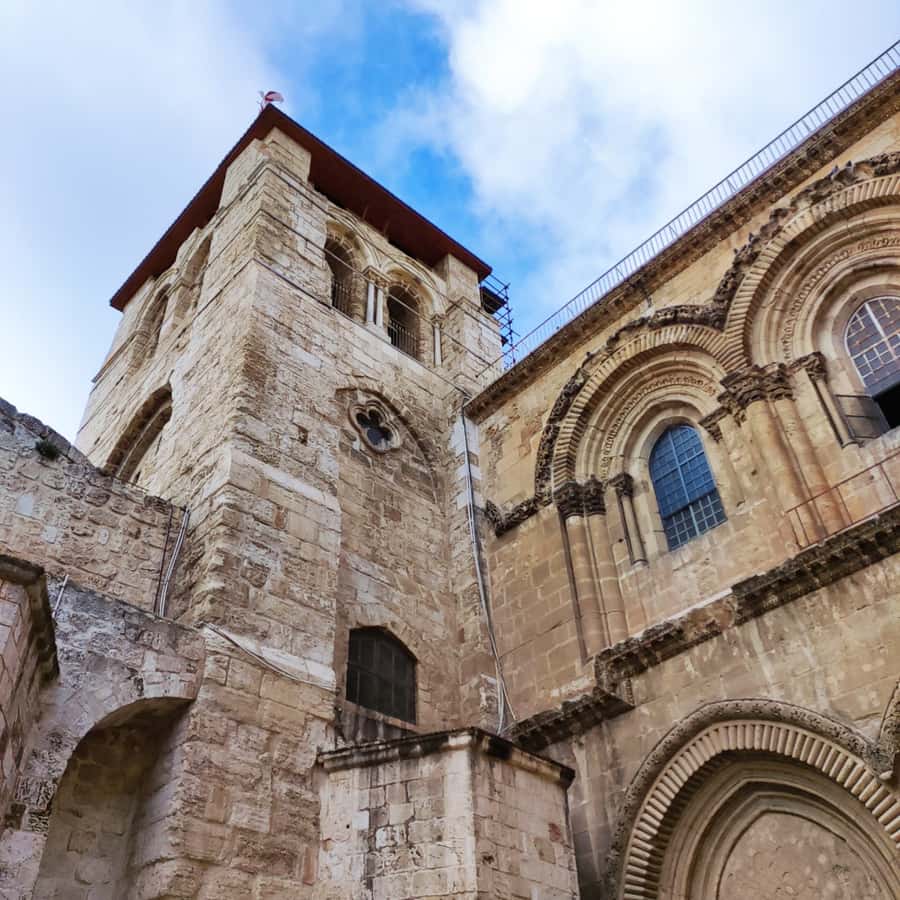
The tour ends its main religious sequence at the Church of the Holy Sepulcher. For Christians, this is among the most important places in the world because it is associated with Jesus’s crucifixion, burial, and resurrection.
The church is shared by several Christian communities, and its interior can feel complex at first. Chapels, altars, candles, stone surfaces, and lines of worshippers create a place where religious practice is happening around you, not merely being displayed for sightseeing.
A private guide can help you understand what you are seeing and why different areas matter. The guide can also help you move through the church with the right tone. This is not a place for a rushed checklist. Even if you are visiting mainly for history or architecture, the atmosphere calls for patience and respect.
The tour includes a private visit to the church, but entrance fees are not included in the price. Since the supplied details do not specify which entrance charges may apply or when they are collected, ask your guide or booking contact before setting out. Bring some flexibility into your timing, since holy sites can have changing access conditions.
Ending near Jaffa Gate
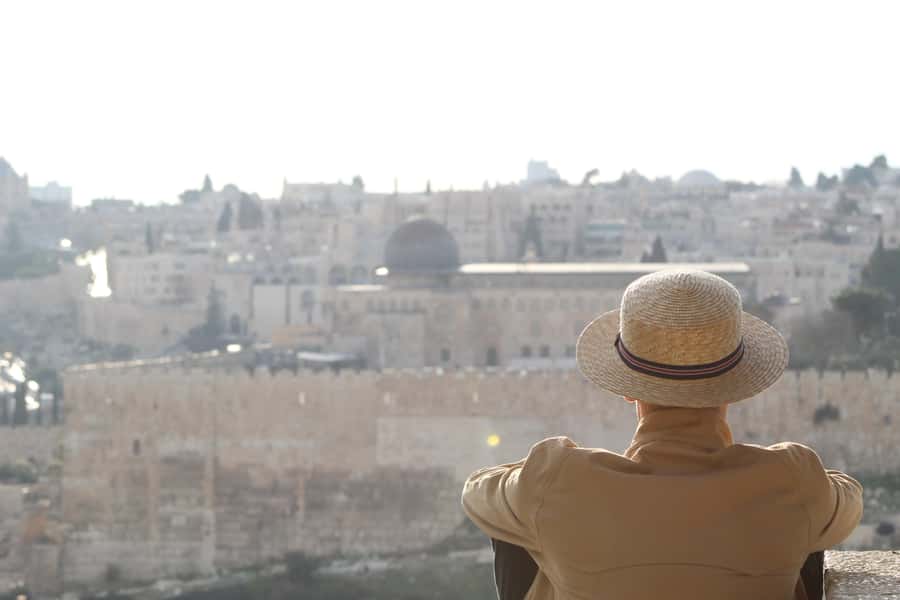
The planned finish is near Jaffa Gate, one of the Old City’s best-known entrances. This gives you a useful position for continuing your day, though you must arrange your own onward transport because drop-off is not included.
Jaffa Gate is a practical place to stop after a demanding walk. You can continue exploring, find food, or make your way toward other parts of Jerusalem. Several guides have added food-related stops when the group wanted them, including suggestions around Mahane Yehuda Market. Food and drinks are not part of the tour price, so plan to pay separately.
One guide helped a visitor order unfamiliar pastries at the Jewish Market. Another took a group to places for a meal after the formal sightseeing. These personal touches are not promised, but they point to the benefit of telling your guide what you want before the final hour.
Watch your energy. One group found that by the third hour, people were tiring, and the guide did not adjust the pace quickly enough. That is useful advice for you: speak up before your legs give out. Ask for a shorter explanation, a brief pause, or a final stop that matters most to you.
The guides are the heart of the experience
The strongest reason to choose this tour is the guide. Moshe has been praised for answering detailed questions quickly and for sharing places outside a standard Old City route. Alena has been described as warm, flexible, and passionate, with a talent for shaping the tour around a group’s interests.
Izzat has earned praise for practical help as well as sightseeing. He offered advice about neighborhoods, future places to visit, and settling in Israel. Hanna was valued for making a group feel comfortable while teaching them about the city. Alena and Izak were also appreciated for taking people slightly off the usual path while remaining friendly and attentive.
These examples suggest a broad range of guiding styles. Your experience may depend on the person assigned, the day’s conditions, and what you ask for. At the start, tell your guide if you want more archaeology, more religious context, more architecture, unusual sites, food advice, or time for personal prayer.
The tour is offered in Arabic, English, French, German, Hebrew, Italian, Russian, Spanish, Chinese, Dutch, Greek, Indonesian, Portuguese, Romanian, and Swedish. Select your preferred language when booking, then confirm it if language is especially important to you.
Clothing, pace, and practical preparation
Bring comfortable shoes, water, comfortable clothes, a long-sleeved shirt, and long pants. The long sleeves and pants are not just for sun or modesty. They help you meet the clothing rules at the Western Wall and other sacred places without carrying extra layers.
You can dress casually for the streets and markets, then make sure your clothing remains respectful inside holy sites. Women should have ankles, arms past the elbows, and the neckline covered. Men need sleeves and covered knees.
This is a private walking tour, not a bus excursion. The description does not provide a fixed duration, although one account refers to the third hour and another describes the guide staying beyond the planned end. Ask for the expected length when booking, especially if you are traveling with children, older relatives, or anyone who tires easily.
The guide may adapt the route around road closures, holidays, or local events. That flexibility is useful, but it can also mean that the exact order of stops changes. Think of the itinerary as a framework rather than a rigid timetable.
You can reserve now and pay later, and cancellation is allowed up to 24 hours ahead for a full refund. Those policies make the booking less risky if your plans are still moving, but always check the final terms at the time of purchase.
Who should book this private walk?
I would recommend it to first-time visitors who want the main religious landmarks explained in one focused outing. It also suits repeat visitors who have already seen the obvious stops and want to request places such as St. Peter in Gallicantu, the Sisters of Zion site, or areas around Mahane Yehuda Market.
It is a good match for people who enjoy asking questions and changing plans. It is less suitable if you want a low-cost group tour, a ride between sights, or a fixed schedule with no surprises.
The tour is also useful for solo visitors. A private guide can help with orientation, local customs, and the practical challenge of moving through a complicated historic center. Families and small groups should weigh the total cost carefully, since the per-person price may feel high as numbers increase.
Should you book the Jerusalem private guide tour?
Book it if your priority is personal attention, detailed explanation, and the freedom to shape your time in the Old City. The Western Wall, Byzantine Cardo, Via Dolorosa, and Church of the Holy Sepulcher create a strong core route, while the best guides add useful context and occasional local touches.
Think twice if $199 per person strains your budget or if you dislike long walks through crowded historic streets. Also remember that food, drinks, entrance fees, and your return from Jaffa Gate are extra.
For the right visitor, the value is not in the number of stops. It is in having someone who can answer the awkward questions, explain why a wall or chapel matters, wait when you need time, and help Jerusalem feel less like a maze. Ask for your preferred language, dress properly, wear sturdy shoes, and tell the guide what you care about. That is how this private tour is most likely to earn its price.
FAQ
Where does the Jerusalem private tour begin?
Pickup is available on foot from a centrally located hotel or another central point in Jerusalem.
Where does the tour end?
The tour finishes near Jaffa Gate. Drop-off service is not included.
What places are included on the route?
The planned route includes Zion Gate, the Armenian Quarter, the Jewish Quarter, the Byzantine Cardo, the Western Wall, the Via Dolorosa, and the Church of the Holy Sepulcher.
Can I place a prayer in the Western Wall?
Yes. The tour information specifically includes the opportunity to insert a written prayer into the cracks of the Western Wall.
Is the Church of the Holy Sepulcher included?
Yes. A private tour of the Church of the Holy Sepulcher is included.
Are entrance fees included in the price?
No. Entrance fees are not included. Food and beverages are also separate.
What should I wear?
Bring comfortable clothes, a long-sleeved shirt, and long pants. At holy sites, women must cover their legs to the ankles, arms past the elbows, and the front up to the neckline. Men must cover their knees and wear a shirt with sleeves.
Which languages are available?
Guiding is available in Arabic, English, French, German, Hebrew, Italian, Russian, Spanish, Chinese, Dutch, Greek, Indonesian, Portuguese, Romanian, and Swedish.
Recently listed in Jerusalem
- West Bank Tour from Jerusalem and Tel-Aviv – Bethlehem & Jericho★ 5.0 · 6 reviews
- Tour of Jerusalem & Dead sea private tour★ 5.0 · 4 reviews
- One-Day Tour to Bethlehem and Jericho★ 5.0 · 2 reviews
- jerusalem classic tour★ 5.0 · 3 reviews
- full day tour Jerusalem price per van up to 6 people★ 5.0 · 8 reviews
- kosher Israel wine tour★ 5.0 · 4 reviews
- Private Tour: Old City of Jerusalem Christianity Tour★ 5.0 · 5 reviews
- Private Silk Painting Workshop in Jerusalem – Create a scarf –★ 5.0 · 4 reviews
Guided, compared.

Travel to Bethlehem Half Day Guided Tour from Jerusalem & TelAviv
Read our review →
Travel To Bethlehem, Jericho & Jordan River – Group Guided Tour from Jerusalem
Read our review →
Browse the lists this tour appears in