
Reviewed · JERUSALEM OLD CITY TOURS
All Inclusive Walking Tour Old City Jerusalem
History comes at you from every stone. This six-hour Jerusalem walk is a strong first look at the Old City, pairing major religious sites with smaller corners that are easy to miss. I especially like the small group of no more than 15 people, and I like that lunch plus tea or coffee are included rather than left for you to arrange. The main caution is pace: six hours on uneven streets, with many stops, can feel tiring, and access or time at certain sacred sites may be limited.
The tour costs $120 per person and begins at 9:00 am near the Tourist Information Center by Jaffa Gate. Guide Efrat receives especially warm praise for her patience, preparation, and ability to answer historical questions, while Leontine is praised for clear communication and strong command of culture and history. The current score is 4.9 out of 5 from 83 ratings, with 98 percent recommending it, though one review raises concerns about dress standards and another about political comments from a guide.
In This Review
- Key points to know before you book
- Why this is a useful first day in Jerusalem
- Starting at Jaffa Gate and entering the Armenian Quarter
- The Cardo and Broad Wall reveal earlier Jerusalems
- Hurva Synagogue brings history and a 360-degree view
- The Western Wall requires respect and realistic timing
- Temple Mount and the Golden Menorah
- Via Dolorosa and the Church of the Holy Sepulchre
- Deir Al Sultan adds one final layer of Christian history
- Lunch, coffee, and the real value of $120
- Who should take this Jerusalem walking tour?
- Should you book the Old City tour?
- FAQ
- How long does the Old City walking tour last?
- Where does the tour begin and end?
- What is included in the tour price?
- How large is the tour group?
- What should I wear?
- Can I cancel for a refund?
Key points to know before you book
- A compact group of up to 15: Small enough for questions and easier movement through narrow Old City lanes.
- Three major faith traditions in one walk: The route includes the Western Wall, Temple Mount, Via Dolorosa, and Church of the Holy Sepulchre.
- Lunch and a cafe stop are included: You receive a restaurant lunch and one tea or coffee, which adds useful value to a long walking day.
- The Hurva Synagogue includes a rooftop view: Its interior, large Holy Ark, history, and 360-degree outlook add more than a quick photo stop.
- The route includes lesser-known corners: The Armenian Quarter, Broad Wall, Golden Menorah, and Deir Al Sultan help fill in the spaces between headline sights.
- Dress rules are strict: Men and women must cover shoulders and knees at places of worship and selected museums.
Why this is a useful first day in Jerusalem
The Old City can feel confusing at first. Four quarters, several faiths, tight lanes, busy religious sites, and layers of history all crowd into a relatively small area. A guide gives you a framework, so you are not simply walking from one famous building to another without understanding the setting.
This route also has a sensible range. You get the best-known sights, but the day is not only a checklist of monuments. The Armenian Quarter, the Cardo, Broad Wall, and Deir Al Sultan add texture and help explain how different communities shaped Jerusalem.
The group limit matters here. The Old City is made for walking, not for a large coach group. A maximum of 15 people should make it easier to hear the guide and keep the group together through narrow passages. It also gives you a better chance to ask questions, something that appears to be a real strength with guides such as Efrat.
Still, keep your expectations measured. A small group does not guarantee a private tour. You will share the day with other people, and the route covers a lot of ground in six hours. If you want long, quiet periods at each holy site, this itinerary may feel too full.
More City Tours in Jerusalem
- Jerusalem: Guided Walking Tour of the Old City
★ 4.7 · 386 reviews - Full Day City Tour of Jerusalem
★ 4.1 · 367 reviews - From Jerusalem Small group tour Old&New City ENTRY FEES INCL
★ 4.0 · 135 reviews
Starting at Jaffa Gate and entering the Armenian Quarter
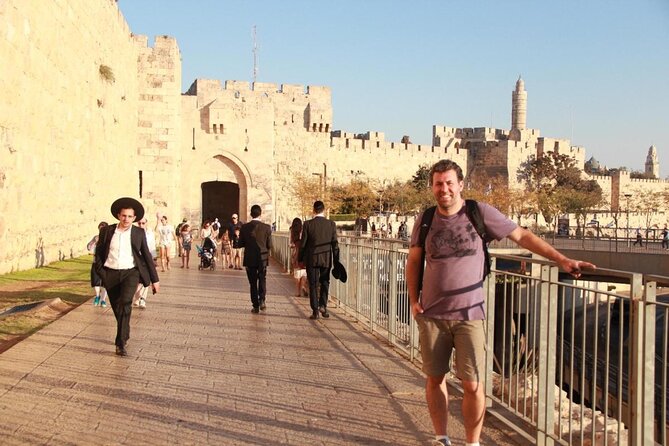
The meeting point is the Tourist Information Center near Omar Ibn Katab Street, close to Jaffa Gate. This is a practical place to begin because Jaffa Gate is the main entrance used by tourists entering the Old City.
The opening stop is brief, only about five minutes, but it gives your guide a chance to set the scene. From here, you move into the Armenian Quarter, the smallest of the Old City’s four quarters. The Armenian presence in Jerusalem reaches back to the fourth century, when Armenia adopted Christianity and Armenian monks settled here.
That short visit matters because it shows that Jerusalem’s identity is not limited to the three best-known sacred sites. The Armenian Quarter offers a look at one of the city’s long-standing Christian communities. Do not expect a major museum visit here. This is a concise orientation stop, best appreciated as part of the wider story.
The Cardo and Broad Wall reveal earlier Jerusalems
The Cardo follows, with about 15 minutes devoted to the ancient main street of Jerusalem under Byzantine rule. It once ran north to south and was lined with columns. The remains help you picture the city as a Roman and Byzantine center rather than only as the setting of biblical events.
This is one of the tour’s most useful historical pauses. Jerusalem has been rebuilt and altered many times, and the Cardo makes those changes visible. You can compare the surviving ancient street plan with the lanes and buildings around you.
Next comes the Broad Wall in the Jewish Quarter. This defensive structure dates to the reign of King Hezekiah. The stop lasts about 15 minutes and adds an older military chapter to the day.
I like this pairing because the Cardo and Broad Wall are not simply famous religious sites. One explains urban life and trade under Byzantine rule. The other points to the city’s defenses in the period of the biblical kingdoms. Together, they help you see Jerusalem as a living city with political and civic needs, not only a place of pilgrimage.
Hurva Synagogue brings history and a 360-degree view
The Hurva Synagogue is one of the more substantial stops, with about 20 minutes set aside. You can see its interior, hear its story, and view the world’s tallest Holy Ark, which holds the synagogue’s Torah scrolls.
The rooftop is a major reason to value this stop. A 360-degree view gives you a chance to orient yourself across the Old City, something that is difficult to do from street level. After walking through enclosed lanes, the open outlook can be a welcome change.
This stop also broadens the religious focus of the day. The Western Wall is the most famous Jewish site on the route, but the Hurva Synagogue offers a different kind of setting, with architecture, worship, and a view across Jerusalem.
The admission ticket is included. That detail matters because this is one of the few stops where an entrance ticket is specifically part of the tour rather than simply a visit to a public area.
More Walking Tours in Jerusalem
- Jerusalem Walking Tour: In the Footsteps of Jesus
★ 4.5 · 67 reviews - Boutique Walking Tour of Jerusalem
★ 5.0 · 64 reviews - Old City of Jerusalem Guided Walking Tour
★ 5.0 · 47 reviews - Jerusalem: The Center of the Universe – Walk the “Holy City” with GaryTheGuide
★ 5.0 · 38 reviews
The Western Wall requires respect and realistic timing
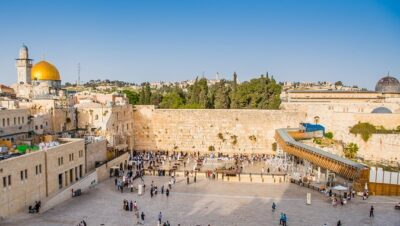
The Western Wall is a retaining wall connected with the Temple Mount, the site of the First and Second Temples. It is a place of prayer and pilgrimage sacred to Jewish people, and it remains one of the most emotionally powerful locations in Jerusalem.
The planned visit lasts about 20 minutes. That is enough to see the site and absorb its importance, but it may not be enough for an unhurried approach to the wall, especially if the area is crowded or the guide needs to keep the group moving. One account specifically says there was not enough time to reach the wall closely, so you should treat this as a guided introduction rather than a guaranteed extended prayer visit.
Dress is especially important here. Men and women must have their shoulders and knees covered at places of worship. A casual outfit that works elsewhere in Jerusalem may not be accepted at the wall or other sacred sites. The supplied information also notes a concern about male participants in shorts and casual shirts being encouraged to approach the wall, so I would take responsibility for your own clothing and follow the rules carefully.
Do not rely on the tour to solve a dress problem at the last minute. Wear long trousers or a long skirt, and a top that covers your shoulders from the start.
Temple Mount and the Golden Menorah
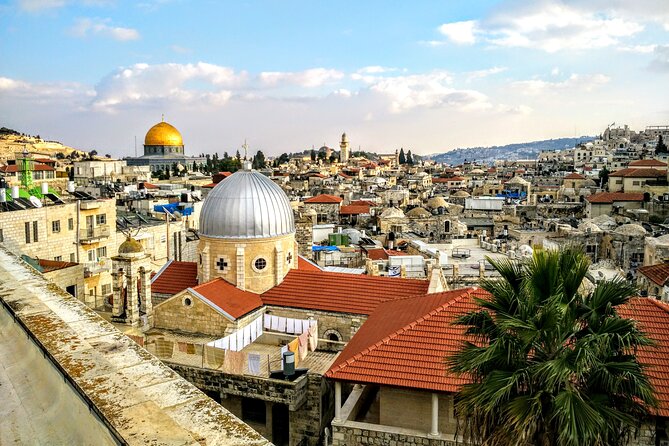
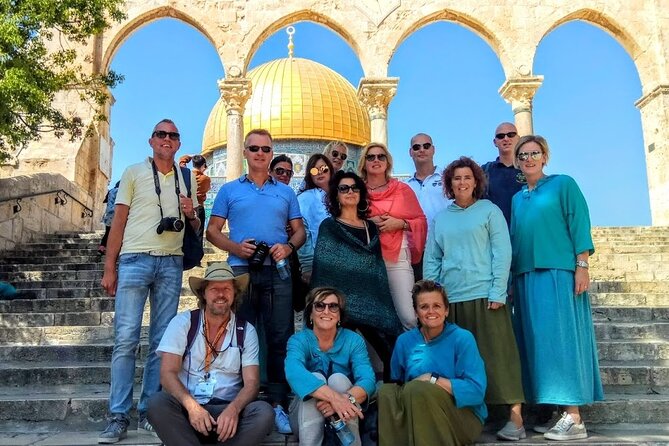
The Temple Mount stop lasts about 35 minutes. This is the raised site associated with the two Jewish Temples and now home to the Dome of the Rock and Al-Aqsa Mosque.
From a historical point of view, this is the point where the interests of Judaism, Christianity, and Islam meet most sharply. Your guide can help connect the religious and political meaning of the site to the rest of the Old City.
The information provided lists the stop but does not promise entry into the Dome of the Rock or Al-Aqsa Mosque. That distinction is important. You should expect to see and discuss the area included in the walking route, but do not book this tour assuming interior access to every building.
The Golden Menorah comes next, with about 15 minutes. It is a replacement based on biblical descriptions and research by the Temple Institute and academic and biblical researchers. The original menorah is described as a seven-lamp gold lampstand used in the tabernacle and later in the Temple in Jerusalem.
This is a compact but distinctive stop. It connects modern religious reconstruction with ancient descriptions, giving you another way to think about how Jerusalem’s past is interpreted in the present.
Via Dolorosa and the Church of the Holy Sepulchre
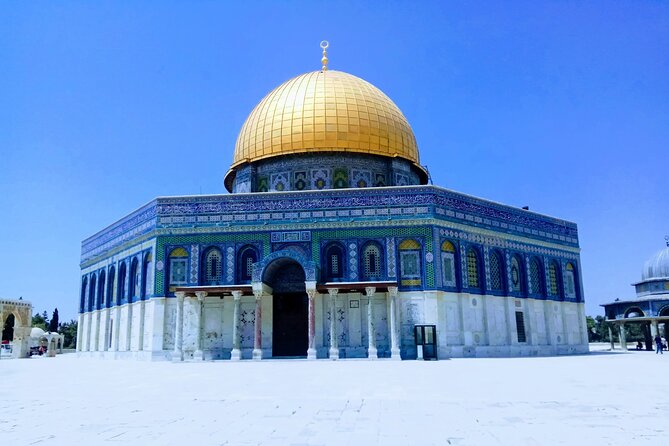
The Way of the Cross, or Via Dolorosa, receives about 30 minutes. Today it functions as a processional route representing the path Jesus took toward crucifixion after being forced onward by Roman soldiers.
The route can be difficult to understand without guidance. It is not a single quiet walkway set apart from the rest of the city. It passes through the Old City, where daily life continues around a route of intense religious meaning. That contrast is part of the experience.
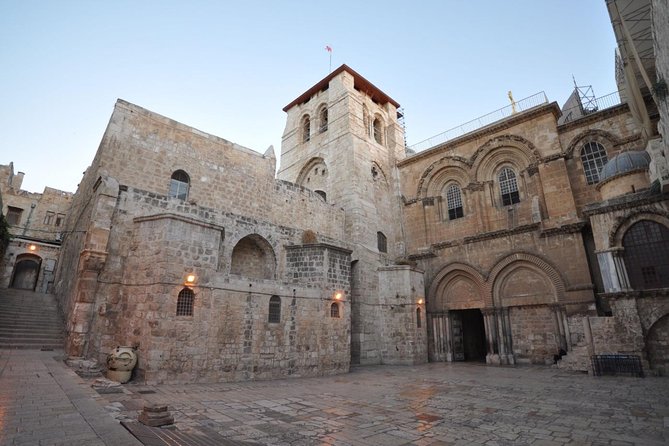
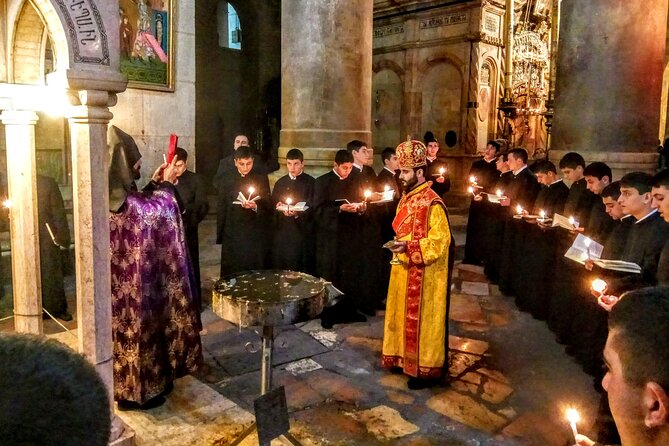
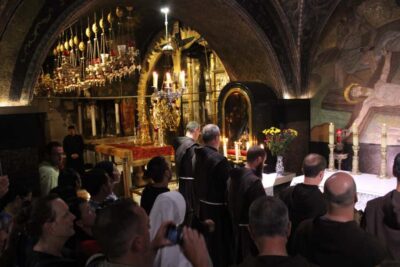
The Church of the Holy Sepulchre is the next major stop, with about 30 minutes. For Christians, it is the most sacred site on the tour and is associated with the crucifixion, burial, and resurrection of Jesus. Golgotha, the place of crucifixion, is inside the church.
Thirty minutes gives you a meaningful introduction, but the church can be complicated to visit. You are seeing a site shared and managed by several Christian communities, with long-standing arrangements governing its use. A guide is valuable here because the building’s importance is not always obvious from its busy interior or from the flow of people moving through it.
As with the Western Wall, the schedule may feel short if you want extended personal time. The strength of the tour is context and coverage. For quiet prayer, detailed photography, or a slow architectural study, you may want to return independently.
Deir Al Sultan adds one final layer of Christian history
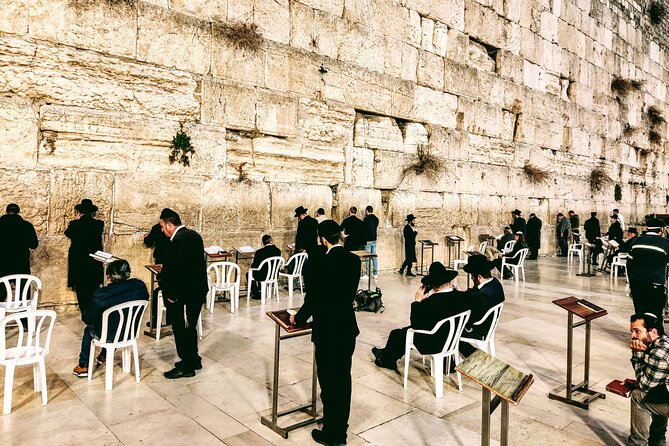
The final listed stop is Deir Al Sultan, a monastery on the roof of the Church of the Holy Sepulchre. The visit lasts about 15 minutes.
Its importance lies partly in the arrangement known as the Status Quo, an understanding between religious communities that dates to the Ottoman period and has governed access and use for more than 200 years. This is a fine example of the unusual systems that keep Jerusalem’s shared holy places functioning.
Deir Al Sultan is not as familiar to first-time visitors as the Church of the Holy Sepulchre itself. Including it gives the tour a less predictable finish and shows that the Old City’s religious story continues above and behind its better-known sites.
The activity ends back at the meeting point. Since the route begins and ends near Jaffa Gate, you can use the location as a useful base for your next Jerusalem plan, though the tour itself does not include transportation beyond walking.
Lunch, coffee, and the real value of $120
At $120 per person, this is not a bargain walking tour in the narrow sense. You are paying for a six-hour guided route, a small group, historical explanation, a restaurant lunch, and tea or coffee at a local cafe.
The food helps justify the price. A long Old City walk is more enjoyable when you do not have to stop the group to search for lunch, compare menus, or work out where to sit. The cafe stop also gives you a chance to rest and talk through what you have seen.
The exact restaurant, meal, and cafe are not specified, so I would not book this expecting a particular dish or a luxury dining experience. Think of the inclusions as practical support for a full morning and afternoon on foot.
The guide is the largest part of the value. Efrat is praised for being friendly, patient, and prepared to answer questions, while Leontine receives high marks for communication, cultural understanding, timing, and the placement of the lunch and coffee breaks. Since guides can vary, your experience may depend on who leads the group that day.
A 4.9 out of 5 score from 83 ratings and a 98 percent recommendation rate point to a strong record. Still, one review objected to political views being brought into the tour. If you prefer a strictly neutral presentation, it is fair to ask questions about history while keeping your own judgment engaged.
Who should take this Jerusalem walking tour?
I would recommend it most strongly to first-time visitors who want a well-organized introduction to the Old City. You see major sites from Jewish, Christian, and Islamic traditions in one day, with enough explanation to connect them.
It also suits you if you prefer a guide who can answer questions rather than a fixed audio route. The small group makes personal interaction more likely, and the praise for Efrat and Leontine suggests that strong guiding is one of the experience’s best features.
This tour may be less suitable if you have mobility limits, dislike long periods on foot, or want to spend an hour or more inside each major religious site. The information says most people can participate, but it does not promise a step-free route or extended time at every stop.
You should also consider your clothing before booking. Knees and shoulders must be covered for both men and women, and refusal of entry is possible if you do not meet the dress code.
The tour is offered with a mobile ticket, confirmation arrives at booking, and free cancellation is available up to 24 hours before the local start time. Changes or cancellations inside that window are not accepted for a refund. Service animals are allowed, and the starting point is near public transportation.
Should you book the Old City tour?
Book this tour if you want to understand Jerusalem’s Old City before exploring it on your own. The strongest reasons are the limited group size, the wide mix of sites, the included lunch and coffee, and the chance to see places such as the Hurva rooftop, Broad Wall, Golden Menorah, and Deir Al Sultan.
I would book it early, since it is commonly reserved about 59 days ahead. Arrive ready to walk, dress for religious sites, and accept that the schedule offers an introduction rather than unlimited time at each stop.
Skip it if you want a slow, private, highly devotional visit or if $120 feels too high for a group walking tour. For most first-time visitors who value context and efficient use of a day, Booqify, Amazing Jerusalem offers a strong way to get your bearings and see the Old City’s main chapters in one carefully packed route.
FAQ
How long does the Old City walking tour last?
The tour lasts approximately six hours and starts at 9:00 am.
Where does the tour begin and end?
It begins at the Tourist Information Center near Omar Ibn Katab Street by Jaffa Gate. The activity ends back at the meeting point.
What is included in the tour price?
The $120 price includes the guided walking tour, restaurant lunch, tea or coffee at a local cafe, and admission to the Hurva Synagogue.
How large is the tour group?
The tour has a maximum of 15 travelers.
What should I wear?
You must cover your knees and shoulders at places of worship and selected museums. This rule applies to both men and women, and entry may be refused if you do not follow it.
Can I cancel for a refund?
Yes. You can cancel up to 24 hours before the experience starts for a full refund. Cancellations or changes made less than 24 hours before the start time are not accepted for a refund.
More Walks through the Old City
- Best seller! Jerusalem old city four quarters tour
★ 5.0 · 123 reviews - Private Tour Jerusalem Old City
★ 5.0 · 118 reviews - Jerusalem Half Day Tour: Holy Sepulchre and Western Wall
★ 4.5 · 80 reviews - City of David and Underground Jerusalem Day Tour
★ 4.5 · 53 reviews
Recently listed in Jerusalem
- West Bank Tour from Jerusalem and Tel-Aviv – Bethlehem & Jericho★ 5.0 · 6 reviews
- Tour of Jerusalem & Dead sea private tour★ 5.0 · 4 reviews
- One-Day Tour to Bethlehem and Jericho★ 5.0 · 2 reviews
- jerusalem classic tour★ 5.0 · 3 reviews
- full day tour Jerusalem price per van up to 6 people★ 5.0 · 8 reviews
- kosher Israel wine tour★ 5.0 · 4 reviews
- Private Silk Painting Workshop in Jerusalem – Create a scarf –★ 5.0 · 4 reviews
- Experience Shabbat With Dinner In Jerusalem★ 5.0 · 5 reviews
Jerusalem Old City Tours, compared.
Best seller! Jerusalem old city four quarters tour
Read our review →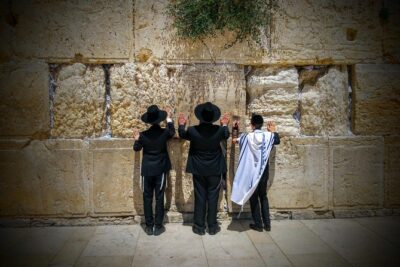
Jerusalem Half Day Tour: Holy Sepulchre and Western Wall
Read our review →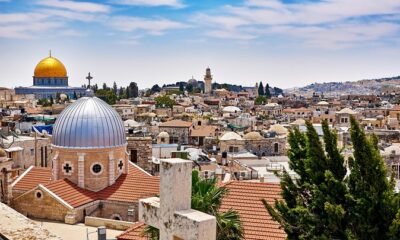
Jerusalem Half-Day Tour from Tel Aviv: Holy Sepulchre and Western Wall
Read our review →
City of David and Underground Jerusalem Day Tour
Read our review →Browse the lists this tour appears in