
Reviewed · FOOD & DRINK
Tel Aviv: Carmel Market Food Tasting Tour “Shuk Hacarmel”
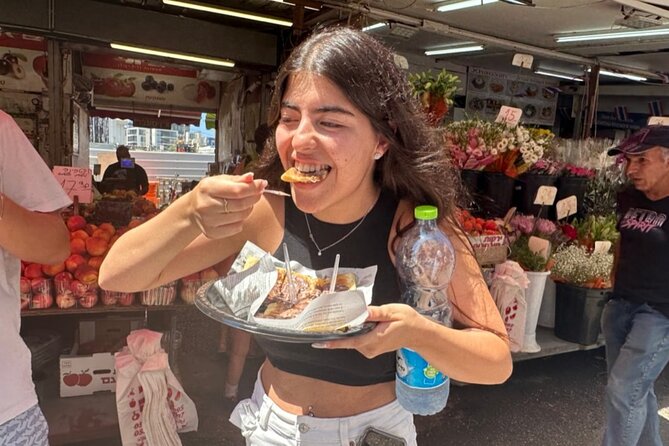
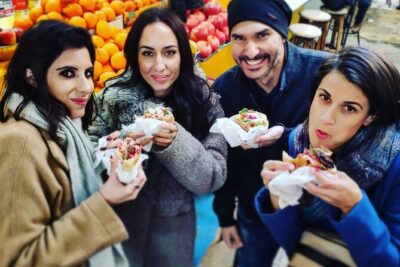
Tel Aviv tastes best at street level. This Carmel Market food tour pairs generous samples with a walk through Shuk Hacarmel, Kerem HaTeimanim, and the food traditions that shaped Israeli cooking. I like the mix of eating and context, especially the chance to try Yemenite malawach, falafel, sabich, hummus, olives, spices, and sweets in one compact outing.
I also like that the tastings are meant to replace lunch, not merely tease your appetite. The guide takes photos and can send them by WhatsApp or Dropbox, and the small maximum of 15 people should make it easier to hear the stories and ask questions. The main point to check is the schedule: the meeting information lists 12:00 pm, while another tour detail says the market experience starts at 11:00, so confirm the exact start time before setting your day around it.
- Generous lunch-sized tastings: The food portions are designed to equal a substantial meal, with no need to plan a separate lunch.
- Yemenite flavor at the source: Malawach and the Kerem HaTeimanim neighborhood add a local angle beyond standard market snacks.
- A short, manageable walk: The route covers about ¾ mile, or 1.2 kilometers, over roughly 90 minutes of walking and food stops.
- Family-run market vendors: The tour visits long-established food sellers and explains how their dishes connect to Jewish communities from North Africa, the Middle East, and Europe.
- Personal photos included: Your guide takes pictures during the outing and can share them through WhatsApp or Dropbox.
- A real market setting: Carmel Market is a working food market, so you get noise, smells, crowds, displays, and daily Tel Aviv life along with your meal.
In This Review
- Why Carmel Market Works Best at Lunchtime
- Meeting in Nahalat Binyamin and Entering the Yemenite Quarter
- Malawach, Falafel, and the First Food Stops
- Family Vendors and the Story Behind Israeli Food
- Kerem HaTeimanim Adds Local Character
- The Unusual Art Quest Stop
- Halva, Baklava, and the Sweet Finish
- Is $79.99 a Fair Price?
- Group Size, Photos, and Weather
- Who Will Enjoy This Carmel Market Tour?
- Should You Book It?
- FAQ
- Where does the Carmel Market food tour start?
- Where does the tour end?
- How long does the experience last?
- What time does the tour start?
- How much does the tour cost?
- Does the food replace lunch?
- What foods are included?
- How far does the group walk?
- How many people can join the tour?
- Are photos included?
- Does the tour operate in bad weather?
- Can I cancel for a full refund?
Why Carmel Market Works Best at Lunchtime
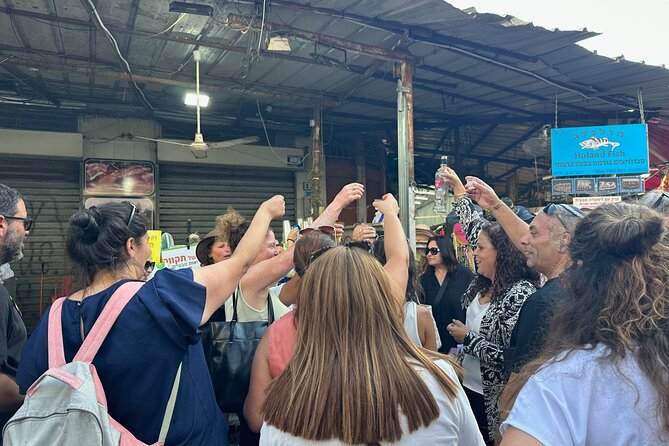
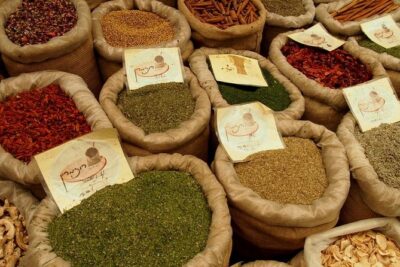
Carmel Market, or Shuk Hacarmel, is Tel Aviv’s largest open-air market. It is not a polished food hall with matching signs and carefully arranged counters. You walk through narrow market lanes lined with produce, baked goods, spices, olives, sweets, and prepared food.
That is exactly why this tour makes sense. A first visit can feel like a sensory pileup: too many smells, too many stalls, and no clear idea what deserves your time. A guide gives the market a shape. Instead of simply wandering past hummus and falafel, you learn how these foods fit into Israeli cooking and how different Jewish communities brought their own customs to the country.
The 11:00 or 12:00 timing is useful because the tastings are intended to replace lunch. You can start the day with a light breakfast, arrive hungry, and treat the tour as your main midday meal. Since the food comes in several portions, you should not expect this to be a small sampling with a restaurant lunch still required afterward.
The tradeoff is that lunch-hour markets can be active and crowded. You may spend part of the tour standing, sharing space with shoppers, and eating in a moving market rather than sitting at a table. I see that as part of the appeal, but it matters if you prefer a quiet, seated meal.
Meeting in Nahalat Binyamin and Entering the Yemenite Quarter
The meeting point is Nahalat Binyamin Street 1 in Tel Aviv-Yafo, with the tour ending back at the same place. The area is near public transportation, which makes this a practical first activity in Tel Aviv or an easy addition to a day already focused on central neighborhoods.
The route takes you toward Kerem HaTeimanim, a small neighborhood known for cozy cafes and traditional Yemenite food. Its name means Yemenite Vineyard, and the tour uses the area to connect food with migration and neighborhood life. The stories here help explain why Israeli cuisine cannot be reduced to one national recipe. It grew from many Jewish communities, plus the Mediterranean ingredients already common in the region.
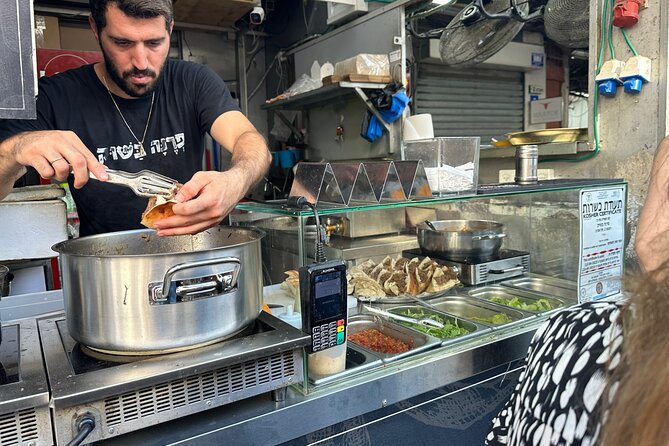
I especially like this part for visitors who want more than a checklist of dishes. Malawach, for example, is a flaky, layered Yemenite Jewish pastry fried until crisp and golden. It is very different from the lighter breads you may associate with a quick market snack, and it gives the tour a clear regional identity from the start.
The route covers only about 1.2 kilometers, so this is not a strenuous walking tour. Still, you should wear comfortable shoes. The issue is not distance but the uneven pace of a market route, with frequent stops, food in hand, and people moving around you.
More food tours in Tel Aviv:
- Carmel Market Tasting Tour – LocaLocal
★ 5.0 · 140 reviews - Tel Aviv Food Tour of the Carmel Market
★ 4.0 · 29 reviews - Carmel Market Tasting Tour
★ 5.0 · 25 reviews
Malawach, Falafel, and the First Food Stops
The food selection begins with some of the best-known flavors of the region, but the value comes from tasting them in a connected sequence. Malawach introduces Yemenite Jewish cooking. Falafel brings you to one of the most familiar Middle Eastern street foods, with crisp chickpea or fava bean patties tucked into warm pita and served with accompaniments.
This is a good setting for falafel because the market gives the dish its natural context. You are not eating an isolated plate in a hotel dining room. You are seeing the ingredients, stalls, breads, pickles, and spices that surround everyday street food.
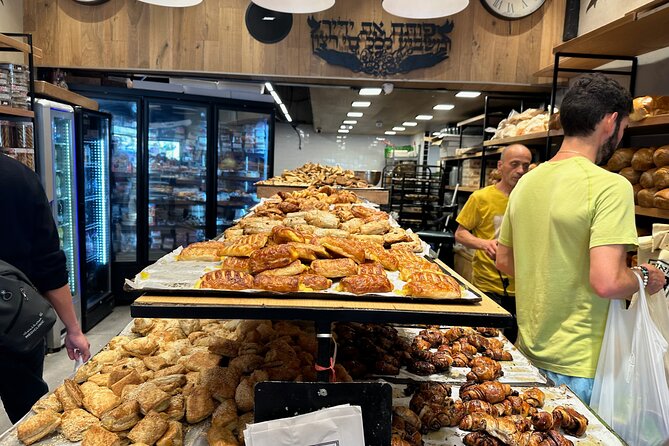
The tour also includes hummus, Syrian olives, sabich, and freshly baked bread. Sabich, generally built around fried eggplant and other fillings, gives you another example of how Jewish communities from the Middle East influenced Israeli food. The inclusion of these dishes helps prevent the tour from becoming a simple falafel crawl.
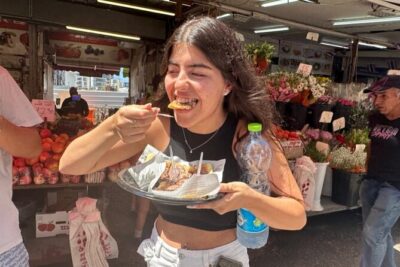
You should arrive ready to eat, but not stuffed. The portions are reported to be generous, and one description specifically notes that the food was enough to leave the group quite full. That is useful information for anyone comparing this with a standard tasting tour, where five or six tiny bites often leave you searching for lunch afterward.
Dietary needs are not specified in the available information, so you should ask about them before booking. The tour includes several foods that may contain wheat, sesame, dairy, eggs, or other common ingredients, but the exact arrangements are not stated.
Family Vendors and the Story Behind Israeli Food
One of the strongest reasons to book a guided market walk is the chance to understand the people and traditions behind the food. The tour stops at family-run vendors that have been operating for generations. That does not turn the market into a museum. It shows you how food traditions survive through working businesses.
Your guide also explains how the market played a part in Tel Aviv’s growth into a multicultural city. That context gives each tasting more weight. A spice stall is not only a place to buy seasoning. A pastry is not just something fried and flaky. Each item reflects movement, adaptation, and the blending of cooking traditions.
A particularly useful detail from the food experience is the attention to visual culture. During the market walk, the guide explains how to identify different cultures through design. That could mean patterns, objects, packaging, or the visual style of goods sold in the market. It gives you something to watch for after the tour, when you return to the market on your own.
Montana is named as one guide who made a strong impression by leading the group directly to food at lunchtime and then explaining the market’s cultural details. Guide quality can shape a food tour, and a licensed local guide is included. Since guides can change, Montana should not be treated as guaranteed for every departure, but her approach suggests the tour can balance eating with interpretation rather than rushing from bite to bite.
Kerem HaTeimanim Adds Local Character
Kerem HaTeimanim is more than a path between the meeting point and the market. The neighborhood is known for traditional Yemenite cuisine and small cafes, giving you a closer look at an older side of central Tel Aviv.
The listed itinerary gives about 30 minutes to this part of the experience. That is enough for an introduction, a few stories, and food-related stops, but not enough for a full neighborhood tour. I would think of it as a compact cultural frame for the market rather than a separate sightseeing excursion.
This stop is especially useful if you have already seen Tel Aviv’s modern center and want to understand how local food traditions fit into the city. It also keeps the tour from focusing only on ingredients. You get a sense of place, neighborhood history, and the relationship between small food businesses and daily city life.
Do not expect a long sit-down visit at each cafe. The tour is built around walking and tasting. If you want a leisurely Yemenite restaurant meal, you would need to arrange that separately.
More Tel Aviv tours worth comparing
- Tel Aviv: Carmel Market Food Tasting Tour “Shuk Hacarmel”
★ 4.0 · 8 reviews - Urban Walking & Food Tour in Tel Aviv
★ 5.0 · 7 reviews - Food & Drink Private Guided Tour in Tel Aviv
★ 5.0 · 3 reviews - Mahane Yehuda Market food tour jerusalem
★ 5.0 · 11 reviews
The Unusual Art Quest Stop
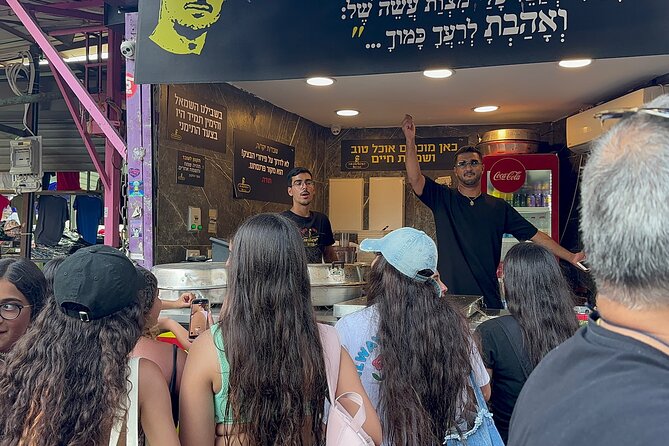
The itinerary also includes Art Quest at Club Allenby 28, described as a place combining contemporary art and nightlife. A 30-minute stop is listed, but the available details do not explain exactly what food or activity takes place there.
That makes this part less predictable than the market and neighborhood sections. I would not book the tour mainly for this stop. Treat it as an additional urban and cultural note within the route, not as a full gallery visit or an evening entertainment experience.
The market remains the clear center of the tour. If you are choosing between this experience and a dedicated art walk, this food tour is the better fit for eating and local food traditions. The Art Quest stop may add variety, but it should not be the deciding factor.
Halva, Baklava, and the Sweet Finish
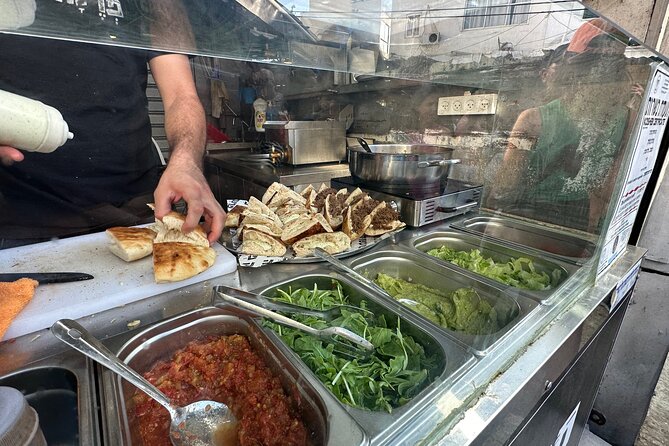
The tour rounds out the savory food with sweet treats such as halva and baklava. These are useful closing tastes because they show another side of the market: dense sesame-based sweets, layers of pastry, nuts, syrup, and displays built to catch your eye.
After hummus, falafel, sabich, bread, and other savory dishes, a sweet finish helps make the meal feel complete. It also gives you a chance to compare textures and ingredients across the market rather than eating variations on one dish.
I would save room for these samples. The food is substantial, and it is easy to fill up early on bread and falafel. A little restraint at the first stops will make the later sweets more enjoyable.
Is $79.99 a Fair Price?
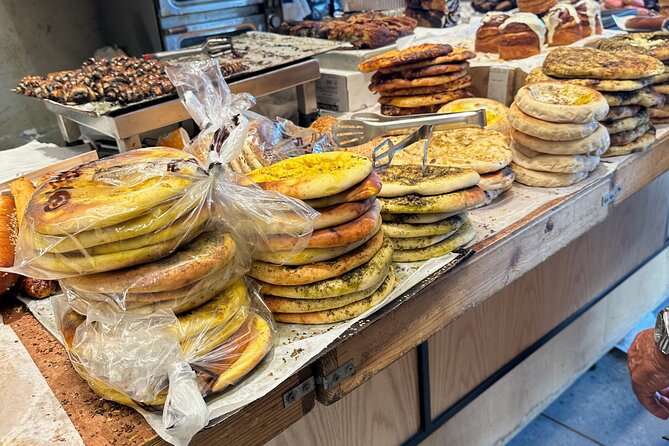
At $79.99 per person, this is not the cheapest way to eat at Carmel Market. You could certainly buy individual snacks for less. The price needs to be judged against what is included: food tastings, a 90-minute walking tour with food stops, a licensed local guide, and photos from the experience.
The strongest value is the combination of a substantial lunch and guided interpretation. You are paying for help choosing what to taste, access to long-established vendors, and an explanation of the cultural connections behind the dishes. If you are new to Tel Aviv or unsure how to approach Shuk Hacarmel, that guidance can save time and make the meal more rewarding.
The value is weaker for confident market eaters who already know where they want to go and prefer to order independently. You will also pay for a group experience, with a maximum of 15 people, rather than a private food crawl.
Group discounts may be available, which could improve the price for families or friends booking together. Additional purchases are not included, so bring money or a payment method if you want to buy extra spices, sweets, bread, or market goods after the official tastings.
Group Size, Photos, and Weather
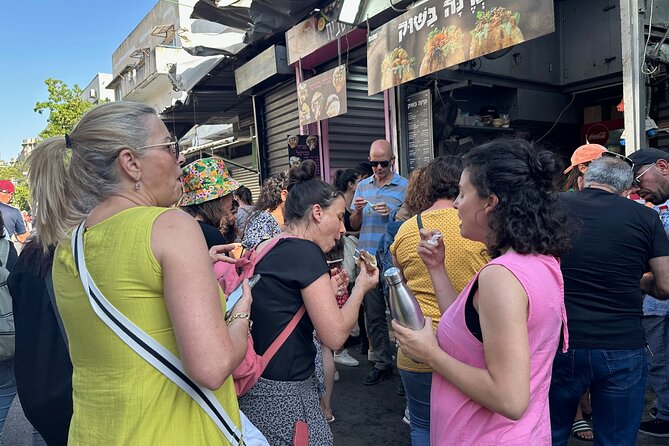
The maximum group size is 15 people. That is large enough to create a social outing but small enough for a guide to keep the group together in market lanes. A group of this size may still need patience at narrow stalls, especially around lunchtime.
Photos are included. The guide takes pictures during the tour and can send them through WhatsApp or Dropbox. This is a nice extra for people who would rather pay attention to the food and surroundings than constantly stop to photograph themselves.
The tour operates rain or shine. That is worth noting because an open-air market feels different in wet weather, and some stalls or walking sections may be less comfortable. Check the forecast and dress accordingly, but do not assume poor weather automatically cancels the outing.
Most people can participate, and the route is relatively short. The available information does not give detailed accessibility specifications, so anyone with mobility concerns should confirm the route and market conditions before booking.
Who Will Enjoy This Carmel Market Tour?
I would recommend this experience to first-time visitors who want a guided introduction to Tel Aviv food without committing to a full-day excursion. It is also a good choice for anyone who likes history served alongside lunch, especially people curious about Yemenite, Middle Eastern, North African, and European Jewish influences on Israeli cuisine.
Food-focused couples, small groups, and families with older children may appreciate the variety and short walking distance. The generous portions also make it practical on a sightseeing day, since you can count the tour as lunch rather than another expense later.
You may want to skip it if you dislike group pacing, cannot eat several common market ingredients, or prefer to sit quietly over a meal. It is also not the right pick if your main interest is shopping, nightlife, or a long formal history tour. The Art Quest stop is brief and the core experience remains food, walking, and market stories.
Free cancellation is available when you cancel at least 24 hours before the start time. Changes or cancellations inside that window are not refunded, and the local cut-off time applies.
Should You Book It?
Book this tour if you want a filling, guided introduction to Carmel Market and you value the story behind what you eat. The generous portions, family-run vendors, Yemenite food, and compact route make it a practical first taste of Tel Aviv.
I would confirm the start time before paying, since the details give both 11:00 and 12:00, and I would arrive hungry enough to treat the tastings as lunch. If you already know Shuk Hacarmel well, the $79.99 price may be harder to justify. For a first visit, though, the guide’s direction and cultural context add real value to a market that can otherwise feel like delicious chaos.
FAQ
Where does the Carmel Market food tour start?
The meeting point is Nahalat Binyamin Street 1 in Tel Aviv-Yafo.
Where does the tour end?
The activity ends back at the meeting point.
How long does the experience last?
The tour lasts about two hours, with approximately 90 minutes of walking and food stops.
What time does the tour start?
The meeting information lists a 12:00 pm start, while another tour detail says the market portion starts at 11:00. Confirm the exact time before your visit.
How much does the tour cost?
The listed price is $79.99 per person.
Does the food replace lunch?
Yes. The tastings are described as equivalent to a substantial lunch portion.
What foods are included?
The food selection includes items such as malawach, falafel, hummus, Syrian olives, sabich, freshly baked bread, spices, halva, and baklava. Exact tastings may vary.
How far does the group walk?
The route covers about ¾ mile, or 1.2 kilometers.
How many people can join the tour?
The maximum group size is 15 people.
Are photos included?
Yes. The guide takes photos during the tour and can send them through WhatsApp or Dropbox.
Does the tour operate in bad weather?
Yes. The tour takes place rain or shine.
Can I cancel for a full refund?
You can cancel for a full refund up to 24 hours before the experience start time. Cancellations or changes made less than 24 hours before the start are not refunded.
More Shopping Tours in Tel Aviv
- Levinsky Market Tasting Tour
★ 5.0 · 8 reviews - Tel Aviv: 2-Hour Jaffa Flea Market Tour with Tastings
★ 4.9 · 8 reviews - Jaffa Flea Market Tasting Tour
★ 5.0 · 3 reviews - Tel Aviv: Carmel Market & Neighborhood Guided Walking Tour
★ 4.7 · 3 reviews
More Market Walks in Tel Aviv
- Tel Aviv: Jaffa & Carmel Market Walking Tour
★ 4.7 · 60 reviews - Tel Aviv: Carmel Market & Tel Aviv Tour with Tastings
★ 3.8 · 36 reviews - Tel Aviv: 2-Hour Carmel Market Tour in English with Lunch
★ 4.8 · 23 reviews - Tel Aviv: 2-Hour Levinsky Market Tour with Full Lunch
★ 4.7 · 10 reviews
Recently listed in Tel Aviv
- Wine Tour North of Israel from Tel Aviv★ 5.0 · 2 reviews
- Private wine tour of Northern Israel★ 5.0 · 4 reviews
- private Full-day Tour to Jericho + the Dead Sea★ 5.0 · 3 reviews
- private Full-Day Tour to Bethlehem and Jerusalem★ 5.0 · 2 reviews
- Jerusalem and Dead Sea Trip from Tel Aviv★ 4.0 · 6 reviews
- Package VIP Skip Line Services in BGN Airport with Transfer to Tel aviv Hotels★ 5.0 · 3 reviews
- Private Transfer from Ben Gurion Airport to Tel Aviv, Bat Yam, Rishon LeZion★ 5.0 · 2 reviews
- VIP Tel Aviv airport Terminal 3 Fast Track Skip Line From plane★ 4.5 · 9 reviews
Food & Drink, compared.


GoKEDEM Golan Heights ATV Action & Wine-Tasting Tour From Tel Aviv
Read our review →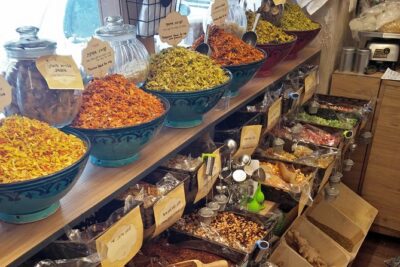
Browse the lists this tour appears in