
Reviewed · FOOD & DRINK
Urban Walking & Food Tour in Tel Aviv
Tel Aviv reveals itself one street at a time. This five-hour walk links the city’s founding stories with its food culture, moving from Habimah Square and Rothschild Boulevard through Bauhaus streets, Neve Tzedek, and the Carmel Market. I like the clear mix of architecture and history, and I like that guide Menno adds personal context about local life rather than simply reciting dates.
The route also gives you a useful first orientation to central Tel Aviv. The main drawback is the amount of walking, especially in warm weather, and the food cost needs careful reading: food and drinks are about $40 per person, despite the tour being described elsewhere as including lunch.
In This Review
- Key points to know before booking
- Starting at Habimah Square and Rothschild Boulevard
- Hotels, unusual buildings, and the first city stories
- Founders, mayors, and the creation of a city
- Neve Tzedek, from small neighborhood to design district
- Carmel Market is the food center of the day
- Kerem HaTeimanim and the final food connection
- What the guide adds to the experience
- Who should book this Tel Aviv walk?
- Should you book it?
- FAQ
- How long does the Tel Aviv walking and food tour last?
- Where does the tour begin?
- Where does the tour end?
- Is lunch included?
- How many people can join?
- Can I cancel for a full refund?
Key points to know before booking
- Rothschild Boulevard explains Tel Aviv’s beginnings: You see the founders’ monument, early neighborhoods, Bauhaus buildings, and the place where the city grew from a small Jewish suburb.
- The walking route is long but well planned: It lasts about five hours and includes stops in Habimah Square, Neve Tzedek, the old railway corridor, Kerem HaTeimanim, and Carmel Market.
- Carmel Market gets the most time: About one hour and 45 minutes are set aside for market food, shopping, cafés, and stalls.
- Menno is a major part of the appeal: His teaching style combines local stories, history, urban development, and restaurant suggestions.
- The tour is private for your group: The listed price is $500 for up to six people, with the description also referring to a maximum of 10 participants.
- Plan for heat and comfortable shoes: The guide can look for shade, benches, and bathrooms, but this is still a serious city walk.
Starting at Habimah Square and Rothschild Boulevard
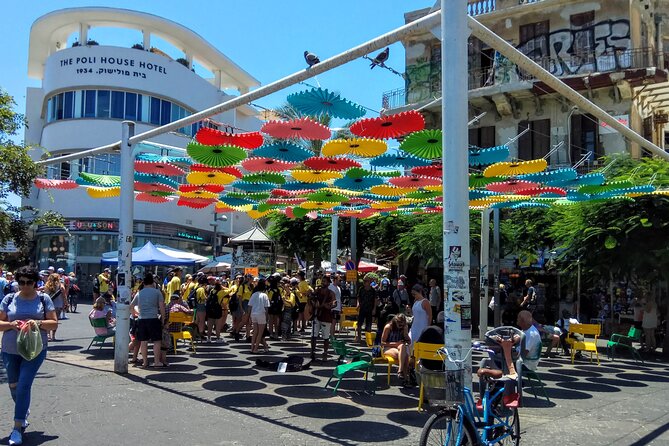
The tour begins at 10 a.m. beside Habimah Theatre, at Tarsat Avenue 2. Habimah Square is a practical starting point because several major streets meet here, including Rothschild Boulevard, Hen Boulevard, Dizengoff Street, and Ben-Zion Boulevard. You get a quick introduction to Tel Aviv’s cultural center before setting off.
The national theatre of Israel sits on the square. It was among the first Hebrew-language theatres, which gives the opening stop more meaning than a quick photo opportunity. The visit here lasts only about 10 minutes, so you should think of it as an orientation rather than a theatre visit.
Rothschild Boulevard then supplies the first major lesson in Tel Aviv’s story. It was the city’s first boulevard and remains one of its best-known streets. The route follows it closely, with short side trips, until reaching Ahuzat Bayit, the first neighborhood of Tel Aviv.
Look upward as you walk. Many of the older buildings use Bauhaus or International style, with clean lines and relatively plain façades. Together, they form part of the White City, the architectural identity for which central Tel Aviv is known. The value here is not just seeing attractive buildings. You begin to understand how a young city developed its own look.
The tour allows about 30 minutes for this section. That is enough for an explanation and several stops, but not enough for a slow architectural survey of every building. If Bauhaus design is your main interest, listen closely and ask questions. You will gain a useful overview, not a specialist architecture lecture.
More Walking Tours in Tel Aviv
- Walking Tour of Akko (Half-day)
★ 5.0 · 84 reviews - Tel Aviv: Jaffa Half-Day Walking Tour
★ 4.5 · 70 reviews - Tel Aviv: Florentin Saturday Walking Tour
★ 3.5 · 65 reviews
Hotels, unusual buildings, and the first city stories
Near Nachmani Street, King Albert Square brings two sharply different buildings into view. The Norman Hotel represents polished boutique design, while Pagoda House has an eclectic appearance that draws the eye immediately. The stop lasts only five minutes, so the guide’s explanation matters more than the time spent looking.
Beit Levin follows, with the nicknames The Castle and the KGB House. Those names give the building an air of mystery, and the guide explains why they are used. This is one of the route’s smaller discoveries, useful because it shows how Tel Aviv’s buildings collect local stories over time.
On Yehuda Ha-Levi Street, you see the location of a station connected with the new Tel Aviv light rail. The stop takes about five minutes. It is a reminder that this is not a preserved old town. Tel Aviv keeps changing, and new transport projects are being placed alongside early 20th-century streets.
The Great Synagogue is another quick but worthwhile stop. Its name suggests a grand landmark, yet it can be easy to pass without noticing. The building was planned by Tel Aviv’s founders but completed years after their original neighborhood was built. That contrast between intention and delay helps explain the city’s uneven development.
Founders, mayors, and the creation of a city
Back on Rothschild Boulevard, the Founders Monument and Fountain marks an important civic story. Jewish families contributed money to build a new modern neighborhood, which later became Tel Aviv. The monument gives you a physical place to connect the city’s origin with private initiative and community effort.
The Meir Dizengoff statue adds a personal face to that story. Dizengoff was Tel Aviv’s first mayor, and the statue shows him on horseback in front of his house. The location also carries national importance. David Ben Gurion declared the new Jewish state in 1948 at this house, after a Jewish state had been absent for 2,000 years.
This is one of the strongest history sections because the stories are tied to ordinary city streets rather than isolated museum displays. I particularly like the way the route links local government, city planning, and national history in a small area.
Next comes Migdal Shalom Tower, described as the first skyscraper in the Middle East. It occupies the location of HaGymnasia, the first Hebrew high school. The building gives you a sharp change of scale: early low-rise Tel Aviv gives way to a tall modern structure.
At Herzl Street 2, the house of Akiva Weiss brings the founding story back to one individual. Weiss initiated the building of Tel Aviv. Nearby is a statue of Alfred Dreyfus, the Jewish captain in the French Army whose trial became a major example of injustice and antisemitism. The Dreyfus Affair influenced Theodor Herzl, whose political work helped shape the modern movement for a Jewish state.
The stop is brief, about five minutes, but the subject is large. I would not expect a full explanation of Herzl or the Dreyfus Affair here. Instead, you get a useful bridge between European Jewish history and the creation of Tel Aviv.
Neve Tzedek, from small neighborhood to design district
Neve Tzedek was the first small Jewish neighborhood outside Jaffa’s walls in the 19th century. Other small neighborhoods followed, each connected with different Jewish social and ethnic groups. Today, the name Neve Tzedek is used for the wider area.
The route passes more than a century-old houses and synagogues. Many streets now contain design shops, clothing boutiques, craft stores, cafés, and restaurants. This is an appealing part of the walk because the low-rise setting still gives you a sense of the older neighborhood, even as modern businesses have changed its character.
The tour spends about 20 minutes here. That is enough to see the contrast between old homes and newer commercial life. It is not enough to browse the shops at leisure, so save your shopping for another visit if you want to linger.
Aharon Chelouche House adds a less familiar part of the immigration story. Aharon Chelouche arrived in the Holy Land in a Mizrahi immigration wave, decades before later Jewish immigration movements were assigned numbered labels. He paid for the land called Neve Tzedek and built the first house there with a private synagogue.
That detail is valuable because it broadens the story beyond the better-known European Jewish founders. Tel Aviv’s early population was not a single group, and this stop gives you a direct example of Mizrahi participation in the city’s beginnings.
Park HaMesila follows the old Ottoman railway route. The former rail corridor has been turned into an urban park connecting the beach with central Tel Aviv. The red line of the light rail will run under the park. This short stop is mainly about urban planning and reuse, showing how the city is adapting old infrastructure for modern public space.
At the Suzanne Dellal Centre, former school buildings have been restored around a picturesque piazza. The complex occupies the ruins of the Alliance School for Boys and the Yechiely Girls School, both from 1908. It is now home to the Batsheva Dance Company and Inbal Dance Theater.
The stop lasts only five minutes, but the site rewards a careful look. You see education, preservation, dance, and neighborhood renewal in one place. The route does not schedule a performance, so treat it as an architectural and cultural stop rather than a theatre visit.
More food tours in Tel Aviv:
- Carmel Market Tasting Tour – LocaLocal
★ 5.0 · 140 reviews - Tel Aviv Food Tour of the Carmel Market
★ 4.0 · 29 reviews - Carmel Market Tasting Tour
★ 5.0 · 25 reviews - Levinsky Market Tasting Tour
★ 5.0 · 8 reviews
Carmel Market is the food center of the day
The Carmel Market section takes about one hour and 45 minutes, by far the longest stop. This is where the tour changes from city orientation to food and street life.
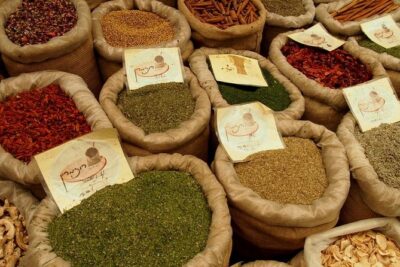
Carmel Market sells a wide range of goods, from vegetables, spices, and clothing to electronics. It also has cafés, bars, restaurants, and chef-run food stalls. The market is not only a place to eat. It is a working commercial center, and the mixture of daily shopping and newer food businesses gives the area much of its character.
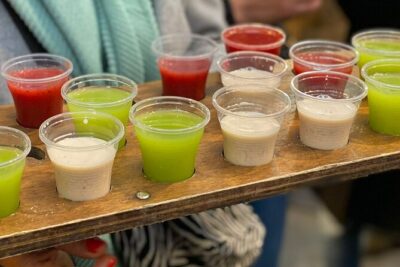
The food tastings are described as varied and filling. You should expect enough food to make this more than a snack stop, though the exact dishes can depend on what is available that day. Complimentary tea or coffee is included in the tour details, while food and drinks are estimated at about $40 per person.
This cost deserves attention. For a private group of up to six, the listed tour price is $500, before the food allowance. That works out to about $83 per person if six people share the base price, or about $125 per person for a group of four. Add roughly $40 per person for food and drinks, and the total becomes a substantial spend.
The value depends on what you want. If you only need directions to Carmel Market, this is expensive. If you want a private guide to connect the market with Tel Aviv’s founding, immigration, architecture, and food culture, the price is easier to defend. A private group also lets you ask questions and set a comfortable pace within the planned route.
The market is also the best place to use Menno’s local suggestions. His guidance includes bars and restaurants worth considering for the rest of your stay. That practical advice can be as useful as the tasting itself, especially if this is your first time in Tel Aviv.
Kerem HaTeimanim and the final food connection
The tour finishes in Kerem HaTeimanim, a poor neighborhood created for Jewish immigrants from Yemen in the early 19th century. The original tin shacks and wooden houses have disappeared, but the narrow streets and ground-level homes remain.
The neighborhood is closely tied to Carmel Market. Yemeni immigrants helped start the market that grew into Tel Aviv’s largest. The final walk makes that connection clear: the food center is not simply a modern attraction, but part of a much older neighborhood story.
You finish at Coffee at the Market, at HaCarmel Street 33, beside Carmel Market. This is convenient if you want to continue eating, shopping, or exploring on your own. It also means you do not need to return to Habimah Square after five hours on foot.
What the guide adds to the experience
The guide is Menno, and his strongest contribution is the combination of history, architecture, urban development, and practical local advice. His enthusiasm for Tel Aviv comes through clearly, and his explanations are described as easy to follow rather than academic.
That matters on a route with many five-minute stops. A building such as the Great Synagogue or Beit Levin could pass quickly without context. A good guide turns those brief looks into connected stories.
Menno also pays attention to the physical demands of the day. On hot walks, he looks for shaded places, bathrooms, and benches. That is helpful, but you should still bring water, wear comfortable shoes, and dress for the weather. The experience requires good weather and may be canceled if conditions are poor.
The group format is another advantage. The activity is private, so only your group participates. The listed price covers up to six people, while the tour information also refers to a cap of 10. If your party is larger than six, confirm the exact pricing and group arrangement before paying.
Who should book this Tel Aviv walk?
I would choose this tour for a first morning in Tel Aviv, especially if you want a quick mental map of central neighborhoods. The route gives you enough history to understand the city, enough architecture to recognize its main styles, and enough food time to learn how the market works.
It suits couples, families, and small groups who prefer a private guide. It is also a good fit if you enjoy asking questions about politics, immigration, city planning, and local restaurants rather than simply checking off landmarks.
You may want another option if you dislike long walks, need a slow sightseeing pace, or want a food tour with the meal fully included in the advertised price. The route has many short stops, but the total distance and heat can still be tiring.
The tour also gives only a brief look at each landmark. You will not visit the inside of every building, attend a dance performance, or spend hours shopping in Neve Tzedek. Its strength is the connected story, not extended time at individual attractions.
Should you book it?
Book this experience if you want Tel Aviv explained as a living city, not just a list of sights. The route connects the White City, early Jewish neighborhoods, Yemeni immigration, national history, modern transport, and Carmel Market in one well-packed morning.
The strongest reasons to book are Menno’s personal, enthusiastic guiding style, the varied food section, and the private format. Before booking, budget the extra food cost, prepare for heat, and make sure your group is happy with several hours of walking.
For six people sharing the $500 fee, the base price is easier to justify. For two people, it is a premium experience. I would recommend it most strongly as a first-day orientation for a small group that values context and local guidance more than saving every dollar.
FAQ
How long does the Tel Aviv walking and food tour last?
The tour lasts approximately five hours. It begins at 10 a.m. and ends at Carmel Market.
Where does the tour begin?
The meeting point is Habimah Theatre, at Tarsat Avenue 2 in Tel Aviv-Yafo.
Where does the tour end?
The tour ends at Coffee at the Market, at HaCarmel Street 33. You finish in the Carmel Market area.
Is lunch included?
Food and drinks are estimated at about $40 per person. The tour details also mention complimentary tea or coffee, so confirm the exact food arrangement when booking.
How many people can join?
The listed price is $500 per group for up to six people. The tour description also says groups are capped at 10 participants, and the activity is private for your own group.
Can I cancel for a full refund?
Yes. You can cancel at least 24 hours before the local start time for a full refund. Cancellations or changes made less than 24 hours before the start time are not accepted, and poor weather may lead to a different date or a full refund.
More Food in Tel Aviv
- Tel Aviv: Carmel Market Food Tasting Tour “Shuk Hacarmel”
★ 4.0 · 8 reviews - Tel Aviv: Carmel Market Food Tasting Tour “Shuk Hacarmel”
★ 5.0 · 5 reviews - Food & Drink Private Guided Tour in Tel Aviv
★ 5.0 · 3 reviews - Mahane Yehuda Market food tour jerusalem
★ 5.0 · 11 reviews
Recently listed in Tel Aviv
- Wine Tour North of Israel from Tel Aviv★ 5.0 · 2 reviews
- Private wine tour of Northern Israel★ 5.0 · 4 reviews
- private Full-day Tour to Jericho + the Dead Sea★ 5.0 · 3 reviews
- private Full-Day Tour to Bethlehem and Jerusalem★ 5.0 · 2 reviews
- Package VIP Skip Line Services in BGN Airport with Transfer to Tel aviv Hotels★ 5.0 · 3 reviews
- Jerusalem and Dead Sea Trip from Tel Aviv★ 4.0 · 6 reviews
- VIP Tel Aviv airport Terminal 3 Fast Track Skip Line From plane★ 4.5 · 9 reviews
- Private Transfer from Ben Gurion Airport to Tel Aviv, Bat Yam, Rishon LeZion★ 5.0 · 2 reviews
Food & Drink, compared.




GoKEDEM Golan Heights ATV Action & Wine-Tasting Tour From Tel Aviv
Read our review →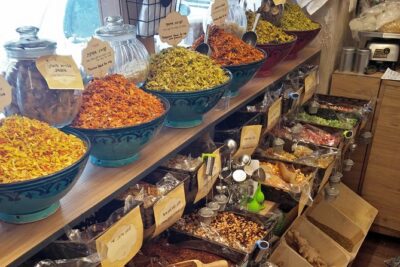
Browse the lists this tour appears in