Reviewed · MARKETS
Private Tour to the Culinary World of Jerusalem Market
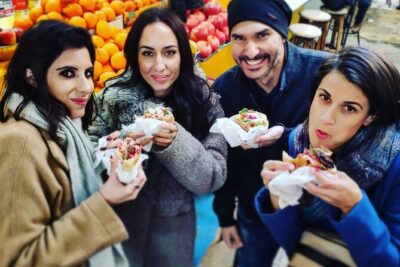
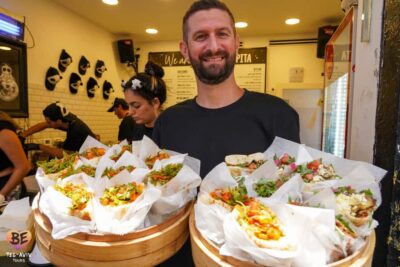
Come hungry for Jerusalem’s story. This two-hour private tour of Mahane Yehuda Market connects food with migration, faith, family, and modern Israeli life, rather than treating the market as a simple place to browse. I like the mix of six to eight tastings and the chance to trace flavors from Yemen, Greece, Europe, and other parts of the Jewish world.
I also like the personal angle offered by guide Nissim Slama, who combines market history with conversation about life in Jerusalem. The main drawback is the price: at $183 per person for two hours, this is a serious splurge, especially since shopping is not included. You are paying for a private guide, a focused food route, and cultural context, not just snacks.
In This Review
- Key points at a glance
- Why Mahane Yehuda works so well for a food tour
- Meeting the market at the mural
- Six to eight tastings across the Jewish world
- Food as a map of Jerusalem’s people
- A private tour changes the pace
- What the two-hour route can and cannot do
- Who will get the most from this experience
- Practical value at $183 per person
- My take on Nissim Slama’s guiding style
- Should you book this Mahane Yehuda food tour?
- FAQ
- Where does the tour meet?
- How long does the tour last?
- How much does the tour cost?
- How many tastings are included?
- Are market purchases included?
- Which languages are available?
- Is this a private group experience?
Key points at a glance
- Six to eight tastings turn a short visit into a proper introduction to the market’s food culture.
- Mahane Yehuda’s Jewish world connection explains how Yemenite, Greek, European, and other traditions shaped Israeli cooking.
- Nissim Slama leads the experience in English, French, or Hebrew.
- A private group allows the tour to focus on your questions, pace, and interests.
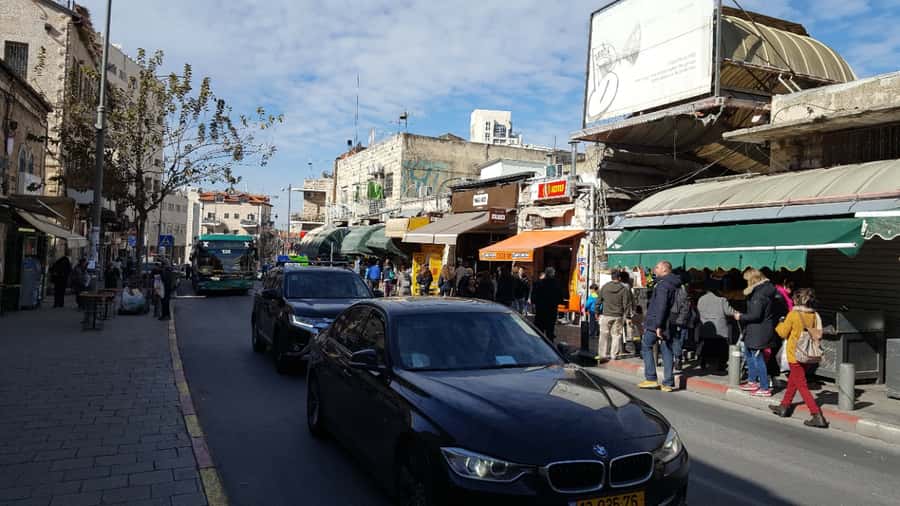
- The meeting point is in front of the mural, making the start fairly easy to identify.
- The tour lasts two hours, so it works well as a first taste of the shuk, but not as a full shopping expedition.
Why Mahane Yehuda works so well for a food tour
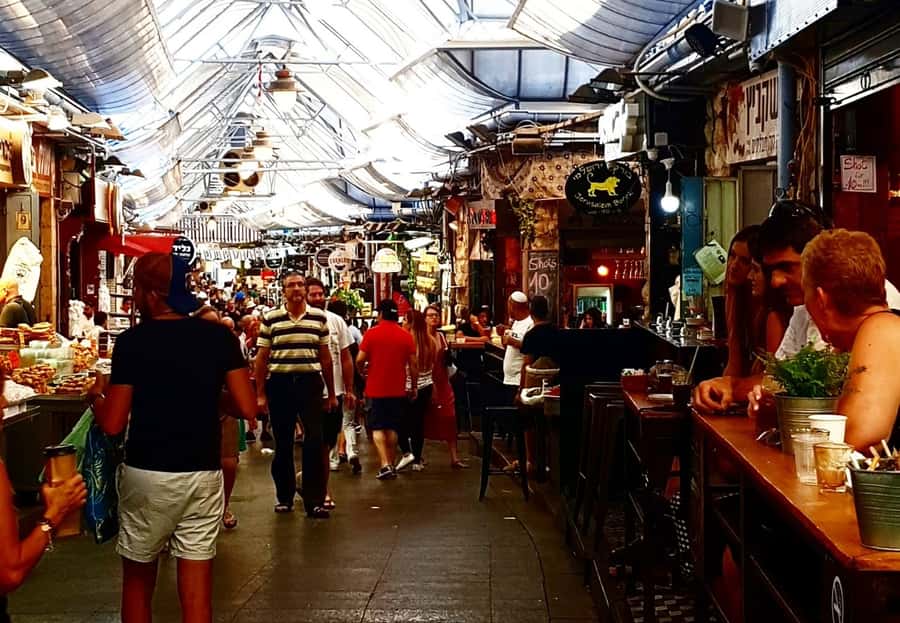
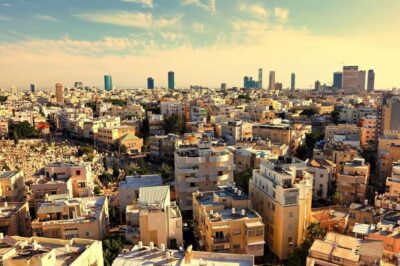
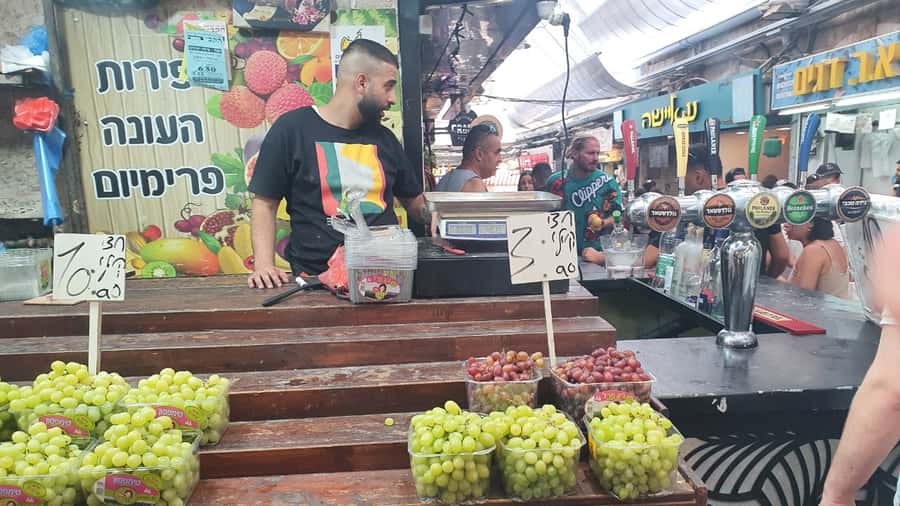
Mahane Yehuda is Jerusalem’s central market, but it changes character depending on how you use it. During the day, it is a place for fruit, vegetables, prepared foods, and everyday shopping. Later, some parts of the market become places to eat and go out.
That mix gives the market more meaning than a line of food stalls. You are seeing a working market and a social center at the same time. The tour uses food as a way to explain how Jerusalem’s people and traditions came together.
I find that approach more useful than simply being handed a list of dishes. A market can be full of color and noise, yet still leave you wondering what any of it means. Here, the guide explains the internal culture of the shuk and the stories connected to its shops.
The focus is modern Israeli cuisine. You will learn how it grew from older Jewish cooking traditions carried by communities from different parts of the world. That makes the tasting route a small history lesson, but one you can eat.
More Private Tours in Jerusalem
- Private Tour Jerusalem Old City
★ 5.0 · 118 reviews - JERUSALEM private tour with ELAD VAZANA – Life in Israel & Palestine Then & Now
★ 5.0 · 115 reviews - Palestine Revealed: 2-Day Private Tour from Jerusalem
★ 5.0 · 110 reviews
Meeting the market at the mural
The meeting point is in front of the mural. That is the practical starting detail you need, since the market has plenty of entrances, signs, and passing foot traffic.
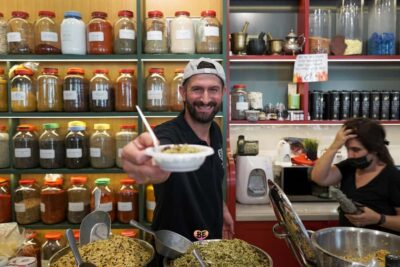
Your guide is Nissim Slama, a tour guide and lecturer who leads the tour in English, French, or Hebrew. Since this is a private experience, the group is not combined with strangers. That matters in a market, where a smaller group can make it easier to hear explanations and ask questions.
The tour begins with the story of the place and its shops. You are not simply taken from one bite to the next. The aim is to understand how the market functions and how its food reflects Jerusalem’s people.
I would arrive ready to listen before eating. The first part sets up the rest of the tour, helping you understand why a dish from one Jewish community belongs in the same culinary story as food from another.
Six to eight tastings across the Jewish world
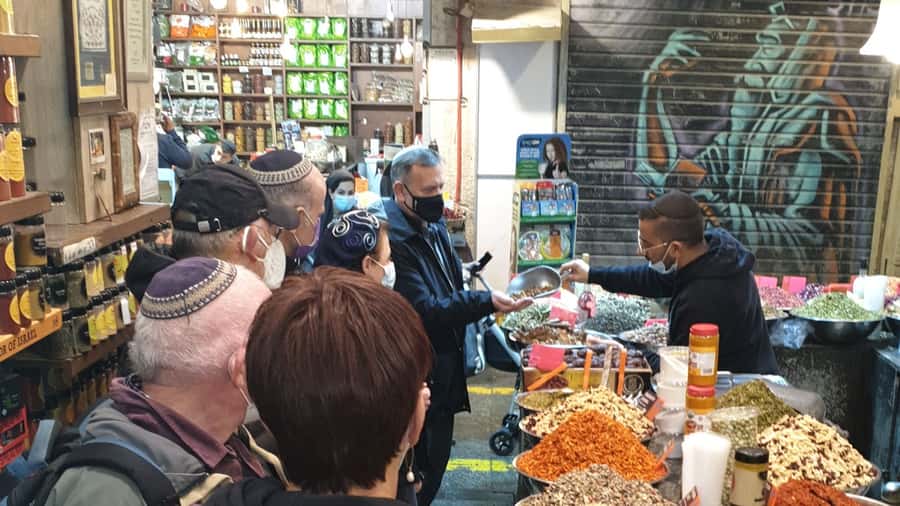
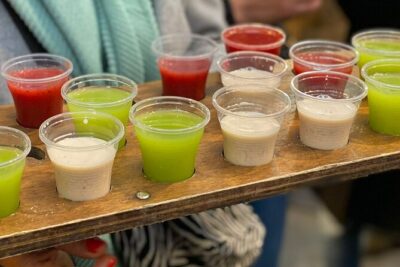
The core of the experience is six to eight tastings. The exact foods are not specified, and that is worth keeping in mind. You should expect a selection of market specialties rather than a fixed menu you can study in advance.
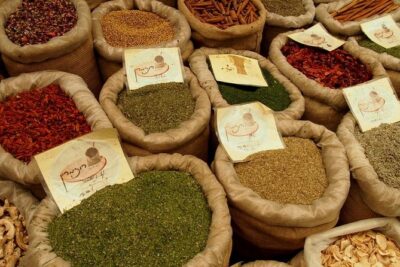
The route travels through food traditions associated with Yemen, Greece, Europe, and other parts of the Jewish world. This is the tour’s strongest idea. Instead of presenting Israeli cooking as one single tradition, it shows how many communities contributed techniques, ingredients, and habits.
A Yemenite influence may point you toward one set of flavors and cooking customs. A Greek or European connection may tell a different story about where Jewish families lived and what they carried with them. The point is not only to taste separate cuisines. It is to see how those traditions became part of a newer Israeli style.
That makes each sample more useful. You can ask what community or tradition it represents, how it fits into Jewish cooking, and how it changed in Jerusalem. I like food tours that give you questions to take with you, and this one is built around them.
The tastings are also described as ample. You should not plan this as a light nibble between meals. The practical advice is simple: eat lightly beforehand and arrive hungry. Six to eight generous samples over two hours can function as a substantial meal, depending on what is served.
Because the exact tasting list is not supplied, I would not book this expecting one particular pastry, sandwich, or dessert. Book it for variety, explanation, and the chance to try market specialties chosen by the guide.
Food as a map of Jerusalem’s people
The most valuable part of the tour is the connection between food, culture, mentality, and history. Those ideas can sound abstract in a museum, but the market gives you something concrete to hold, smell, and taste.
A recipe can show how a community adapted to a new place. A shop can hint at which foods remained important across generations. A prepared dish can reveal how older Jewish traditions were changed into modern Israeli cuisine.
That connection also helps explain Jerusalem itself. The city is not presented only through monuments or religious sites. You get a look at the people who shop, cook, sell, and eat here.
Nissim also brings conversation about life in Jerusalem into the experience. That personal element is important. A market tour can tell you dates and facts, but a conversation about daily life helps you see the city as a lived-in place.
I would use the private format to ask direct questions. You might want to ask how the market has changed, how its shops developed, or how old Jewish food traditions relate to the food being sold today. The two-hour limit means you will not cover everything, but you can make the visit more personal.
More market walks in Jerusalem:
- Mahane Yehuda Market food tour jerusalem
★ 5.0 · 11 reviews - Private Market Culinary Tour in Jerusalem
★ 5.0 · 4 reviews - Carmel Market Tasting Tour – LocaLocal
★ 5.0 · 140 reviews - Tel Aviv: Jaffa & Carmel Market Walking Tour
★ 4.7 · 60 reviews
A private tour changes the pace
Private touring is the main reason this experience costs more than a standard group food walk. You are not paying only for the food. You are paying for a guide who can shape the conversation around your group and keep the route focused.
That is useful for families, couples, and small groups with different interests. If one person wants history, another wants food, and another wants to understand modern Jerusalem, a private guide can address all three without following a fixed group discussion.
It also gives you more room to ask questions while standing near a shop or tasting. In a public market, those moments can pass quickly. A private tour lets you spend more attention on the story behind the food.
The tradeoff is clear. $183 per person is high for two hours, even with six to eight tastings. If you mainly want to sample inexpensive market food, you can spend less by exploring on your own. If you want interpretation, structure, and a guide focused on your group, the price becomes easier to defend.
The value is strongest when you care about context. It is weaker if you already know the market well and simply want to shop or eat at your own pace.
What the two-hour route can and cannot do
Two hours is long enough for a purposeful introduction. You can learn the market’s story, visit shops, taste several specialties, and discuss the links between Jewish communities and Israeli cooking.
It is not long enough to know every corner of Mahane Yehuda. You should not expect a complete market survey, an extended shopping trip, or a full account of every culinary tradition connected to Jerusalem.
That limitation is not necessarily a problem. A shorter route can help you get your bearings before returning on your own. You may finish with a clearer idea of what interests you and which parts of the market deserve more time.
Shopping is specifically not included. This keeps the tour focused, but it also means you should budget separately if you want to buy fruit, prepared food, or other market goods during or after the visit.
The market’s evening party atmosphere is part of its identity, but the tour’s available starting times are not stated. Check the schedule before booking if you want a particular mood. A daytime visit may emphasize the working market, while a later start could feel different, but you should confirm the actual time rather than assume.
Who will get the most from this experience
I would recommend this tour to you if you enjoy food with a story attached. It suits first-time visitors who want a structured introduction to Mahane Yehuda and people who have already visited but felt they were only seeing the surface.
It is also a good match for anyone curious about Jewish food traditions across countries. The Yemen, Greek, European, and broader Jewish connections give the tour a clear theme instead of a random sequence of bites.
Families can benefit from the private format, especially if a child or older relative needs a more flexible conversation. The experience is also well suited to people who prefer talking with a guide rather than reading signs or following a large group.
You may want to skip it if your priority is shopping. The tour includes the story of the shops, but purchasing goods is not part of the price. You may also find the cost hard to justify if you are looking only for a quick lunch.
Since the tastings are ample, this is not ideal for someone who wants only a small snack. Come ready for food, conversation, and a fairly concentrated look at one market.
Practical value at $183 per person
At $183 per person, the tour belongs in the special-experience category. The duration is short, but the private guide and food tastings add value that you would not get from simply walking through the market.
I would judge the price against your larger Jerusalem plans. If this is your only food-focused activity, the tour can provide a useful introduction to local eating and Jewish culinary traditions. If you already have several expensive food experiences booked, the cost may feel harder to absorb.
The number of tastings helps. Six to eight samples is a substantial amount for a two-hour visit, especially when the portions are ample. Still, the food alone should not be your reason for booking. Market prices are usually lower when you buy directly, so the guide’s interpretation is the key part of the value.
The private format also makes the price easier to understand for a group sharing the experience. You get direct access to Nissim, a route built for your party, and the chance to spend your time on questions that interest you.
Free cancellation up to 24 hours before the start gives you some flexibility. You can also reserve now and pay later, which helps if you are still arranging a Jerusalem itinerary.
My take on Nissim Slama’s guiding style
Nissim Slama is listed as a tour guide and lecturer, and the experience places strong weight on explanation. Expect the market’s history, the story of individual shops, and discussion of how food connects to life in Jerusalem.
The best part of that setup is the personal perspective. The tour is not limited to formal facts about ingredients or dates. It also opens a conversation about the city and the people who live there.
That matters because Mahane Yehuda can be easy to experience only as a backdrop for photographs. Nissim’s role is to give the stalls, food, and market culture a human frame.
You should take advantage of that by asking questions. A private tour is most useful when you participate, rather than treating it as a silent tasting line.
Should you book this Mahane Yehuda food tour?
Book it if you want a private, food-led introduction to Jerusalem’s Jewish cultures, and if $183 per person fits your budget. The combination of six to eight tastings, market history, and conversation with Nissim Slama gives the tour more substance than a basic snack stop.
I would especially choose it early in a Jerusalem visit. Two hours can help you understand the market before you return independently, and the food connections may give extra meaning to dishes you encounter elsewhere.
Skip it if you mainly want to shop, keep costs low, or choose every bite yourself. For everyone else, the strongest reason to go is not simply eating at Mahane Yehuda. It is learning how food carried across the Jewish world became part of modern Jerusalem.
FAQ
Where does the tour meet?
The meeting point is in front of the mural at Mahane Yehuda Market.
How long does the tour last?
The tour lasts two hours.
How much does the tour cost?
The listed price is $183 per person.
How many tastings are included?
The tour includes between six and eight tastings.
Are market purchases included?
No. Shopping in the market is not included in the tour price.
Which languages are available?
The live guide is available in English, French, and Hebrew.
Is this a private group experience?
Yes. The tour is for a private group.
More Shopping Tours in Jerusalem
- Tel Aviv: Carmel Market & Tel Aviv Tour with Tastings
★ 3.8 · 36 reviews - Tel Aviv Food Tour of the Carmel Market
★ 4.0 · 29 reviews - Carmel Market Tasting Tour
★ 5.0 · 25 reviews - Tel Aviv: 2-Hour Carmel Market Tour in English with Lunch
★ 4.8 · 23 reviews
Recently listed in Jerusalem
- West Bank Tour from Jerusalem and Tel-Aviv – Bethlehem & Jericho★ 5.0 · 6 reviews
- Tour of Jerusalem & Dead sea private tour★ 5.0 · 4 reviews
- One-Day Tour to Bethlehem and Jericho★ 5.0 · 2 reviews
- jerusalem classic tour★ 5.0 · 3 reviews
- full day tour Jerusalem price per van up to 6 people★ 5.0 · 8 reviews
- kosher Israel wine tour★ 5.0 · 4 reviews
- Private Silk Painting Workshop in Jerusalem – Create a scarf –★ 5.0 · 4 reviews
- Experience Shabbat With Dinner In Jerusalem★ 5.0 · 5 reviews