
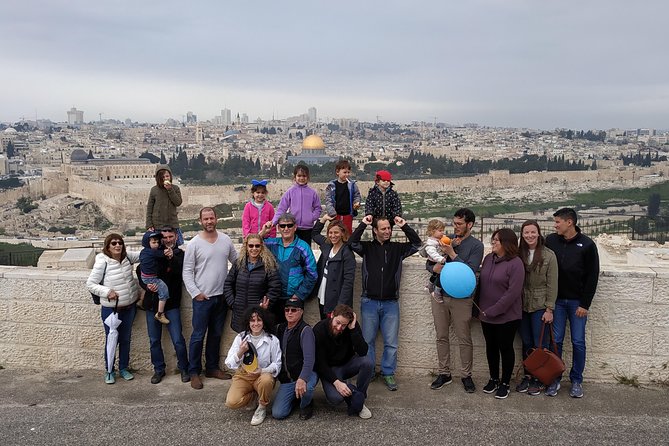
Reviewed · PRIVATE TOURS IN JERUSALEM
Private Tour: Highlights of Jerusalem
Jerusalem rewards a careful guide. This private tour brings you through the Old City’s Jewish, Muslim, and Christian quarters, linking famous sights with the archaeology and politics behind them. I especially like the chance to walk the Roman Cardo and Hezekiah’s Broad Wall, then follow the Via Dolorosa to the Church of the Holy Sepulchre. I also like the freedom to shape the outing as a half-day or full-day visit with Dr. David Gurevich, an archaeologist with a PhD focused on Jerusalem. The main drawback is that taxis and entrance fees are extra, so the $499 group price is not the final cost.
You can book this for a small party or a group of up to 15 people, which changes the value considerably. A couple may find the price steep, while a family or larger group can share the fee and gain a private guide rather than follow a fixed public schedule. Plan for serious walking, modest clothing at holy sites, and enough time to pause rather than race through the Old City.
In This Review
- Key points to know before you book
- Starting at Jaffa Gate and reading Jerusalem from the walls
- The Jewish Quarter, Roman Cardo, and Temple Mount views
- The Davidson Center and the streets below the Temple Mount
- Walking the Muslim Quarter and the Via Dolorosa
- The Western Wall and a careful visit to a sacred site
- The Christian Quarter, Golgotha, and the Holy Sepulchre
- What Dr. Gurevich adds to the day
- Timing, taxis, tickets, and the $499 price
- Who should choose this Jerusalem tour?
- Should you book the Highlights of Jerusalem tour?
- FAQ
- How long does the Jerusalem Highlights tour last?
- What sights are included on the route?
- Are entrance fees included?
- Are taxi rides included?
- Where does the tour start and finish?
- What is the cancellation policy?
Key points to know before you book

- Dr. David Gurevich brings an archaeology-first view: His academic background adds useful context to the ruins, walls, roads, and changing religious quarters.
- The route covers Jerusalem’s major faith sites: You visit the Western Wall, Via Dolorosa, Golgotha, and the Church of the Holy Sepulchre.
- The ramparts add a different view of the Old City: A walk along the walls gives you a broad sense of Jerusalem’s layout before you enter its narrow lanes.
- The day can be adjusted: The experience is listed as roughly three to nine hours, with half-day and full-day options and possible customization.
- Transport costs are separate: Taxi rides within Jerusalem are not included, and entrance fees are also outside the tour price.
- The route is best for curious walkers: Most people can participate, but cobbled streets, steps, heat, and a long day require practical shoes and steady energy.
Starting at Jaffa Gate and reading Jerusalem from the walls
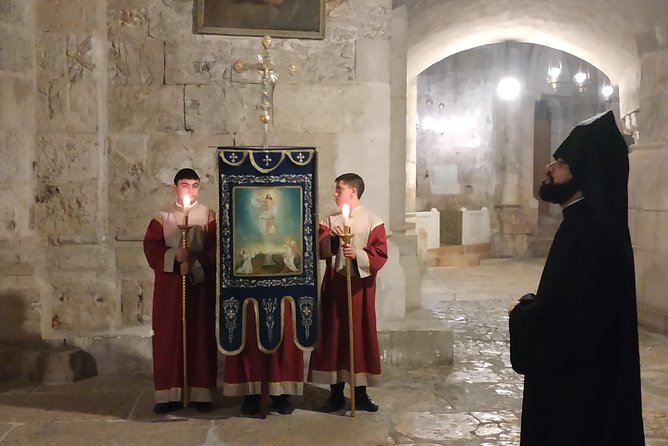
The tour begins at 9:00 a.m. at Yafo Street 1 in Jerusalem, with the Old City story starting near Jaffa Gate. This is a smart opening point because the gate connects the older walled city with the major changes that reached Jerusalem in the 19th century.
Jaffa Gate is not simply a place to meet. It helps you see how Jerusalem changed from a tightly enclosed city into a place increasingly shaped by new roads, foreign visitors, and modern development. A good guide can use this first stop to explain why the Old City feels both ancient and surprisingly close to the modern city outside its walls.
The planned stop here is short, about 15 minutes. That is enough for orientation, but not enough for a full treatment of the gate and surrounding area. If you choose the shorter version of the tour, you will likely need to keep moving.
The Ramparts Walk follows, with about 40 minutes on top of the Old City walls. This is one of the most useful parts of the experience for first-time visitors. On ground level, Jerusalem can feel like a maze of stone alleys, shops, shrines, courtyards, and stairways. From the walls, you gain a wider view and a better sense of how the quarters fit together.
The walk also gives the guide room to discuss the wall’s special history while you look across the city. It is a physical introduction before the more focused visits below. Check the exact route and ticket arrangements before setting out, since admission to the ramparts is not included.
More Private Tours in Jerusalem
- Private Tour Jerusalem Old City
★ 5.0 · 118 reviews - JERUSALEM private tour with ELAD VAZANA – Life in Israel & Palestine Then & Now
★ 5.0 · 115 reviews - Palestine Revealed: 2-Day Private Tour from Jerusalem
★ 5.0 · 110 reviews
The Jewish Quarter, Roman Cardo, and Temple Mount views
From the walls, the route moves into the Jewish Quarter. Here, the Roman Cardo and Hezekiah’s Broad Wall help turn broad historical periods into things you can actually see under your feet and beside you.
The Cardo points to Jerusalem under Roman rule. Its surviving remains offer a clear reminder that the Old City has been rebuilt, damaged, and reshaped many times. Hezekiah’s Broad Wall takes you farther back, toward the Iron Age city. Seeing these remains in one walking route is valuable because you are not studying one isolated era. You are comparing layers of Jerusalem in place.
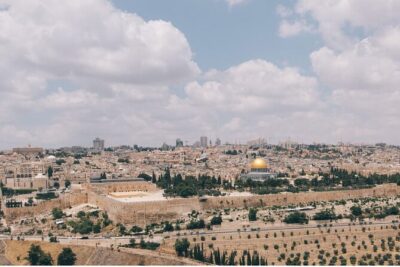
The Jewish Quarter also provides a lookout toward the Temple Mount. That view is important even if your main interest is architecture or archaeology, because the Temple Mount sits at the center of the city’s religious and political story. The guide can connect what you see from the lookout with the Western Wall and the archaeological remains farther south.
This portion is listed at about an hour. That sounds generous, but the quarter contains enough material to fill much longer. If archaeology matters to you, ask Dr. Gurevich in advance to give the Roman and Iron Age remains more attention. If your group includes children, his background in archaeology and his reported ability to keep children aged seven and nine engaged may help turn stones and walls into a story rather than a lecture.
The Davidson Center and the streets below the Temple Mount
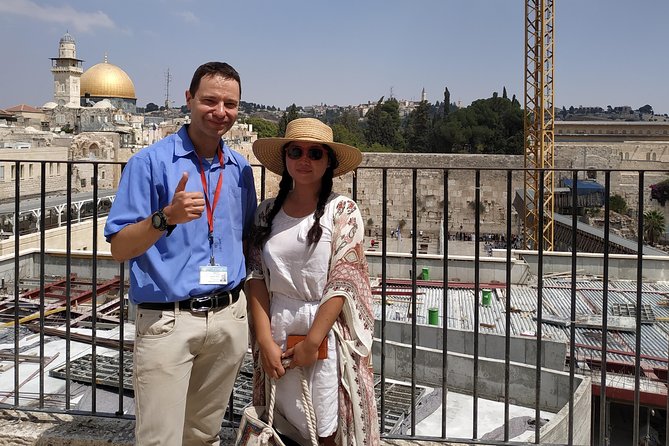
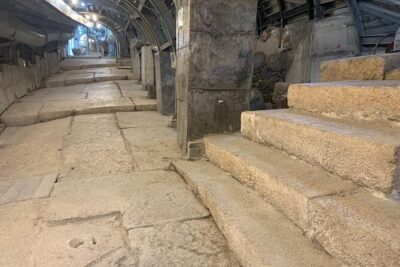
The Davidson Center is presented as an optional addition, and it is one of the strongest choices for anyone interested in ancient Jerusalem. The site includes excavations directly below the Temple Mount walls and the remains of streets from the 1st century CE.
The appeal is simple: instead of viewing the Temple Mount only from a distance, you can follow the route a pilgrim might have taken toward the Second Temple. The archaeological remains give scale to the ancient city and help explain how people approached the sacred complex.
The visit is planned for about 45 minutes. That makes it possible during a full day, but it may be harder to fit into a short outing that also includes the ramparts and the main holy sites. Admission is not included, so confirm the current fee and opening arrangements before you book.
I would prioritize this stop over several optional extras if your main goal is ancient Jerusalem. The Church of the Holy Sepulchre and Western Wall are essential for many first-time visitors, but the Davidson Center provides the physical evidence that connects the city’s streets, walls, pilgrims, and temples.
Walking the Muslim Quarter and the Via Dolorosa
The route then enters the Muslim Quarter and begins the famous Via Dolorosa, also called the Way of the Cross. The path starts in today’s Muslim Quarter and continues toward the Christian Quarter, which lets you see how the Old City’s religious communities occupy adjoining, sometimes tightly packed spaces.
This is where a private guide earns his fee. The Via Dolorosa is not a single quiet monument. It is a working route through a dense part of Jerusalem, with shops, homes, worship spaces, and narrow lanes. The Christian meaning of the route is central, but the surrounding Muslim Quarter is equally part of the present-day city.
The walk is planned for about an hour, and the full visit to the route can take longer when you stop to ask questions or enter sites. The route is meaningful for Christian pilgrims, but you do not need to approach it only as a devotional journey. Dr. Gurevich’s archaeology and history background can help place the stations within the city’s changing physical setting.
An optional stop at the Austrian Hospice adds a rooftop view of the Old City. This is a useful choice if your group wants photographs and a pause above the crowded lanes. It may also be a good way to break up the walking, though the extra stop will use time that could otherwise go to the Davidson Center or the Church of the Holy Sepulchre.
More Jerusalem tours worth comparing
- From Jerusalem: Masada & Dead Sea Full Day Tour with Pick Up
★ 4.5 · 815 reviews - Masada and the Dead Sea Day Trip from Jerusalem
★ 4.5 · 757 reviews - From Jerusalem: Nazareth and Sea of Galilee Tour
★ 4.5 · 588 reviews - Nazareth and the Sea of Galilee Day Trip from Jerusalem
★ 4.5 · 446 reviews
The Western Wall and a careful visit to a sacred site
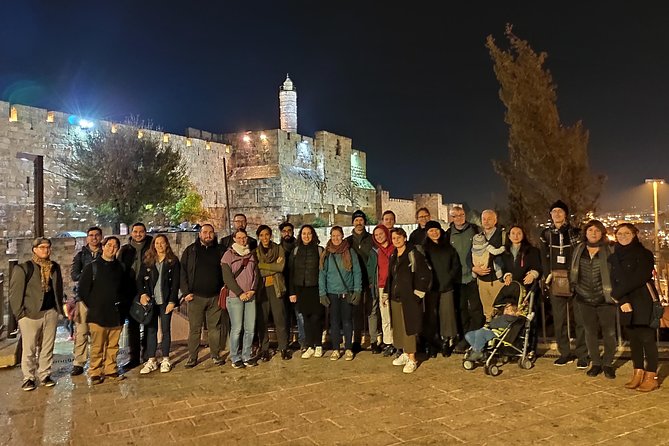
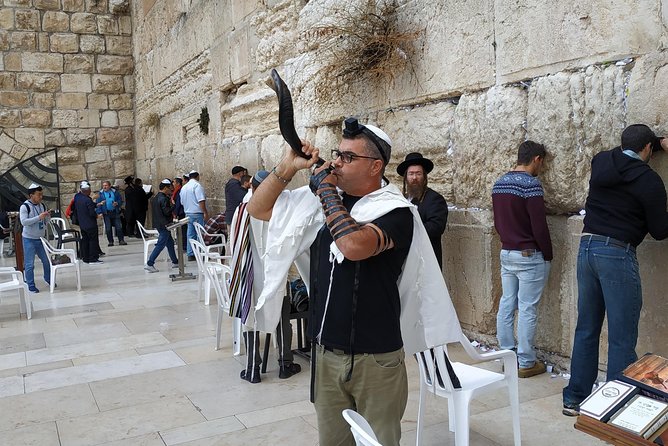
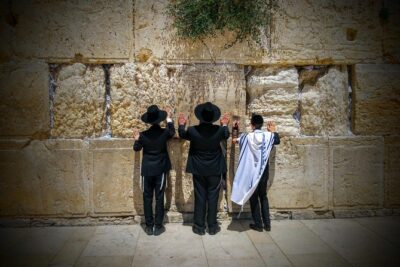
The Western Wall receives about 30 minutes on the planned route. It is the most important place near the Temple Mount where Jews conduct services, and it is a site where visitors need to be respectful rather than simply check off another landmark.
Modest clothing is required for visits to holy sites, so dress with the entire day in mind. Loose, respectful clothing is the safest choice for moving between Jewish, Muslim, and Christian locations.
The value of a guide here is not just historical explanation. A private guide can help your group understand the setting, answer questions without holding up a larger group, and explain what you are seeing in a calm way. Still, half an hour is a short visit. If you want time for personal reflection, photography, or observation, tell the guide before the day starts.
The wall is closely tied to the Temple Mount, but access rules and site conditions can change. The tour description does not promise entry to every part of the Temple Mount complex. You should treat the lookout and surrounding archaeological sites as the reliable focus, then confirm any additional access when booking.
The Christian Quarter, Golgotha, and the Holy Sepulchre
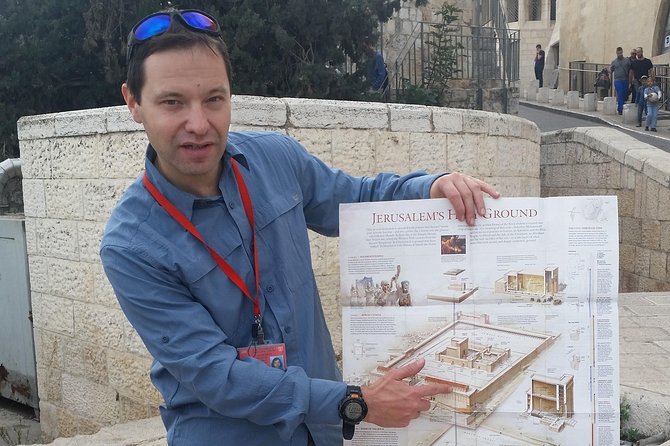
The Christian Quarter continues the Via Dolorosa toward the Church of the Holy Sepulchre. The final stations lead to Golgotha, identified with the place where Jesus was crucified, and to the burial site within the church.
The Church of the Holy Sepulchre can be visually and emotionally intense. It is not a single-purpose church built around one simple room. Its chapels, shrines, surfaces, and religious traditions reflect the long development of a major Christian holy place.
The planned visit to Golgotha is about 30 minutes, while the Christian Quarter itself receives another 30 minutes. That schedule gives you an introduction, but not unlimited time inside the church. Crowds, worship services, and lines can affect how much you see, so keep your expectations flexible.
An optional visit to Alexander’s Court in the Russian compound offers another historical layer. The site contains ancient gates to a Byzantine church, making it an appealing addition for visitors who want more than the standard pilgrimage route. As with the Davidson Center, the extra stop is best suited to a full-day schedule.
The Via Dolorosa is listed both as part of the Muslim Quarter and as a separate one-hour stop. In practice, think of it as one connected walk rather than two separate attractions. That makes the route easier to understand and helps you plan your energy.
What Dr. Gurevich adds to the day
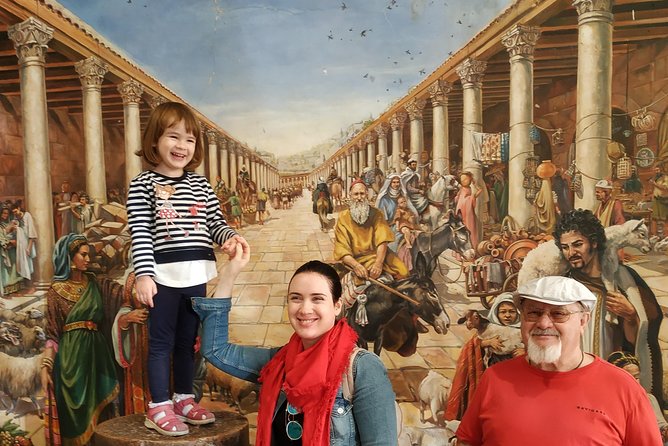
The strongest feature of this experience is the guide. Dr. David Gurevich is described as a Fulbright scholar who studied at Harvard and holds a PhD in archaeology focused on Jerusalem. His academic credentials matter here because the Old City is full of competing dates, traditions, restorations, and claims.
Just as important, the comments about his style describe someone down to earth, patient, flexible, and willing to adjust the amount of detail. That combination is useful. A guide can know a great deal and still make a poor companion if every stop becomes a long speech. The available feedback repeatedly highlights his sense of humor, thoughtful answers, interesting side notes, and ability to engage families.
I would expect the experience to work best as a conversation. You can ask about ancient Jerusalem, the Roman period, the Crusades, archaeology, religious traditions, or the city’s modern political setting. The supplied feedback also points to his ability to discuss Israel’s broader history and geopolitical situation without turning the walk into a one-note presentation.
If you want a guide who sticks strictly to a short checklist, this may feel more detailed than necessary. If you enjoy asking why a wall was built, how a street changed, or how several traditions overlap at one site, the academic background is a real advantage.
Timing, taxis, tickets, and the $499 price
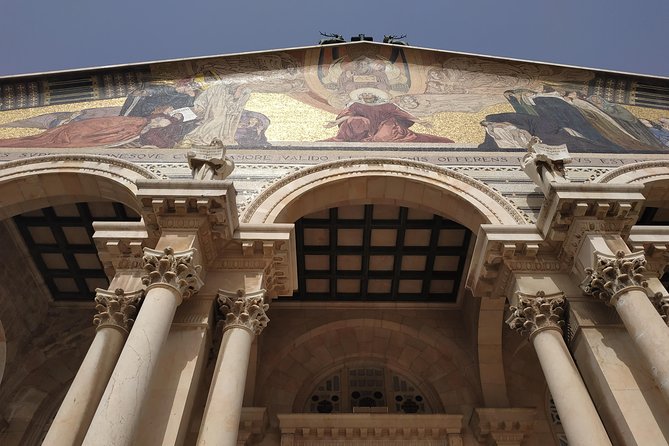
The published price is $499 per group of up to 15 people. That is a private group price, not a per-person fee. For 10 or 15 people, the arithmetic can be attractive. For one or two people, it is a much larger expense, although you are paying for a private guide and the ability to tailor the day.
The experience lasts about three to nine hours, depending on whether you choose a half-day or full-day plan and which optional stops you add. The detailed route describes an eight-hour day, so anyone choosing the full itinerary should expect a substantial walking day.
Pickup is offered, but the meeting details also give Yafo Street 1 as the starting point, and the activity ends back at the meeting point. Clarify the exact pickup arrangement before booking. Taxi rides within the city are not included, so you will need to budget for those separately. Entrance fees are also not included, including the listed charges for places such as the ramparts and Davidson Center.
The tour is near public transportation, which helps with getting to the start. A mobile ticket is provided, and confirmation is sent within 48 hours, subject to availability. Free cancellation applies if you cancel at least 24 hours before the start time. Inside that window, the payment is not refunded and changes are not accepted.
Who should choose this Jerusalem tour?
I would recommend it most strongly to first-time visitors who want the Old City explained in one connected story. You will see the major religious landmarks, but you will also walk through Roman and Iron Age remains and view the quarters from above.
It is a good match for families, especially if your children ask questions and respond better to stories than to silent sightseeing. The private format also makes it easier to pause, adjust the pace, or shift attention toward archaeology.
It suits couples and small groups who want a serious history guide and do not mind paying more for privacy. Larger families and groups get the best financial value because the $499 fee is shared.
You should think twice if you have limited mobility, dislike uneven walking, or want a relaxed schedule with long meals and little movement. Most people can participate, but this is a walking tour through an old city, not a sightseeing ride. The half-day option may be the better choice if heat, stairs, or religious-site queues are concerns.
Should you book the Highlights of Jerusalem tour?
Book it if you want the essential Old City sights tied to archaeology, religious history, and the physical shape of Jerusalem. Dr. Gurevich’s background, flexible style, and reported success with both families and serious history students give this experience more substance than a simple monument checklist.
The best value comes when you are traveling with several people or when you care deeply about interpretation. Ask about taxi costs, ticket prices, pickup, and the optional Davidson Center before confirming. For a short visit, choose the Western Wall, the Christian Quarter, the Church of the Holy Sepulchre, and one archaeological focus. For a full day, add the ramparts and Davidson Center, then let the guide adjust the pace.
FAQ
How long does the Jerusalem Highlights tour last?
The experience can last approximately three to nine hours. The detailed full-day route is planned for about eight hours, while a shorter half-day version is also available.
What sights are included on the route?
The route covers Jaffa Gate, the Old City ramparts, the Jewish Quarter, the Muslim Quarter, the Western Wall, the Christian Quarter, Golgotha, the Church of the Holy Sepulchre, and the Via Dolorosa.
Are entrance fees included?
No. Entrance fees are not included. The tour information specifically lists admission as separate for places such as the Ramparts Walk and Davidson Center.
Are taxi rides included?
No. Taxi rides within the city are not included in the $499 group price.
Where does the tour start and finish?
The stated meeting point is Yafo Street 1 in Jerusalem at 9:00 a.m. The activity ends back at the meeting point. Pickup is offered, so confirm the exact arrangement when booking.
What is the cancellation policy?
You can cancel at least 24 hours before the start time for a full refund. Cancellations or changes made less than 24 hours before the start time are not accepted for a refund.
Recently listed in Jerusalem
- West Bank Tour from Jerusalem and Tel-Aviv – Bethlehem & Jericho★ 5.0 · 6 reviews
- Tour of Jerusalem & Dead sea private tour★ 5.0 · 4 reviews
- One-Day Tour to Bethlehem and Jericho★ 5.0 · 2 reviews
- jerusalem classic tour★ 5.0 · 3 reviews
- full day tour Jerusalem price per van up to 6 people★ 5.0 · 8 reviews
- kosher Israel wine tour★ 5.0 · 4 reviews
- Private Tour: Old City of Jerusalem Christianity Tour★ 5.0 · 5 reviews
- Private Silk Painting Workshop in Jerusalem – Create a scarf –★ 5.0 · 4 reviews
Private Tours in Jerusalem, compared.
JERUSALEM private tour with ELAD VAZANA – Life in Israel & Palestine Then & Now
Read our review →
Palestine Revealed: 2-Day Private Tour from Jerusalem
Read our review →
Bethlehem Half Day Private Tour – Pick up from Jerusalem/Tel Aviv/Ashdod
Read our review →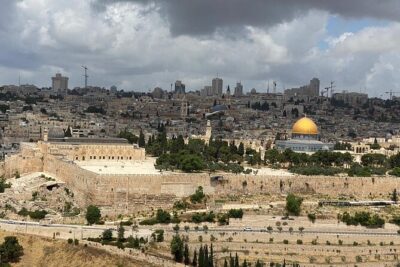
Full-Day Private and Guided Tour of the Jerusalem’s Old City
Read our review →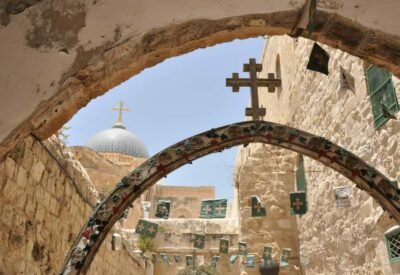
Full Day Private Christian Tour in Jerusalem with Tour Guide
Read our review →Browse the lists this tour appears in