
Reviewed · CAESAREA AND ACRE TOURS
Caesarea, Acre & Rosh Hanikra Day Trip from Jerusalem
Ancient ports meet sea caves here. This long northern Israel outing gives you Caesarea’s Roman ruins and Acre’s Crusader remains in one day, while the Baha’i Gardens and Rosh Hanikra add striking coastal views. I like the range of sights and the chance to cover places that are awkward to connect by public transport. The main caution is the pace: with four major stops and a 6:00 a.m. pickup, this is a full day of quick visits.
The strongest guides, including Dorit, Daniel, Jacob, and Dan Porges, have brought the sites to life with humor, context, and clear explanations. I also like that hotel pickup, entrance fees, an air-conditioned vehicle, and a professional guide are included. The weak point is the transport system, especially from Jerusalem, where vehicle changes and late returns have caused real frustration.
In This Review
- Key points to know before booking
- What this Jerusalem day trip is really trying to do
- Caesarea: Roman power beside the sea
- Haifa and the Baha’i Gardens viewpoint
- Rosh Hanikra: the day’s most unusual scenery
- Acre: Crusader stone below modern streets
- The guide can make or break the day
- The early pickup and vehicle changes
- Is $139 good value for a 12-hour day?
- Who should book this northern Israel tour?
- My verdict on Caesarea, Acre, and Rosh Hanikra
- FAQ
- How long does the tour last?
- Is hotel pickup included?
- What sites are visited?
- Are entrance fees included?
- Is food included?
- Is the Baha’i Gardens visit a full tour of the gardens?
- Can young children join the tour?
Key points to know before booking
- Four very different northern sights in one day: Roman archaeology, a mountain shrine, sea caves, and a medieval fortress city.
- Caesarea is the history anchor: You walk through Herod the Great’s ancient port and see a well-preserved Roman theater.
- Rosh Hanikra is the visual highlight: A cable car carries you down to chalk grottoes shaped by the Mediterranean.
- Haifa is a brief viewpoint stop: You see the Baha’i Gardens from above, but you do not tour the terraces.
- Acre combines archaeology and street life: The underground Crusader city is followed by time near the Old City Market.
- Plan for a very early, very long day: Pickup starts around 6:00 a.m., and the group can reach 40 people.
What this Jerusalem day trip is really trying to do
This tour links four northern destinations that sit along a broad route from Jerusalem toward the Mediterranean coast. You are not getting a slow, specialist tour of any one place. You are getting a broad sampler of Roman, medieval, religious, and geological history, with the driving handled for you.
That makes the trip useful if your time in Israel is limited. From Jerusalem, visiting Caesarea, Haifa, Rosh Hanikra, and Acre independently would take careful planning and a long day on the road. Here, one ticket covers the route, guide, coach, and admissions.
The trade-off is easy to understand. Each stop has a set time, and the schedule leaves little room for lingering. You may have to choose between taking photos, listening to the guide, and simply enjoying the place. I would book this for coverage and convenience, not for a relaxed pace.
The advertised price is $139 per person. That is fair if you value the transportation, several entrance tickets, and a full day of guiding. It is less attractive if you prefer independent sightseeing or want long hours in Acre and Caesarea. Food and drinks are not included, so bring water and plan for the cost and timing of lunch.
More Day Trips in Jerusalem
- Masada and the Dead Sea Day Trip from Jerusalem
★ 4.5 · 757 reviews - Nazareth and the Sea of Galilee Day Trip from Jerusalem
★ 4.5 · 446 reviews - From Jerusalem: Dead Sea Chill Out Half-Day Trip
★ 4.7 · 165 reviews
Caesarea: Roman power beside the sea
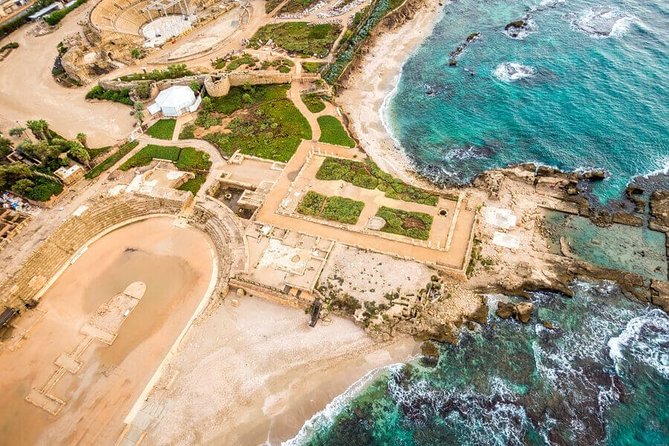
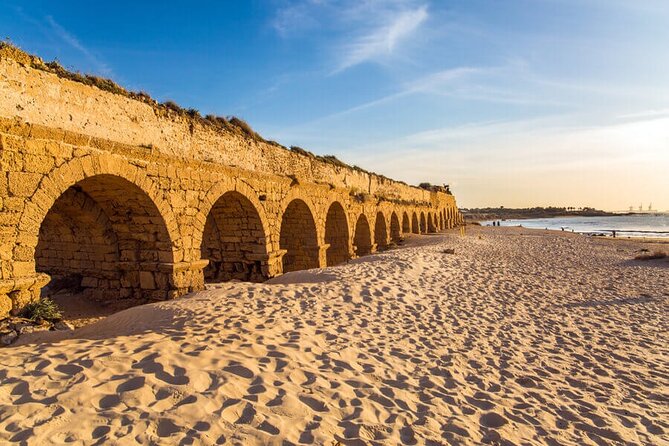
Caesarea is the day’s best introduction to the ancient world. Herod the Great built the city more than 2,000 years ago and dedicated it to Caesar Augustus. The port became an important center of Roman life, and the remains give you a clear sense of the city’s former scale.
You spend about an hour walking through the national park’s ruins and excavated areas. The route includes an ancient harbor setting and the remains of public buildings, though the experience is mainly about seeing the archaeological remains while your guide supplies the story.
The Roman theater receives a separate stop of about 20 minutes. It dates from the first century A.D. and is one of the clearest parts of the site to picture in use. Its shape makes the ancient entertainment world easier to understand than a pile of foundations would.
Caesarea works well early in the day because it gives you both history and open-air scenery. The drawback is time. An hour and 20 minutes is enough for an organized introduction, but not enough for a slow archaeological visit. If you want every inscription, building, and shoreline feature, you will find the stop short.
Wear shoes that can handle uneven ground. The tour specifically recommends comfortable walking shoes and water, sensible advice for a day that combines outdoor ruins with several more walking stops.
Haifa and the Baha’i Gardens viewpoint
Haifa climbs from the Mediterranean up the northern slope of Mount Carmel. The city’s steep setting gives the Baha’i Gardens their dramatic appearance, with 19 terraces arranged like a long staircase down the mountain.
The gardens are carefully maintained, with paths, hedges, and flower beds arranged around the Shrine of the Báb. The gold-domed shrine is the final resting place of the prophet of the Baha’i faith. Even from a distance, the symmetry of the terraces and the sea beyond make this a memorable photo stop.
You should set your expectations correctly. The tour gives you around 20 minutes to view the gardens from Haifa. It does not provide a long walk through the terraces. For some people, that is enough. You get the panorama of Haifa, the Galilee Hills, and the Mediterranean without adding another lengthy visit to an already crowded schedule.
For others, this will feel like a thin stop. If the gardens are a main reason you want to visit Haifa, check the details carefully before booking. The value here is the viewpoint and the explanation, not a full garden visit.
The coach route also gives you a sense of Haifa’s steep geography. You are seeing a city shaped by its slope, port, and religious landmarks rather than simply checking off a garden.
Rosh Hanikra: the day’s most unusual scenery
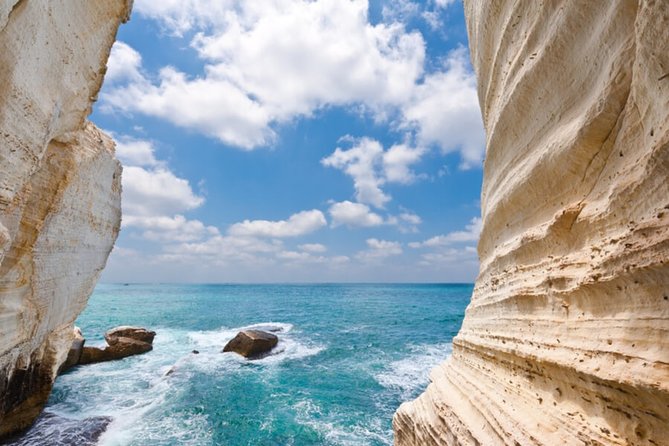
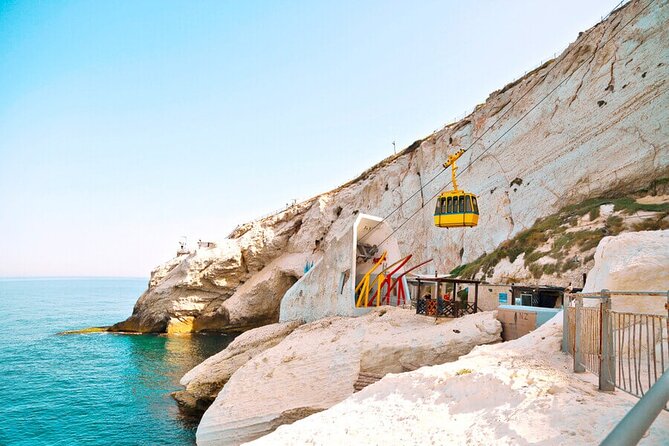
Rosh Hanikra changes the mood completely. After Roman stone and urban views, you reach a coastal formation where the sea has cut tunnels and chambers into soft chalk rock.
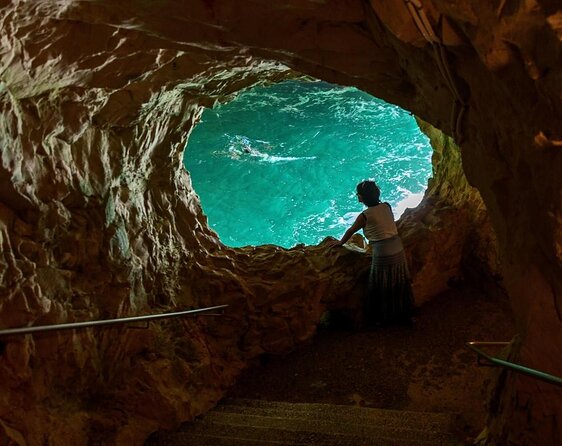
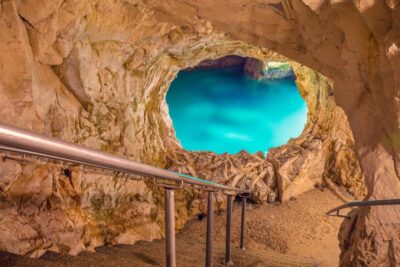
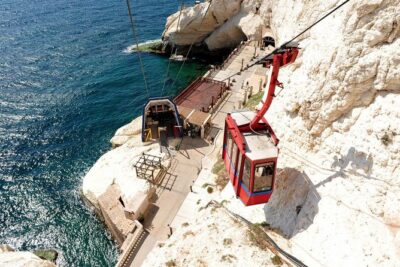
A cable car takes you down to the grottoes. That short descent is part of the fun, since it gives you a clear view of the white cliff and the Mediterranean coast. At the bottom, you walk through the cavernous passages and watch the water move through the openings in the rock.
The total visit is listed at about one hour, including the cable car and grotto visit. The grottoes themselves receive roughly 40 minutes. That is enough to see the main formations, but conditions matter. One account noted that poor weather meant the grottoes were not lit up because there was no sun, so the visual impact can vary with the day.
The stop also includes a view toward the Lebanese border. This adds geographic context to the northern coast, though the main attraction remains the rock formations and sea.
I would place Rosh Hanikra near the top of the day’s appeal. It is unlike the other stops, easy to understand without a long lecture, and visually strong. Still, it is weather-sensitive. The experience requires good weather, and the tour can be canceled if conditions are poor, with a different date or a full refund offered.
More coastal runs to Caesarea and Acre:
- Caesarea, Haifa & Akko Day Trip from Jerusalem
★ 4.3 · 96 reviews - From Jerusalem: Caesarea, Haifa, Acre & Rosh Hanikra Tour
★ 4.2 · 25 reviews - Caesarea, Haifa, Rosh Hanikra, and Acre Tour from Jerusalem
★ 4.0 · 16 reviews - Caesarea, Haifa, Acre and Rosh Hanikra Tour from Jerusalem
★ 3.5 · 7 reviews
Acre: Crusader stone below modern streets
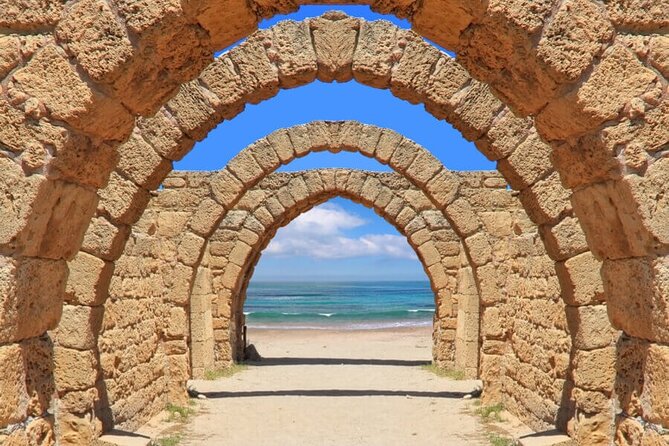
Acre, also called Akko, is the final major stop and the one that rewards historical imagination. It is one of the oldest cities in the world, with layers of settlement above and below today’s streets.
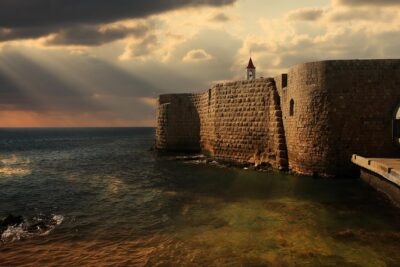
The underground Crusader city is the centerpiece. Medieval tunnels, halls, and the citadel complex were hidden for centuries beneath rubble in northern Israel. Inside, you see the remains of a Crusader town that survives in surprisingly complete form, both below ground and at street level.
You have about an hour for the city and another hour for the underground citadel. That sounds generous compared with Haifa, but the schedule can still feel tight once walking, explanations, and group movement are included.
Acre is also where the tour’s balance becomes most noticeable. The old city and market offer atmosphere beyond the formal archaeological site. The route includes walking through the Old City Market, with time to pick up a souvenir. Some departures have included a stop at a selected shop, and this has not suited everyone. If shopping is not your priority, you may prefer more time exploring the streets or asking the guide about the city’s other historic buildings.
The tour’s food arrangements deserve attention here. Food and drinks are listed as extra, and some group experiences have involved a family-style lunch at a restaurant selected by the tour operation. That can be convenient, but it may not suit every diet or preference. Bring a snack, carry water, and ask the guide early when and where the meal break will happen.
Acre is a good final stop because the market gives the day a more lived-in feeling after several formal attractions. Yet if you want a detailed visit to the prison, synagogue, or every section of the old city, this outing may leave you wanting more.
The guide can make or break the day
The best part of the experience is often the guide. Dorit has been praised for making the history easy to follow and bringing the stories alive at each site. Daniel has received particularly warm comments for delivering a day full of explanations and insight. Jacob has been appreciated for humor and perspective, including on a rainy day, while Dan Porges has been credited with adding useful context during a hot, demanding schedule.
Those names are useful to know, but you cannot assume which guide you will receive. The standard depends on the individual guide’s command of English, energy, and ability to manage a large group.
Language planning matters. One departure included both English and Spanish, although the booking had been made for English only. If English explanation is important to you, confirm the language arrangement before departure.
The group limit is 40 people. A strong guide can keep that moving, but a large group naturally makes it harder to hear every explanation or stay close to the guide at busy sites. Keep your phone charged, note the coach location, and listen closely for meeting times.
The early pickup and vehicle changes
The day begins around 6:00 a.m. with hotel pickup in Jerusalem. The early start is not a minor detail. It allows the itinerary to reach the far northern coast, but you need to be ready before most of the city is properly awake.
The pickup system can be complicated. Jerusalem departures may be taken first to a transfer point, with some people changing vehicles before the main northern route begins. Reports of taxis, multiple coaches, and confusing transfers make this the largest practical risk in the experience.
A late pickup at the start can create anxiety, especially when you are standing outside before sunrise. The return can also run late, with one account describing arrival at the Jerusalem hotel three hours behind schedule. That is not typical enough to define every departure, but it is serious enough to shape your planning.
Do not schedule a flight, dinner reservation, or important appointment immediately after this tour. Keep your morning meeting instructions easy to access, arrive early, and ask the local office for precise pickup details if anything is unclear.
The vehicle is air-conditioned, which matters during hot weather. Still, seat comfort and vehicle size can vary during transfers. If you are prone to motion sickness, sit near the front when possible, keep water with you, and avoid relying on a last-minute seat at the back.
Is $139 good value for a 12-hour day?
At $139, this is a reasonable package for someone who wants a guided northern circuit from Jerusalem. The price includes hotel pickup and drop-off, an air-conditioned vehicle, a professional guide, and entrance fees for the paid attractions. You are paying for the route as much as for the individual sites.
The value is strongest when you do not have a rental car, do not want to manage long-distance transport, or have only one open day. Caesarea, Rosh Hanikra, and Acre are spread widely enough that arranging all three independently takes effort.
The value drops if you dislike group schedules. You may spend more time loading, transferring, and waiting than you would with a private driver. You also cannot simply extend your visit at the Roman theater, remain longer at the grottoes, or spend a free afternoon in Acre.
The included admissions help, but meals are not included. Budget for lunch, drinks, and any purchases in the market or at a designated shop. The tour has been described as well organized and well paced by some people, while others found it rushed, so your satisfaction will depend heavily on how much time you want at each site.
Who should book this northern Israel tour?
I would recommend it to you if you want a big-picture day of northern Israel and accept that each stop will be an introduction. It suits first-time visitors, history fans who want Roman and Crusader sites in one outing, and people who prefer a guide and coach to independent route planning.
It also suits you if Rosh Hanikra is high on your list. The cable car and grottoes are difficult to combine casually with Jerusalem sightseeing, and this tour handles the transport.
I would be more cautious if you have limited stamina, dislike pre-dawn departures, or need a calm schedule. The day includes outdoor walking, vehicle transfers, stairs or uneven surfaces at historic sites, and many hours on the road. Children under four are not permitted, and the trip is not designed as a young-child outing.
If Acre is your main goal, a dedicated visit would give you more time for the old city, market, and additional historic buildings. If Caesarea is your priority, you could also choose a slower archaeological visit rather than fit it into a four-stop circuit.
My verdict on Caesarea, Acre, and Rosh Hanikra
This is an ambitious day, and its ambition is both its strength and its weakness. You get ancient Rome, Baha’i architecture, unusual coastal geology, and Crusader Acre for $139, with transport and admissions handled. That is a lot of Israel in 12 hours.
The most rewarding stops are Caesarea for its Roman setting, Rosh Hanikra for its sea-cut grottoes, and Acre for the underground Crusader city and market atmosphere. Haifa is pleasant but brief, and the transport arrangements can be frustrating.
Book it if convenience and variety matter more than depth. Skip it if you want a relaxed pace, guaranteed smooth transfers, or a long independent visit in Acre. Either way, wear good shoes, carry water, keep your schedule open late, and treat the day as a fast-moving sampler rather than a leisurely tour.
FAQ
How long does the tour last?
The experience lasts approximately 12 hours. Pickup begins around 6:00 a.m., and the return time can vary with traffic, transfers, and the day’s schedule.
Is hotel pickup included?
Yes. Hotel pickup and drop-off are included from Jerusalem, according to the tour details.
What sites are visited?
The route includes Caesarea National Park, the Roman theater at Caesarea, the Baha’i Gardens viewpoint in Haifa, Rosh Hanikra and its grottoes, and Acre’s Old City and underground Crusader citadel.
Are entrance fees included?
Yes. Entrance fees are included for the attractions listed as paid admissions, including Caesarea, the Rosh Hanikra grottoes, and the underground Crusader city in Acre.
Is food included?
No. Food and drinks are not included in the listed inclusions. Bring water and plan separately for lunch and other refreshments.
Is the Baha’i Gardens visit a full tour of the gardens?
No. The itinerary provides a viewpoint in Haifa for about 20 minutes. You see the terraces, the Shrine of the Báb, and the surrounding views, but the schedule does not describe a full walk through the gardens.
Can young children join the tour?
Children under four are not permitted. The tour is suitable for most participants who can manage a full day with walking and extended coach travel.
More 1-Day Tours in Jerusalem
- Bethlehem, Jericho, and Qasr El Yahud Day Trip from Jerusalem
★ 4.0 · 109 reviews - From Jerusalem: Masada Sunrise, Ein Gedi & Dead Sea Day Trip
★ 3.9 · 67 reviews - Private Tour: Nazareth, Tiberias and Sea of Galilee Day Trip from Jerusalem
★ 4.0 · 24 reviews - Private Tour: Masada and Dead Sea Day Trip from Jerusalem
★ 4.5 · 23 reviews
Recently listed in Jerusalem
- West Bank Tour from Jerusalem and Tel-Aviv – Bethlehem & Jericho★ 5.0 · 6 reviews
- Tour of Jerusalem & Dead sea private tour★ 5.0 · 4 reviews
- One-Day Tour to Bethlehem and Jericho★ 5.0 · 2 reviews
- jerusalem classic tour★ 5.0 · 3 reviews
- full day tour Jerusalem price per van up to 6 people★ 5.0 · 8 reviews
- kosher Israel wine tour★ 5.0 · 4 reviews
- Private Silk Painting Workshop in Jerusalem – Create a scarf –★ 5.0 · 4 reviews
- Experience Shabbat With Dinner In Jerusalem★ 5.0 · 5 reviews
Caesarea and Acre Tours, compared.
Caesarea, Rosh Hanikra and Acre Day Trip from Tel Aviv
Read our review →
Unforgettable Tour to Caesarea, Haifa, Acre and Rosh HaNikra from Tel Aviv
Read our review →
Tel Aviv/Jerusalem: Caesarea, Haifa & Akko Day Tour
Read our review →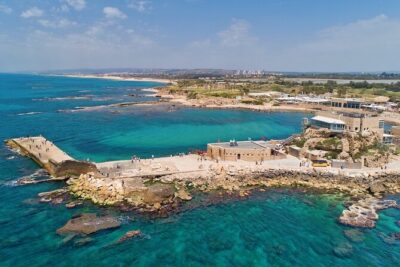
Browse the lists this tour appears in