

Reviewed · CAESAREA AND ACRE TOURS
Caesarea, Haifa, Acre and Rosh Hanikra Tour from Jerusalem
Ancient ports, sacred gardens, and a sea cliff await. This long northern Israel outing links Caesarea, Haifa, Acre, and Rosh Hanikra in one day, with entrance fees included and a climate-controlled coach to handle the miles. I like the mix of Roman ruins and Crusader remains, and I like that one ticket covers several major sights. The main concern is the schedule: an advertised 12-hour day can stretch beyond 15 hours once transfers and hotel stops are added.
The tour also gives you a rare chance to reach Israel’s northern coast without arranging several separate trips. Guides Daniel and the driver Bilal received especially strong praise for their explanations and care. Still, the Jerusalem pickup deserves close attention, since the tour may involve a transfer through Tel Aviv or Haifa before you return home.
In This Review
- Quick points before you book
- Four northern stops in one very long day
- Caesarea: Roman power beside the sea
- Haifa’s Bahá’i Gardens in a 20-minute stop
- Rosh Hanikra: the coast’s most unusual hour
- Acre’s Old City and Crusader remains
- The citadel, prison, and British Mandate story
- The coach, transfers, and the real cost of the day
- Why the guides matter on this route
- Food, age limits, and what to bring
- Who should book the $69 tour?
- FAQ
- What time does the tour start?
- How long does the tour last?
- Is hotel pickup and drop-off included?
- Are entrance fees included?
- Is food included?
- Can children join the tour?
- Should you book it?
Quick points before you book
- Caesarea’s Roman theater: See an ancient amphitheater still used for modern performances, along with gates, walls, rooms, a moat, and part of a hippodrome.
- Haifa’s Bahá’i view: Spend a short time above the terraced gardens, with the shrine and city below.
- Rosh Hanikra by cable car: Ride down to wave-cut limestone grottoes near Israel’s border with Lebanon.
- Acre’s layered past: Visit the Old City and Crusader remains, then see the former prison and British Mandate gallows.
- A very early start: Pickup begins around 5:40 a.m., and the day can run much longer than the stated 12 hours.
- Good value at $69: Transport, a guide, hotel pickup and drop-off, and entrance fees are included, but food and drinks are not.
Four northern stops in one very long day
This is a coach tour for seeing a lot of northern Israel quickly. You travel from Jerusalem toward Tel Aviv, then continue north beside the Mediterranean coast before working back through Haifa and Acre.
The price is appealing. At $69, you get transportation in an air-conditioned vehicle, a professional guide, hotel pickup and drop-off, and the listed admission charges. That matters here because the route covers a wide area. A self-arranged version would require several train, bus, taxi, or rental-car decisions, plus separate admission purchases.
The tradeoff is time. The official duration is about 12 hours, but the practical day may be longer. One account describes leaving at 5:40 a.m. and reaching the hotel around 9 p.m., more than 15 hours later. Jerusalem pickups can also involve joining the main group from Tel Aviv, with extra hotel stops and a later van transfer. I would treat the 12-hour figure as an estimate, not a promise.
The group limit is 40 people. That is large enough for a full coach experience, so you should expect set departure times and short visits rather than a relaxed private tour. The payoff is that a guide handles the route, explains the sites, and keeps the day moving.
More coastal runs to Caesarea and Acre:
- Caesarea, Haifa & Akko Day Trip from Jerusalem
★ 4.3 · 96 reviews - Caesarea, Acre & Rosh Hanikra Day Trip from Jerusalem
★ 4.0 · 78 reviews - From Jerusalem: Caesarea, Haifa, Acre & Rosh Hanikra Tour
★ 4.2 · 25 reviews
Caesarea: Roman power beside the sea

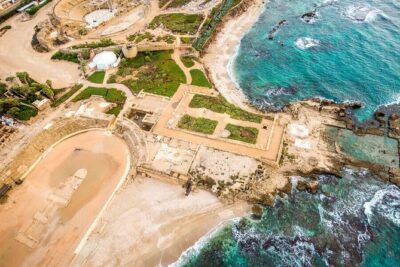
Caesarea is the first major stop, and it gives you the strongest sense of how wealth and power shaped this coast. Herod built the city and named it for Caesar, creating a port city with Roman planning, grand public buildings, and a clear message of imperial ambition.
You have about one hour here. That is enough to see the main excavated remains, but not enough for a slow archaeological study. Expect to walk among gateways, a moat, walls, and rooms that show the scale of the old city. The Roman amphitheater is the visual highlight. Its preserved seating and curved form make it easy to picture performances taking place there.
The theater still hosts Israeli and international artists. That modern use gives the ruin a welcome connection to present-day life. Beside it, you can see part of the former hippodrome, where chariot races once took place. The stop works best if you listen closely to the guide, since the stones alone do not always explain what you are seeing.
I like this opening because it starts with a major site rather than a minor roadside pause. You get Roman architecture, coastal scenery, and a quick lesson in how Herod reshaped the area. The limitation is the one-hour window. If you enjoy archaeology, you may want more time to examine each section.
The admission fee is included, so you do not need to budget for a separate ticket at the entrance. Wear comfortable shoes and be ready to walk at the group’s pace. The tour does not include food or drinks, so bring water and a breakfast snack for this early portion of the day.
Haifa’s Bahá’i Gardens in a 20-minute stop

The route continues through Haifa, where the tour pauses at the Bahá’i Shrine and Gardens. The gardens descend in carefully arranged terraces toward the city, with 19 levels of flowers and formal planting.
This is a viewpoint stop rather than a full garden visit. You get roughly 20 minutes, so your time is mainly for seeing the shrine, taking in the alignment of the terraces, and looking over Haifa. The short visit can feel rushed if you want to explore the gardens in detail, but it gives you a striking change of mood after Caesarea’s weathered stone.
I find this stop valuable because it shows a different side of Israel. The day moves from Roman engineering to a modern religious site known for order, symmetry, and quiet presentation. The golden dome and descending terraces also create one of the clearest city views on the route.
Do not expect a long walk through all 19 terraces. The schedule does not allow that. Treat the stop as a scenic introduction, not a complete visit to the Bahá’i complex. Your guide should help explain why the shrine and gardens matter, and one guide, Daniel, was praised for giving detailed explanations across the day.
Rosh Hanikra: the coast’s most unusual hour
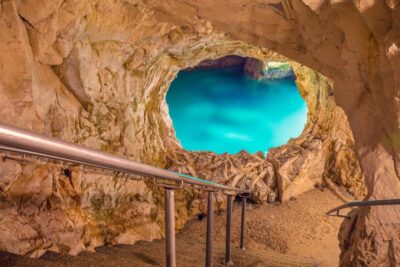
Rosh Hanikra is the northernmost point on Israel’s Mediterranean coast included in this route. Here, waves have cut into pale limestone and created a set of grottoes. A cable car carries you down toward the rock formations, which is one of the more memorable parts of the day.
The cable-car ride changes the pace. After several hours on the road, you get a short descent and a close look at the coastline from below. The grottoes were formed by repeated wave action, and their curved passages make the geology easy to understand. You are not just looking at a distant cliff. You are brought into the rock itself.
The listed stop lasts about one hour, followed by another 40 minutes connected with the grottos and the Lebanese border area. The supplied schedule describes both the cable-car grotto visit and time at the border point, so you should expect these parts to form one northern stop rather than two separate destinations.
The border setting adds a serious historical and geographic note. You are near Lebanon, at the far end of Israel’s coast, and the guide can place the area in its wider regional context. This is also where the day reaches its furthest point from Jerusalem, which helps explain the long return journey.
Rosh Hanikra is included in the tour’s admission arrangements. That is useful because the cable car is a key part of the visit, not an optional extra listed at the last moment. The main practical issue is timing. If the cable car or access point is busy, a fixed group schedule leaves little room to linger.
More Jerusalem tours worth comparing
- From Jerusalem: Masada & Dead Sea Full Day Tour with Pick Up
★ 4.5 · 815 reviews - Masada and the Dead Sea Day Trip from Jerusalem
★ 4.5 · 757 reviews - From Jerusalem: Nazareth and Sea of Galilee Tour
★ 4.5 · 588 reviews - Nazareth and the Sea of Galilee Day Trip from Jerusalem
★ 4.5 · 446 reviews
Acre’s Old City and Crusader remains
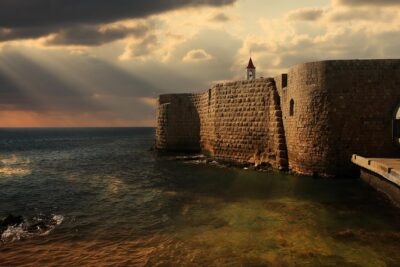
Acre brings the day back to urban history. The Old City contains remains from the Crusader period, along with later Ottoman and British Mandate chapters. You receive about one hour for the Old City before moving to the citadel area.
This is a compact stop, but the layers are striking. Crusader structures show the importance of Acre as a medieval stronghold and port. Later buildings and political uses remind you that the city’s story did not end with the Crusaders.
The Old City visit is listed without a separate admission charge, while the citadel admission is included. That split is worth understanding. You may spend the first hour seeing the historic streets and exterior areas, then enter the citadel for the more structured presentation of the site.
Acre can be challenging on a tight schedule. The tour is designed to give you a strong overview, not free time for wandering through every lane. If you want to stop for a long meal, shop, or explore at your own pace, this format will feel restrictive. If you want an organized introduction before a future independent visit, it works well.
The citadel, prison, and British Mandate story
The citadel is one of the day’s most serious stops. Inside, you can see Crusader remains, a prison used during Turkish rule, and gallows connected with the British Mandate period.
The gallows carry a difficult story. They were used to execute Jews who broke British restrictions on Jewish immigration to Palestine after World War II. This part of the visit moves beyond architecture and into the political conflicts of the 20th century.
I appreciate that the itinerary does not present Acre as only a medieval attraction. You get Crusader archaeology, Ottoman-era prison history, and the British Mandate period in one place. That range helps you understand why Acre matters, even though the visit is short.
The citadel stop lasts about one hour. Listen carefully to the guide here, since the significance of the prison and gallows depends on context. Daniel was praised for explaining archaeology and the Bahá’i Gardens, and his ability to connect different periods would be especially useful at Acre.
The coach, transfers, and the real cost of the day
The air-conditioned coach is a major help during a full day on the road. You have a climate-controlled seat between sites instead of needing to drive, navigate, or find parking. That makes the $69 price attractive, especially with admission fees already covered.
Comfort is not perfect. One positive account praised the driver but said the bus seats were difficult to get in and out of. If you have limited mobility or simply dislike cramped coach seating, ask about the vehicle and transfer plan before booking.
The Jerusalem arrangement is the most important logistical point. The additional information says people picked up in Jerusalem join the tour from Tel Aviv. The negative experience described a shuttle to another bus, several hotel stops, and a van transfer on the return to Jerusalem. Another account reported being left at a Haifa switch point after confusion over available return seats.
These accounts do not mean every departure will go badly. They do mean you should confirm the pickup location, the Jerusalem return plan, and every transfer before setting out. Keep your phone charged, carry the local contact details supplied at booking, and do not leave a transfer point until a staff member clearly directs you.
The tour has a maximum of 40 people, so staff may be moving several groups at once. That can explain some of the confusion at connection points, but it does not remove the need for clear communication. At this price, the tour offers strong sightseeing value. It asks you to accept less control and less personal space than a private car.
Why the guides matter on this route
A route this large can become a blur of ruins, gardens, caves, and old walls. The guide makes the difference between simply seeing places and understanding how the periods connect.
Daniel received especially warm praise for explaining the archaeological evidence at Caesarea, the purpose of the Bahá’i Gardens, and the major sites in Acre. That is exactly the kind of help you need when each stop lasts only 20 to 60 minutes.
The driver also shapes the experience. Bilal was singled out for his driving and service on one highly rated outing. A calm driver matters on a day with many highway hours, early pickup, and a late return.
Because the provider is Click Tours and departures may use shared transport, you should not assume every group will have the same guide or vehicle. The named praise gives you a useful standard, but the strongest parts of the experience depend on the staff assigned that day.
Food, age limits, and what to bring
Food and drinks are not included. The schedule begins around 5:40 a.m., so I would bring water and something easy to eat. The long driving sections may offer chances to buy food, but the supplied details do not promise a specific meal stop.
The minimum age is four years old, and most people can participate. Still, the day is demanding for young children because of the early start, long ride, walking, and late finish. Families should think about stamina rather than just the age rule.
You should also plan for changing conditions. Caesarea and Acre involve historic structures and walking, while Rosh Hanikra includes a cable-car descent and grotto visit. Comfortable shoes will help more than formal clothing.
Insurance is not included. Free cancellation is available if you cancel at least 24 hours before the start time. Changes or cancellations inside that 24-hour period are not accepted for a refund, so check your plans carefully before the cutoff.
Who should book the $69 tour?
I would choose this outing if you want maximum coverage in a single day. It is particularly useful if your time in Israel is limited, you do not want to rent a car, and you are happy to trade long hours for a broad introduction to the northern coast.
History fans get Roman, Crusader, Ottoman, and British Mandate material. Architecture lovers get the Bahá’i terraces and Acre’s old buildings. Nature-minded visitors get the sea cliffs and limestone grottoes at Rosh Hanikra.
I would hesitate if you want relaxed pacing, long meals, or flexible time at each site. I would also be cautious if a confusing transfer or a late return would cause serious problems. The route is ambitious, and the Jerusalem connection can add substantial time.
At $69, the included transport and admissions make the tour a good bargain on paper. The real question is not just price. It is whether the convenience of seeing four major places outweighs the early start, coach limitations, and possible transfer complexity.
FAQ
What time does the tour start?
The listed start time is 5:40 a.m. Pickup and transfer arrangements can affect your exact meeting details.
How long does the tour last?
The advertised duration is approximately 12 hours. A reported schedule ran from 5:40 a.m. until about 9 p.m., so the actual day can exceed 12 hours.
Is hotel pickup and drop-off included?
Yes. Hotel pickup and drop-off are included, but Jerusalem participants may join the main tour from Tel Aviv and may use transfers.
Are entrance fees included?
Yes. The tour includes the listed entrance fees, including the Caesarea National Park and Rosh Hanikra attractions, as well as the citadel of Acre.
Is food included?
No. Food and drinks are not included, so you should plan to bring or buy your own refreshments.
Can children join the tour?
Yes. The minimum starting age is four years old, and most people can participate. The long day and early pickup may still be tiring for younger children.
Should you book it?
Book this tour if your priority is seeing as much northern Israel as possible for a low upfront price. Caesarea, the Bahá’i Gardens, Rosh Hanikra, and Acre offer a strong mix of ancient ruins, religious architecture, coastal scenery, and modern political history.
Before paying, confirm the Jerusalem pickup and return arrangement in writing. If you can handle a 5:40 a.m. start, a full coach, and a possible 15-hour day, this is an efficient and worthwhile overview. If you want comfort, independence, and time to linger, choose a shorter or private option instead.
Recently listed in Jerusalem
- One-Day Tour to Bethlehem and Jericho★ 5.0 · 2 reviews
- West Bank Tour from Jerusalem and Tel-Aviv – Bethlehem & Jericho★ 5.0 · 6 reviews
- Tour of Jerusalem & Dead sea private tour★ 5.0 · 4 reviews
- jerusalem classic tour★ 5.0 · 3 reviews
- full day tour Jerusalem price per van up to 6 people★ 5.0 · 8 reviews
- kosher Israel wine tour★ 5.0 · 4 reviews
- Private Silk Painting Workshop in Jerusalem – Create a scarf –★ 5.0 · 4 reviews
- Experience Shabbat With Dinner In Jerusalem★ 5.0 · 5 reviews
Caesarea and Acre Tours, compared.
Caesarea, Rosh Hanikra and Acre Day Trip from Tel Aviv
Read our review →
Caesarea, Acre & Rosh Hanikra Day Trip from Jerusalem
Read our review →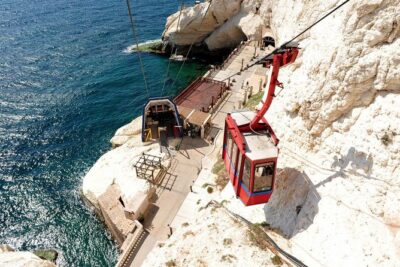
Unforgettable Tour to Caesarea, Haifa, Acre and Rosh HaNikra from Tel Aviv
Read our review →
Tel Aviv/Jerusalem: Caesarea, Haifa & Akko Day Tour
Read our review →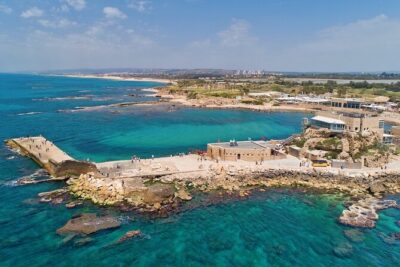
Browse the lists this tour appears in