
Reviewed · CAESAREA AND ACRE TOURS
Private tour: Caesarea, Haifa, and Mt. Carmel
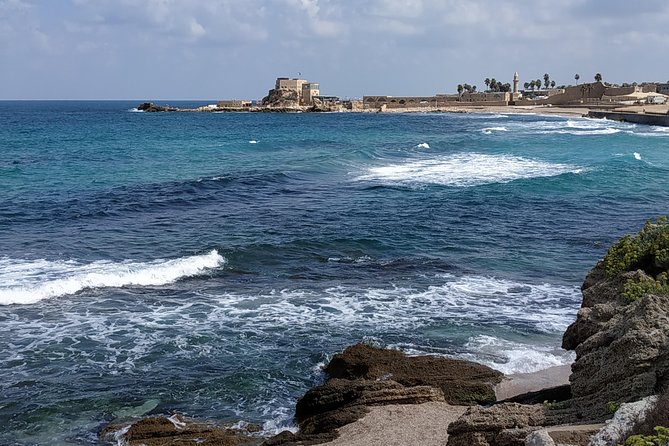
Rome, faith, and sea views fit into one day. This private outing links Caesarea’s Roman ruins with Haifa’s Bahai Gardens and the high viewpoints of Mt. Carmel, while leaving room for your group’s interests. I like the flexible format and the chance to travel with an archaeologist, Dr. David Gurevich, rather than follow a fixed script.
I also like that families and mixed-age groups can shape the day around their pace. The main caution is cost clarity: the advertised $475 per group covers guiding for up to 15 people, but private transportation, entrance fees, and lunch are extra.
In This Review
- Key points to know before booking
- From Tel Aviv to Caesarea in about 40 minutes
- Caesarea’s Roman theater and Herod’s coastal palace
- The harbor and the newly opened museum
- Haifa’s Bahai Gardens and a change of pace
- Lunch in Daliat El Carmel
- Mt. Carmel, Elijah, and the Jezreel Valley
- The optional choice between Megiddo and Akko
- What the $475 price really buys you
- Who will enjoy this day most
- Timing, meeting point, and cancellation
- FAQ
- How long does the tour last?
- Where does the tour start?
- Is transportation included in the price?
- Are entrance fees included?
- Is lunch included?
- Can the itinerary include Megiddo or Akko?
- Is this a private tour?
- Should you book the Caesarea, Haifa, and Mt. Carmel tour?
Key points to know before booking
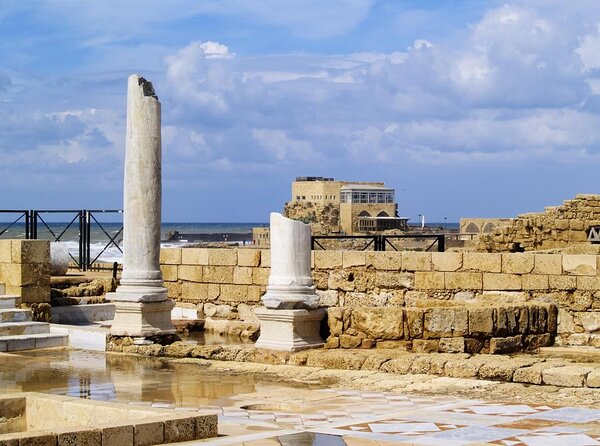
- Caesarea gets the most attention: Expect about two and a half hours across the Roman theater, palace remains, hippodrome, harbor, and museum.
- Dr. David Gurevich leads the tour: His PhD in archaeology adds serious context, especially at Caesarea.
- The itinerary is flexible: You can ask about adding Megiddo or Akko, though doing so may affect the day’s timing.
- Mt. Carmel adds variety: The tour moves from Roman ruins to a Druze village, a Christian monastery, and wide views over the Jezreel Valley.
- Transportation needs checking: Pickup is offered, but private transportation is listed separately from the guiding fee.
- Modest dress matters: You will visit Bahai and Christian religious sites, so dress respectfully.
From Tel Aviv to Caesarea in about 40 minutes
The day begins at 8:00 a.m. at Tel Aviv Savidor Train Station, with the tour returning there at the end. The drive north to Caesarea takes about 40 minutes, making this a practical way to reach the Mediterranean coast without arranging several separate day trips.
The private format is the main advantage from the start. Your group alone takes part, and the schedule can be adjusted to suit families, academic groups, or people who want more time for archaeology. A family with children and older relatives can ask for a gentler pace, while an archaeology-focused group can spend longer discussing the site.
The group limit is generous, up to 15 people. That makes the $475 price potentially fair for a large family or small organization, but much less attractive for one or two people. At the full limit, the guiding fee works out to about $32 per person before transportation, admissions, and lunch. For a couple, it is effectively a premium private guide.
One practical point deserves attention before you pay: pickup is offered, yet private transportation is listed as not included. Ask exactly how the vehicle is arranged and what it costs. The start and end point is clearly given as Savidor Train Station, so you should not assume that door-to-door hotel transport is part of the price.
More Private Tours in Tel Aviv
- Jerusalem Private Full Day Tour
★ 5.0 · 110 reviews - Exclusive Private Tour in The Israel Diamond Exchange
★ 5.0 · 60 reviews - Tel Aviv Airport (TLV) to Tel Aviv Hotels – Private Transfer
★ 4.0 · 59 reviews
Caesarea’s Roman theater and Herod’s coastal palace
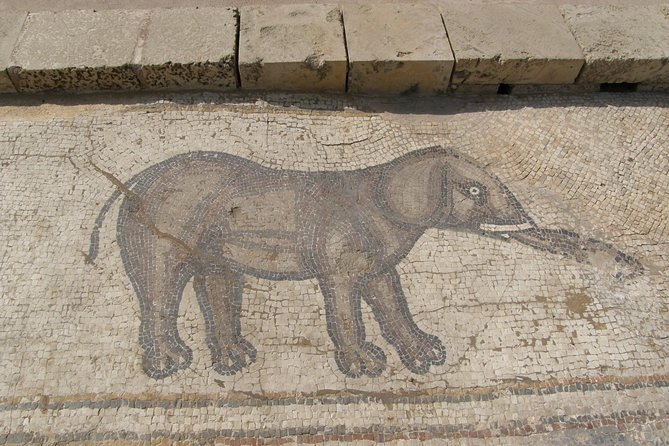
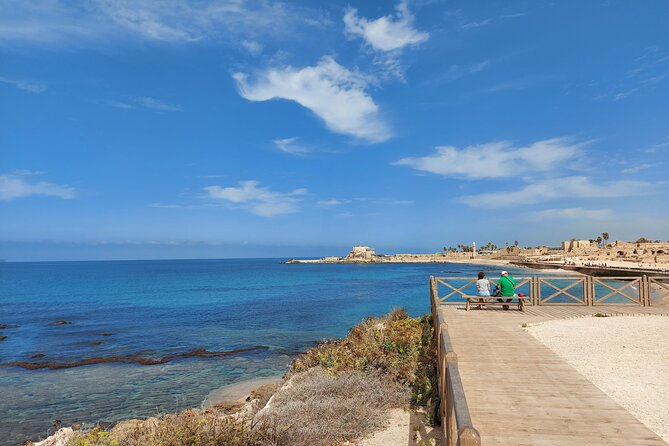
Caesarea is the center of the day, and rightly so. Herod the Great established the port city, which later became the capital of the Roman province. The remains combine sea views with the hard evidence of Roman planning, public entertainment, royal power, and maritime trade.
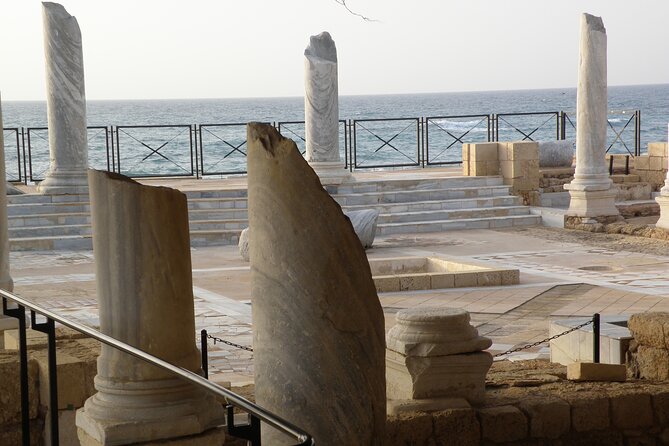
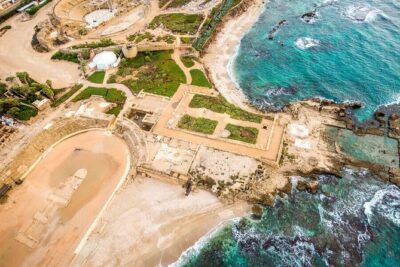
The first visit lasts about two hours. You can expect to see the Roman theater, the remains of Herod’s coastal palace, the hippodrome, and the ancient port. Each stop gives the guide a different way to explain how the city worked.
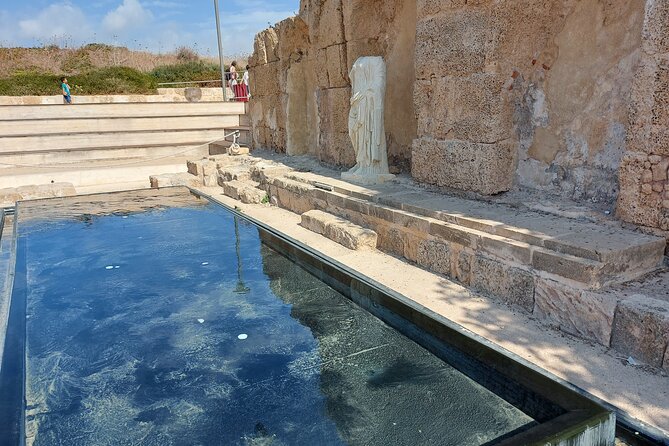
The theater is a natural place to begin. Its surviving structure helps you picture public performances in a Roman city, while its position near the coast gives the visit a strong visual start. I would pay attention to how the site connects architecture with political life. Public buildings were not simply useful; they displayed the authority and wealth of the ruler who built them.
Herod’s coastal palace provides another angle. The remains are linked to the ruler’s private and ceremonial world, and the setting brings the sea directly into the experience. The view is part of the appeal, but the guide’s explanation is what turns scattered stones into a readable site.
The hippodrome shifts the mood from royal residence to mass entertainment. Horse racing drew large crowds, and the space gives you a sense of the scale needed for public spectacles. If you are visiting with children, this is one of the easier places to make the past feel immediate. Racing, cheering, and competition need little explanation.
The ancient port finishes the main exploration. Caesarea was not just a palace town or archaeological display. Its harbor made the city a major point of contact along the Mediterranean. Looking across the remains, you can connect the city’s political importance to ships, commerce, and movement along the coast.
The guide is especially important here. David Gurevich has a PhD in archaeology, and the strongest praise for his work centers on detail, historical context, and his ability to explain more than the visible ruins. That is valuable at Caesarea, where a casual walk can easily become a quick look at old walls. With a specialist, you are more likely to understand how the parts relate to one another.
The harbor and the newly opened museum
A second Caesarea stop lasts about 30 minutes and focuses on the ancient harbor and newly opened museum. The shorter visit gives the day a second look at the site instead of treating Caesarea as one long, tiring walk.
That division can work well. The first section covers the major remains, while the later stop gives you time to take in the port and museum with a different focus. It also creates a natural pause before heading to Haifa.
Admission fees are not included for Caesarea. You should allow for that extra cost when comparing this outing with a larger group tour. The exact amount is not supplied here, so confirm the current fee before booking.
The main drawback is that the experience depends heavily on how the guide uses the time. Two and a half hours can feel generous for an archaeology fan, but short if you want every exhibit, photograph, and explanation. The private setting helps because you can ask for emphasis on the theater, palace, port, or museum rather than simply following a standard route.
Haifa’s Bahai Gardens and a change of pace
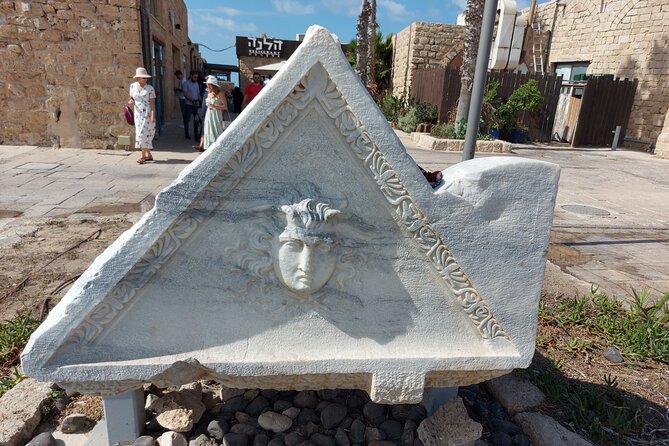
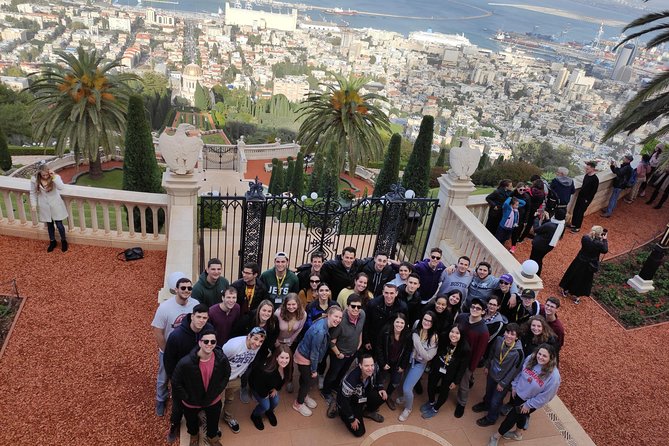
The road then continues to Haifa, where the tour stops at the Bahai Gardens for about 40 minutes. The gardens are a UNESCO World Heritage site and the worldwide center of the Bahai faith.
This is a sharp contrast with Caesarea. Instead of broken Roman structures and open archaeological ground, you get a carefully ordered religious site with strong visual lines and views across Haifa. The stop is free, according to the tour details, although the experience is still shaped by site rules and appropriate conduct.
Forty minutes is enough for an overview and photographs, but it is not a long study visit. You will want to listen closely to the guide and avoid spending the entire stop taking pictures. The setting does much of the visual work, while the explanation provides the religious and cultural context.
Wear modest clothing for this portion of the day and for the monastery later on. That is not just a packing tip. Respectful dress makes it easier to enter religious places without an awkward last-minute adjustment.
The Bahai Gardens also show why this tour works as a single day. You are not seeing five versions of the same ruin. The program moves between Roman authority, Mediterranean trade, a modern faith center, Druze culture, and Christian tradition.
More coastal runs to Caesarea and Acre:
- From Tel Aviv: Caesarea, Haifa and Akko Day Trip
★ 4.4 · 744 reviews - Caesarea, Rosh Hanikra and Acre Day Trip from Tel Aviv
★ 4.5 · 406 reviews - Walking Tour of Akko (Half-day)
★ 5.0 · 84 reviews - Unforgettable Tour to Caesarea, Haifa, Acre and Rosh HaNikra from Tel Aviv
★ 4.0 · 56 reviews
Lunch in Daliat El Carmel
The stop at Daliat El Carmel lasts about an hour and includes time to eat traditional Middle Eastern food in a Druze village. Lunch is not included, so you pay for your own meal.
This is one of the more human parts of the day. After several formal sites, a village meal gives you a chance to sit down, eat, and experience a living community rather than only preserved monuments. The food also adds a regional note that a packed schedule of ruins and viewpoints would otherwise miss.
Because the menu and restaurant are not specified, you should treat the meal as flexible rather than a fixed tasting menu. Ask the guide what is available that day and how much time you have before ordering. An hour is enough for a straightforward meal, but not for a slow, extended lunch.
The village stop is also useful for families. Children may welcome a break from site explanations, and older adults may appreciate the chance to rest. For a group of 10 or more, the private arrangement can make meal timing easier, but it is still wise to keep an eye on the clock.
Mt. Carmel, Elijah, and the Jezreel Valley
The final major stop is the Discalced Carmelite Order Muhraqa Monastery on Mt. Carmel. The visit lasts about an hour and includes a viewpoint over the Jezreel Valley, along with the monastery dedicated to Elijah the prophet.
This stop brings together scenery and religious tradition. The view gives the day its broadest sense of place, while the monastery provides a focused site connected with biblical tradition. It is a fitting final visit after the more urban and coastal stops.
You should expect a quieter atmosphere here than at Caesarea. The appeal is not a long list of structures, but the combination of the mountain setting, the valley view, and the monastery’s meaning. Modest clothing is important again.
The view over the Jezreel Valley is also a good reason not to rush the final hour. Weather and visibility will affect what you see, and the stop is best enjoyed with a little time to look around rather than treating it as a quick photograph from the vehicle.
The optional choice between Megiddo and Akko
Megiddo and Akko are mentioned as optional additions. They are not part of the stated core route, so you should discuss them before the day begins.
Megiddo would appeal to anyone interested in archaeology and biblical-era sites. Akko would suit someone more interested in an ancient port city and a different coastal setting. Both could add major value for the right group, but fitting them into an eight to nine-hour day may require shortening other stops.
This is where the private format helps most. You can explain whether your priority is Roman archaeology, religious history, food, or views, then ask the guide which addition makes sense. Do not assume that both can be added without changing the schedule. The tour is flexible, but the day is not endless.
A group that has already seen Caesarea may prefer Akko. A group with a strong interest in ancient sites may choose Megiddo. Families with children might decide that the core route already offers enough variety.
What the $475 price really buys you
The price is $475 per group of up to 15 people. The included service is guiding. Entrance fees, lunch, and private transportation are separate.
For a large group, this can be good value. You get a private guide for a full day, a flexible plan, and the ability to ask questions without sharing the schedule with strangers. A group of 10 family members, for example, can split the guide fee and still have a more personal experience than a standard coach excursion.
For a small group, the calculation changes. Two people pay the same group rate, then add transport, admissions, and lunch. If you mainly want to see the sites without detailed explanation, a less expensive shared option may suit you better.
The strongest reason to pay the private-tour price is the guide. David’s academic background is repeatedly praised for adding depth at Caesarea and for making the day work for ages ranging from children to older adults. He has also helped a group arrange travel and hotel needs in another city, which suggests a useful level of practical attention beyond the formal tour route.
Still, academic detail is not automatically the right choice for everyone. If you prefer a short introduction and lots of independent time, say so at the beginning. The private structure gives you room to set that tone.
Who will enjoy this day most
I would recommend this tour most strongly to:
- Families who want one guide and one flexible schedule
- Small groups sharing the cost of a private outing
- People with a serious interest in archaeology
- First-time visitors who want several major northern sites in one day
- Groups with mixed ages and different levels of stamina
- Anyone considering Megiddo or Akko as an addition
It is less suitable if you want a slow visit to every site. The route covers a lot of ground, and the day includes several distinct stops. You will spend time moving between Caesarea, Haifa, Daliat El Carmel, and Mt. Carmel.
The tour also may not suit someone looking for a fully inclusive price. You need to budget separately for transportation, entrance tickets, and lunch. Confirming those costs before booking will prevent the $475 headline price from becoming a surprise.
Timing, meeting point, and cancellation
The experience starts at 8:00 a.m. and ends back at Tel Aviv Savidor Train Station. It lasts about eight to nine hours, so plan on a full day rather than a short excursion.
Confirmation is sent within 48 hours, subject to availability. The meeting point is near public transportation, and most people can take part. The supplied details do not promise hotel pickup, despite stating that pickup is offered, so clarify the exact pickup arrangement.
Free cancellation is available if you cancel at least 24 hours before the start time. Cancellations or changes made inside that period are not accepted for a refund.
FAQ
How long does the tour last?
The tour lasts approximately eight to nine hours, beginning at 8:00 a.m. and ending back at Tel Aviv Savidor Train Station.
Where does the tour start?
The meeting point is Tel Aviv Savidor Train Station in Tel Aviv-Yafo. The activity ends back at the same meeting point.
Is transportation included in the price?
No. Guiding is included, but private transportation is listed separately as not included. Confirm the transportation arrangement and price before booking.
Are entrance fees included?
No. Entrance fees for Caesarea, the monastery, and other paid sites are not included. The Bahai Gardens stop is listed as free.
Is lunch included?
No. Lunch in Daliat El Carmel is not included, so you pay for your own meal.
Can the itinerary include Megiddo or Akko?
Megiddo and Akko are offered as optional locations. Discuss the choice with the guide in advance because adding either site may affect the timing of the main route.
Is this a private tour?
Yes. Only your group takes part, with a maximum group size of 15 people.
Should you book the Caesarea, Haifa, and Mt. Carmel tour?
Book it if you want a private, guide-led day with strong archaeology, varied scenery, and room to shape the schedule. The best fit is a family or larger group that can share the $475 fee and values detailed explanations from an academic guide.
I would be more cautious if you are traveling as a couple or watching every expense. Ask for the full transportation and admission costs first. If the total still works for your budget, Dr. David Gurevich’s archaeological background and the mix of Caesarea, Haifa, Druze food, and Mt. Carmel make this a satisfying way to see several sides of northern Israel in one well-planned day.
Recently listed in Tel Aviv
- Wine Tour North of Israel from Tel Aviv★ 5.0 · 2 reviews
- private Full-day Tour to Jericho + the Dead Sea★ 5.0 · 3 reviews
- private Full-Day Tour to Bethlehem and Jerusalem★ 5.0 · 2 reviews
- Private wine tour of Northern Israel★ 5.0 · 4 reviews
- Package VIP Skip Line Services in BGN Airport with Transfer to Tel aviv Hotels★ 5.0 · 3 reviews
- Jerusalem and Dead Sea Trip from Tel Aviv★ 4.0 · 6 reviews
- Private Transfer from Ben Gurion Airport to Tel Aviv, Bat Yam, Rishon LeZion★ 5.0 · 2 reviews
- VIP Tel Aviv airport Terminal 3 Fast Track Skip Line From plane★ 4.5 · 9 reviews
Caesarea and Acre Tours, compared.
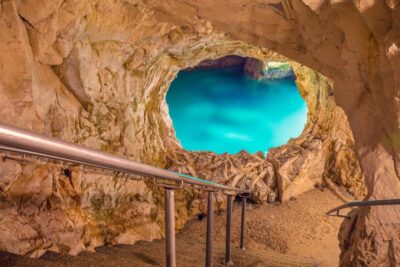
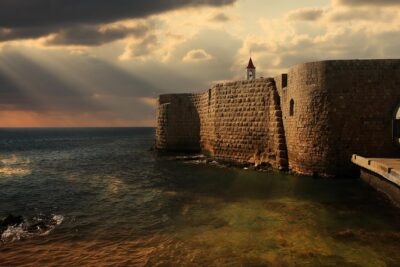
Caesarea, Rosh Hanikra and Acre Day Trip from Tel Aviv
Read our review →
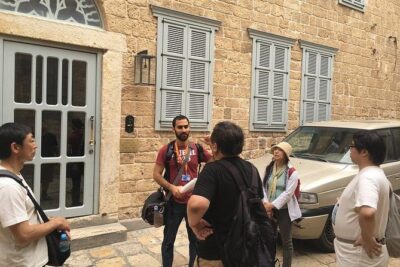
Caesarea, Acre & Rosh Hanikra Day Trip from Jerusalem
Read our review →
Unforgettable Tour to Caesarea, Haifa, Acre and Rosh HaNikra from Tel Aviv
Read our review →
Tel Aviv/Jerusalem: Caesarea, Haifa & Akko Day Tour
Read our review →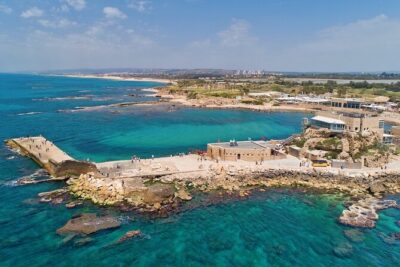
Browse the lists this tour appears in