
Reviewed · 2-DAY EXPERIENCES
Palestine Revealed 2-Day Private Tour from Tel Aviv
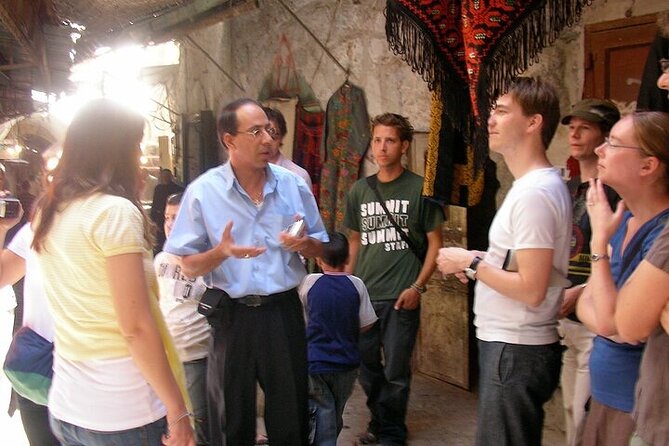
History here is never far away. This private tour from Tel Aviv combines Bethlehem’s major religious sites with Hebron’s checkpoints, settlements, refugee camp, and Palestinian family life, giving you far more political context than a standard sightseeing trip. I like the small private format and the chance to share a meal with a Palestinian family, rather than simply viewing the West Bank through a bus window. I also like that the route includes both famous landmarks and difficult places such as Shuhada Street and the Separation Barrier.
The main consideration is the price: $1,489 per person is a serious outlay for two days. It becomes easier to justify if you value private transport, an English-speaking guide, accommodation, meals, and a focused discussion of the Israeli occupation. It is less appealing if you want a low-cost religious sightseeing tour or a politically neutral presentation.
In This Review
- Key Points Before You Book
- Why This Tour Is Different From a Standard Bethlehem Excursion
- From Tel Aviv to Gush Etzion
- Kiryat Arba and the Memory of Violence
- The Cave of the Patriarchs and Two Sacred Traditions
- Walking Hebron’s Old City and Shuhada Street
- Hebron Glass and Ceramics
- Mar Saba and the Judean Desert
- The Church of the Nativity in Bethlehem
- The Separation Barrier and the Walled Off Hotel
- Aida Refugee Camp and Personal Stories
- Overnight Arrangements, Meals, and Comfort
- Is $1,489 Per Person Good Value?
- Who Should Book This Experience?
- Practical Tips for the Two Days
- Should You Book the Palestine Revealed Tour?
- FAQ
- How long is the Palestine Revealed tour?
- Where does the tour start and end?
- What time does the tour begin?
- Is a passport required?
- What should I wear?
- Is admission to the Walled Off Hotel included?
Key Points Before You Book
- Hebron is the emotional center: You visit Kiryat Arba, the Cave of the Patriarchs, Shuhada Street, military checkpoints, settler compounds, and the Old City in one concentrated day.
- The tour presents a clear Palestinian perspective: The guide explains the occupation and its effect on Palestinian communities, rather than treating politics as a side note.
- Meals are part of the experience: Lunch with a Palestinian family in Hebron and an optional overnight stay with a middle-class Palestinian family in Bethlehem add personal contact.
- Day two mixes sacred places and modern politics: Mar Saba and the Church of the Nativity are followed by the Separation Barrier, Banksy’s artwork, the Walled Off Hotel, and Aida Refugee Camp.
- You need a passport and modest clothing: Religious and socially conservative settings make long trousers, covered shoulders, and a high neckline the sensible choice.
- The private format costs more but gives you room to ask questions: Only your own group takes part, so the pace and conversation can feel more focused than on a large coach tour.
Why This Tour Is Different From a Standard Bethlehem Excursion
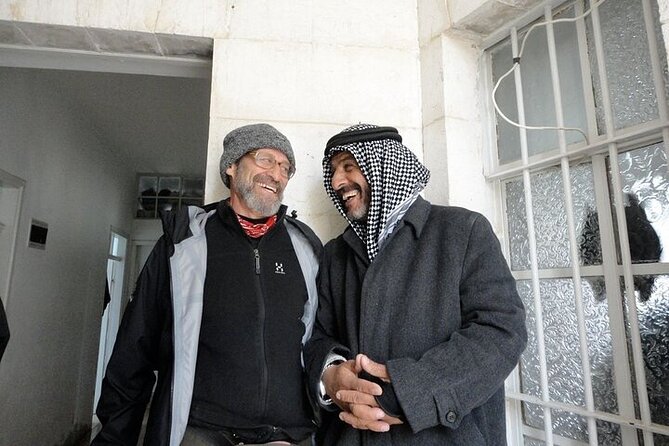
Many day trips from Tel Aviv reduce Bethlehem to the Church of the Nativity, a quick lunch, and a hurried return. This two-day program takes a broader and more demanding view. You see the religious landmarks, but you also visit places shaped by borders, military control, settlement expansion, displacement, and restricted movement.
That focus is important to understand before booking. The tour is not designed to present every political viewpoint in equal measure. Its purpose is to explain the Palestinian experience of the occupation and show how Israeli settlements and military arrangements affect nearby Palestinian towns and villages. You should expect direct discussion of a contested subject.
I see that as the tour’s greatest strength for the right audience. You are given places to look at, people to meet, and local industries to visit, rather than receiving only a political lecture. At the same time, the subject matter can be confronting. Hebron in particular is not an easy stop, and the experience may feel heavy at times.
Because the tour is private, you can ask for clarification without worrying about a bus full of strangers. The English-speaking guide is there for the entire program, and the private setup should make it easier to pause for questions or discuss the meaning of what you are seeing.
More Private Tours in Tel Aviv
- Jerusalem Private Full Day Tour
★ 5.0 · 110 reviews - Exclusive Private Tour in The Israel Diamond Exchange
★ 5.0 · 60 reviews - Tel Aviv Airport (TLV) to Tel Aviv Hotels – Private Transfer
★ 4.0 · 59 reviews
From Tel Aviv to Gush Etzion
The tour starts at 7:30 a.m., with pickup offered from your Tel Aviv hotel. The listed meeting point is the Clock Tower on Yefet Street in Jaffa, so confirm the exact pickup arrangement before the morning of departure.
Your route heads through Jerusalem and then into the Gush Etzion settlement bloc. The first stop lasts about 30 minutes and introduces the Israeli communities in the area, along with their effect on nearby Palestinian villages.
This is a useful opening because it gives you political geography before you reach Hebron. Settlements are not abstract marks on a map here. They are communities with roads, security arrangements, and a physical relationship to Palestinian villages around them. The guide explains the current status of these communities and the disputes surrounding them.
Do not expect a long walk or a major monument at this stop. Its value comes from explanation and orientation. You are beginning to see how the West Bank is divided into overlapping communities and systems of control.
Kiryat Arba and the Memory of Violence
On entering Hebron, you first visit Kiryat Arba, an Israeli suburb and Jewish enclave at the edge of the city. The stop takes about 30 minutes and includes Baruch Goldstein’s tomb.
This is one of the tour’s most controversial moments. Goldstein carried out a massacre at the Cave of the Patriarchs in 1994, killing Muslim worshippers. Visiting his tomb is not presented as a casual cultural stop. It raises questions about extremist violence, commemoration, and the way a city remembers its dead.
You should arrive ready for a serious discussion, not a photo opportunity. The subject may be upsetting, and some people will find the stop difficult. That is also why it belongs in a tour that wants to explain Hebron as a place where religion, memory, politics, and military power meet in a very small area.
The Cave of the Patriarchs and Two Sacred Traditions
The Cave of the Patriarchs, known to Muslims as Al-Haram Al-Ibrahimi and to Jews as Me’arat Hamachpela, is one of the world’s most important shared holy sites. The tour allows about 90 minutes here and gives you the opportunity to enter both the mosque on the Muslim side and the synagogue on the Jewish side.
The site is associated with Abraham, making it sacred to Judaism, Islam, and Christianity. Yet the arrangement of the building and the rules governing access also reflect the division of Hebron. You are not simply visiting an ancient tomb. You are seeing how religious space can be separated and regulated in a city claimed by more than one community.
Bring your current passport. It is specifically required for this stop and for the day’s travel. Dress conservatively, with trousers or long skirts, covered shoulders, and a shirt that reaches toward the neck. The tour advises that only your face, lower arms, and hands should show. In hot weather, light, loose clothing is the practical answer.
Allow time for security and changing access conditions. The provided schedule gives 90 minutes, but the experience depends on the day’s arrangements. Your guide can help you understand what you are seeing on both sides.
More Tel Aviv tours worth comparing
- From Tel Aviv: Masada & Dead Sea Full Day Tour with Pick Up
★ 4.5 · 1,496 reviews - From Tel Aviv: Jerusalem and Bethlehem Guided Day Trip
★ 4.3 · 1,316 reviews - Masada and the Dead Sea Day Trip from Tel Aviv
★ 4.5 · 1,014 reviews - Tel Aviv: Jerusalem, Bethlehem & Dead Sea
★ 4.0 · 881 reviews
Walking Hebron’s Old City and Shuhada Street
After the holy site, you spend about two and a half hours walking through Hebron’s Old City and along Shuhada Street. This is the part of the tour where the city’s political divisions become physical and visible.
You see settlers’ compounds, a military base, and checkpoints along the route connecting those areas. The tour describes the ghetto-like neighborhoods of Hebron and the restrictions that shape movement through the city. The word ghetto is politically loaded, but it reflects the tour’s stated approach to the area and its focus on Palestinian living conditions.
This walk requires more attention than a normal old-town stroll. Look at the street layout, the barriers, the military presence, and the empty or restricted sections. The guide’s commentary matters because many of the details are easy to miss if you only take photographs.
Lunch is served in the Old City, with the opportunity to eat with a Palestinian family in Hebron. That personal contact gives the day a human center. You are not only hearing about policy and history. You are sitting down for a meal and listening to how those conditions affect ordinary family life.
The lunch is also one reason this private tour can feel more meaningful than a standard guided visit. It creates time for conversation, although you should approach it with respect and avoid treating the family’s experience as a tourist performance.
Hebron Glass and Ceramics
The day finishes with a visit to a local glass factory, lasting about 30 minutes. Glassmaking is a common industry in Hebron, and the stop offers a useful change of pace after the difficult material earlier in the day.
This is not an optional shopping stop described only in terms of souvenirs. Local craft connects the city to work, family businesses, and Palestinian economic life. You may find glass and ceramics for sale, but the more important point is seeing a local trade continue in a city under considerable political and economic pressure.
If you prefer a tightly packed list of monuments, half an hour at a factory may feel less essential. I like the contrast. It reminds you that Hebron is not only a political symbol. It is also a working city.
Mar Saba and the Judean Desert
Day two begins at Mar Saba Monastery, with about 90 minutes at the site. The monastery offers striking views across the Judean desert and a strong visual change from Hebron’s dense streets and checkpoints.
The stop provides quiet and space to look outward. Mar Saba is a religious site in a dramatic desert setting, and the view helps explain why this part of the region has drawn monks and pilgrims for centuries. The tour schedule does not promise a long interior visit or specify admission arrangements, so think of this as a scenic and historical stop centered on the monastery and its setting.
Comfortable shoes will help throughout the two days, especially since the program combines city walking, old streets, and outdoor viewpoints. The schedule is full, and the morning at Mar Saba is not simply a drive-by photograph.
The Church of the Nativity in Bethlehem
From Mar Saba, you continue to Manger Square and the Church of the Nativity. The visit and walk through Bethlehem’s Old City take about two hours.
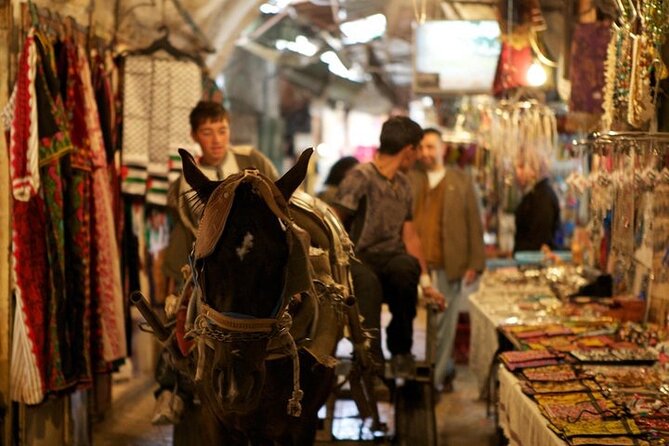
The church marks the traditional birthplace of Jesus and is Bethlehem’s essential religious sight. Manger Square gives you an immediate sense of the city’s role as a pilgrimage center, while the Old City adds streets, shops, and everyday life around the monument.
The tour works best here because the church is not treated as the entire story of Bethlehem. You see the place that draws religious visitors, then move into the political and social issues that shape the city outside the church walls.
The pace may feel quick if you want extended time for prayer, photography, or independent shopping. Still, the two-hour allocation is sensible within a program that must also include the barrier, the Walled Off Hotel, and Aida Camp.
The Separation Barrier and the Walled Off Hotel
After lunch at a local restaurant, your guide takes you along the Separation Barrier surrounding Bethlehem. The walk lasts about two hours and 15 minutes, making it one of the longest sections of the second day.
The guide explains how the wall affects local Palestinians and how artists have used its surfaces for political art and graffiti. Banksy’s work is part of this discussion, but the point is larger than identifying a famous artist. You are looking at a barrier that functions as a political object, a restriction on movement, and a public canvas.
The Walled Off Hotel adds another layer. Developed to bring visitors to an area that had been largely abandoned, it contains a museum about the occupation, a gallery for local artists, and art connected to the wall.
Admission is not included. The fee is 20 NIS, so carry local currency or confirm the accepted payment method. This is a modest extra cost, but it is easy to overlook when the tour price is already high.
I would give this section time and attention. It can be tempting to treat Banksy’s art as a photo stop, yet the setting is the real subject. The art draws you in, while the guide explains why the wall exists and what it means for people living nearby.
Aida Refugee Camp and Personal Stories
The final scheduled stop is Aida Refugee Camp, where you spend about an hour. You have the opportunity to meet local residents and hear their stories.
This visit places displacement and refugee life into direct human terms. It also keeps the tour from ending with art and architecture. The camp is part of the modern Palestinian story, and the guide’s role is to provide context while local people speak about their own lives.
As with the family meal in Hebron, your attitude matters. Listen carefully, ask polite questions, and avoid assuming that one person speaks for everyone in the camp. The tour gives you access to personal experiences, not a single answer to a complicated political issue.
The day ends back at the meeting point in Tel Aviv after the return journey. Exact driving times are not provided, so expect a long day with several stops and plenty of time on the road.
Overnight Arrangements, Meals, and Comfort
The tour includes one night of accommodation, normally in double or triple occupancy. A single room is not included unless specified, and a three or four-star hotel upgrade costs extra if you request it.
An optional overnight stay with a middle-class Palestinian family in Bethlehem is also offered. This choice may appeal to you if personal exchange matters more than hotel comfort. If you prefer privacy and predictable facilities, choose the standard accommodation arrangement and clarify the room setup before booking.
Breakfast, dinner, and two lunches are listed among the inclusions, although the wording around meals is slightly repetitive. Alcoholic drinks are not included, and food or drinks outside the stated meals are your responsibility.
Transport is air-conditioned, and coffee or tea is included. Those details matter during a full two-day route, especially in warm weather. The private vehicle also saves you from arranging separate transport between Tel Aviv, Jerusalem, Hebron, Bethlehem, Mar Saba, and the return point.
Is $1,489 Per Person Good Value?
At $1,489 per person, this is expensive. The value depends on what you would otherwise need to arrange yourself.
The price covers private air-conditioned transport, hotel pickup and drop-off, an English-speaking guide, one night of accommodation, breakfast, dinner, lunches, and a carefully planned route through areas that can be difficult to visit independently. You are also paying for access to local encounters and sustained explanation, not just entrance to a few monuments.
The cost makes more sense for a couple or small group that wants privacy and serious political discussion. Group discounts may improve the value, especially if several people share the private vehicle and guide.
It makes less sense if your main goal is the Church of the Nativity. A shorter Bethlehem tour would likely suit that purpose better. You are paying a premium here for the two-day scope, the private arrangement, the Hebron visit, the family meal, and the focus on occupation and Palestinian daily life.
Who Should Book This Experience?
I would recommend this tour to you if you want to understand how sacred sites, settlements, checkpoints, refugee camps, and ordinary communities fit together. It suits readers who prefer direct local contact and are willing to spend time with difficult subjects.
It is also a good choice if you want a private setting. The two published experiences connected with Green Olive Tours praise the company’s planning, coordination, and guide support. Guides named in those experiences include Yahav in Jerusalem, Mustafa in Bethlehem, and Mohammad in Jericho, although the guide for your booking is not specified.
I would not choose this tour for a light, easygoing weekend. Hebron’s political divisions, Goldstein’s tomb, the wall, and Aida Camp can be emotionally demanding. The company’s approach is clearly sympathetic to Palestinian accounts of the occupation, so you should book with that perspective in mind.
Cancellation is flexible only up to three full days before the start time. After that, the payment is not refunded and last-minute changes are not accepted.
Practical Tips for the Two Days
- Bring your current passport, especially for the Cave of the Patriarchs.
- Wear trousers or another modest lower garment, plus a shirt covering your shoulders and upper chest.
- Choose light, loose clothing in hot weather.
- Wear shoes suitable for walking through old streets and outdoor sites.
- Budget 20 NIS for entry to the Walled Off Hotel.
- Confirm hotel pickup because the listed starting point is the Clock Tower in Jaffa.
- Clarify whether you will share a double or triple room, or pay for a single room.
- Ask about the hotel upgrade if three or four-star accommodation matters to you.
- Keep an open mind, but remember that the tour presents a clearly Palestinian-centered account of the occupation.
Should You Book the Palestine Revealed Tour?
Book it if you want a serious, personal look at Hebron and Bethlehem rather than a checklist of holy places. The strongest parts are the walk through Hebron, the family meal, the wall and Walled Off Hotel, and the chance to hear directly from people in Aida Camp.
Think twice if the price is beyond your budget, if you prefer a politically neutral tour, or if you want relaxed sightseeing with plenty of free time. For the right reader, this is a valuable two-day introduction to the Palestinian Territories, but it asks you to listen carefully and accept that the experience will not always be comfortable.
FAQ
How long is the Palestine Revealed tour?
The tour lasts approximately two days and includes one overnight stay.
Where does the tour start and end?
The listed meeting point is the Clock Tower at Yefet Street 14 in Tel Aviv-Yafo. The activity ends back at the meeting point, and hotel pickup and drop-off in Tel Aviv are offered.
What time does the tour begin?
The scheduled start time is 7:30 a.m.
Is a passport required?
Yes. A current valid passport is required on the day of travel, and you should make sure to bring it for the Cave of the Patriarchs visit.
What should I wear?
Dress modestly. Trousers are recommended for men and women, with shoulders and the area around the neck covered. Light, loose clothing is suggested in hot weather.
Is admission to the Walled Off Hotel included?
No. Admission costs 20 NIS and is not included in the tour price.
Recently listed in Tel Aviv
- Wine Tour North of Israel from Tel Aviv★ 5.0 · 2 reviews
- Private wine tour of Northern Israel★ 5.0 · 4 reviews
- private Full-day Tour to Jericho + the Dead Sea★ 5.0 · 3 reviews
- private Full-Day Tour to Bethlehem and Jerusalem★ 5.0 · 2 reviews
- Package VIP Skip Line Services in BGN Airport with Transfer to Tel aviv Hotels★ 5.0 · 3 reviews
- Jerusalem and Dead Sea Trip from Tel Aviv★ 4.0 · 6 reviews
- Private Transfer from Ben Gurion Airport to Tel Aviv, Bat Yam, Rishon LeZion★ 5.0 · 2 reviews
- VIP Tel Aviv airport Terminal 3 Fast Track Skip Line From plane★ 4.5 · 9 reviews
2-Day Experiences, compared.
2 Day Tour to Petra and Wadi Rum from Tel Aviv
Read our review →
Palestine Revealed: 2-Day Private Tour from Jerusalem
Read our review →
2-Day Best of Israel Tour from Tel Aviv: Jerusalem, Bethlehem and Masada Tour
Read our review →
Browse the lists this tour appears in