
Reviewed · WALKING TOURS
Tel Aviv’s Old Neighborhoods walking Tour
Tel Aviv’s past hides in plain sight. This evening walk links Rothschild Boulevard, Florentin, and Neve Tzedek while explaining the city’s founding stories, unusual architecture, and changing neighborhoods. I especially like the small group, capped at eight, and the route’s mix of major history with everyday hangouts such as Levinsky Street and Teder.fm. The main consideration is pace: 11 stops in about two and a half hours means some visits are brief.
Guide Menno earns special praise for explaining places that first-time visitors can easily miss. I also like the 7:30 pm start, when the route shifts from formal history to cafés, bars, food stalls, and evening street life. You will need moderate physical fitness, and the tour is more about walking and stories than entering major attractions.
In This Review
- Key points to know before you book
- Why this walk gives Tel Aviv a useful introduction
- Starting on Rothschild Boulevard and the road to independence
- Park HaMesila and the old railway line
- Florentin after dark: Teder.fm, Aluf Batslut Square, and street art
- Levinsky Street and Tel Aviv’s food culture
- The German-American Colony and a complicated beginning
- HaTachana, the old station with a new purpose
- Suzanne Dellal and the quiet lanes of Neve Tzedek
- What $55 means in practical value
- Timing, fitness, and who should book
- Should you book this Tel Aviv walking tour?
- FAQ
- How long does the Tel Aviv Old Neighborhoods Walking Tour last?
- What time does the tour begin?
- Where does the tour start?
- Where does the tour end?
- How many people can join the tour?
- Can I cancel for a full refund?
Key points to know before you book
- Small group of no more than eight: You get a better chance to ask questions and keep up with the guide.
- A city told through neighborhoods: The route moves from Independence Hall and Bauhaus buildings to Florentin’s street art, the German-American Colony, and Neve Tzedek.
- Evening timing works well: The 7:30 pm start brings you to bars, restaurants, and social spaces after daytime heat and activity have eased.
- Menno is the guide to look for: His clear storytelling about Tel Aviv’s origins was the strongest praise attached to this experience.
- Mostly an outdoor walk: Stops are free, but the value comes from the guide’s explanations and the connected route.
- Good for repeat visitors: The tour reveals lesser-known corners even if you have already seen Tel Aviv’s main sights.
Why this walk gives Tel Aviv a useful introduction
Tel Aviv can seem young, casual, and short on old monuments. That impression changes once you walk through its earliest neighborhoods. This tour shows you how the city grew through a mix of Jewish pioneers, foreign settlers, railway links, industrial work, preservation, and nightlife.
I like that the route does not stay in one polished district. You move through areas with different moods and different stages of renewal. Rothschild Boulevard gives you national history and architecture. Florentin adds workshops, graffiti, cafés, and late-night culture. Neve Tzedek brings the walk back to quiet lanes and carefully restored low-rise buildings.
The guide’s role matters here. Menno is praised for knowing the origins of the city’s unusual neighborhoods and for making complicated pieces of Israeli history understandable. You are not simply checking off buildings. You are learning why the city developed in such an uneven, fascinating way.
The group limit of eight is another real advantage. A large group would make narrow streets harder to manage and would reduce the chance to ask about a building, a business, or a local custom. With a small group, you should find it easier to stay close to the guide during street crossings and busy sections.
More Walking Tours in Tel Aviv
- Walking Tour of Akko (Half-day)
★ 5.0 · 84 reviews - Tel Aviv: Jaffa Half-Day Walking Tour
★ 4.5 · 70 reviews - Tel Aviv: Florentin Saturday Walking Tour
★ 3.5 · 65 reviews
Starting on Rothschild Boulevard and the road to independence
The meeting point is DH Networks LTD at Montefiore Street 48. The walk begins at 7:30 pm, with Rothschild Boulevard as the first major area. You will spend about 10 minutes looking at the boulevard and its early Tel Aviv setting before focusing on Independence Hall.
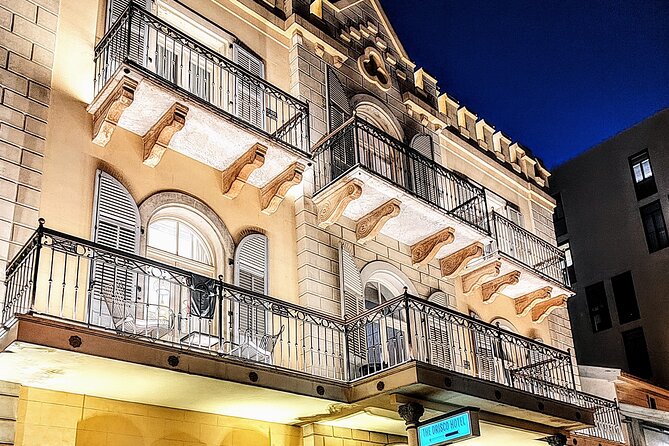
Rothschild Boulevard is important for two reasons. It is one of the city’s best places to see buildings in the Bauhaus and International styles, and it is tied directly to the creation of modern Israel. Many of these buildings form part of the White City of Tel Aviv, a UNESCO World Heritage Site.
I appreciate this opening because it gives you a useful visual lesson before the route becomes more informal. Look up at the façades, balconies, windows, and clean geometric forms. The point is not simply that the buildings look attractive. They help explain why Tel Aviv has such a strong architectural identity.
At Rothschild Boulevard 16, you reach Independence Hall, also called the Dizengoff House. This is where Israel’s Declaration of Independence was signed. The stop lasts about 15 minutes, and admission is listed as free.
Do not expect a long museum visit during this walk. The stop is short, so the guide’s explanation is the key part. If Independence Hall is a priority for you, you may want to set aside separate time to explore it beyond the tour. As part of the walk, though, it gives the evening a clear historical anchor.
Park HaMesila and the old railway line
The route then reaches Park HaMesila, a section of an urban park built along the path of the old Ottoman railway. You spend about 10 minutes here. The park is described as a popular place to hang out at any hour, so it helps connect transport history with present-day city life.
This is one of the more useful transitions in the walk. Railway lines often explain why towns grew where they did, and here the old route helps connect southern neighborhoods with central Tel Aviv. You can see how a former transport corridor has been given a new public purpose.
The stop is not a formal railway museum, and there is no admission charge. Think of it as a place where the guide points out how old infrastructure still shapes the city. If you enjoy urban planning, public spaces, and the way cities reuse former industrial areas, this short stop should interest you.
Florentin after dark: Teder.fm, Aluf Batslut Square, and street art
Florentin is the liveliest section of the evening. At Teder.fm, you get 10 minutes in a place known for music, nightlife, and a distinctly hip social crowd. The description is playful, but the point is practical: this is where Tel Aviv’s modern creative scene becomes part of the tour.
The stop does not promise a full evening at the venue. You are seeing it as one piece of the neighborhood, so you should not book this walk expecting a concert or a long meal there. Still, it is a smart inclusion because it shows how a former working district has become one of the city’s preferred places to spend an evening.
Next comes Aluf Batslut Square, another 10-minute stop. A gray parking area was turned into a small park with benches, beach chairs, grass, and a bar serving drinks, sandwiches, and cakes. That change tells you plenty about Florentin’s character without needing a grand landmark.
I like this pause because it gives the walk a human scale. You see a modest public space made useful through informal design and local business. If the bar is operating during your visit, it may be a tempting place to return after the tour, though the walk itself is not built around eating or drinking.
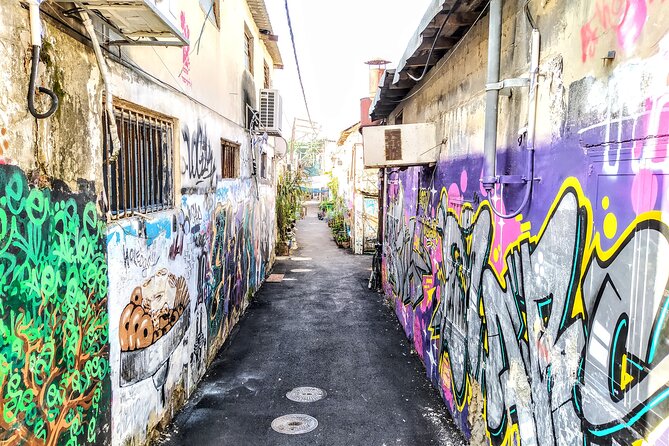
Florentin is also known for street art. The neighborhood combines industrial buildings, a garment district, cafés, bars, graffiti, and a Bohemian identity. You will spend about 10 minutes in the area, but the route’s value is greater than the clock suggests because the guide can explain how these different uses sit side by side.
You might want more time here. Street art is easy to miss when you are moving with a group, and the best details may be on side walls rather than directly ahead. If Florentin interests you most, plan to return in daylight or after the walk for a slower look.
A different day out, same base:
- From Tel Aviv: Masada & Dead Sea Full Day Tour with Pick Up
★ 4.5 · 1,496 reviews - From Tel Aviv: Jerusalem and Bethlehem Guided Day Trip
★ 4.3 · 1,316 reviews - Masada and the Dead Sea Day Trip from Tel Aviv
★ 4.5 · 1,014 reviews - Tel Aviv: Jerusalem, Bethlehem & Dead Sea
★ 4.0 · 881 reviews
Levinsky Street and Tel Aviv’s food culture
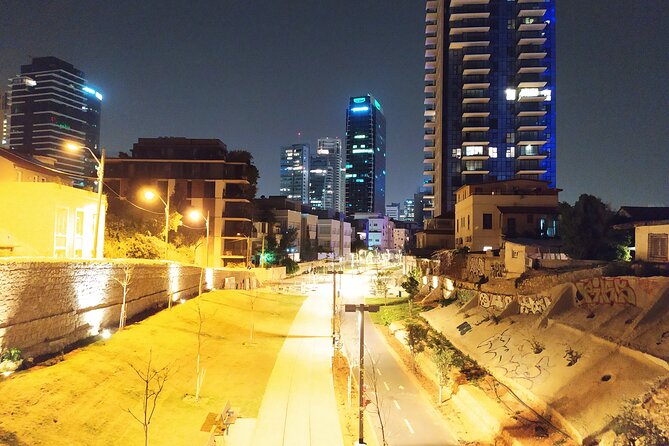
Levinsky Street brings a different flavor. The Levinsky Market is known for spices, food, and fusion cooking during the day. In the evening, the street remains active with bars and restaurants.
This is not presented as a food tasting tour, so you should not arrive expecting included samples or a set meal. Instead, the guide uses the street to show how Tel Aviv’s food culture developed through a mix of communities and imported flavors. The 10-minute stop is enough to orient you, but not enough for a serious market crawl.
If you enjoy food markets, I would make a note of the street and return at a separate time. The tour gives you context and a first look. Your own follow-up visit lets you take your time with spice shops, cafés, and restaurants.
The German-American Colony and a complicated beginning
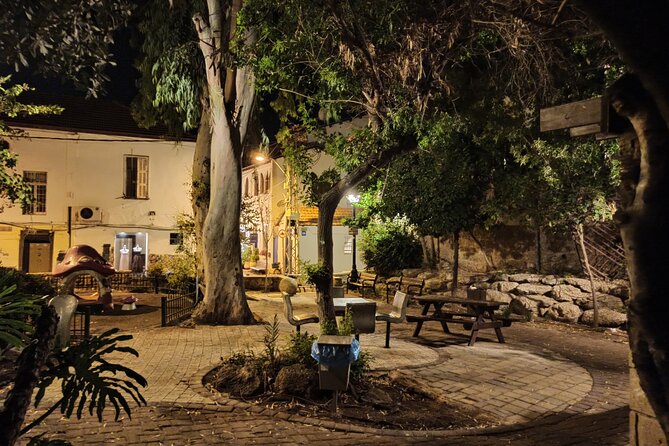
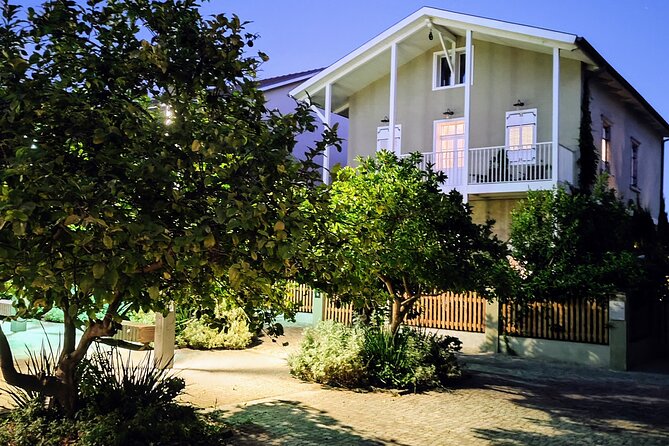
The next stop is the American Colony Quarter, reached after the more modern feel of Florentin. The explanation here is particularly useful because the area is also identified as the German-American Colony. Christian Templars were among the first settlers, building one of the earliest neighborhoods in what became Tel Aviv.
The tour’s broader story also refers to American pilgrims and the short-lived Adam’s City. These overlapping names and founding accounts are exactly why a guide helps. Tel Aviv’s early development was not one simple, tidy event, and the neighborhood’s surviving wooden houses make that visible.
You spend about 15 minutes here. The older homes provide a sharp contrast with Florentin’s painted walls and industrial structures. I would pay attention to the building materials and scale rather than expecting a large collection of preserved monuments. The charm is in the small group of houses and the story attached to them.
This stop may be especially rewarding if you have already seen the White City and want something less familiar. It also adds balance to the tour. Tel Aviv is not only Bauhaus apartments and beach culture. Its early story includes outsiders, religious settlers, ambitious plans, and projects that did not last.
HaTachana, the old station with a new purpose
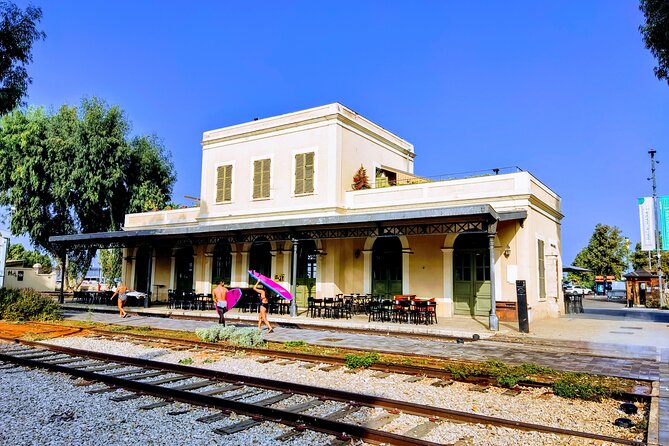
HaTachana was the first train station in the Middle East, opened in 1892. Today, the site includes art galleries, shops, restaurants, and activities for children and families. The stop lasts about 15 minutes.
The old station is a natural bridge between the city’s past and present. Rail travel helped connect the area with the wider region, while the restored site now serves leisure, shopping, and culture. You can see how a place built for transport has become a destination in its own right.
Because the tour moves on after a short visit, you may not have time to explore every shop or gallery. That is a limitation, but it also keeps the evening focused. The guide can explain why HaTachana matters, then you can decide if you want to return for a longer visit.
Families may appreciate the site’s child-friendly activities, while couples and solo visitors may prefer the restaurants and galleries. The tour itself does not include food, shopping, or gallery admission, so treat these as optional possibilities rather than part of the paid experience.
Suzanne Dellal and the quiet lanes of Neve Tzedek
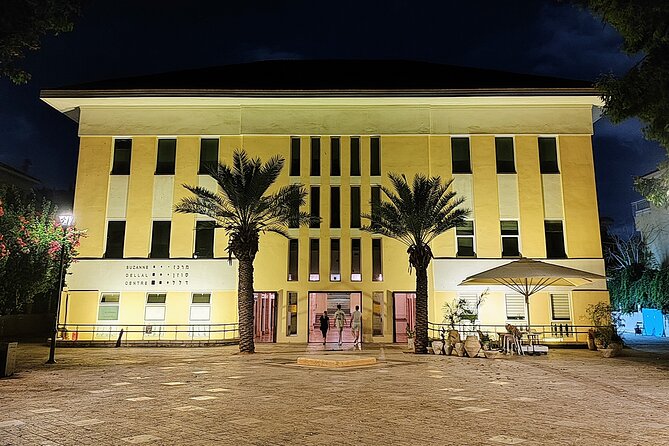
The walk continues to the Suzanne Dellal Centre, where three impressive school buildings from the late 19th century now house three dance schools. You spend about 10 minutes here.
This is another fine example of reuse. Buildings that once served education now support dance and performance. The setting also helps introduce Neve Tzedek, the neighborhood that many people find most pleasant for walking.
Neve Tzedek is identified as Tel Aviv’s first Jewish neighborhood. Its narrow streets and low-rise buildings feel very different from the broad boulevard and taller urban blocks elsewhere on the route. The neighborhood sits between the refined Rothschild Boulevard area and the beach, a location that has driven major gentrification.
That last point is worth keeping in mind. Neve Tzedek is attractive, but its polished appearance comes from change and rising interest, not from being frozen in the past. The tour can help you see both sides: the preserved scale and character of the streets, along with the pressure created by its desirable location.
You spend about 15 minutes walking through the neighborhood. This is enough to appreciate the architecture and layout, but you may wish to return later for a slower stroll. The narrow streets reward patience, and the final part of the walk is a good place to note cafés, shops, and buildings you want to revisit.
The tour ends at the Alfred Dreyfus Monument on Ahad Ha’Am Street 16, at the junction of Ahad Ha’Am and Herzl Street. That location gives you a useful base for continuing your evening, though the experience does not state that onward transport or dining is included.
What $55 means in practical value
The price is $55 per person for about two hours and 30 minutes. Every listed stop has free admission, so you are paying for the guide, the small group, the route, and the local interpretation rather than tickets.
That can be good value if you want the city explained as a connected story. You could walk through many of these areas alone, but you would likely miss the links between Independence Hall, the Ottoman railway, Florentin’s industrial past, the early colonies, and Neve Tzedek’s redevelopment.
The price is less attractive if you mainly want extended time at individual venues, a food tour, or interior visits. This is an outdoor neighborhood walk with brief stops. Its success depends heavily on the guide, and Menno’s strong praise is encouraging because his explanations are central to what you are buying.
Two five-star ratings are a small sample, so I would not treat them as a broad guarantee. Still, both highlight the same strengths: the walk reveals unfamiliar parts of Tel Aviv, and Menno explains the origins of peculiar neighborhoods in a way that works even for someone visiting the city for a second time.
Timing, fitness, and who should book
The evening start is one of the tour’s best practical features. At 7:30 pm, you can spend the route moving from historical sites toward places where Tel Aviv’s nightlife and food culture are already part of the scene.
You should be comfortable walking for two and a half hours and standing during explanations. A moderate level of physical fitness is required. The information does not specify stairs, pavement conditions, or total walking distance, so anyone with mobility concerns should ask the provider before booking.
The tour is a good match for:
- First-time visitors who want a broad introduction to central and southern Tel Aviv.
- Repeat visitors who have seen the main sights and want local context.
- Architecture fans interested in Bauhaus and International Style buildings.
- People who enjoy street art, markets, public spaces, and neighborhood change.
- Solo visitors or couples who prefer a small group.
- Anyone who wants an evening walk rather than a daytime museum visit.
It may not suit you if you want a relaxed pace, substantial time for photography, a guided meal, or long visits inside attractions. You also need to follow the route at the group’s pace.
The tour is available with a mobile ticket, is near public transportation, and allows service animals. You can cancel for a full refund up to 24 hours before the start time. It is only bookable within two weeks of the current date, so advance planning is limited.
Should you book this Tel Aviv walking tour?
I would book it if you want Tel Aviv explained through its streets rather than reduced to a list of famous buildings. The strongest reason is the range: national history on Rothschild Boulevard, old railway infrastructure, Florentin nightlife and graffiti, Levinsky food culture, early settler neighborhoods, HaTachana, and Neve Tzedek all fit into one evening.
I would especially choose it if Menno is the guide available. His ability to explain the city’s origins and point out places that even repeat visitors miss appears to be the experience’s main strength.
Skip it if your priority is a long stop at Independence Hall, a proper food tasting, or a slow architectural photography walk. For most curious visitors, though, $55 is a fair price for a small-group introduction that gives you several neighborhoods to explore again on your own.
FAQ
How long does the Tel Aviv Old Neighborhoods Walking Tour last?
The tour lasts approximately two hours and 30 minutes.
What time does the tour begin?
The tour starts at 7:30 pm.
Where does the tour start?
The meeting point is DH Networks LTD at Montefiore Street 48 in Tel Aviv-Yafo.
Where does the tour end?
The tour ends at the Alfred Dreyfus Monument on Ahad Ha’Am Street 16, at the junction of Ahad Ha’Am Street and Herzl Street.
How many people can join the tour?
The tour has a maximum group size of eight people.
Can I cancel for a full refund?
Yes. You can receive a full refund if you cancel at least 24 hours before the experience start time. Cancellations or changes made less than 24 hours before the start are not refunded or accepted.
Recently listed in Tel Aviv
- Wine Tour North of Israel from Tel Aviv★ 5.0 · 2 reviews
- Private wine tour of Northern Israel★ 5.0 · 4 reviews
- private Full-day Tour to Jericho + the Dead Sea★ 5.0 · 3 reviews
- private Full-Day Tour to Bethlehem and Jerusalem★ 5.0 · 2 reviews
- Package VIP Skip Line Services in BGN Airport with Transfer to Tel aviv Hotels★ 5.0 · 3 reviews
- Jerusalem and Dead Sea Trip from Tel Aviv★ 4.0 · 6 reviews
- Private Transfer from Ben Gurion Airport to Tel Aviv, Bat Yam, Rishon LeZion★ 5.0 · 2 reviews
- VIP Tel Aviv airport Terminal 3 Fast Track Skip Line From plane★ 4.5 · 9 reviews
Walking Tours, compared.
Jerusalem Walking Tour: In the Footsteps of Jesus
Read our review →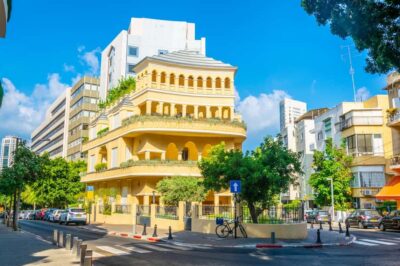

Browse the lists this tour appears in