
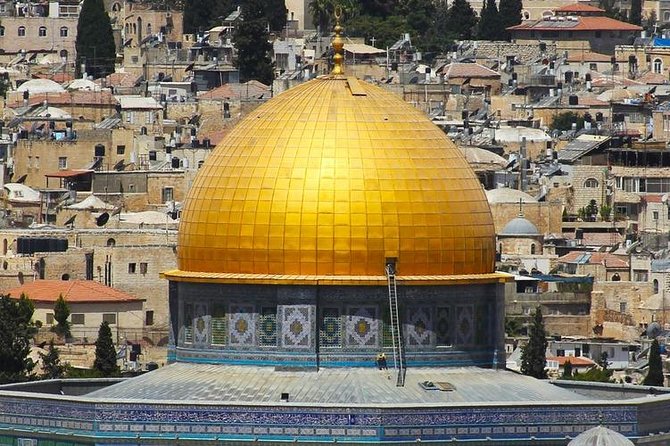
Reviewed · WALKING TOURS
Jerusalem Walking Tour
Jerusalem rewards slow steps. This private Old City walking tour links Jewish, Christian, and ancient Roman landmarks in roughly two to three hours, ending in the colorful Arab market. I like the route’s wide sweep, from the Cardo and Broad Wall to the Western Wall and Church of the Holy Sepulchre. I also like that you can request the Western Wall Tunnels for an extra 25 NIS per person. The main caution is pace: the route covers a lot, and the quality of your experience depends heavily on your guide.
The tour begins on Mamilla Avenue and ends back at the same meeting point. Guide Harley receives especially warm praise for his clear explanations and willingness to spend extra time, though one unhappy account found the guide’s English difficult to follow. Confirm your guide and priorities in advance, especially if you want an extended visit or an added archaeological stop.
In This Review
- Key points to know before you book
- Starting on Mamilla Avenue and entering the Old City
- The Cardo and Broad Wall reveal Jerusalem’s older foundations
- The Jewish Quarter and Western Wall
- Adding the Western Wall Tunnels for a closer look
- The Southern Wall and the Temple Mount view
- Cenacle and King David’s Tomb
- Pools of Bethesda and the Via Dolorosa
- Church of the Holy Sepulchre
- Ending through Jerusalem’s Arab market
- What $89.99 means in practical terms
- Timing, comfort, and who should book
- Should you book the Jerusalem Walking Tour?
- FAQ
- How long does the Jerusalem Walking Tour last?
- Where does the tour start?
- Where does the tour end?
- Is this a private tour?
- Is the Western Wall Tunnel entry included?
- How much do the Western Wall Tunnels cost?
- Are the main sights included in the tour price?
- Is the tour available by mobile ticket?
- Can I cancel for a full refund?
Key points to know before you book
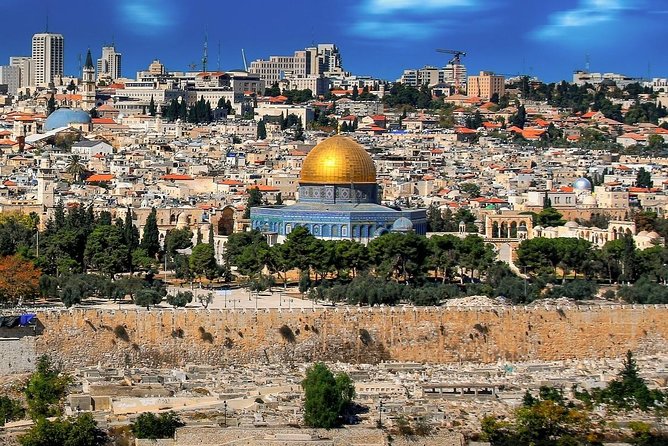
- A private route through three faith traditions: You visit major Jewish, Christian, and Roman-era sites within Jerusalem’s Old City walls.
- The Western Wall Tunnels cost extra: They can be arranged for 25 NIS per person, but you need to call at least one week ahead.
- The Arab market is the final flourish: The route finishes through the Old City market, where food, spices, and daily life replace formal monuments.
- The tour packs in many stops: Most listed visits last about 10 minutes, with 20 minutes in the Jewish Quarter.
- Harley has earned strong praise: His tours have sometimes run about two hours longer than planned, with extra archaeology and history.
- It is private, not a standard shared group: Only your party participates, although group discounts are available.
Starting on Mamilla Avenue and entering the Old City
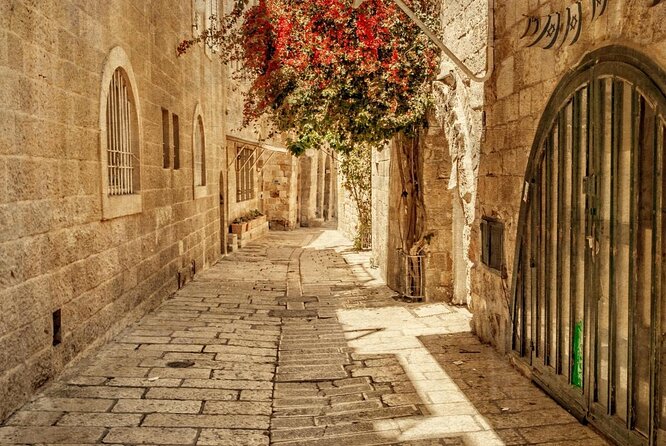
Your meeting point is at Alrov Mamilla Avenue, a useful starting place between modern Jerusalem and the Old City. The tour ends here too, so you do not need to work out a second pickup point after several hours on foot.
The opening section gives you a quick sense of Jerusalem’s layered character. You leave a modern shopping avenue and move toward streets shaped by Roman planning, ancient defense, religious devotion, and local trade. The route is not a single-theme history walk. It moves between eras and faiths, which is exactly why a strong guide matters.
Because the advertised duration is only two to three hours, I would arrive ready to keep moving. The itinerary includes many stops, and most are allotted around 10 minutes. That allows for orientation and explanation, but not long, quiet visits at every site.
More Walking Tours in Jerusalem
- Jerusalem: Guided Walking Tour of the Old City
★ 4.7 · 386 reviews - All Inclusive Walking Tour Old City Jerusalem
★ 5.0 · 83 reviews - Jerusalem Walking Tour: In the Footsteps of Jesus
★ 4.5 · 67 reviews
The Cardo and Broad Wall reveal Jerusalem’s older foundations
The first formal stop is the Cardo, once the main street of Roman Jerusalem. A 10-minute visit will not turn it into an archaeology lecture, but it gives you a helpful framework for understanding how the city was organized under Roman rule.
The Cardo is especially useful early in the walk because it shifts your attention away from the better-known holy sites. You begin by seeing Jerusalem as a planned urban center, not only as a place of pilgrimage. Ask your guide to point out what survives from the ancient street and what belongs to later rebuilding.
Next comes the Broad Wall, an ancient defensive line built around Jerusalem. Its value is visual and practical. A wall is not just a date in a history book. It tells you that the city was vulnerable, contested, and repeatedly reshaped.
These two stops are free, and they help you read the rest of the Old City with sharper eyes. The drawback is that brief stops can feel rushed if archaeology is your main interest. If you want a slower study of ruins, ask about extending the tour.
The Jewish Quarter and Western Wall
You spend about 20 minutes in the Jewish Quarter, longer than at most individual stops. That extra time makes sense. The quarter connects the city’s ancient remains with its continuing Jewish life, and it leads naturally toward the Western Wall.
The Western Wall is the central Jewish site on this route and a place of pilgrimage for millions. Even with a short 10-minute stop, you should have time to take in the setting and listen to an explanation of its religious importance.
This is one point where respectful behavior matters more than snapping a quick picture. Your guide can help you understand what you are seeing, but the atmosphere may call for a quieter approach. Dress and conduct should suit a sacred site, and you should follow any instructions given at the wall.
The route also includes views of the Temple Mount. Seeing the mount from the surrounding streets gives you a sense of its physical dominance over the Old City, even though this walking experience does not promise a full visit inside every area of the compound.
Adding the Western Wall Tunnels for a closer look
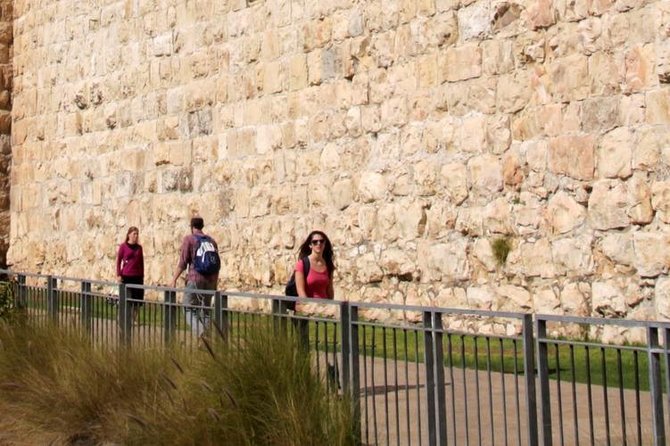
The Western Wall Tunnels are not included in the base price. The operator can arrange them for an additional 25 NIS per person if you call ahead, with at least one week’s notice.
For many people, this is the most useful optional addition. The visible section of the Western Wall is only part of the ancient structure. The tunnels offer a chance to examine more of the wall below and beside the open-air prayer area.
Do not assume the tunnels will be available simply because you mention them on the morning of the tour. The information specifically requires advance contact and booking. If underground archaeology is high on your list, make that request before your trip and confirm the added cost.
One private version of the tour has also included the City of David and additional time at King David’s Tomb. This suggests some flexibility, but you should treat those additions as custom arrangements, not standard inclusions. Get the revised route and price confirmed in advance.
A different day out, same base:
- From Jerusalem: Masada & Dead Sea Full Day Tour with Pick Up
★ 4.5 · 815 reviews - Masada and the Dead Sea Day Trip from Jerusalem
★ 4.5 · 757 reviews - From Jerusalem: Nazareth and Sea of Galilee Tour
★ 4.5 · 588 reviews - Nazareth and the Sea of Galilee Day Trip from Jerusalem
★ 4.5 · 446 reviews
The Southern Wall and the Temple Mount view
At the southern end of the Temple Mount, you see sections built during the reign of King Herod. The excavated area here is among Jerusalem’s important archaeological sights, and the 10-minute stop gives your guide a chance to explain how the mount was expanded and supported.
The Southern Wall is a good counterpoint to the Western Wall. The Western Wall is closely tied to living prayer and pilgrimage. The southern area emphasizes the scale of the ancient building project and the remains left around it.
The route only promises a view of the Temple Mount, not a full tour of the mount itself. That distinction matters. If your main goal is to enter the compound or see a particular building from inside, ask before booking so you do not expect a different experience.
Cenacle and King David’s Tomb
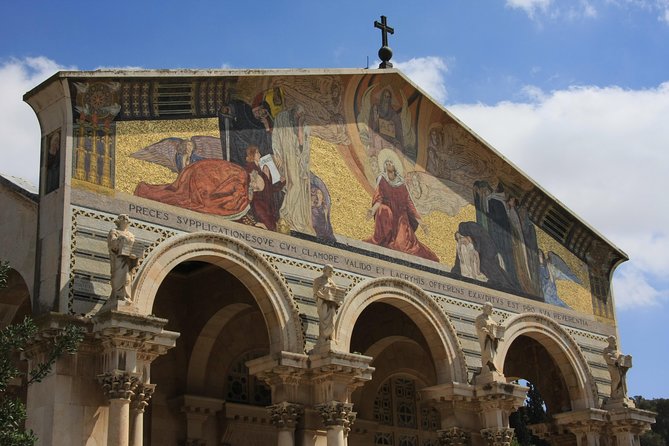
The Cenacle, also called the Upper Room, is traditionally identified as the room of the Last Supper. The building’s Christian meaning is strong, although the site itself reflects layers of later use and interpretation. A 10-minute visit is enough for a guide to explain the tradition and the setting, but not for a long architectural study.
Beside it is King David’s Tomb, a site considered the burial place of David. Like several places in Jerusalem, its importance comes from religious tradition as much as from what can be proven archaeologically. A good guide should make that distinction clear without turning the stop into an argument.
These two visits work well together because they show how different religious traditions claim meaning in the same compact part of the city. You get a Christian site beside a Jewish site, with the Temple Mount nearby. Jerusalem’s geography does much of the teaching here.
Pools of Bethesda and the Via Dolorosa
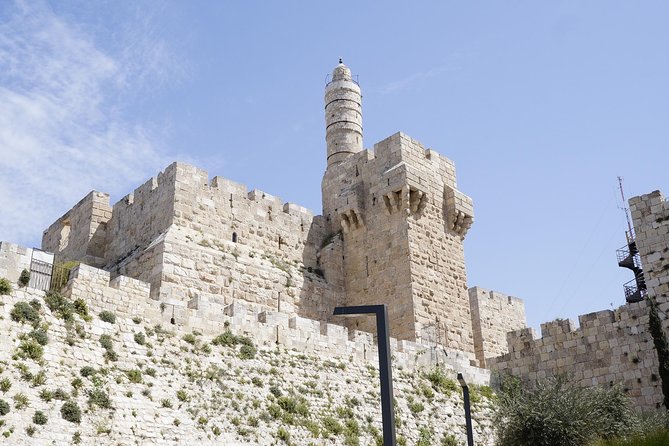
The Pools of Bethesda connect the walk to the New Testament account of Jesus healing a paralyzed man. The stop lasts about 10 minutes, so expect a concise explanation of the biblical story and the remains associated with the pools.
The site is also a reminder that Jerusalem’s sacred places are often archaeological spaces first. You may see stones, excavated areas, and fragments rather than a perfectly preserved biblical scene. That mix of faith, tradition, and physical remains is part of what makes the Old City so compelling.
From there, the tour follows the Via Dolorosa, the traditional route associated with Jesus carrying the cross. The Way of the Cross runs through ordinary Old City streets, so you may find the experience more immediate than a visit to an isolated monument. Shops, doorways, and daily foot traffic surround the religious route.
The stop is free, but the route can be busy and visually crowded. That is not a flaw in Jerusalem. It is the setting itself. Still, a short guided explanation helps you understand which stations and turns matter.
Church of the Holy Sepulchre
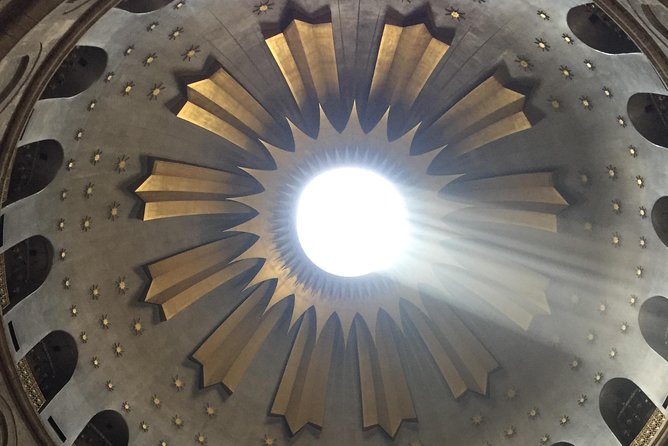
The Church of the Holy Sepulchre is the Christian highlight of the walk. It is traditionally built on the site of Jesus’s crucifixion at Calvary and is regarded as Christianity’s holiest site.
You receive about 10 minutes here, which is enough for a guided introduction but may feel short if you want to examine every chapel and shrine. The church is complex, layered, and shared by several Christian communities. Its meaning is not always obvious from a quick glance, so this is another place where the guide’s clarity makes a real difference.
The tour’s strongest guides have been praised for explaining the church’s history and religious details especially well. One highly praised guide, Harley, has been described as turning the walk into an extended lesson in archaeology, history, and religion. That kind of extra context can make a short church visit feel far more substantial.
At the same time, one poor experience centered on difficult-to-follow English and explanations that did not make sense to the listener. This is not a reason to dismiss the tour, but it is a reason to communicate clearly before departure. If you need a particular language level or have a specific religious perspective, state that when booking.
Ending through Jerusalem’s Arab market
The official route exits through the Old City’s Arab market. This is a smart ending because it shifts you from formal sacred sites to the city’s living commercial life.
Expect a market filled with local shops, smells, colors, and the steady mix of residents and visitors. The description does not promise a food tasting or shopping allowance, so treat this as a walk through the market rather than a dedicated culinary tour.
I like this part because it keeps Jerusalem from feeling like an outdoor museum. After walls, churches, tombs, and ancient streets, the market shows the Old City as a place where people still work, shop, and meet. You may want to leave room in your schedule for a brief browse, but remember that the tour returns to Mamilla Avenue.
What $89.99 means in practical terms
At $89.99 per person, this is not the cheapest way to see Jerusalem’s Old City. The value depends on what you want from the visit.
For a private tour, the price can make sense if your group wants its own pace and a guide focused only on your party. You are paying for orientation across several difficult subjects, not simply transportation or admission tickets. The listed sights are included, and most carry no separate entry fee.
The tour becomes a better value for people who want context quickly. In a few hours, you cover Roman remains, ancient defenses, the Jewish Quarter, the Western and Southern Walls, Christian pilgrimage sites, and the Arab market. Trying to connect all of that alone can take more time and lead to missed details.
The price is less attractive if you want long visits at each monument. Ten minutes per stop is a brisk schedule, and the Western Wall Tunnels cost extra. Group discounts may improve the price for a larger party, but the exact discount is not specified, so confirm it before paying.
The strongest value seems to come from the guide. Harley has received praise for extending the tour well beyond the planned time and adding archaeology and history. That is a wonderful bonus if available, but I would not book on the assumption that every tour will run two hours longer.
Timing, comfort, and who should book
Most people can participate, service animals are allowed, and the meeting point is near public transportation. The tour requires good weather and a minimum number of participants, despite being private for your group. If the operator cancels for weather or insufficient participation, you are offered another date or experience, or a full refund.
You should be comfortable walking through the Old City for two to three hours and standing at several stops. The route is not described as demanding, but Jerusalem’s historic streets and the number of sites covered mean you should choose practical footwear.
I would recommend this tour to:
- First-time visitors who want a strong introduction to the Old City
- Families or small groups that value a private guide
- People interested in both Jewish and Christian landmarks
- Anyone who wants the Western Wall and Church of the Holy Sepulchre in one route
- Visitors who prefer a guide to explain archaeological and religious context
I would be more cautious if you want a slow photography walk, a dedicated food tour, or a full archaeological visit. The itinerary is broad rather than leisurely.
Should you book the Jerusalem Walking Tour?
Book it if you want one private route that connects Jerusalem’s major sacred and historic sights without spending a full day on foot. The Western Wall, Temple Mount view, Via Dolorosa, Church of the Holy Sepulchre, and Arab market make a strong first visit.
Before paying, ask about the guide’s language skills, confirm the private format, and request the Western Wall Tunnels at least one week ahead if they matter to you. If you want City of David or extra time at a particular site, ask for a custom plan.
The tour is best understood as a well-packed introduction, not a slow study of every monument. With a strong guide, it can become a memorable lesson in Jerusalem’s faiths, archaeology, and daily life. With a rushed or unclear guide, the same itinerary may feel like a list of quick stops.
FAQ
How long does the Jerusalem Walking Tour last?
The tour lasts approximately two to three hours. Some private versions may run longer if the guide adds extra explanation or customized stops, but the planned duration is two to three hours.
Where does the tour start?
The tour starts at Alrov Mamilla Avenue 8 on Alrov Mamilla Avenue in Jerusalem, Israel.
Where does the tour end?
The activity ends back at the meeting point on Alrov Mamilla Avenue.
Is this a private tour?
Yes. Only your group participates in the activity.
Is the Western Wall Tunnel entry included?
No. The Western Wall Tunnels are not included in the base price.
How much do the Western Wall Tunnels cost?
The supplement is 25 NIS per person. You must call in advance, and the tunnels should be booked at least one week ahead.
Are the main sights included in the tour price?
Yes. Visiting the sights along the route is included. Separate entry is specified only for the Western Wall Tunnels.
Is the tour available by mobile ticket?
Yes. A mobile ticket is available.
Can I cancel for a full refund?
Yes, if you cancel at least 24 hours before the experience starts. Cancellations or changes made within 24 hours are not refunded, and poor-weather or minimum-participation cancellations offer a different date, another experience, or a full refund.
Recently listed in Jerusalem
- West Bank Tour from Jerusalem and Tel-Aviv – Bethlehem & Jericho★ 5.0 · 6 reviews
- Tour of Jerusalem & Dead sea private tour★ 5.0 · 4 reviews
- One-Day Tour to Bethlehem and Jericho★ 5.0 · 2 reviews
- jerusalem classic tour★ 5.0 · 3 reviews
- full day tour Jerusalem price per van up to 6 people★ 5.0 · 8 reviews
- kosher Israel wine tour★ 5.0 · 4 reviews
- Private Tour: Old City of Jerusalem Christianity Tour★ 5.0 · 5 reviews
- Private Silk Painting Workshop in Jerusalem – Create a scarf –★ 5.0 · 4 reviews
Walking Tours, compared.
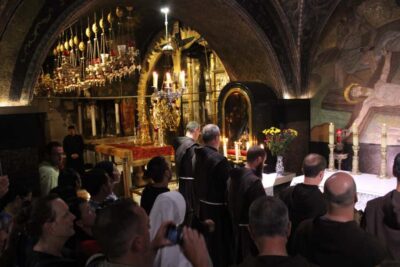
Jerusalem Walking Tour: In the Footsteps of Jesus
Read our review →

Browse the lists this tour appears in