
Reviewed · JERUSALEM OLD CITY TOURS
Jerusalem: 3–Hour Old City Tour in French
Jerusalem rewards slow footsteps. This private French-language walking tour links the Old City’s four quarters with the stories of Judaism, Christianity, and Islam. I like its clear time journey, from Suleiman’s walls and the Armenian Quarter to the Roman Cardo, Hezekiah’s waterworks, the Western Wall, and the Church of the Holy Sepulchre. I also like that your guide can speak French, English, or Italian. The main consideration is pace: three hours is enough for an excellent introduction, but not enough for every alley, church, museum, or archaeological site.
The route is especially appealing if you want history explained rather than simply pointed out. Private-group format gives you a better chance to ask questions and keep the focus on your interests. The guide, Florent, received warm praise for being attentive, cultured, clear, and pleasant, while another French-speaking guide was described as erudite and highly skilled at explaining difficult subjects.
In This Review
- Key points to know
- Starting near Mamilla and entering through Jaffa Gate
- The Armenian Quarter and Jerusalem’s first change of mood
- The Jewish Quarter, the Roman Cardo, and changing rulers
- Hezekiah and Isaiah, where faith meets engineering
- The Temple area and the Western Wall
- Following Jesus toward the Church of the Holy Sepulchre
- Why the guide makes a difference
- Price, pace, and practical value
- Who should book this Old City walk?
- FAQ
- How long is the Jerusalem Old City tour?
- What language is the tour offered in?
- Where does the tour meet?
- Is this a private tour?
- What sites and areas does the tour cover?
- Are entrance fees included?
- Should you book it?
Key points to know
- Jaffa Gate sets the scene: Begin near the most useful entrance for understanding Jerusalem’s walls and modern neighborhoods.
- Four quarters in three hours: Move through the Armenian, Jewish, Christian, and Muslim areas without losing the larger story.
- The Roman Cardo adds an older layer: Follow the route associated with Publius Aelius Hadrianus and see how Roman Jerusalem shaped the city.
- Hezekiah and Isaiah bring the Bible to life: The tour connects ancient engineering with the story of a devout king and a prophet.
- The final stop is deeply symbolic: Walk along the path associated with Jesus before ending at the Church of the Holy Sepulchre.
- Bring water and a hat: Good walking shoes matter on an old-stone route, and rain can make the walk less comfortable.
Starting near Mamilla and entering through Jaffa Gate
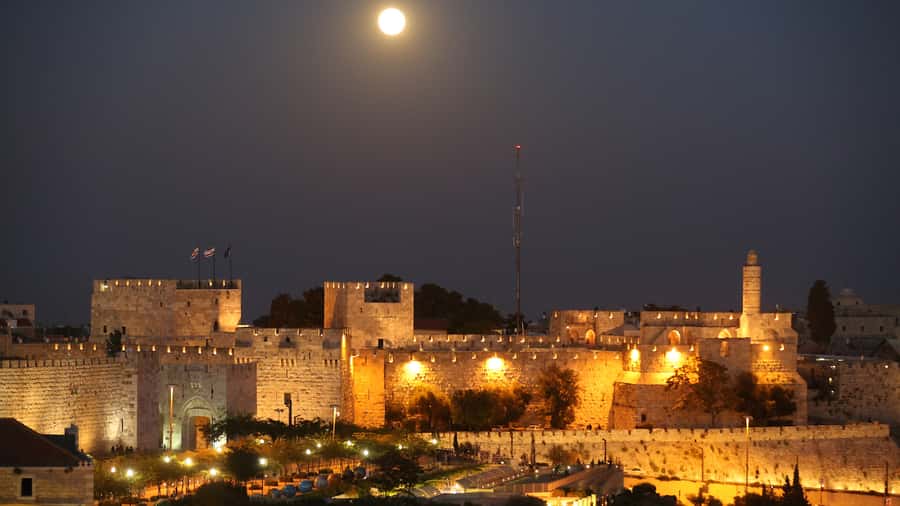
The meeting point is listed at the entrance to the Mamilla Shopping area, while the walking tour itself begins at Jaffa Gate. I would confirm the exact meeting instructions before setting out, since these are nearby but not identical points.
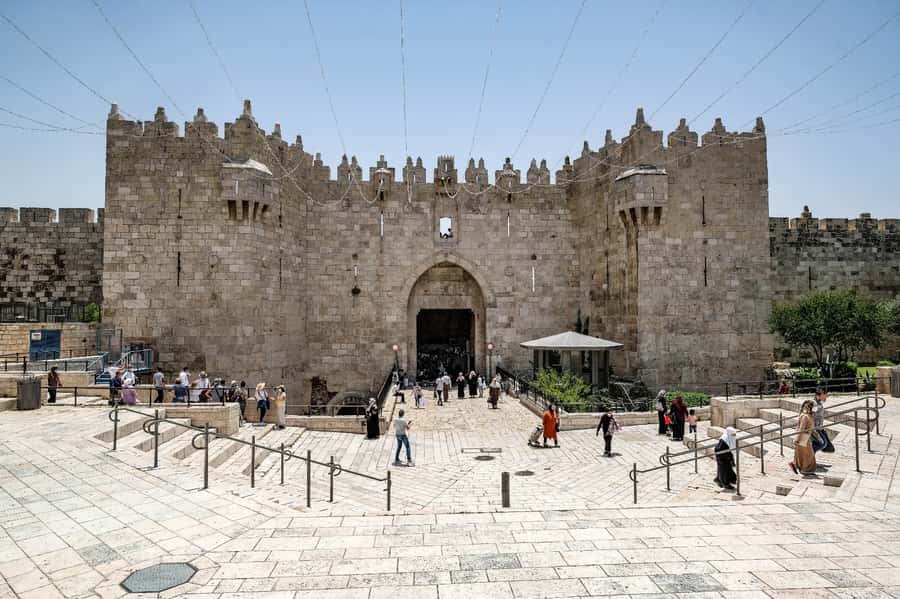
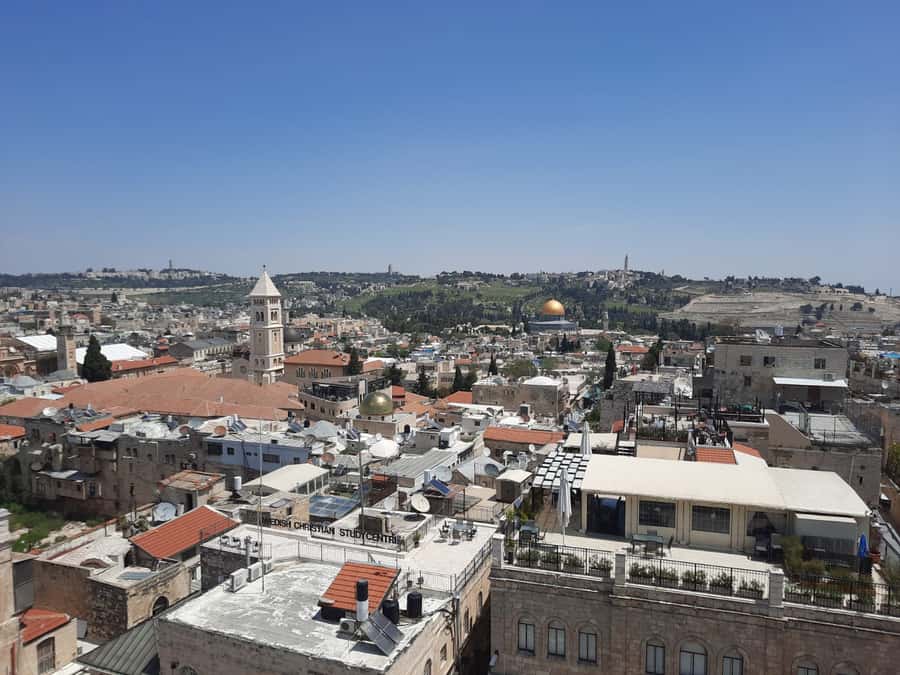
Jaffa Gate is a sensible place to begin. It gives you an immediate view of Jerusalem’s Ottoman-era walls, built under Suleiman the Magnificent. These walls are not just a photogenic frame around the Old City. They help you understand why Jerusalem developed as a compact, fortified center, with gates controlling movement in and out.
The opening also sets up a modern story: the creation of the State of Israel and the neighborhoods of Jerusalem. That combination of present-day politics, city geography, and older stonework is useful. You are not looking at isolated monuments. You are learning how the city’s districts and boundaries shaped daily life.
Because the tour lasts only three hours, listen closely during the introduction. Your guide has to establish a lot of context before the walk reaches the major religious sites. A private group should make it easier to pause for questions, but you will still get more from the tour if you arrive ready to walk rather than expecting a long stop at every landmark.
More City Tours in Jerusalem
- Jerusalem: Guided Walking Tour of the Old City
★ 4.7 · 386 reviews - Full Day City Tour of Jerusalem
★ 4.1 · 367 reviews - From Jerusalem Small group tour Old&New City ENTRY FEES INCL
★ 4.0 · 135 reviews
The Armenian Quarter and Jerusalem’s first change of mood
The Armenian Quarter is an excellent first neighborhood. It has a distinct identity within the Old City, and beginning here helps you see Jerusalem as a collection of communities rather than one single historic center.
The route moves through the quarter as part of a journey through time. That order matters. Instead of receiving a long lecture about every period at once, you get the story in stages, with each area adding another layer.
The Armenian section also gives the tour a quieter opening before the route reaches the best-known religious sites. You might find that the streets feel less immediately familiar here than around the Western Wall or the Holy Sepulchre. That is part of its value. The guide can help you notice the quarter’s place in the city without reducing it to a quick photo stop.
If Armenian history is your main interest, three hours will not allow for a full study of the community or its institutions. The tour presents the quarter as one important part of Old City Jerusalem, not as a specialist Armenian heritage visit.
The Jewish Quarter, the Roman Cardo, and changing rulers
From the Armenian Quarter, the walk continues into the Jewish Quarter and then reaches the Roman Cardo. This is one of the strongest parts of the route for anyone who wants to see how Jerusalem changed under different rulers.
The Cardo is connected with Publius Aelius Hadrianus, better known as the Roman emperor Hadrian. Walking along this ancient Roman street gives you a physical sense of the city’s planning. The long, formal route differs from the smaller lanes that dominate much of the Old City today.
I like this shift from neighborhood identity to imperial planning. It shows that Jerusalem was not shaped by one period alone. Roman building, Jewish tradition, Christian pilgrimage, Islamic rule, and Ottoman fortification all remain part of the city’s story.
Do not expect the Cardo to function like a full archaeological museum visit. The tour passes through this historic area as part of a larger walk, and museum or park entrance fees are not included. If you want extended time at a particular archaeological site, ask the guide how much time the private group can spare.
Hezekiah and Isaiah, where faith meets engineering
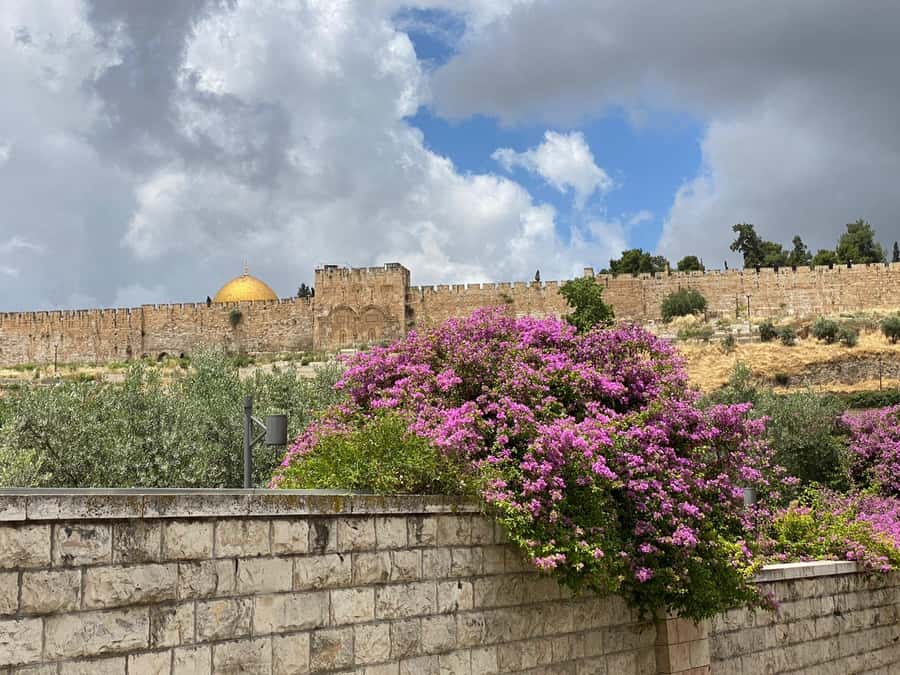
The story of King Hezekiah and the prophet Isaiah gives the middle of the tour a welcome change in focus. Instead of concentrating only on rulers, walls, and religious buildings, the guide explains a biblical episode tied to practical engineering.
Hezekiah is presented as a pious king whose technical ability remains impressive. That pairing is what makes the story memorable. Ancient Jerusalem needed faith, political judgment, and water management to survive. The tale of Hezekiah and Isaiah lets you consider all three.
This section should suit you if you enjoy history that connects a written story with a real problem. Water, defense, and the city’s survival are easier to understand when the guide explains why the engineering mattered.
The supplied details do not promise entry into a water tunnel or a separate underground visit, so you should not book this tour expecting that. The focus is on the story and its connection to Jerusalem. If you have a special interest in Hezekiah’s water system, ask about the exact stopping point when you meet your guide.
More walks through the Old City:
- Best seller! Jerusalem old city four quarters tour
★ 5.0 · 123 reviews - Private Tour Jerusalem Old City
★ 5.0 · 118 reviews - All Inclusive Walking Tour Old City Jerusalem
★ 5.0 · 83 reviews - Jerusalem Half Day Tour: Holy Sepulchre and Western Wall
★ 4.5 · 80 reviews
The Temple area and the Western Wall
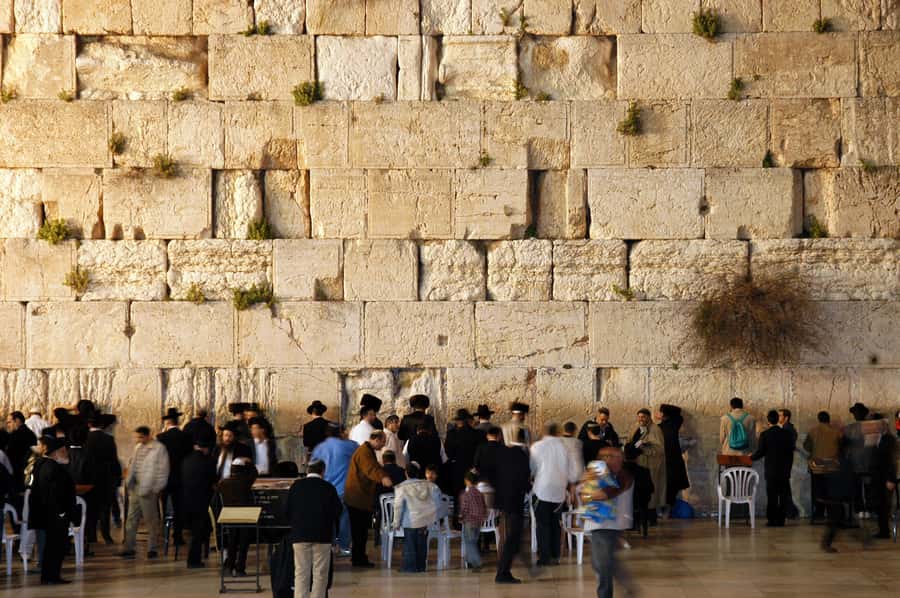
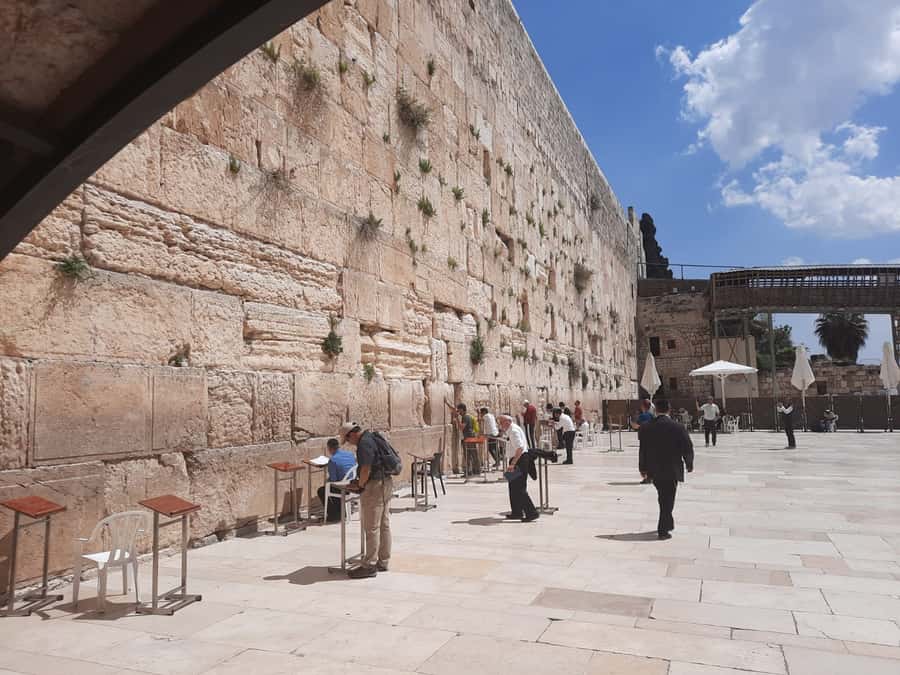
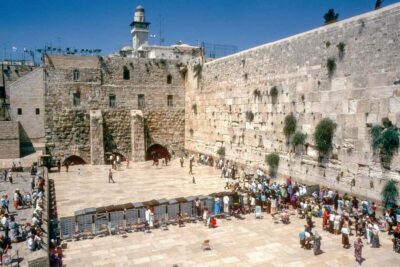
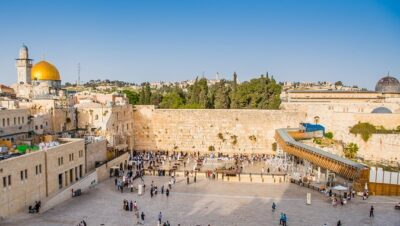
The tour then returns to the central religious importance of Jerusalem with the Temple area and the Western Wall. These are not just stops for photographs. They are places where the city’s religious meaning, political tension, and long memory meet.
Your guide’s job here is especially important. A good explanation can help you understand why the Western Wall matters to Jewish worship and how the Temple shaped Jerusalem’s identity. It can also help you recognize the sensitivities of a place shared by major religious traditions.
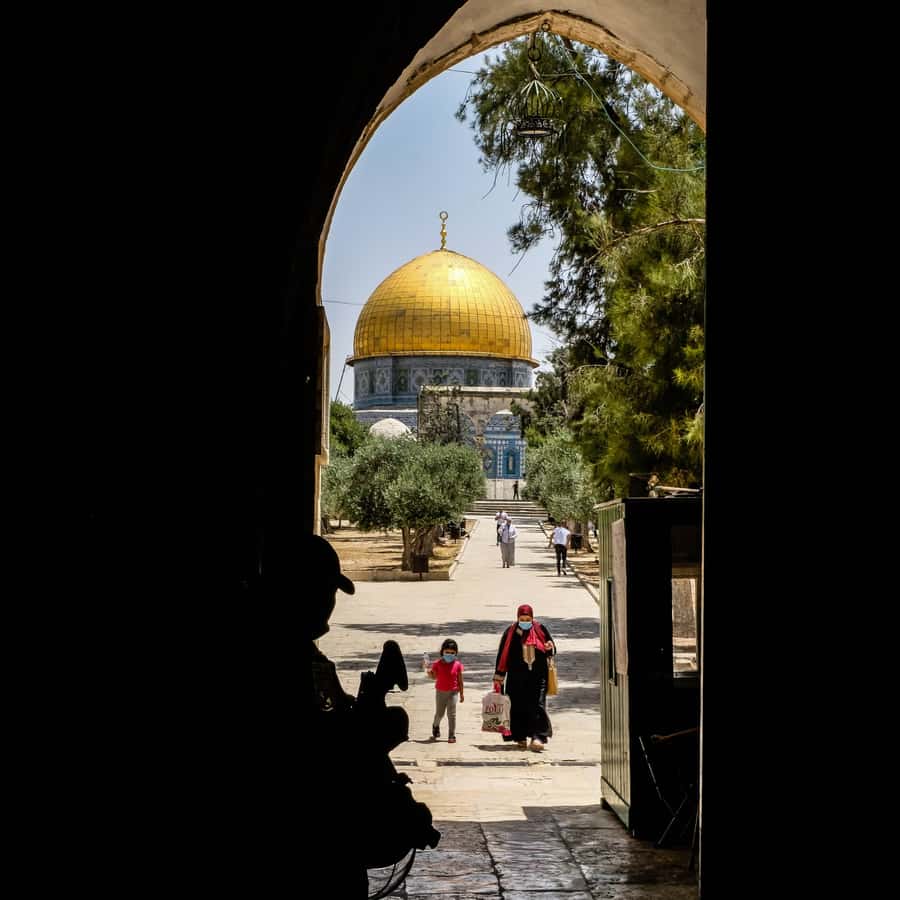
The itinerary refers to the Islamic era of Jerusalem as part of this section. That wider context keeps the tour from presenting the city through only one faith tradition. You will hear about the three Abrahamic religions, often called the religions of the book, and how their sacred stories overlap in the same small area.
Keep your expectations realistic. The tour is a walking introduction, not a full religious-site program. It does not include stated entrance fees for parks or museums, and the details do not guarantee access to every interior site. Clothing and site rules can also vary, so your guide is the right person to ask about what is possible during your visit.
Following Jesus toward the Church of the Holy Sepulchre
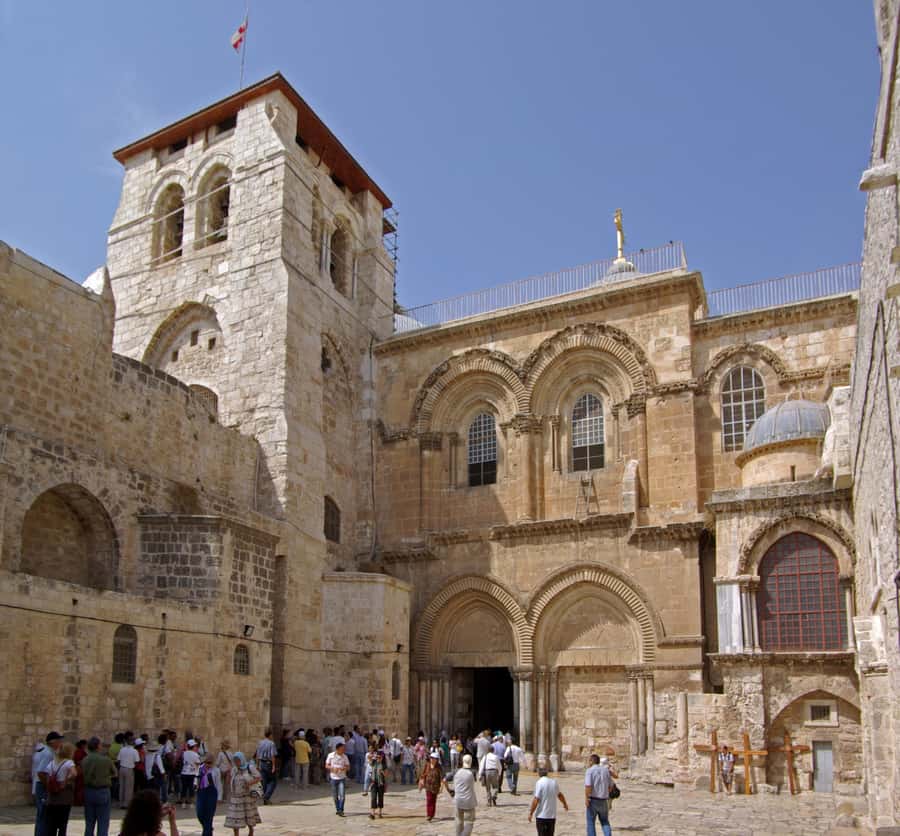
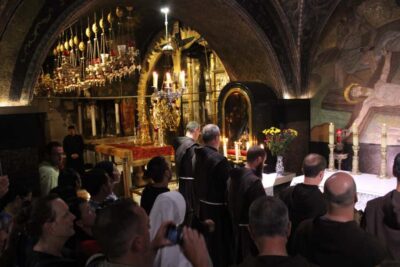
The final stretch follows the path associated with Jesus and ends at the Church of the Holy Sepulchre. This gives the tour a strong narrative finish, moving from ancient walls and Roman streets to the Christian story of the Passion.
The Church of the Holy Sepulchre is one of Jerusalem’s most important Christian sites. Ending there makes sense because the route has already introduced the city’s Jewish and Islamic connections. You arrive with a wider understanding of why this place matters, rather than treating it as a stand-alone church.
The walk can be emotionally powerful, but it may also be crowded and confusing. The supplied information says the tour ends at the church, not that it includes a full guided interior visit or special access. Ask your guide what you will see inside and how much time is planned there.
This final stop is also where the guide’s communication skills matter most. The Passion story involves sacred tradition, historical interpretation, and personal belief. The strongest tour will give you clear context without telling you what you must think.
Why the guide makes a difference
The guide is the main reason to consider this experience over a self-guided walk. The route itself is easy to identify on a map, but the connections between the Armenian Quarter, Roman Cardo, Hezekiah, the Temple, the Western Wall, and the Holy Sepulchre are not always obvious.
Florent is specifically praised for being attentive, cultured, and clear. Those qualities matter in Jerusalem, where a rushed or vague explanation can leave you with more confusion than understanding. One French-speaking participant also described the guide as erudite, pedagogical, and very pleasant.
The guide can conduct the tour in French, English, or Italian. For French-speaking visitors, that is a real advantage when discussing religious terms, ancient rulers, and sensitive events. You can follow fine points more easily, and you may feel more comfortable asking questions.
The experience is described as a private group, rather than a large shared walk. That usually gives you a more personal exchange with the guide, though the exact number of people in your party is not specified. If your group has a particular interest, such as Roman Jerusalem, biblical engineering, or Christian pilgrimage, tell the guide early.
Price, pace, and practical value
At $82 per person, the tour is not the cheapest way to see the Old City. Its value depends on how much you want interpretation and personal attention. A private three-hour walk with a guide who can explain the city in your language can be worthwhile, especially on a first visit.
You are paying for a connected story rather than a list of monuments. The route covers four quarters and several major periods, including Ottoman, Armenian, Roman, biblical, Jewish, Islamic, and Christian subjects. That is a lot for one morning or afternoon.
The tradeoff is depth. Three hours goes quickly in Jerusalem. You will not have time for every museum, park, interior, or side street. If you want detailed archaeology, lengthy worship time, or a slow photographic walk, choose a longer or more specialized visit.
The practical advice is simple:
- Wear sturdy, comfortable walking shoes.
- Bring water.
- Carry a hat for sun.
- Be prepared for rain, since one December visit was described as very good despite some rain.
- Allow mental space for a busy route with many historical subjects.
The tour does not include park or museum entrance fees. That keeps the advertised price clearer, but you should budget separately if your guide recommends an optional paid site or if you plan to return independently.
Free cancellation up to 24 hours before the start gives you useful flexibility. You can also reserve and pay later, which helps if your Jerusalem schedule is still shifting. Check the available start times because the exact departure time is not fixed in the tour details.
Who should book this Old City walk?
I would recommend it most strongly to a first-time visitor who wants a well-organized introduction without joining a large group. It also suits French-speaking visitors who want to discuss complex subjects comfortably, along with couples or families who prefer a private guide.
It is a good match if you enjoy walking, religious history, archaeology, and stories that connect ancient events to visible places. The route also works well for someone who wants to understand the Old City’s four quarters before returning later to explore one area in detail.
I would be more cautious if you have limited mobility, dislike uneven historic streets, or want extended time inside museums and religious buildings. The provided information recommends good walking shoes but gives no specific accessibility details, so ask before booking if that is important for you.
FAQ
How long is the Jerusalem Old City tour?
The tour lasts three hours.
What language is the tour offered in?
The live guide can conduct the tour in French, English, or Italian.
Where does the tour meet?
The meeting point is at the entrance to the Mamilla Shopping area. The walking route begins at Jaffa Gate, so confirm the exact meeting instructions before you go.
Is this a private tour?
Yes. The experience is offered for a private group.
What sites and areas does the tour cover?
The route includes the Old City’s four quarters, the walls of Suleiman the Magnificent, the Armenian Quarter, the Jewish Quarter, the Roman Cardo, the Western Wall, the Islamic-era story of Jerusalem, and the Church of the Holy Sepulchre.
Are entrance fees included?
No. Park and museum entrance fees are not included. The tour information does not promise entry to every site mentioned, so ask your guide what can be visited inside during the three-hour route.
Should you book it?
Book this tour if you want a private, French-friendly introduction to Jerusalem that ties the Old City’s major faiths and historical periods into one walk. The strongest reasons are the focused route, the language choice, and the praise for Florent’s clear and considerate guiding.
Skip it if you want a slow archaeological study or a full series of interior visits. At three hours, this is best viewed as a smart first orientation. It gives you the city’s main threads, then leaves you free to return to the Western Wall, Cardo, Armenian Quarter, or Holy Sepulchre with more time.
Recently listed in Jerusalem
- West Bank Tour from Jerusalem and Tel-Aviv – Bethlehem & Jericho★ 5.0 · 6 reviews
- Tour of Jerusalem & Dead sea private tour★ 5.0 · 4 reviews
- One-Day Tour to Bethlehem and Jericho★ 5.0 · 2 reviews
- jerusalem classic tour★ 5.0 · 3 reviews
- full day tour Jerusalem price per van up to 6 people★ 5.0 · 8 reviews
- kosher Israel wine tour★ 5.0 · 4 reviews
- Private Tour: Old City of Jerusalem Christianity Tour★ 5.0 · 5 reviews
- Private Silk Painting Workshop in Jerusalem – Create a scarf –★ 5.0 · 4 reviews
Jerusalem Old City Tours, compared.
Best seller! Jerusalem old city four quarters tour
Read our review →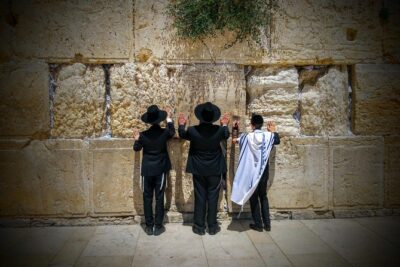
Jerusalem Half Day Tour: Holy Sepulchre and Western Wall
Read our review →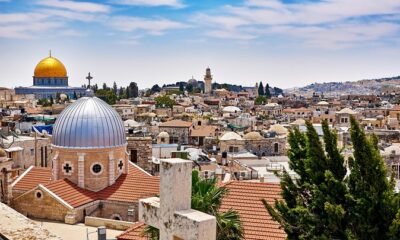
Jerusalem Half-Day Tour from Tel Aviv: Holy Sepulchre and Western Wall
Read our review →
Browse the lists this tour appears in