
Reviewed · GOLAN HEIGHTS TOURS
From Tel Aviv: Golan Heights Tour
Volcanic rock, ancient towns, and border views. This 10-hour trip from Tel Aviv gives you a useful introduction to northern Israel, moving from the Plain of Armageddon to the Sea of Galilee and across the Golan Heights. I especially like the combination of Katzrin’s archaeology and the sharp view from Mount Bental toward Kuneitra. I also like that hotel pickup, transport, entry fees, and an English-speaking guide are included.
The main drawback is the long day on the road. You cover a large area, and one past participant felt too much time went to lunch instead of another stop by the Sea of Galilee. Bring food money, but keep lunch brisk if you want every minute of scenery and history.
In This Review
- Key points to know before booking
- Why this 10-hour route works
- From Tel Aviv to the Plain of Armageddon
- The Sea of Galilee from its southern edge
- Crossing the Jordan River near Hamat Gader
- Shalom Observatory and the meaning of high ground
- Katzrin’s ancient village and synagogue
- The Golan Antiquities Museum and Gamla
- Mount Bental and the Kuneitra valley
- What the price includes, and where value depends
- Guide quality can make or break the day
- What to bring and what to wear
- Who should book this tour?
- Should you book the Golan Heights tour?
- FAQ
- How long is the Golan Heights tour from Tel Aviv?
- What language is the tour conducted in?
- Is hotel pickup included?
- What places are visited during the tour?
- Will I see an ancient synagogue?
- Is food included in the price?
- What should I bring?
- Can children and wheelchair users join?
- Can I cancel the booking?
Key points to know before booking
- The tour crosses several major regions: You travel from Tel Aviv through the Plain of Armageddon, past Megiddo, along the Sea of Galilee, and up into the Golan Heights.
- Katzrin combines ruins and museum exhibits: You see a partially restored Mishnah and Talmud period village, an ancient synagogue, an oil press, and the Golan Antiquities Museum.
- Mount Bental brings the border close: Syrian bunkers, trenches, and fortifications remain near the overlook, with Kuneitra visible beyond.
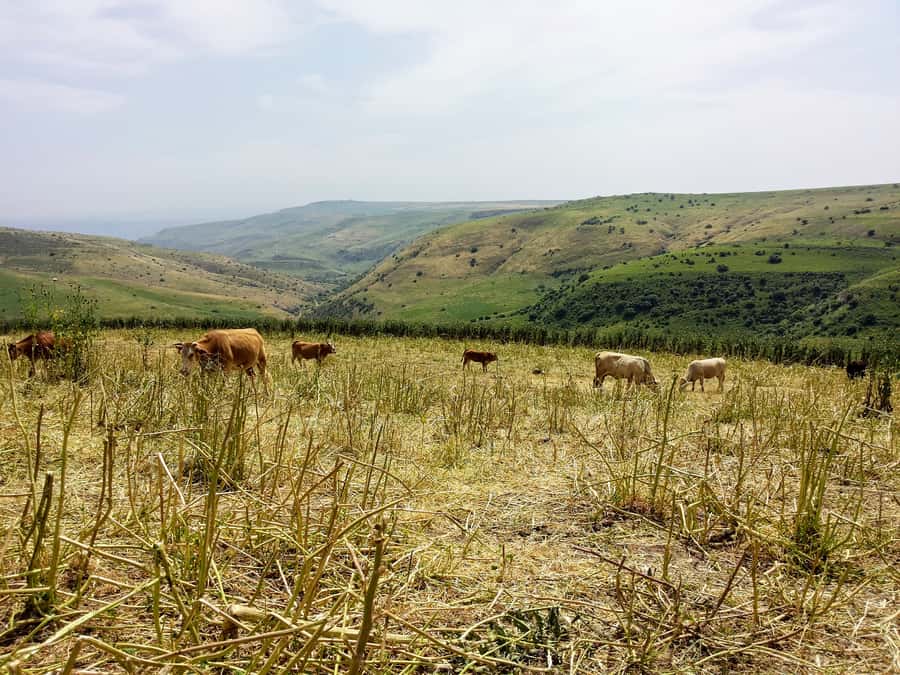
- The scenery changes throughout the day: Expect open plains, the Sea of Galilee, basalt rock, green countryside, and high viewpoints.
- The guide can shape the experience: Past praise focused strongly on guides including Avishai Levi and Avi, especially their explanations, good driving, and ability to add useful stops.
- This is an active sightseeing day: Comfortable shoes, sun protection, and modest clothing for holy places are important.
Why this 10-hour route works
The Golan Heights are not a quick side trip from Tel Aviv. The drive takes time, but the route gives you a broad picture of northern Israel instead of dropping you at one viewpoint and sending you back. You move through biblical, Roman, Jewish, Syrian, and modern Israeli chapters in one long day.
I like that the tour connects places rather than treating them as isolated photo stops. You see how the Sea of Galilee sits below the Golan plateau, why the high ground mattered during military conflicts, and how Jewish communities lived here during the Mishnah and Talmud periods.
The trip is best for you if you want history explained as you go. A self-guided visit would give you views and ruins, but the meaning of the sites would be harder to connect. The strongest comments about this experience praised the guides for clear explanations, humor, safe driving, and extra local insight. Avishai Levi was singled out for making the day both informative and fun, while Avi earned similar praise for his driving and wide knowledge of the area.
More days up in the Golan Heights:
- Golan Heights private site seeing Jeep Tour
★ 5.0 · 2 reviews - Golan Heights Day Trip from Tel Aviv
★ 4.5 · 65 reviews - Golan Heights Day Trip from Jerusalem
★ 4.5 · 20 reviews
From Tel Aviv to the Plain of Armageddon
Your day begins with hotel pickup in Tel Aviv and a long ride north in an air-conditioned coach. The operator provides pickup from your hotel, but if you are staying in an Airbnb or another private address, you are given a nearby pickup point instead.
The first broad setting is the Plain of Armageddon, linked in the Book of Revelation with the final battle of Armageddon. The route also brings you near Megiddo, the site of an ancient biblical city. The supplied information does not promise a full archaeological visit inside Megiddo, so think of this section as historical orientation and a look at the region rather than a dedicated Megiddo tour.
This early part of the journey matters because it shows how northern Israel is shaped by routes and elevation. The plain opens out below the surrounding hills, making it easier to understand why the area has mattered to armies, traders, and settlements for centuries.
The ride is also the first practical test of the tour. Ten hours is a serious commitment, and you should expect some stretches of coach travel between stops. The air conditioning helps, but you will still appreciate having water, sun protection, and something small to eat.
The Sea of Galilee from its southern edge
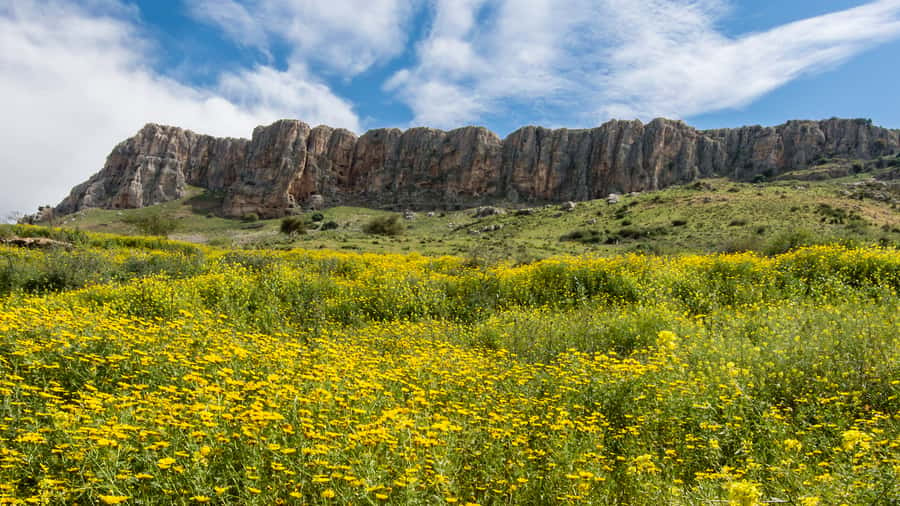
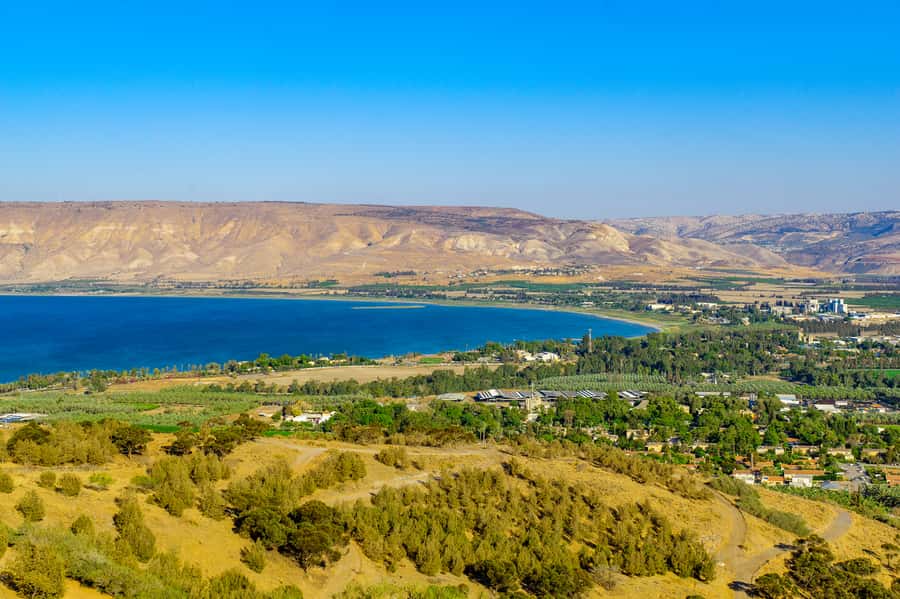
As the route continues north, you reach the southernmost point of the Sea of Galilee, also called the Kinneret. A viewpoint here looks across the water toward the undulating Golan Heights, with the Israeli city of Tiberias visible along the shore in the distance.
This is one of the day’s most useful stops because the geography becomes clear. From below, the Golan can seem like a distant line of hills. From the viewpoint, you see the height difference and the relationship between the lake, the shoreline, and the plateau.
I would pay attention to the guide here instead of treating this as only a scenic pause. The view helps explain why the Golan Heights has strategic importance. High ground gives a commanding position over the Sea of Galilee and the settlements near its edge.
The stop may feel short compared with the amount of scenery around you. That is one reason the lunch schedule matters. If your group spends too long eating, you may wish you had more time at the lake viewpoint. Food and drinks are not included, so plan for that expense and keep your meal practical.
Crossing the Jordan River near Hamat Gader
The coach crosses the Jordan River at the foot of the Golan Heights before beginning the ascent. You pass through the area of Hamat Gader, now known as a spa destination and once valued by the Romans nearly 2,000 years ago.
The tour does not promise a spa visit, so do not book this expecting a soak. The value here is the route and the context. Your guide can point out how thermal springs and the river helped make this area attractive to people in different periods.
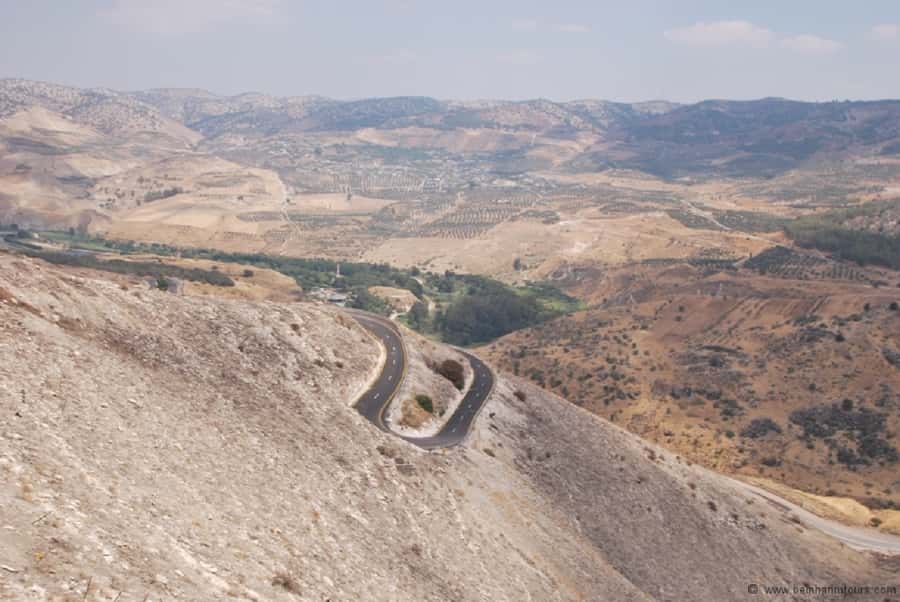
As you climb, the countryside becomes greener, and black basalt begins to appear. This volcanic rock is one of the defining features of the Golan Heights. It gives walls, ruins, and parts of the countryside a dark, rough character that differs from the softer tones around the lake.
The road ascent also changes the view. You gradually look down toward the Sea of Galilee instead of across it. That shift is part of the appeal of a guided coach tour, since you can watch the region change without worrying about directions or parking.
More Galilee tours worth comparing
- Haifa Shore Excursion: Nazareth and the Galilee – for cruise ship guests only
★ 4.5 · 109 reviews - Private Excursion to Nazareth Tiberias and the Sea of Galilee
★ 5.0 · 39 reviews - Galilean Cooking Workshop 2-4 particpants
★ 5.0 · 27 reviews - Kabbalah Heritage Walk
★ 5.0 · 23 reviews
Shalom Observatory and the meaning of high ground
The Shalom Observatory provides a broad view back toward the Sea of Galilee. From here, the lake lies below, with Tiberias on its edge and the Golan rising around you.
This stop is especially useful if you want the modern political and military context explained. The Golan Heights has strategic value because of its elevation and proximity to the lake and border areas. You are not simply looking at attractive countryside. You are seeing why control of this plateau has mattered so much.
I would expect the guide to spend time explaining the view rather than rushing through it. The best guides on this route appear to treat the observatory as a place for orientation, helping you connect the slopes, roads, water, and towns visible from above.
Bring a hat and sunscreen. The tour specifically recommends both, and viewpoints can offer little relief from the sun. Comfortable shoes are also sensible, since the day includes archaeological areas and outdoor military remains.
Katzrin’s ancient village and synagogue
Katzrin is the cultural and archaeological center of the tour. Excavations uncovered a village dating from the Mishnah and Talmud periods, and part of it has been restored so you can examine the remains more easily.
You see houses, an oil press, and an ancient synagogue. These structures make the site more personal than a field of scattered stones. The synagogue, in particular, gives you a direct connection to Jewish community life in the Golan during late antiquity.
I like the oil press because it explains daily work in a simple, physical way. Ancient history can feel abstract when you only see foundations. An oil press, house layout, and synagogue help you imagine how people lived, worshipped, and produced food.
The ruins also show the effect of the local volcanic rock. Basalt was widely used in construction, so the dark stone is not just a natural feature. It is part of the built environment.
The tour description also presents Katzrin as the capital of the Golan, with occupation reaching back to the Middle Bronze Age. Romans, Mamluks, Ottomans, and the French later ruled or influenced the town and area. You get a long sequence of periods here, but the stop is most rewarding when the guide connects those periods to the actual stones in front of you.
The Golan Antiquities Museum and Gamla
In Katzrin, you visit the Golan Antiquities Museum. It contains finds from the region and nearby archaeological sites, along with artifacts and audiovisual presentations about Gamla.
Gamla was a Jewish city from the Second Temple period excavated nearby. The museum adds context that outdoor ruins cannot always provide. Objects, displays, and audiovisual material can help you understand the people and events behind the foundations.
This is a good indoor counterpoint to the viewpoints and open-air sites. On a hot day, the museum also gives you a break from direct sun. The exact amount of time available can depend on the pace of the day, so I would listen closely during the guide’s introduction and focus on the exhibits most connected to Gamla and Katzrin.
The museum is valuable for you if you enjoy archaeology but do not want to spend the whole day at a dig. It gives the Golan a human scale, linking regional history with household objects, religious buildings, and settlement remains.
Mount Bental and the Kuneitra valley
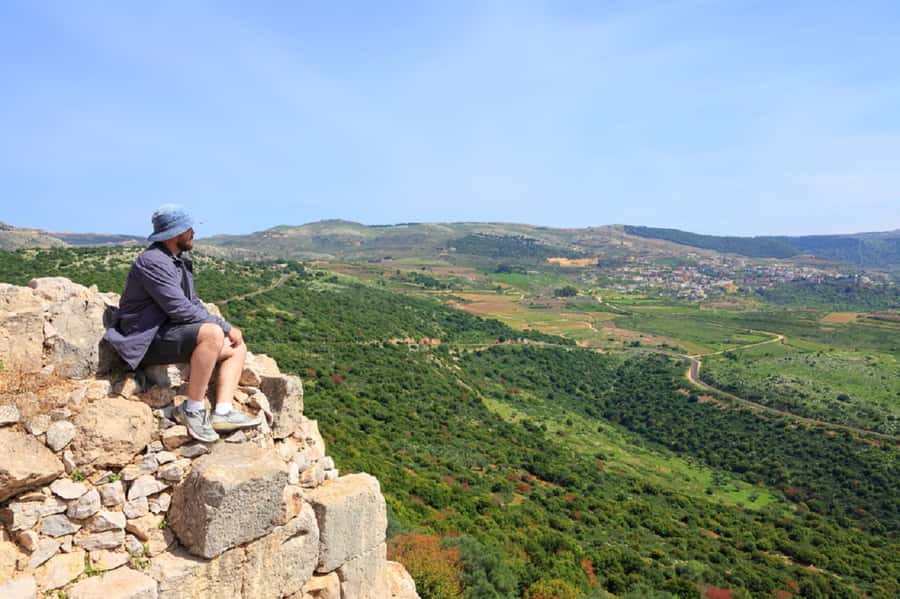
Mount Bental is the most striking final viewpoint. From the summit, you look toward the Kuneitra valley and the Syrian city of Kuneitra beyond. The border feels close here, and the view carries a sharper political meaning than a normal mountain overlook.
You also see the remains of Syrian fortifications, including bunkers, a military base, and trenches captured by Israeli forces during the Six-Day War in 1967. These are not reconstructed theme-park displays. They are physical reminders of the area’s recent military past.
The contrast is powerful. On one side, you have open views and pastoral countryside. At your feet, you may see concrete defenses and cut earth from a conflict zone. The guide’s explanation is important because the site can otherwise seem like a collection of old military structures without enough context.
You should also expect uneven ground around outdoor fortifications. The tour is not suitable for wheelchair users, and comfortable shoes are recommended for good reason. Children under four cannot join, and the long day may be tiring for younger children even when they meet the age requirement.
What the price includes, and where value depends
At $128 per person, this is not a bargain-priced local outing, but the value is reasonable if you want a full northern Israel day without arranging a car, driver, parking, entries, and route planning yourself.
The price includes hotel pickup and drop-off, an air-conditioned coach, a professional guide, and the entry fee. Those inclusions matter because the route covers many separate places, and the Golan is much easier to handle with transport already arranged.
Food and drinks are extra. That is the clearest additional cost to plan for. One participant felt lunch took too much time, so you should treat the meal as a necessary pause rather than the centerpiece of the day. If your priority is seeing more of the lake or archaeological sites, a quick meal is the better use of your schedule.
The tour requires at least three participants to operate. Check availability for the starting time, and keep your plans flexible until the booking is confirmed. Free cancellation is available up to 24 hours before departure, with a full refund, and you can reserve now and pay later.
Guide quality can make or break the day
This route covers a lot of ground, so the guide matters more than usual. A good guide turns a long coach ride into a moving history lesson. A weak guide could leave you with a string of viewpoints and ruins that never quite connect.
The strongest praise centered on clear explanations, enthusiasm, humor, and kindness. Avishai Levi was remembered for taking time to explain things properly and for making the day feel special. Avi was praised for excellent driving, broad area knowledge, and adding places beyond what the participant expected.
Those details are useful when setting expectations. You are not booking a quiet, independent day with hours to wander alone. You are booking a structured tour where the guide supplies much of the meaning. The guide also handles the practical rhythm of a long route, including transfers, viewpoints, and entry stops.
The experience has a 4.4 rating from 26 reviews, which suggests strong overall satisfaction but not perfection. The lunch concern is worth taking seriously, especially if you dislike long group meals or prefer more time at scenic locations.
What to bring and what to wear
Pack light, but pack smart. You will want:
- Comfortable walking shoes for ruins, viewpoints, and fortifications
- A sun hat
- Sunscreen
- Water and money for food and drinks
- Modest clothing for holy places
Modest dress is required at religious sites, including the ancient synagogue area if requested by the guide or site staff. The tour information does not specify a full dress code, so conservative clothing is the safest choice.
The day includes both outdoor and indoor stops, but sun exposure is a clear concern. The Golan can look cool and green in photographs while still feeling hot at open viewpoints. Sunscreen and a hat are practical necessities, not optional extras.
Who should book this tour?
I would recommend it to you if you are based in Tel Aviv and want to see the Golan Heights without renting a car. It suits first-time visitors who want a guided explanation of the Sea of Galilee, Katzrin, ancient Jewish sites, volcanic geology, and the modern border area in one day.
It is also a good fit if you value a strong guide more than a slow, flexible schedule. The best part of the experience is the range of subjects covered and the way the guide can connect them.
I would hesitate if you dislike long coach rides, need substantial free time at each stop, or want a dedicated Megiddo visit. Megiddo is part of the route and regional story, but the main stops focus on the Golan, Katzrin, the Sea of Galilee, and Mount Bental.
Should you book the Golan Heights tour?
Book it if you want a broad, history-focused day with transport and guiding taken care of. The ancient synagogue, Katzrin ruins, museum, basalt terrain, Sea of Galilee views, and Syrian fortifications give you a varied picture of northern Israel.
Skip it if you prefer to move slowly, choose your own lunch stop, or spend most of the day at one site. For everyone else, $128 is a fair price for the distance covered and the included transport, entry, pickup, and guide. Wear practical clothes, keep lunch short, and hope for a guide with the energy and care shown by Avishai Levi or Avi.
FAQ
How long is the Golan Heights tour from Tel Aviv?
The tour lasts 10 hours.
What language is the tour conducted in?
The live tour guide speaks English.
Is hotel pickup included?
Yes. Pickup and drop-off at your hotel are included. If you are staying at an Airbnb or another location, the operator provides details for the closest pickup point.
What places are visited during the tour?
The route includes the Plain of Armageddon and the Megiddo area, the southern Sea of Galilee, the Jordan River at the foot of the Golan Heights, Hamat Gader, Shalom Observatory, Katzrin, the Golan Antiquities Museum, and Mount Bental.
Will I see an ancient synagogue?
Yes. The archaeological village at Katzrin includes an ancient synagogue, along with houses and an oil press.
Is food included in the price?
No. Food and drinks are not included.
What should I bring?
Bring comfortable shoes, a sun hat, and sunscreen. Modest clothing is required for holy places.
Can children and wheelchair users join?
The tour is not suitable for children under four or for wheelchair users.
Can I cancel the booking?
You can cancel up to 24 hours before the tour for a full refund. The tour also offers a reserve now and pay later option, and it requires a minimum of three participants to operate.
Recently listed in Galilee
- Sea of Galilee – Off the Beaten Track★ 5.0 · 3 reviews
- Druze Culinary Tour of the Western Galilee★ 5.0 · 6 reviews
- A Day of Spiritual Discovery in the Upper Galilee★ 5.0 · 7 reviews
- Golan Heights private site seeing Jeep Tour★ 5.0 · 2 reviews
- Culinary Day Tour of the Galilee★ 5.0 · 6 reviews
- Nazareth: Biblical History & Culture Private Tour★ 5.0 · 3 reviews
- Israel: Nazareth and Sea of Galilee Private Full-Day Tour★ 5.0 · 3 reviews
- Tour The Mystical City Of Safed★ 5.0 · 11 reviews
Golan Heights Tours, compared.
2-Day Northern Israel Tour from Jerusalem: Golan Heights, Nazareth and the Sea of Galilee
Read our review →
GoKEDEM Golan Heights ATV Action & Wine-Tasting Tour From Tel Aviv
Read our review →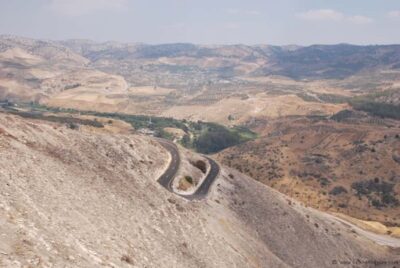
2-Day Northern Israel Tour from Tel Aviv: Golan Heights, Nazareth and the Sea of Galilee
Read our review →
Browse the lists this tour appears in