
Reviewed · JERUSALEM OLD CITY TOURS
Explore Jerusalem’s Old City
Jerusalem rewards curious walkers. This private tour is appealing because you can shape the day around your interests while Roni Peled adds personal stories and strong historical context. I also like the way it links Jewish, Christian, and Muslim sites in one continuous route. The main drawback is scope: fitting all eight stops into one day can make the experience long and physically demanding, especially if you include Hezekiah’s Tunnel.
The price is $579.49 for up to 15 people, not per person, so the value improves sharply for a family or small group. You get a licensed guide and a private experience, but City of David admission and lunch at Lina are extra. Ask in advance how the route will be adjusted if your group needs a slower pace or wheelchair-friendly access.
In This Review
- Key points to know before booking
- Why this private Jerusalem tour works well
- Jaffa Gate gives you the city’s opening chapter
- The Armenian Quarter offers a quieter pause
- Mount Zion links faith and modern conflict
- The City of David is the tour’s most demanding section
- The Western Wall brings the history into the present
- The Muslim Quarter adds color and daily life
- The Via Dolorosa and Lina’s hummus make a natural break
- The Church of the Holy Sepulchre needs patient attention
- What the $579.49 group price really means
- Who will appreciate this tour most
- Should you book Explore Jerusalem’s Old City?
- FAQ
- How long does the tour last?
- What time does the tour start?
- Where does the tour begin?
- Where does the tour end?
- Is this a private tour?
- Is the price per person?
- Is lunch included?
- Is admission to the City of David included?
- Can the tour accommodate wheelchair users?
Key points to know before booking
- Roni’s personal Jerusalem background adds local detail to the history, including his childhood near the pre-1967 Israel-Jordan border.
- The route crosses several faith traditions, from the Western Wall and Tomb of King David to the Via Dolorosa and Church of the Holy Sepulchre.
- The City of David section is the most active part, with a possible walk through dark, water-filled Hezekiah’s Tunnel.
- The itinerary is genuinely flexible, so you can give more time to churches, archaeology, Jewish history, markets, or panoramic views.
- The group price works best for several people, since the cost stays the same for a private party of up to 15.
- Lunch and one major admission are not included, so budget for the City of David ticket and your meal.
Why this private Jerusalem tour works well
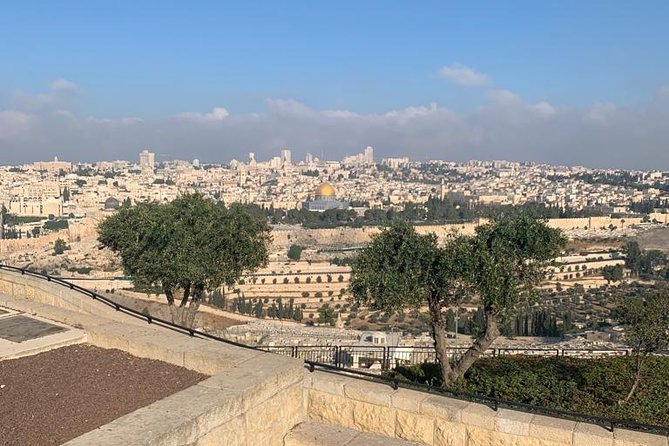
Jerusalem can feel like several cities packed into one old stone maze. Sacred sites sit beside homes, shops, archaeological excavations, and narrow passageways. A private guide helps you connect those pieces instead of simply ticking off famous locations.
The strongest feature here is the ability to adjust the day. A half-day can focus on the Old City and its major religious sites. A full day can add Mount Zion and the City of David, giving you a wider sweep of Jerusalem’s past.
That flexibility matters because people arrive with different priorities. You may want churches and biblical sites. Someone else in your group may care more about ancient water systems, the 1948 and 1967 battles, or the Muslim Quarter’s market streets. With a private guide, you can ask for more explanation where your interest lies.
Roni is repeatedly praised for his energy, patience, clear English, and command of Jewish, Christian, and Islamic history. Several people also appreciated that he adjusted the length of visits to match their interests. His work connected with families, church leaders, repeat visitors to Jerusalem, and people seeing the city for the first time.
The tour begins at 8:00 a.m. at Jaffa Gate and ends back at the meeting point. Starting early is useful. The Old City is easier to understand before a full day of walking has worn you down, and the morning departure leaves room for a substantial route.
More City Tours in Jerusalem
- Jerusalem: Guided Walking Tour of the Old City
★ 4.7 · 386 reviews - Full Day City Tour of Jerusalem
★ 4.1 · 367 reviews - From Jerusalem Small group tour Old&New City ENTRY FEES INCL
★ 4.0 · 135 reviews
Jaffa Gate gives you the city’s opening chapter
Jaffa Gate is a smart place to begin. It is one of the best-known entrances to the Old City, and it immediately places you near the Tower of David, the Armenian Quarter, and the road toward Mount Zion.
The opening explanation covers the gates, their inscriptions, and the history of the city’s western approach. You also get an observation point near the Tower of David with views toward the west. This is more than a quick photo stop. It gives you a mental map before you enter the maze of lanes.
Roni’s own connection to Jerusalem adds an unusual layer here. He shares experiences from growing up near the Israel-Jordan border before 1967, when Jerusalem was divided. Personal memories can make the city’s modern political history easier to grasp than a list of dates.
The scheduled stop is only about 10 minutes, so do not expect a full Tower of David visit. Think of Jaffa Gate as orientation, not a museum tour.
The Armenian Quarter offers a quieter pause
From Jaffa Gate, the route enters the Armenian Quarter. Compared with the busier market lanes elsewhere in the Old City, this section can feel more subdued, which makes it a good place to slow down and listen.
The visit includes the courtyard of St. James Church, described as the burial site of James, the brother of Jesus, and James, one of Jesus’ twelve disciples. The church is also known for its architecture and traditional Armenian ceramics.
The Armenian community has been part of Jerusalem for more than 1,500 years. That long presence helps widen your view of the city. Jerusalem is not only a setting for major biblical events. It is also a lived-in place shaped by communities that maintained their faith, language, art, and traditions over many centuries.
The stop lasts about 20 minutes. Church access can depend on opening conditions and religious services, so the guide’s ability to adapt the timing is useful.
Mount Zion links faith and modern conflict
The approach to Mount Zion passes through Zion Gate, where the tour explains the final battle for the Jewish Quarter in 1948 and the city’s liberation in 1967. The gate itself carries physical reminders of that conflict, making this one of the better places to connect Jerusalem’s modern history with what you see on the ground.
On Mount Zion, the route includes the Room of the Last Supper, the Tomb of King David, and Dormition Church. The church is associated with the tradition that Mary, the mother of Jesus, fell into a coma before her death.
A lookout point offers views toward the Hill of Evil Counsel and the Temple Mount. These views help you see how close the city’s major religious centers are to one another, even though their histories and traditions differ greatly.
The planned visit takes about an hour. It is a full section, but the exact balance can be tailored. If your group is focused on Christian sites, you may want more time in the churches. If modern history matters more, ask for a fuller explanation of the 1948 division and 1967 changes.
More walks through the Old City:
- Best seller! Jerusalem old city four quarters tour
★ 5.0 · 123 reviews - Private Tour Jerusalem Old City
★ 5.0 · 118 reviews - All Inclusive Walking Tour Old City Jerusalem
★ 5.0 · 83 reviews - Jerusalem Half Day Tour: Holy Sepulchre and Western Wall
★ 4.5 · 80 reviews
The City of David is the tour’s most demanding section
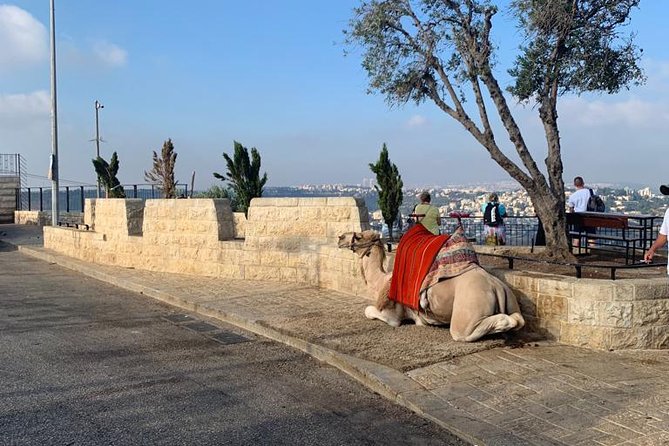
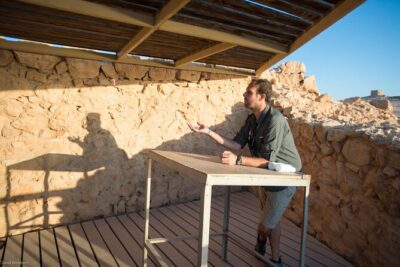
The City of David National Park is where the tour shifts from city streets to archaeology and underground water engineering. The site is presented as the place where King David established Jerusalem as the capital of the United Kingdom of Israel around 3,000 years ago.
You will see foundations associated with King David’s palace and ruins of homes and administrative buildings linked with officials of the Judean kings. The value here comes from seeing ancient Jerusalem as a functioning city, not only as a collection of sacred labels.
The highlight is a water route connected with the Gihon Spring. The tour describes a 3,800-year-old passage to Jerusalem’s water supply and connects the spring with the anointing of King Solomon. The route may continue through the water in the darkened Hezekiah’s Tunnel, with flashlights, before emerging at the Shiloah Pool from the Second Temple period.
This is a memorable experience, but it needs preparation. The tunnel section is dark and involves walking through water. The provided schedule allows about two hours, and admission is not included in the tour price. If anyone in your group dislikes confined spaces, has mobility limits, or prefers not to walk in water, tell Roni before the day begins.
The tour can be adapted for wheelchair users, but the tunnel route itself may not suit every mobility need. Accessibility should be discussed clearly when booking rather than assumed from the general accessibility note.
The Western Wall brings the history into the present
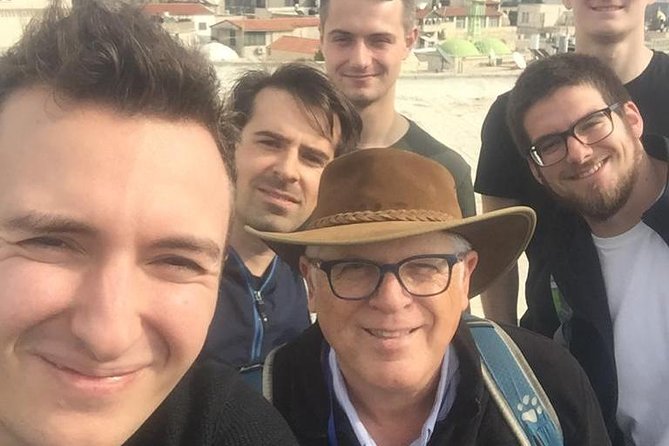
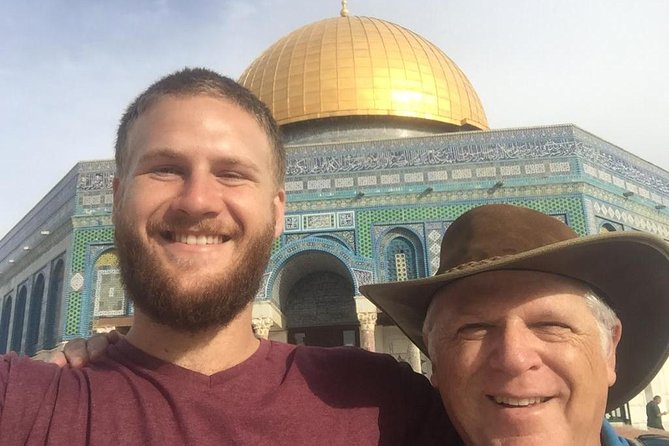
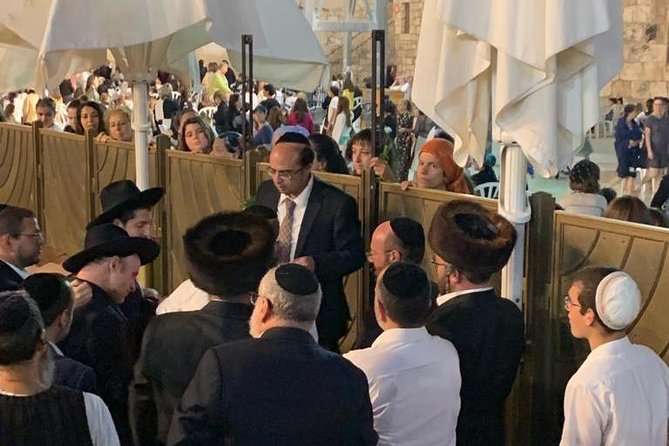
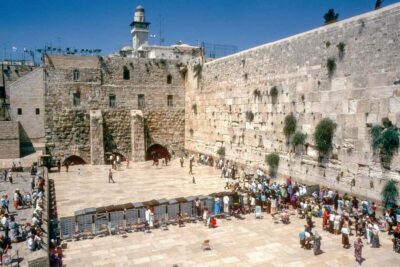
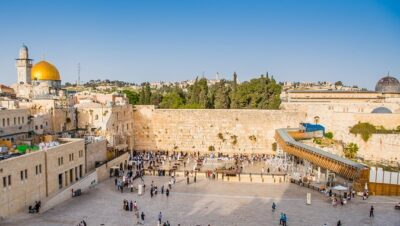
At the Western Wall, the guide explains its connection with the remains of the Second Temple and its location beside the Temple Mount. The Dome of the Rock and Al-Aqsa Mosque are found on the Temple Mount today, creating one of the most concentrated religious settings in the world.
The planned stop is about 15 minutes. That is enough to approach the Wall, observe the prayer area, and place a written prayer in the stones if you wish. It is not enough for a long, unhurried visit during a busy period, so tell your guide if this is a central purpose of your day.
The Wall is not just an archaeological remnant. It remains an active place of prayer, and the atmosphere can change quickly depending on the day, religious calendar, or ceremonies taking place. Dress and behavior should respect the sacred setting.
The Muslim Quarter adds color and daily life
The Muslim Quarter brings you into the Old City’s commercial heart. You will walk through the bazaar and the 600-year-old Market of Cotton Merchants, which remains active today.
This section helps balance the tour’s focus on major religious monuments. You are not only looking at ancient stones. You are also seeing shops, trade routes, and ordinary city life continuing inside a historic setting.
The route includes views of the Dome of the Rock and an explanation of the rise of Islam in the region from 638 CE to the present. That wider context is important because the Old City cannot be understood through one faith tradition alone.
Allow about 30 minutes here. The market is a place to observe as much as to shop. If you want time for browsing or buying food and souvenirs, mention that early, since a full itinerary leaves little spare time.
The Via Dolorosa and Lina’s hummus make a natural break
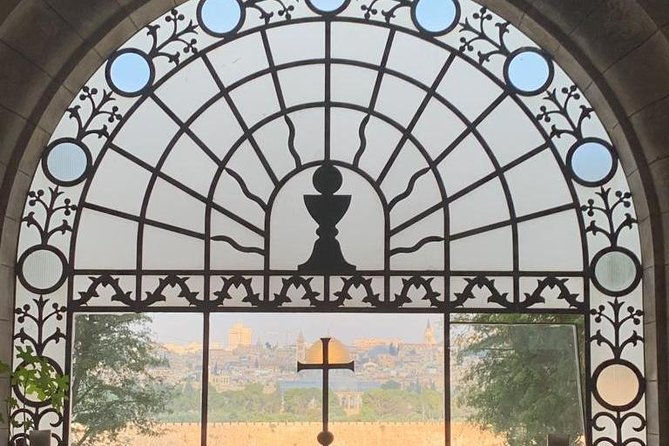
The Via Dolorosa follows the traditional route associated with Jesus. The tour visits sites along the way and then pauses for lunch at Lina, described as a leading hummus restaurant in the Old City.
Lunch is not included, so you pay separately. That is worth remembering when comparing the total cost. The break is also useful because this tour involves several hours on foot, and stopping for a proper meal is more sensible than trying to rush from one sacred site to the next.
The Via Dolorosa is not a single quiet monument. It is a working street through the Muslim Quarter, with shops and daily activity around religious stations. That mix is part of what makes the route meaningful, but it can also make it crowded and less reflective than you may expect.
The scheduled time is about an hour, including the lunch break. If food is important to you, ask how much of that hour will be spent eating and how much will be used for the route.
The Church of the Holy Sepulchre needs patient attention
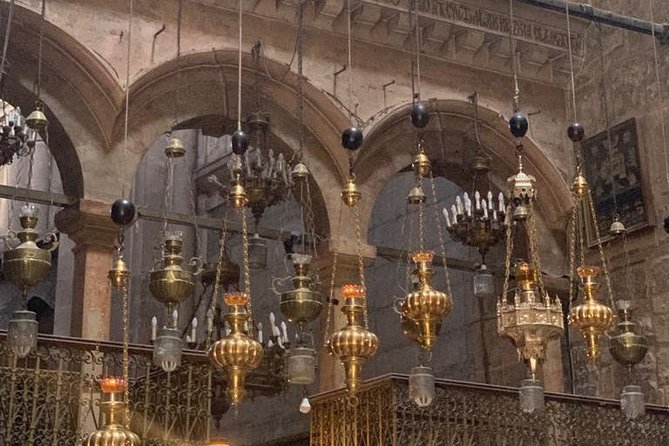
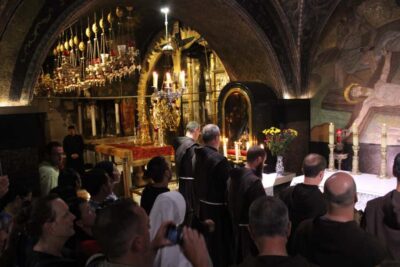
The final major stop is the Church of the Holy Sepulchre, associated with the crucifixion, the anointing bed, and Jesus’ tomb. For many Christian visitors, this is the emotional center of the day.
The church is shared by several Christian communities, and its interior can feel complicated at first. A guide is especially useful here because the meaning of each area is not always obvious, and the building’s importance comes from layers of tradition, worship, and history.
The visit is scheduled for about an hour. That gives you time to understand the main locations, but lines and services can affect the pace. A private tour cannot guarantee immediate access to every area, so patience is part of the experience.
If your main goal is Christian pilgrimage, you may want to make this stop longer and reduce time elsewhere. If you want a broad introduction to Jerusalem, the planned hour gives a solid base without allowing the church to consume the whole day.
What the $579.49 group price really means
At $579.49 per group of up to 15, the cost is easiest to justify with several people. A party of 10 pays far less per person than a couple, while both receive a private guide for the same basic fee.
The price includes a licensed tour guide. It does not include lunch or admission to the City of David National Park. Those extra costs are not minor details, since the City of David is one of the longest stops and includes the tour’s most distinctive activity.
For a couple, the private format is a premium purchase. You are paying for control over the route, a guide focused only on your group, and the chance to ask detailed questions. For a family or group of friends, the arithmetic is more favorable.
The tour is often booked about 11 days ahead, and confirmation arrives within 48 hours subject to availability. That makes early planning sensible, especially if you have a fixed Jerusalem schedule.
Who will appreciate this tour most
I would recommend this experience to you if you want a serious introduction to Jerusalem without joining a large group. It suits families, church groups, history fans, and repeat visitors who want a different angle on the Old City.
Roni’s style appears particularly well matched to people who enjoy explanation rather than a quick procession from monument to monument. His background at the Israel Museum and his personal connection with Jerusalem add weight to the archaeology and modern history sections.
The tour also suits groups with mixed interests because the route can be adjusted. You can ask for more time in churches, Jewish religious sites, archaeology, markets, or viewpoints.
It is less suitable if you want a relaxed day with very little walking. The full route lasts roughly four to eight hours, and the complete version includes steep or uneven Old City streets, a long sequence of stops, and possibly a water tunnel. A half-day plan may be the better choice for young children, older family members, or anyone who tires easily.
Free cancellation is available up to 24 hours before the start time for a full refund. Changes or cancellations inside that window are not accepted, so check your plans before the final day.
Should you book Explore Jerusalem’s Old City?
Book it if you want one guide to connect Jerusalem’s major religious traditions, ancient archaeology, market life, and modern history. The strongest reasons are the private format, the adjustable itinerary, and Roni’s personal and professional connection with the city.
For the best value, bring a group large enough to share the $579.49 fee. Decide in advance if the City of David tunnel is right for everyone, and budget separately for admission and lunch.
I would choose the full day if this is your first serious visit to Jerusalem and you can manage the pace. If you have only a few hours, ask for a focused route through Jaffa Gate, Mount Zion, the Western Wall, the Via Dolorosa, and the Church of the Holy Sepulchre. That version sacrifices archaeology but gives you a strong introduction to the Old City’s central sights.
FAQ
How long does the tour last?
The experience lasts approximately four to eight hours, depending on whether you choose a half-day or full-day plan and how the itinerary is arranged.
What time does the tour start?
The stated start time is 8:00 a.m.
Where does the tour begin?
The meeting point is at Jaffa Gate in Jerusalem, listed as Jaffa Gate hostel, Jaffa Gate, Jerusalem.
Where does the tour end?
The activity ends back at the meeting point.
Is this a private tour?
Yes. Only your group participates, with a maximum group size of 15 people.
Is the price per person?
No. The listed price of $579.49 is per group of up to 15 people.
Is lunch included?
No. Lunch at Lina is not included in the tour price.
Is admission to the City of David included?
No. Admission to the City of David National Park is not included.
Can the tour accommodate wheelchair users?
The tour can be adapted for travelers with wheelchairs. Because the route may include the water-filled Hezekiah’s Tunnel, discuss your group’s needs before booking.
Recently listed in Jerusalem
- West Bank Tour from Jerusalem and Tel-Aviv – Bethlehem & Jericho★ 5.0 · 6 reviews
- Tour of Jerusalem & Dead sea private tour★ 5.0 · 4 reviews
- One-Day Tour to Bethlehem and Jericho★ 5.0 · 2 reviews
- jerusalem classic tour★ 5.0 · 3 reviews
- full day tour Jerusalem price per van up to 6 people★ 5.0 · 8 reviews
- kosher Israel wine tour★ 5.0 · 4 reviews
- Private Tour: Old City of Jerusalem Christianity Tour★ 5.0 · 5 reviews
- Private Silk Painting Workshop in Jerusalem – Create a scarf –★ 5.0 · 4 reviews
Jerusalem Old City Tours, compared.
Best seller! Jerusalem old city four quarters tour
Read our review →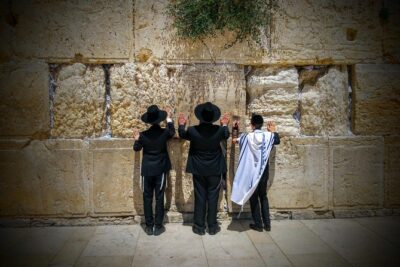
Jerusalem Half Day Tour: Holy Sepulchre and Western Wall
Read our review →
Jerusalem Half-Day Tour from Tel Aviv: Holy Sepulchre and Western Wall
Read our review →
Browse the lists this tour appears in