
Reviewed · HISTORICAL TOURS
Dine on a Combo Druze Culinary and History Tour
Northern Israel rewards curious eaters.
This private day with Simon combines Druze food and culture with small, personal sites that are easy to miss on a standard tour. I especially like the visit to Al Mona Garden, where Naji Abbas tells his family story through a prize-winning garden, and the generous brunch at Noor, a kosher Druze restaurant in Julis. The main consideration is the long day: ten hours includes all driving from your pickup point and back.
I also like the tour’s human scale. You visit a soap maker who employs Druze, Muslim, Christian, and Jewish women, then hear about Peki’in’s ancient Jewish community from its remaining local perspective. Simon’s past guests have praised his patience, clear explanations, and ability to show lesser-known places. With pickup anywhere in Israel, this is a useful choice for a private group of up to four, though the $700 group price makes the best sense when you fill all four places.
In This Review
- Key points to know before booking
- Why this Druze day feels different from a standard sightseeing tour
- Al Mona Garden and Naji Abbas’s family tribute
- Julis brunch at Noor, served the Druze way
- Grandma Gamila’s natural soap factory
- Peki’in and the cave of Rabbi Shimon bar Yochai
- The old synagogue and Peki’in’s Jewish story
- The $700 price and what you receive
- Who will get the most from this private tour
- Practical details that affect your day
- FAQ
- Where does the tour take place?
- Can I be picked up from my hotel or another location?
- What time does the tour start?
- How long does the experience last?
- Is this a private tour?
- Is food included?
- What is included besides the brunch?
- Can I buy products at Grandma Gamila’s factory?
- What happens if the weather is poor?
- Should you book the Druze culinary and history tour?
Key points to know before booking
- Al Mona Garden tells a family story: Naji Abbas created the garden for his parents, Mona and Rasheed, and it won second place in a competition for the world’s most beautiful garden.
- The Julis brunch is a full Druze spread: Expect salads, eggs, cheeses, olives, falafel, fresh pita, and black coffee rather than a quick roadside snack.
- Grandma Gamila’s products are made in the Galilee: Fifteen local healing herbs and pure plant oils go into soaps, creams, oils, candles, and other goods.
- Peki’in brings several faiths into one small town: Druze, Christians, Muslims, and one remaining Jewish woman form part of its present story.
- The tour is private and pickup is flexible: Only your group participates, and pickup is offered from any location in Israel.
- The day suits people who like conversation: Simon’s style is patient and explanatory, with time for questions rather than a fast checklist of sights.
Why this Druze day feels different from a standard sightseeing tour
Many northern Israel excursions focus on major archaeological sites or famous cities. This one takes a quieter route through two Druze towns, Julis and Peki’in, using gardens, food, craft, and family stories to explain the region.
That approach matters because Druze culture is not presented as a museum display. You meet people connected to living businesses and hear how family, military service, food, faith, and work fit together. The day also makes room for Jewish, Christian, and Muslim threads, especially in Peki’in.
Simon leads the experience, and the available feedback gives you a useful sense of his approach. He has been praised for being patient, easy to understand, and well prepared, even by people who had lived in Israel for more than 26 years. One note also highlights his ability to build a day around little-known places.
I would not book this if your ideal day means several major monuments, lots of free time, or a short drive between stops. You should book it if you like meeting local hosts, eating a substantial brunch, and letting a guide connect the dots.
More history-led tours in Jerusalem:
- Jerusalem Yad Vashem Holocaust History Museum Tour
★ 5.0 · 98 reviews - Jerusalem Heritage Private Tour
★ 5.0 · 3 reviews - Private Historical Tour of Masada & Dead Sea from Jerusalem
★ 5.0 · 2 reviews
Al Mona Garden and Naji Abbas’s family tribute
The first stop lasts about 90 minutes, and it gives the day an unusually personal start. Al Mona Garden was created by Naji Abbas in honor of his parents, Mona and Rasheed. The garden won second place in a competition seeking the most beautiful garden in the world, a remarkable achievement that adds weight to what might otherwise seem like a simple garden visit.
The important part is not only the planting or design. Naji’s personal story opens a window onto Druze life in Israel. You hear about his father’s strong support for the Israel Defense Forces as far back as 1948, along with other aspects of Druze culture.
This is a good example of the tour’s method. Rather than beginning with a long lecture, Simon uses one family and one place to introduce a wider community. The result should feel more grounded and easier to remember.
The garden is also a gentle first stop after pickup. You can walk, listen, and get used to the day before sitting down for the main meal. Admission is included.
A practical note: the tour requires a moderate level of physical fitness. The information provided does not give a detailed accessibility description, so you should ask ahead if walking through the garden or visiting the old sites could be difficult for you.
Julis brunch at Noor, served the Druze way
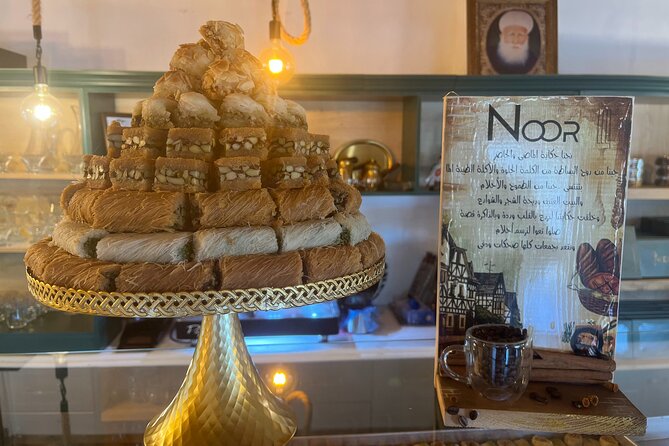
After Al Mona Garden, you travel to Julis for a two-hour brunch at Noor. Basma Henno established this kosher Druze restaurant in the center of town and named it after her son, Noor. She is also an IDF war widow, a detail that gives the restaurant another personal connection to the themes of family and service.
The meal is based on local food and produce freshly picked from nearby fields. You can expect Galilean Druze salads, eggs, cheeses, olives, falafel, and other dishes, served with freshly baked Druze pita. The meal ends with fragrant black coffee.
I like that this is described as brunch rather than a token tasting. You are given time to sit down and eat a proper spread, which makes the meal part of the cultural experience rather than fuel between attractions. Sharing several dishes also lets you try more than you could order as a single entrée.
The pricing details need a little care. A separate lunch is not included, but this two-hour brunch is part of the planned experience. In practical terms, you should not assume you need to buy another full meal during the day, but you may want to clarify exactly what the restaurant serves and whether any extras cost more.
Food preferences and dietary needs are not specified in the available information. Ask before booking if you need special arrangements. The restaurant is kosher, but that alone does not answer every question about allergies or substitutions.
Grandma Gamila’s natural soap factory
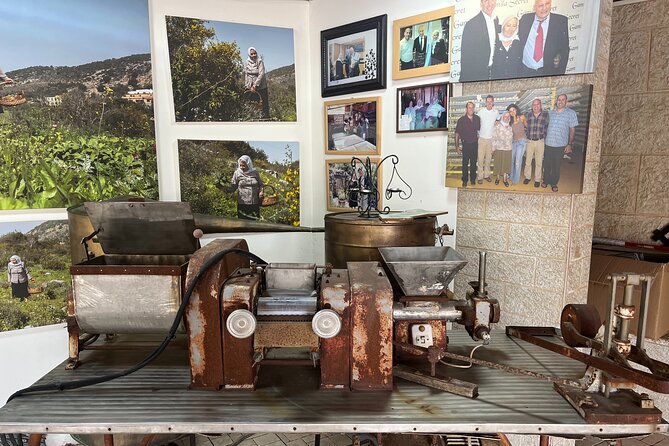
The next stop takes about 90 minutes and shifts the focus from food to local production. At Grandma Gamila’s soap factory, Gamila Hiar has spent more than 30 years using knowledge of nature to make beauty products from 15 healing herbs grown only in the Galilee.
The products also use pure plant oils and contain no artificial colors or fragrances, according to the tour details. The range includes face oils, hand and foot cream, cleansing bars, candles, and other items.
You get to see the story behind a recognizable local business rather than simply stopping at a shop. That gives the purchase option more meaning. If you buy something, you are choosing a product tied to Galilean herbs, plant oils, and a long-running Druze enterprise.
The social side is also worth noting. Gamila employs Druze, Muslim, Christian, and Jewish women. In a day that already crosses religious and cultural lines, this workplace adds a practical example of cooperation.
You do not have to buy anything. The stop includes an opportunity to shop, not a required purchase. That distinction is important for anyone who dislikes sales-focused excursions. You can listen to the production story, look at the products, and decide for yourself.
The tour calls Gamila a world leader in natural beauty products. That is promotional language, so I would treat it as part of the business story rather than an independent ranking. Still, the 30-year history and specific ingredient details give the stop substance.
More Jerusalem tours worth comparing
- From Jerusalem: Masada & Dead Sea Full Day Tour with Pick Up
★ 4.5 · 815 reviews - Masada and the Dead Sea Day Trip from Jerusalem
★ 4.5 · 757 reviews - From Jerusalem: Nazareth and Sea of Galilee Tour
★ 4.5 · 588 reviews - Nazareth and the Sea of Galilee Day Trip from Jerusalem
★ 4.5 · 446 reviews
Peki’in and the cave of Rabbi Shimon bar Yochai
Peki’in is the most historically layered stop of the day. The town is home to Druze, Christians, and Muslims, and it is also linked to a Jewish community said to have lived there for 2,000 years.
The first Peki’in visit is to the Cave of Rabbi Shimon bar Yochai, also called the Cave of the Rashbi. According to the traditional account, Rabbi Shimon bar Yochai and his son, Rabbi Elazar, fled the Romans in 149 CE and hid in the cave for 12 years.
The story says they survived on fruit from a carob tree and water from a spring. You spend about 30 minutes here, so this is a brief historical stop rather than an extended cave exploration.
The cave connects Peki’in to the period after the Romans tightened their grip on the region. It also shows how religious tradition can give an ordinary physical place lasting importance. Simon can explain the story and its setting, helping you understand why this modest stop matters.
Do not expect a large archaeological attraction with a long list of displays. The appeal is the tradition, the setting, and the chance to consider how people preserved faith and memory under Roman rule.
The old synagogue and Peki’in’s Jewish story
The final visit lasts about two hours and focuses on the old synagogue and the story of Peki’in’s Jewish community. The local tradition says Jews who fled the destruction of the Second Temple in 70 CE settled in Peki’in and maintained a presence there for centuries.
Today, the town’s Jewish population has nearly disappeared, with only one elderly Jewish woman remaining according to the tour information. That fact gives the visit a quiet, human quality. You are not simply looking at an old building. You are hearing about the end of a community that had been connected to the town for a very long time.
The visitor center explains this history, and the ancient synagogue is next door. Two plaques on the synagogue wall were recently carbon-dated by the Israel Antiquities Authority to the period when the Cohanim, or Jewish priests, fled Jerusalem to escape the Romans. Local legend says the plaques were brought from the Second Temple.
The wording here is important. The dating supports the age of the plaques, while the connection to the Second Temple remains a legend. That mix of archaeology, religious memory, and local tradition is exactly what makes old places interesting, but you should not treat every traditional claim as proven fact.
This is the longest stop in Peki’in, and rightly so. It gives you time to hear the story, visit the synagogue, and place the town within the larger history of Roman Judea and Jewish settlement.
The $700 price and what you receive
The tour costs $700 per group of up to four people. That is not a low-cost excursion for one person, but it is a different calculation when shared by a full group. At four people, the cost works out to $175 each before any optional purchases or other personal expenses.
For that price, you receive a private tour, pickup, an air-conditioned vehicle, bottled water, snacks, and admission where charges apply. Only your group participates, so you do not have to fit into a large coach schedule or share the day with strangers.
The flexible pickup is especially useful. Pickup is offered from any location in Israel, but the ten-hour duration includes the transportation from your pickup point to the attractions and the return journey. If you are far from the Galilee, the driving may take a substantial part of the day.
That is both a strength and a limitation. You get a door-to-door private day, but you should not imagine ten full hours at the gardens, restaurant, factory, and historic sites. Ask for a realistic driving estimate from your location before booking.
The brunch is included in the planned schedule, while lunch is listed as not included. Water and snacks are provided. Optional purchases at Gamila’s factory are extra.
Who will get the most from this private tour
I would recommend this day to people who want:
- A private outing for up to four people
- A guide-led introduction to Druze culture in Israel
- Local food served in a traditional setting
- Small businesses and personal stories instead of only major sights
- A mix of religion, archaeology, food, and community history
- Flexible pickup from a location anywhere in Israel
It is also a good fit for repeat visitors. The available feedback describes Simon taking people who had lived in Israel for decades to lesser-known places and still teaching them something new.
Families and mixed-age groups may appreciate the variety. One person can focus on food, another on gardens, another on religious history, and another on shopping. The day does require moderate physical fitness, and the long duration may be tiring for young children or anyone who struggles with extended drives.
You should think twice if you want a tour centered on major cities such as Jerusalem, Tel Aviv, Haifa, or Acre. This experience is about northern communities and smaller sites, not a broad survey of Israel’s headline attractions.
Practical details that affect your day
The start time is 9:00 a.m., and the tour lasts about ten hours. Confirmation is provided at booking, and the activity is private.
Wear comfortable clothing and shoes suitable for garden paths and historic sites. That advice follows the stated moderate fitness requirement, not a promise about the exact ground conditions.
The tour requires good weather. If poor weather causes cancellation, you are offered another date or a full refund. It also requires a minimum number of participants, and if that minimum is not reached, you are offered another date, another experience, or a full refund.
For a full refund, cancel at least 24 hours before the start time. Changes or cancellations inside that window are not accepted for a refund, and the cut-off uses local time.
FAQ
Where does the tour take place?
The tour visits two Druze towns in northern Israel, Julis and Peki’in, along with Al Mona Garden and Grandma Gamila’s soap factory.
Can I be picked up from my hotel or another location?
Pickup is offered from any location in Israel. The exact pickup arrangement should be confirmed when you book.
What time does the tour start?
The start time is 9:00 a.m.
How long does the experience last?
The tour lasts approximately 10 hours, including transportation from your pickup location to the attractions and the return journey.
Is this a private tour?
Yes. Only your group participates, with a maximum of four people per group.
Is food included?
A Druze brunch at Noor in Julis is part of the day and includes salads, eggs, cheeses, olives, falafel, pita, and black coffee. Lunch is listed separately as not included.
What is included besides the brunch?
Bottled water, snacks, an air-conditioned vehicle, and admission tickets where specified are included.
Can I buy products at Grandma Gamila’s factory?
Yes. You have the opportunity to purchase face oils, creams, cleansing bars, candles, and other natural beauty products, but purchases are optional.
What happens if the weather is poor?
If the tour is canceled because of poor weather, you are offered a different date or a full refund.
Should you book the Druze culinary and history tour?
Book it if you want a private, full-day introduction to northern Israel that links Druze food, family stories, and local work with the ancient traditions of Peki’in. The garden, generous brunch, soap factory, cave, and synagogue create a varied day, and Simon’s patient style is a strong reason to choose a guide-led visit.
Skip it if you want a short outing, a major archaeological site, or a tightly packed list of famous attractions. The $700 cost is easiest to justify with four people, and the driving time matters if your pickup point is far from the Galilee.
For the right group, this is a thoughtful day rather than a basic sightseeing transfer. You come away with food in your memory, products you may still be using at home, and a clearer sense of how several communities have shared northern Israel across centuries.
Recently listed in Jerusalem
- West Bank Tour from Jerusalem and Tel-Aviv – Bethlehem & Jericho★ 5.0 · 6 reviews
- Tour of Jerusalem & Dead sea private tour★ 5.0 · 4 reviews
- One-Day Tour to Bethlehem and Jericho★ 5.0 · 2 reviews
- jerusalem classic tour★ 5.0 · 3 reviews
- full day tour Jerusalem price per van up to 6 people★ 5.0 · 8 reviews
- kosher Israel wine tour★ 5.0 · 4 reviews
- Private Silk Painting Workshop in Jerusalem – Create a scarf –★ 5.0 · 4 reviews
- Experience Shabbat With Dinner In Jerusalem★ 5.0 · 5 reviews
Historical Tours, compared.
Jerusalem Yad Vashem Holocaust History Museum Tour
Read our review →


Full-Day Private Luxury and Cultural Tour in Tel Aviv
Read our review →

Browse the lists this tour appears in