
Reviewed · RAMON CRATER TOURS
Stargazing Mitzpe Ramon
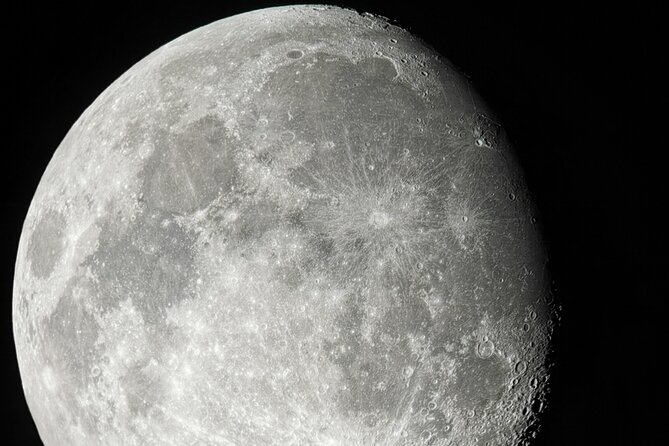
The desert sky puts on a serious show. This private stargazing outing near Makhtesh Ramon combines dark desert conditions, advanced robotic telescopes, warm drinks, and clear explanations of the stars above you. Your guide sets up a telescope, mats, mattresses, a fire, tea or coffee, and snacks before you arrive, so the evening feels relaxed rather than technical.
I especially like the small private format, with only your group participating, and the chance to lie back while looking at the sky. I also like the mix of science, mythology, constellations, and actual telescope viewing. The main consideration is logistics: transportation is not included, and the exact meeting location and time are sent on the morning of the activity.
In This Review
- Key points to know before booking
- Meeting the guide beside Makhtesh Ramon
- The first hour: getting oriented under the stars
- Looking through the robotic telescopes
- Mats, mattresses, fire, and desert comfort
- The guide makes the difference
- How much time should you allow?
- Is $460 good value for a group?
- Who will enjoy this most?
- Practical details that affect your decision
- Should you book Stargazing Mitzpe Ramon?
- FAQ
- Where does the stargazing experience begin?
- Where does the experience end?
- How long does the activity last?
- How many people can join?
- What is included in the price?
- Is hotel pickup included?
- What will I learn about?
- What might I see through the telescopes?
- Is the activity suitable for most people?
- What happens if the weather is poor?
Key points to know before booking
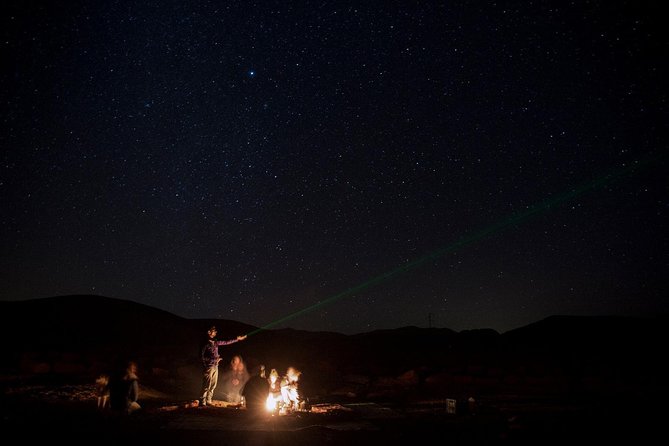
- A private desert session for up to eight people: The $460 price covers the whole group, not each individual.
- A dark-sky setting near the Ramon Crater: The remote location is the main reason the stars can appear so sharp.
- Robotic telescopes and extra equipment: The standard setup includes a telescope, with additional telescopes available for the extended activity.
- A mix of astronomy and storytelling: Expect constellations, zodiac signs, asterisms, myths, astronomy history, and science about the solar system and beyond.
- Comfort matters in the desert: Mats, mattresses, a fire, hot drinks, and snacks are provided.
- Weather controls the schedule: You can cancel free up to 24 hours before the start, and poor weather may lead to a new date or a full refund.
Meeting the guide beside Makhtesh Ramon
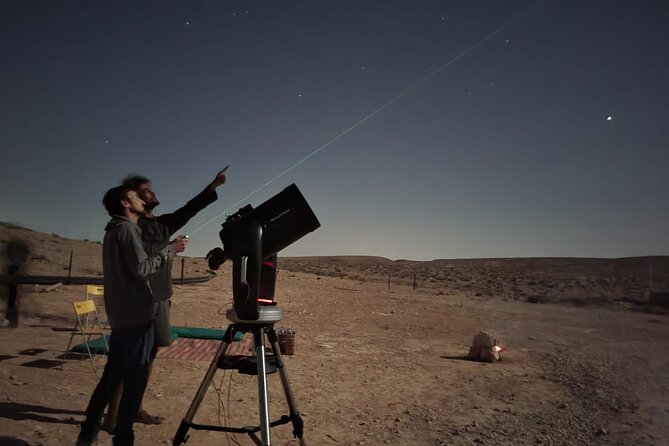
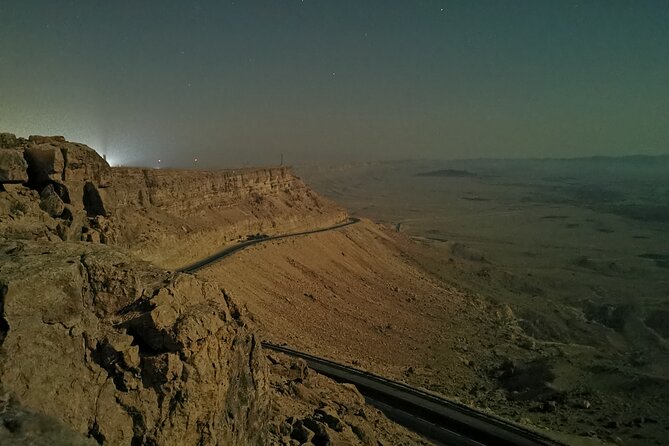
The activity starts at Makhtesh Ramon, the large desert crater near Mitzpe Ramon. The supplied location information also identifies Sde Boker as the general area, so you should read the same-day directions carefully rather than rely on a familiar town name or a map pin from memory.
Your guide waits in the desert with the equipment already prepared. This is not a visit to a formal observatory with a building, gift shop, or rows of fixed viewing stations. You arrive at an open, dark setting where the telescope, seating, fire, and refreshments are ready for your group.
That setup is a real part of the experience. In a city observatory, the machinery often gets most of the attention. Here, the silence and lack of artificial light do much of the work. The desert can feel almost empty at night, which is exactly what makes the sky so powerful.
The meeting arrangement does require some attention. Hotel pickup is not included, and neither is transportation to or from the attraction. You are responsible for getting to the meeting point at the appointed hour. The operator sends the exact location and schedules the time on the morning of the activity, so keep your phone available that day.
More trips down to the Ramon Crater:
- Rappelling Down the Ramon Crater Cliff
★ 5.0 · 47 reviews - Two hour guided jeep tour in to and around the Ramon crater
★ 5.0 · 45 reviews - Ramon Crater Jeep Tour from Mitzpe Ramon
★ 5.0 · 44 reviews
The first hour: getting oriented under the stars
The opening part of the session helps you understand what you are looking at. Your guide introduces stars, constellations, zodiac signs, and asterisms, which are recognizable patterns of stars that may not be official constellations.
That distinction is useful. Many people can identify a few famous shapes but have no idea how to find them in the sky. A guide can give you a frame of reference, then connect the points of light to stories and patterns that are easier to remember.
The astronomy talk also includes myths and legends. This adds a human layer to what could otherwise become a list of technical facts. Different cultures used the sky to tell stories, mark seasons, and make sense of the world. Hearing those stories beside a desert fire gives the subject a natural setting.
The guide also covers the history of astronomy. The stated program does not promise a fixed lecture or a particular set of historical figures, so the discussion can likely respond to your questions and the night’s viewing conditions. That flexibility suits a private group better than a rigid presentation.
Looking through the robotic telescopes
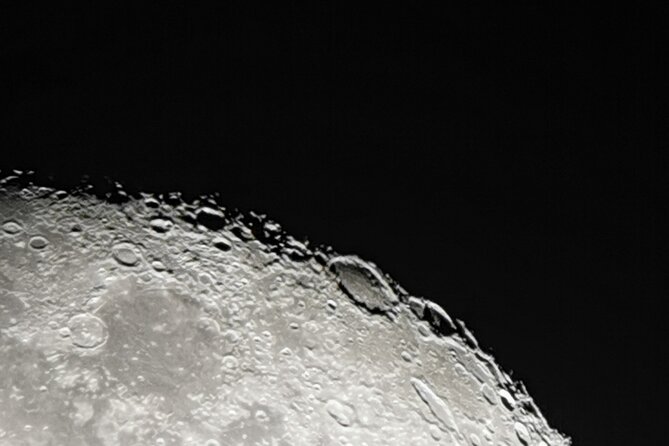
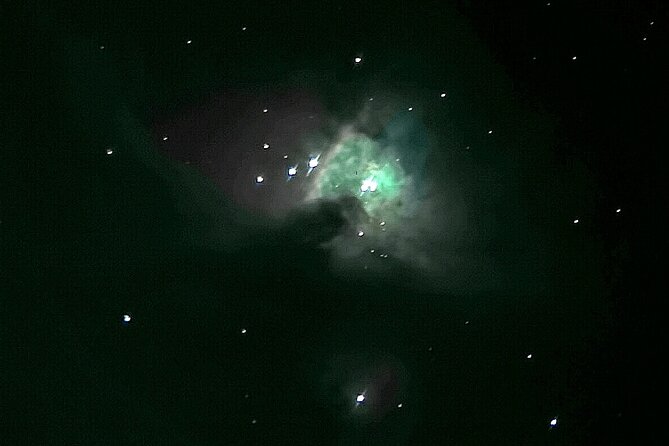
The telescope viewing is the heart of the evening. The equipment is described as advanced and robotic, and the standard experience includes views of the moon and some planets in our solar system.
What you see will depend on the date, the weather, and what is above the horizon. The program does not guarantee a particular planet or object, so you should treat the telescope list as a guide to the sort of viewing planned, not a promise of a specific lineup.
The program also includes deep-sky objects. These can include star clusters, nebulae, double stars, and galaxies. That range matters because each type gives you a different sense of scale. A planet feels like a nearby world. A star cluster shows many stars gathered together. A galaxy reminds you that the night sky extends far beyond the solar system.
The robotic mount should also help the guide locate and follow objects. You do not need to know how to operate the equipment yourself. Instead, you can focus on looking, asking questions, and comparing what you see with the guide’s explanation.
The extended version adds extra telescopes. The supplied information does not give a separate price or exact length for that option, so ask about the upgrade before committing. If your group has several people eager to look through the equipment, extra telescopes could make the viewing flow more smoothly.
Mats, mattresses, fire, and desert comfort
A telescope session can become uncomfortable if you spend nearly two hours standing or craning your neck. This experience addresses that with a mat and mattresses where you can lie down and watch the sky.
I like this detail because the best way to see a large section of sky is not always to stand beside a tripod. Lying back lets you look upward for longer stretches and makes the outing feel less like a technical demonstration.
The fire, tea or coffee, and snacks add warmth and a social center. One account describes the setup as a bonfire with chairs and good tea after a desert hike. That suggests the refreshments can be especially welcome after time outdoors, though the experience itself does not include a hike.
Still, you should take the cold seriously. Desert temperatures can drop at night, and one detailed account specifically notes that the desert was cold. Bring warm layers even if the daytime weather feels mild. The provided information confirms hot drinks and a fire, but it does not state that warm clothing, blankets, or other personal gear are supplied.
The fire also changes the rhythm of the night. You can move between looking through the telescope, listening to the guide, resting on the mattresses, and warming up with a drink. That makes the session easier for people who are interested in astronomy but do not want a nonstop technical talk.
More Negev tours worth comparing
- Jerusalem: Masada, Ein Gedi & Dead Sea Tour
★ 4.2 · 226 reviews - From Tel Aviv: Masada &Dead Sea Tour INCLUDING ENTRANCE FEES
★ 4.4 · 77 reviews - In Depth Introduction of the Ramon Crater
★ 5.0 · 11 reviews - The Ramon Crater and rappelling package tour – an exciting combo tour.
★ 5.0 · 4 reviews
The guide makes the difference
This experience depends heavily on the guide. The program calls for a local guide and a professional guide, and individual guide names appear in the available feedback. Nadav is praised for leading a powerful introduction to the universe. Moshe is described as warm, articulate, and highly informed, while Ori, also called Star Ori, receives praise for his energy, personal attention, and ability to give the group his best.
Those comments point to the quality you should hope for: clear speech, warmth, and a willingness to connect science with the people sitting around the fire. The exact guide for your date is not guaranteed in the supplied information, so you should not book solely around one name.
A good astronomy guide does more than point at bright objects. The guide helps you find your place under the sky, explains why an object matters, and gives you a story or idea that stays with you after the telescope is packed away. This program appears designed for that kind of conversation.
The private format helps. Your group can ask basic questions without worrying about slowing down a large crowd. Children, first-time sky watchers, and serious astronomy fans can all follow the same session at different levels, provided everyone is comfortable with the outdoor setting.
How much time should you allow?
The listed duration is about 1 hour and 45 minutes. The general description gives a range of 1.5 to 2 hours, so plan for roughly two hours at the meeting point.
That is long enough for an introduction, telescope viewing, questions, refreshments, and time to simply look upward. It is not an all-night astronomy camp, and the program does not include overnight accommodation or a longer desert expedition.
The same-day scheduling system means you may not know the precise hour until the morning of the activity. This can be useful if the operator is adjusting the session to conditions, but it makes it harder to plan a tightly packed day around the crater.
Give yourself enough time to reach the meeting point without rushing. The exact location is sent on the day of the experience, and the activity ends back at that same meeting point.
Is $460 good value for a group?
The price is $460 per group of up to eight people. That works out to $57.50 per person if eight people attend, before considering any separate transportation costs. For a couple, the effective per-person price is much higher, but you are paying for a private setup rather than joining a large shared group.
The value comes from several elements working together:
- A private guide for your group
- Professional telescope equipment
- A remote dark-sky setting
- Mats and mattresses
- A fire, tea or coffee, and snacks
- A session that combines science, stories, and live viewing
If your group already has several people who want to see the night sky, the price becomes easier to justify. A family or group of friends can split the cost while keeping the session personal. For two people, the price is harder to defend unless private guiding and a custom desert setting are especially important to you.
Transportation is the main extra cost to consider. Since pickup and transfers are not included, you need to arrange your own way to Makhtesh Ramon. The package is strongest for people already staying in the region and planning to visit the crater.
Who will enjoy this most?
I would recommend this for people who want more than a quick look at a few bright stars. The program suits anyone curious about planets, galaxies, constellations, and the science behind what appears overhead.
It is also a good choice for families and mixed-interest groups. Someone fascinated by astronomy can ask detailed questions, while someone less technical can enjoy the myths, fire, snacks, and desert setting.
The private format may appeal to couples and small groups marking a special evening. You can keep the conversation focused on your own interests instead of following a fixed public tour.
People who dislike cold, remote outdoor settings, or uncertain viewing conditions should think carefully. The experience takes place in the desert at night, and good weather is required. A cloudy or otherwise poor night can lead to a new date or a full refund, but the sky itself cannot be guaranteed.
Practical details that affect your decision
Confirmation is sent within 48 hours of booking, subject to availability. The activity is generally suitable for most people, and service animals are allowed.
You can cancel for a full refund up to 24 hours before the local start time. Cancellations or changes made less than 24 hours ahead are not accepted for a refund. If bad weather cancels the outing, you are offered another date or a full refund.
The experience is mobile-ticketed, so keep the booking information accessible on your phone. Since the exact meeting instructions arrive on the morning of the activity, check your messages before setting out.
The supplied information does not describe the surface at the meeting point, restroom access, or special seating beyond the mats and mattresses. If anyone in your group has mobility concerns, contact the provider before booking and ask for current access details.
Should you book Stargazing Mitzpe Ramon?
Book it if you want a private, guided night under a genuinely dark desert sky, and if you value conversation as much as the telescope images. The combination of robotic equipment, astronomy stories, reclining mats, fire, tea, and snacks gives the evening a thoughtful shape.
I would be more cautious if you are on a tight budget, traveling without your own transportation, or expecting a guaranteed view of a specific planet or galaxy. The $460 cost is fair for a full group of up to eight, but less attractive for only one or two people.
For the best chance of enjoying it, dress warmly, keep your schedule flexible on the day, and confirm the meeting directions as soon as they arrive. If the sky is clear, this can turn a visit to the Ramon Crater into something much more personal than a scenic stop in daylight.
FAQ
Where does the stargazing experience begin?
It begins at Makhtesh Ramon, also known as the Ramon Crater. The general location is identified as Sde Boker, and the exact arrival location is sent on the morning of the activity.
Where does the experience end?
It ends back at the meeting point at Makhtesh Ramon.
How long does the activity last?
The listed duration is approximately 1 hour and 45 minutes. The general description gives an expected range of about 1.5 to 2 hours.
How many people can join?
This is a private activity for your group, with up to eight people included in the group price.
What is included in the price?
A local guide, a professional guide, telescope equipment, mats, mattresses, a fire, tea or coffee, and snacks are part of the experience description. Extra telescopes are available for the extended activity.
Is hotel pickup included?
No. Hotel pickup and transportation to or from the attraction are not included.
What will I learn about?
The session covers stars, constellations, zodiac signs, asterisms, astronomy history, myths and legends, the solar system, and objects beyond it.
What might I see through the telescopes?
The program includes the moon, some planets, star clusters, nebulae, double stars, and galaxies. Exact viewing depends on the night’s conditions and what is visible.
Is the activity suitable for most people?
Yes. The provided information says most people can participate, and service animals are allowed.
What happens if the weather is poor?
The experience requires good weather. If it is canceled because of weather, you can choose a different date or receive a full refund.
Recently listed in Negev
- The Ramon Crater and rappelling package tour – an exciting combo tour.★ 5.0 · 4 reviews
- Sunset time Ramon Crater Jeep tour, bonfire and stargazing★ 5.0 · 4 reviews
- טיולי ג’יפים במכתש רמון★ 5.0 · 2 reviews
- From Jerusalem: Masada and Dead Sea Tour★ 4.7 · 4 reviews
- In Depth Introduction of the Ramon Crater★ 5.0 · 11 reviews
- Ramon Crater Jeep Tour from Mitzpe Ramon★ 5.0 · 44 reviews
- Two hour guided jeep tour in to and around the Ramon crater★ 5.0 · 45 reviews
- Rappelling Down the Ramon Crater Cliff★ 5.0 · 47 reviews
Ramon Crater Tours, compared.

Two hour guided jeep tour in to and around the Ramon crater
Read our review →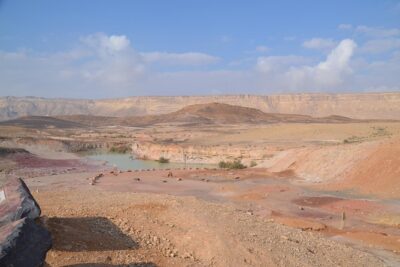
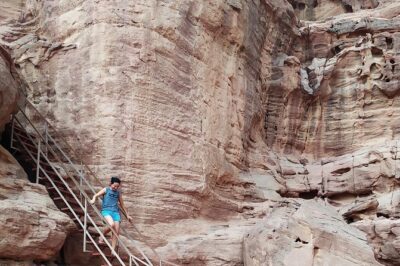
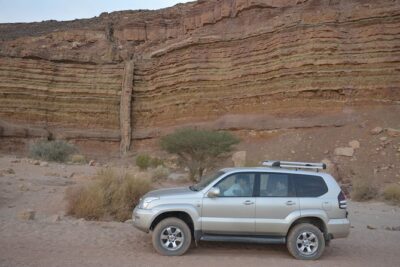
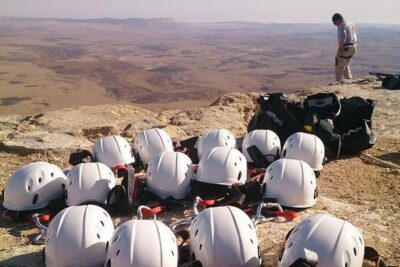
The Ramon Crater and rappelling package tour – an exciting combo tour.
Read our review →
Sunset time Ramon Crater Jeep tour, bonfire and stargazing
Read our review →Browse the lists this tour appears in