
Reviewed · TEL AVIV TOURS
Running Tour – Tel Aviv Highlights 10KM
See Tel Aviv at running pace. This 10-kilometer outing combines exercise with local stories, taking you from old neighborhoods and Bauhaus streets to cultural squares, modern shopping districts, beaches, and the old railway grounds. I like the wide city overview and the chance to cover far more ground than you would on foot. I also like that guide Moy adjusts the pace to the group and brings a coach’s eye to the run.
The main catch is simple: this is still a serious run, not a stroll with occasional jogging. You need a moderate level of fitness, and Tel Aviv’s heat can make 10 kilometers feel much longer than it looks on paper. An early start is the sensible choice.
Moy is the key to the experience. He combines running guidance with stories about Tel Aviv and Israel, and past participants have praised his friendly manner, local insight, and care with pace. The result is part sightseeing, part morning workout, and part orientation for the rest of your visit.
In This Review
- Quick points about the Tel Aviv 10KM run
- Why a 10-kilometer run works well in Tel Aviv
- Starting at HaTachana and entering Neve Tzedek
- Bauhaus streets and Independence Hall
- Habimah Square and the cultural center
- Sarona’s Templar past and modern shops
- The museum yard, Rabin Monument, and civic Tel Aviv
- Atarim Square and Tel Aviv’s waterfront
- Finishing at Park HaTachana
- Moy’s guiding style and the pace of the run
- Timing, heat, and what to bring
- Is $92.95 a fair price?
- Who should book this running tour?
- Should you book the Tel Aviv Highlights 10KM run?
- FAQ
- How long does the Tel Aviv Highlights running tour last?
- How far is the running route?
- Where does the tour start?
- Where does the tour finish?
- What fitness level do I need?
- What should I bring?
- What happens if the weather is poor?
Quick points about the Tel Aviv 10KM run
- A city tour in running shoes: Cover historic Jaffa-area districts, central Tel Aviv, cultural landmarks, the waterfront, and the old railway station area in about 90 to 105 minutes.
- Moy sets the rhythm: The guide is also a running coach, so the pace can be adapted to the group rather than forced to a fixed speed.
- Eight main stops: The route includes Suzanne Dellal, Independence Hall Museum, Habimah Square, Sarona, the Tel Aviv Museum of Art, the Rabin Monument, Atarim Square, and Park HaTachana.
- Strong orientation value: You see the first neighborhood, newer buildings, the White City area, beaches, and major civic sites in one outing.
- Best in cooler hours: An early morning run helps you avoid the worst heat and crowds, a point made especially clear by the French-language feedback.
- Small-group format: The maximum group size is 20 people, with confirmation provided at booking and a mobile ticket accepted.
Why a 10-kilometer run works well in Tel Aviv
Tel Aviv spreads its attractions across several distinct areas. Neve Tzedek feels different from Florentine. The waterfront has a different mood from the civic center. Sarona tells a different story from Jaffa or the old railway grounds.
A walking tour trying to connect all these places would take much of the day. On this route, you use the city’s sidewalks and boulevards to link them at a steady run, stopping for explanations along the way. That gives you a useful first look, especially if you have only a short stay or need to see the city before a workday begins.
The 90-to-105-minute duration includes pauses at the sights. The distance is advertised as 10 kilometers, though one participant on a related run reported covering closer to 13 kilometers after route adjustments. I would treat 10 kilometers as the target, not a guarantee of an exact GPS reading.
The run also functions as a practical introduction. You can note places to revisit later, such as the White City buildings, the beaches, the museum area, or the restored railway station. You will not have time to explore the interiors of every attraction, but you will know where they are and why they matter.
More Tel Aviv tours worth comparing
- From Tel Aviv: Masada & Dead Sea Full Day Tour with Pick Up
★ 4.5 · 1,496 reviews - From Tel Aviv: Jerusalem and Bethlehem Guided Day Trip
★ 4.3 · 1,316 reviews - Masada and the Dead Sea Day Trip from Tel Aviv
★ 4.5 · 1,014 reviews
Starting at HaTachana and entering Neve Tzedek
The meeting point is Tash and Tasha at HaTachana, the restored station area on Professor Yehezkel Kaufmann Street. The tour ends back at the same meeting point, which makes the start and finish easy to plan.
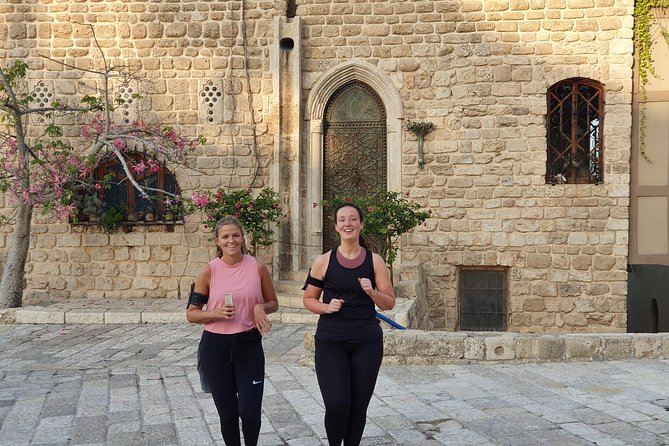
From here, the route takes in an old neighborhood with an artistic feel, including Neve Tzedek and the Suzanne Dellal area. Neve Tzedek was Tel Aviv’s first neighborhood outside Jaffa, and today it is known for its attractive streets, renovated buildings, and creative character.
Suzanne Dellal is a natural early stop. The former buildings have been restored and now house dance and theater spaces. You pause for about 10 minutes, long enough to hear why the complex matters and to look closely at the mix of old walls and later restoration.
I like this opening because it quickly establishes Tel Aviv’s layered character. The city is not just glass towers and beach promenades. It has older quarters, reused buildings, and a strong arts scene. The drawback is that runners who want a workout without frequent interruptions may find the stop-and-start rhythm less satisfying.
Bauhaus streets and Independence Hall
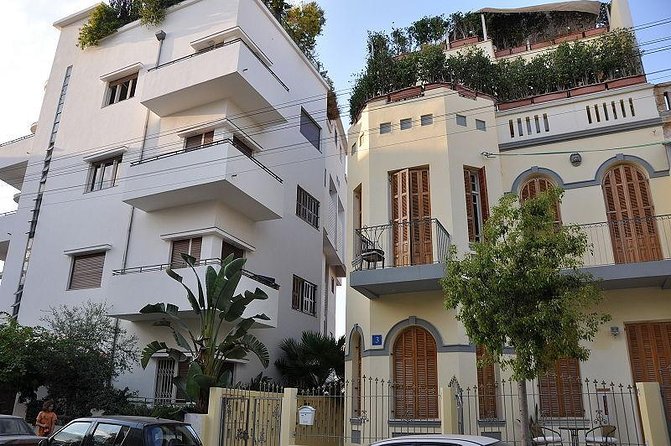
The next section moves along a boulevard lined with renovated Bauhaus and Eclectic-style houses. This is part of the White City, the central area known for its modernist architecture and pale stucco buildings.
At running pace, you will mostly see facades and urban details rather than study every building. That is enough to help you recognize the style later when you return on foot. The tour gives you the broad architectural picture without turning the morning into a formal building lecture.
Independence Hall Museum in the Shalom Mayer Tower receives about 15 minutes. This is one of the most important historical stops because the building is tied to major events in Tel Aviv and Israel. The stop helps connect the city’s early development with the creation of the modern state.
The listed admission is free, but the tour information does not promise a paid museum visit or a full indoor tour. Plan to hear about the site and see it as part of the route, rather than expecting a long museum session.
Habimah Square and the cultural center
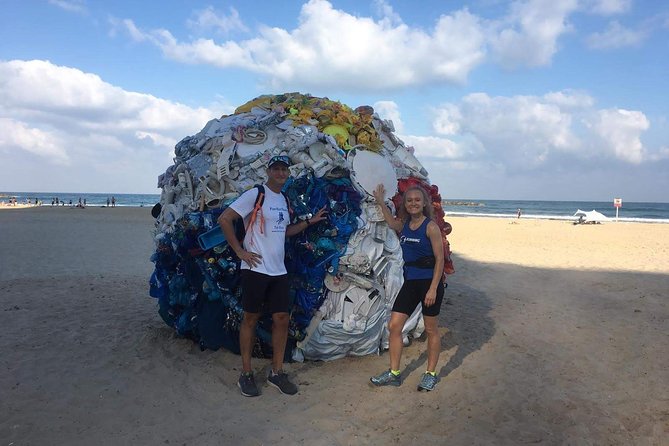
Habimah Square takes only about five minutes, but it gives you a look at central Tel Aviv’s cultural heart. The square sits among major performance institutions and public spaces.
This is a short pause, so the value comes from context rather than extended sightseeing. Moy can explain how the square fits into the city, while you catch your breath and prepare for the next section.
The quick timing also shows how this tour works. You are not spending 30 minutes at every landmark. You are collecting a series of strong impressions, then deciding which ones deserve a longer visit later.
A different day out, same base:
- Tel Aviv: Jerusalem, Bethlehem & Dead Sea
★ 4.0 · 881 reviews - From Tel Aviv: Guided Day Trip to Nazareth & Sea of Galilee
★ 4.4 · 824 reviews - From Tel Aviv: Jerusalem Old & New City Bus Tour
★ 4.2 · 824 reviews - From Tel Aviv: Caesarea, Haifa and Akko Day Trip
★ 4.4 · 744 reviews
Sarona’s Templar past and modern shops
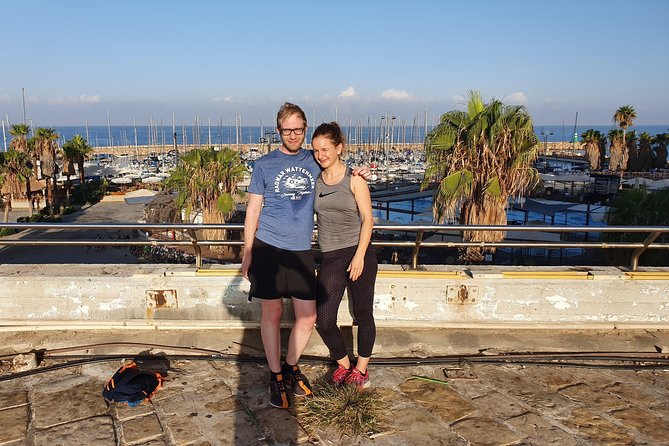
Sarona is one of the more unusual sections of the route. It began as a Templar farm, later became a military camp, and was eventually transformed into a shopping and dining district.
The area’s appeal comes from the contrast. Historic buildings sit beside a modern commercial center, and the old military use adds another layer to the story. The tour also points out a secret tunnel, an especially good detail for anyone interested in the less obvious side of city history.
You spend about 10 minutes here. That is enough to understand the basic change from farm to military site to retail district, but not enough for shopping or a careful look inside every building. If Sarona interests you, mark it for a separate return visit.
I find this kind of stop especially useful because it explains how Tel Aviv reuses space. You are not only looking at preserved architecture. You are seeing how an older site has been given a new public role.
The museum yard, Rabin Monument, and civic Tel Aviv
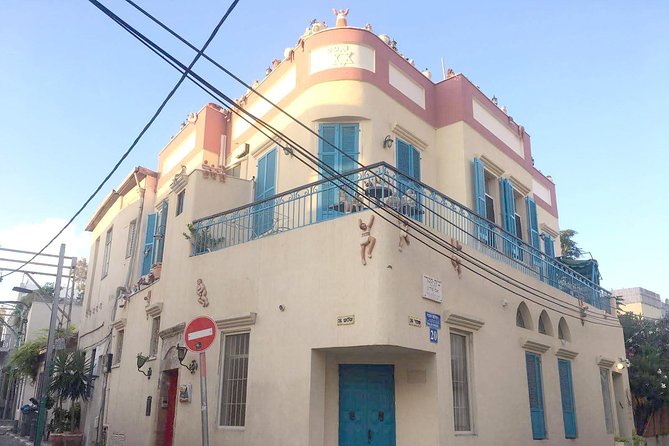
The route continues to the Tel Aviv Museum of Art, near the Israeli Opera and HaKamery Theater. The stop lasts about 10 minutes and focuses on the museum yard and its large iron sculptures.
This is an outdoor look, not a museum visit. If you want to see the galleries, you will need to return on your own. Still, the museum district adds another side of Tel Aviv, one built around art, theater, and public culture rather than beaches or shopping.
The Itzhak Rabin Monument follows, with about 10 minutes at the site near Rabin Square. Here you learn where and how the Israeli prime minister was assassinated. It is a solemn stop, and the setting gives the political story a physical place in the city.
The tour also passes the modest residence of Israel’s first prime minister. The house is important because major decisions were made there, despite its unassuming appearance.
These stops are valuable because they keep the tour from becoming a simple architecture-and-beach run. You get a sense of Israel’s political life as well as Tel Aviv’s cultural institutions. At the same time, the short time at each site means the historical treatment will be introductory. You should not expect a full political history of Israel in one morning.
Atarim Square and Tel Aviv’s waterfront
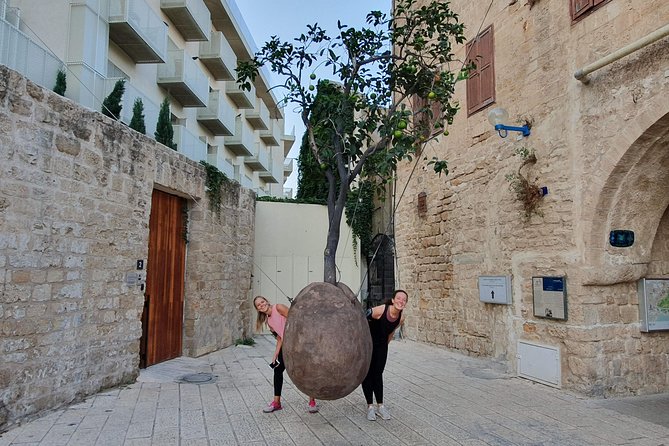
Atarim Square provides a five-minute viewpoint over the marina and beach. This is one of the route’s best visual changes, moving from the dense center to open views of the water.
The stop also raises a useful question: why was the square built at this location, and who built it? Those details give the site more meaning than a quick photo stop. You are encouraged to look at the structure and setting, not just the view.
The waterfront section is a major reason to choose this tour. The run connects city streets with the beach, giving you a feel for Tel Aviv’s relationship with the Mediterranean. Several participants on related routes particularly enjoyed the waterfront and the run toward Jaffa.
You should remember that this is not a beach day. The tour gives you views and orientation, but no swimming or long rest period is included in the information provided. Wear shoes that suit pavement and keep your attention on the route.
Finishing at Park HaTachana
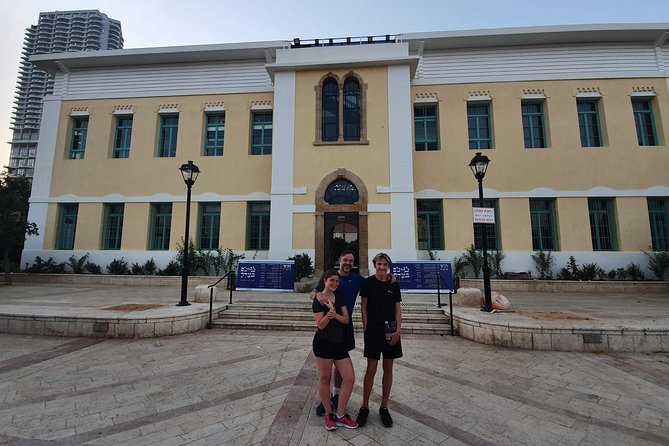
The final main stop is Park HaTachana, where the tour ends after about 10 minutes. The focus is the old railway and the trains that carried Jaffa oranges around the world.
This is a fitting finish because it returns you to the meeting area and ties together Tel Aviv’s commercial past with its modern public spaces. The railway story also links the city to Jaffa and to the export trade that helped put the region on international markets.
Because the activity ends back at the meeting point, you can easily continue into Neve Tzedek or return to your hotel by public transportation. The exact end time may vary with the group’s pace and the amount of explanation at each stop.
Moy’s guiding style and the pace of the run
The strongest part of this experience is the combination of guide and running partner. Moy is described as fun, encouraging, and able to explain Tel Aviv while continuing to run. That is not an easy skill. Speaking clearly during exercise takes practice, and a good guide also needs to watch the group rather than race ahead.
Pace adjustment matters here. The feedback describes Moy adapting to the group, which makes the outing more approachable for runners with different speeds. Still, you should be able to manage a 10-kilometer run with several stops. This is not designed for someone who wants a gentle walk.
The group limit is 20 people. That is small enough for a guide to monitor pace better than on a large coach tour, though the experience will feel more personal if the actual group is smaller.
The guide’s enthusiasm for both running and local history is another plus. You get facts that may not appear in a standard sightseeing route, along with practical orientation for the rest of your time in Tel Aviv.
Timing, heat, and what to bring
The only required item specifically mentioned is running shoes. That sounds obvious, but it is worth taking seriously. You will cover city streets, stop at public sites, and run between districts, so ordinary walking sandals are not a sensible substitute.
Early morning is the best choice when available. One participant recommended a 6:30 a.m. departure, and another specifically advised starting early to avoid crowds and heavy heat. The tour information does not guarantee a particular start time, so confirm the schedule when booking.
You should also consider your own comfort with heat and running. The activity requires moderate physical fitness, and poor weather can lead to cancellation. If the provider cancels because of weather, you are offered another date or a full refund.
The mobile ticket makes arrival simple. The start is near public transportation, which is useful because the activity begins and ends at HaTachana rather than at a hotel.
Is $92.95 a fair price?
At $92.95 per person, this costs much more than a free walking tour. You are paying for a private-style running experience led by a local guide who combines coaching, route planning, and city interpretation.
The price makes the most sense if you already enjoy running and would otherwise spend the morning exercising alone. You get a structured 10-kilometer route, stops at major sights, and a quick introduction to Tel Aviv’s neighborhoods and history.
The value is weaker if you mainly want detailed sightseeing inside museums or monuments. Admission to the listed stops is free, but the experience appears focused on outdoor viewing and explanation. You will need separate visits for the Tel Aviv Museum of Art or Independence Hall Museum interiors.
For a first morning in the city, I think the price can be justified by the amount of ground covered and the convenience of combining exercise with sightseeing. It is less compelling for non-runners or for visitors who prefer a slow, detailed tour.
You can cancel for a full refund up to 24 hours before the start time. Changes or cancellations within 24 hours are not accepted for a refund.
Who should book this running tour?
I would recommend it to:
- Runners who want to keep training during a trip
- Active visitors with limited time in Tel Aviv
- First-time visitors who want a fast city orientation
- People interested in architecture, local history, beaches, and urban change
- Work travelers who need an early activity before the day begins
- Families or friends who can comfortably manage a moderate 10-kilometer run
I would think twice if you dislike running in warm weather, need a slow pace, or want long indoor visits at museums. The route is broad and energetic, but it cannot give every stop the attention it deserves.
Should you book the Tel Aviv Highlights 10KM run?
Book it if you see sightseeing as better with a bit of sweat. The route links Neve Tzedek, the White City, Sarona, the cultural center, Rabin Square, the waterfront, and HaTachana in a compact outing. Moy’s mix of coaching and storytelling is the main reason this feels more useful than simply downloading a running route.
Choose an early departure if possible, and arrive ready to run rather than casually jog. If you want a fast, active introduction to Tel Aviv and plan to return to your favorite stops later, this is a smart use of 90 to 105 minutes.
FAQ
How long does the Tel Aviv Highlights running tour last?
The tour lasts approximately 1 hour 30 minutes to 1 hour 45 minutes.
How far is the running route?
The experience is advertised as a 10-kilometer run. A related running route was reported as closer to 13 kilometers after adjustments, so the final distance may vary slightly.
Where does the tour start?
It starts at Tash and Tasha at HaTachana, on Professor Yehezkel Kaufmann Street in Tel Aviv-Yafo, Israel.
Where does the tour finish?
The activity ends back at the meeting point at HaTachana.
What fitness level do I need?
You should have a moderate level of physical fitness and be comfortable running approximately 10 kilometers with sightseeing stops.
What should I bring?
You need running shoes. The ticket is mobile, and the activity takes place outdoors at multiple city locations.
What happens if the weather is poor?
The experience requires good weather. If it is canceled because of poor weather, you will be offered a different date or a full refund. You can also cancel at least 24 hours before the start time for a full refund.
Recently listed in Tel Aviv
- Wine Tour North of Israel from Tel Aviv★ 5.0 · 2 reviews
- Private wine tour of Northern Israel★ 5.0 · 4 reviews
- private Full-day Tour to Jericho + the Dead Sea★ 5.0 · 3 reviews
- private Full-Day Tour to Bethlehem and Jerusalem★ 5.0 · 2 reviews
- Package VIP Skip Line Services in BGN Airport with Transfer to Tel aviv Hotels★ 5.0 · 3 reviews
- Jerusalem and Dead Sea Trip from Tel Aviv★ 4.0 · 6 reviews
- Private Transfer from Ben Gurion Airport to Tel Aviv, Bat Yam, Rishon LeZion★ 5.0 · 2 reviews
- VIP Tel Aviv airport Terminal 3 Fast Track Skip Line From plane★ 4.5 · 9 reviews
Tel Aviv Tours, compared.
Masada & Dead Sea Full Day Tour with Pick Up
Read our review →
Masada and the Dead Sea Day Trip from Tel Aviv
Read our review →
Day Tour to Jerusalem and Bethlehem from Tel Aviv
Read our review →Browse the lists this tour appears in