
Reviewed · DEAD SEA AND MASADA TOURS
Massada and the Dead Sea in Russian
Salt, stone, and a hard choice await. I like the pairing of Masada’s fortress ruins with a Dead Sea swim, and I like that the tour includes bus transport and a Russian-speaking guide. The main catch is the extra mandatory funicular fee, which can add about $22 to $24, or 80 to 91₪, to the advertised $82 price.
This is a brisk 270-minute outing, or about four and a half hours, so you get two major southern Israel sights without arranging transport yourself. I would especially value the live commentary, with guide Alexandra receiving high praise for making Masada, the Dead Sea, and modern Israel easier to understand.
In This Review
- Five things to know before you go
- Why Masada and the Dead Sea work well together
- Reaching Masada by funicular
- The story behind the fortress ruins
- Looking across the Judean Desert
- Floating in the Dead Sea
- The Dead Sea cosmetics shop
- What the $82 price really covers
- Russian-language guiding and group atmosphere
- Pickup points and timing
- Who should choose this excursion?
- Should you book Masada and the Dead Sea?
- FAQ
- How long does the Masada and Dead Sea tour last?
- What language is the tour conducted in?
- Is transportation included?
- Is the funicular to Masada included in the price?
- Are meals included?
- Where does pickup take place?
- Can I cancel for a full refund?
Five things to know before you go
- Masada is reached by mandatory funicular: The ride is an extra cost, not part of the $82 tour price.
- The guide speaks Russian: Commentary covers Masada, the Dead Sea, and wider Israeli history and present-day life.
- The Dead Sea stop includes swimming and mud treatments: Bring your sense of humor, because floating in salty water feels wonderfully strange.
- The excursion lasts 270 minutes: It offers a useful snapshot of both sites, but it is not a slow, full-day exploration.
- Pickup is arranged from listed city stops: Talpiot Market in Haifa is available only on Saturdays.
- The tour is not suited to limited mobility: Masada, transport changes, and the funicular access need to be considered carefully.
Why Masada and the Dead Sea work well together
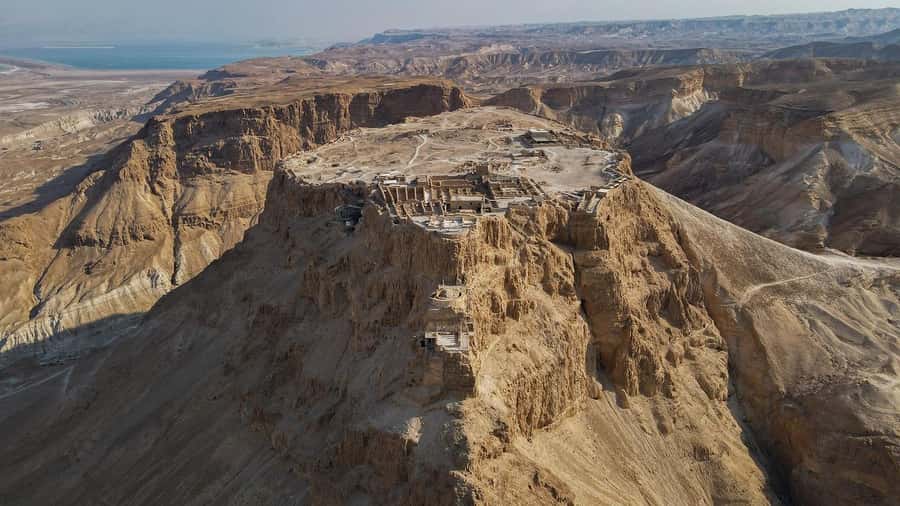
Masada and the Dead Sea tell two very different stories. Masada is about power, survival, and a last stand in the Judean Desert. The Dead Sea is about water, minerals, and the odd pleasure of floating without trying.
That contrast gives this excursion its appeal. You begin with a fortress high above the desert, then move down toward the lowest place in the world for a swim and mud treatment. In a few hours, the scenery and mood change completely.
I like this combination for first-time visitors who want a strong taste of southern Israel but do not want to plan several transfers. The bus handles the long movement through the Judean Desert, while the guide provides the historical thread that connects the stops.
The timing also keeps the day manageable. At four and a half hours, this is not an exhausting expedition. Still, the schedule is compact, so you should expect an overview rather than every corner of Masada or a long, leisurely beach afternoon.
More Dead Sea and Masada trips from Israel:
- 8-Night Israel Tour from Tel Aviv: Jerusalem, Dead Sea, Bethlehem, Nazareth, Northern Israel and Petra
★ 4.5 · 11 reviews - From Tel Aviv: Masada & Dead Sea Full Day Tour with Pick Up
★ 4.5 · 1,496 reviews - Masada and the Dead Sea Day Trip from Tel Aviv
★ 4.5 · 1,014 reviews
Reaching Masada by funicular
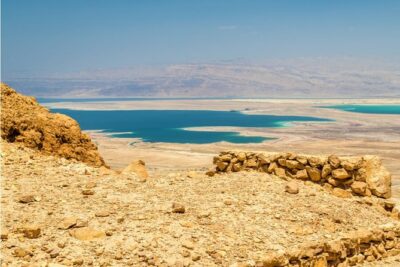
Masada sits on a cliff near Arad and the southern end of the Dead Sea. Its position is part of the story. The fortress looks out across a stark desert setting, and its height explains why it could serve as a defensive stronghold.
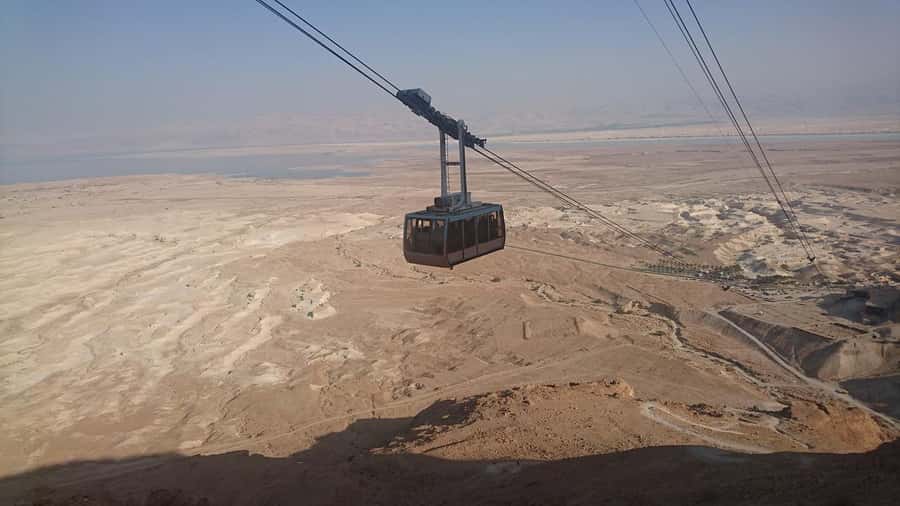
The ascent is handled by funicular, but it is mandatory and costs extra. The stated figures vary slightly, from about $22 or 80₪ to about $24 or 91₪. I would budget for the higher amount so the final price does not surprise you.
The ride matters for two reasons. First, it saves you from making the climb on foot during a short organized excursion. Second, it gives you a quick change in viewpoint as the fortress rises above the desert. The tour information specifically warns that the experience is not recommended for people with limited mobility, so do not treat the funicular as a complete solution to every access issue.
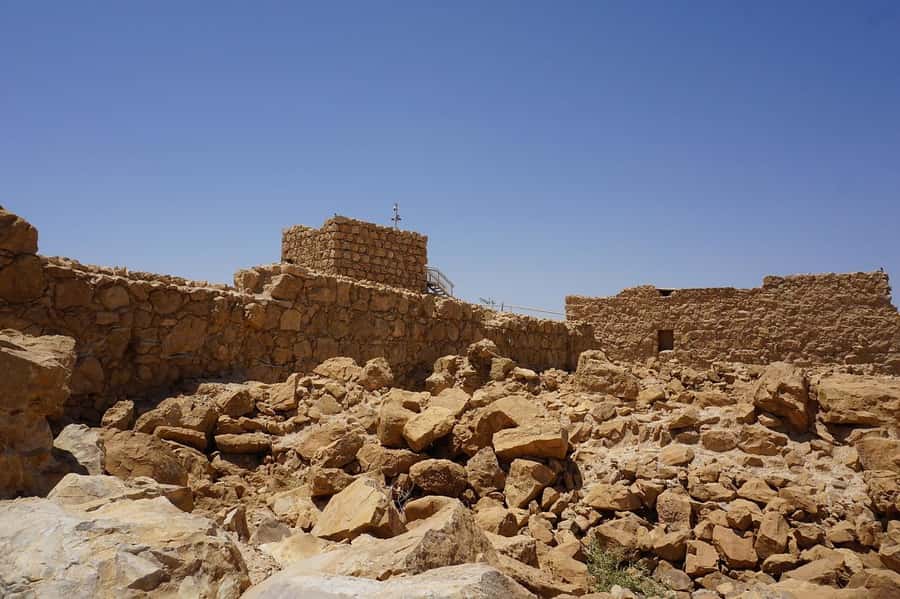
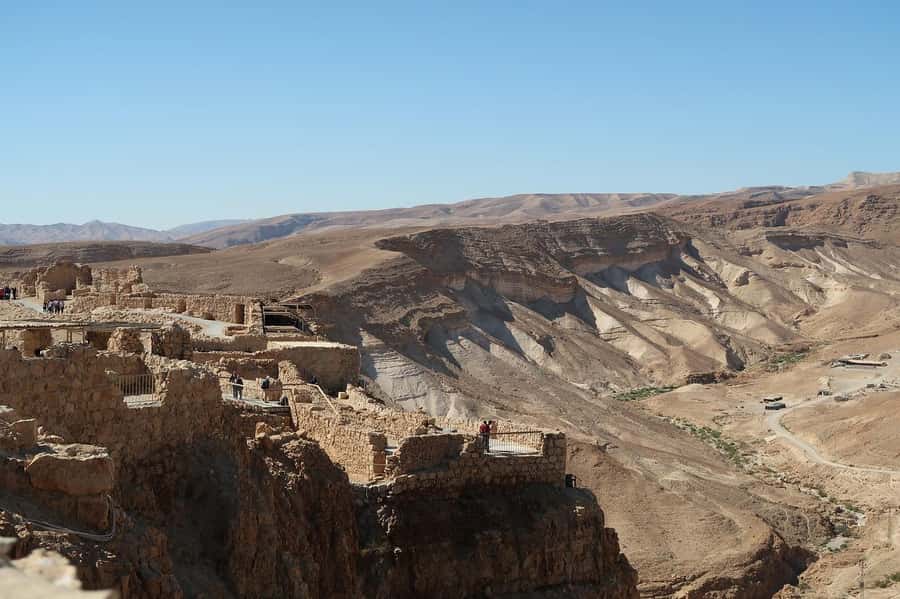
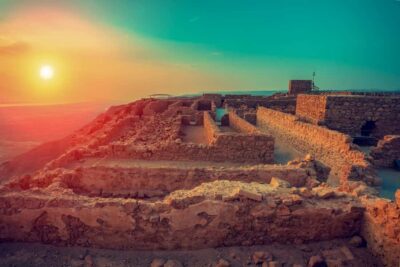
Once at the top, you see Masada as an archaeological site rather than a polished palace. The remains include a palace, synagogue, armories, water cisterns, and other support buildings. These ruins help you picture how the community functioned in an isolated place where water had to be collected and stored with care.
The story behind the fortress ruins
Masada is remembered as a symbol of Jewish courage. During the Roman siege, the defenders, identified here as Zealots, endured months with limited food and water. They were eventually killed in battle or chose suicide rather than surrender and enslavement.
That story can easily be reduced to a slogan, but the site itself adds weight. The cisterns show the practical challenge of life on the cliff. The synagogue and palace remains reveal that Masada was more than a military lookout. It was a place where people lived, worshipped, stored supplies, and prepared for a siege.
A Russian-speaking guide is particularly useful here because the meaning of Masada depends on more than identifying stones. You need the sequence of events, the role of the Romans, and an explanation of why the site still carries such emotional force.
Guide Alexandra received especially warm praise for explaining not only Masada and the Dead Sea, but Israel as a whole. Her approach was described as personal and expressive, with a clear effort to make the material engaging. That is exactly the kind of guiding that can turn a pile of ruins into a place you remember.
Masada is included on the UNESCO World Heritage list, another reason the stop has importance beyond its dramatic views. You are not simply visiting an old fortress. You are seeing a site recognized for its cultural and historical value.
Looking across the Judean Desert
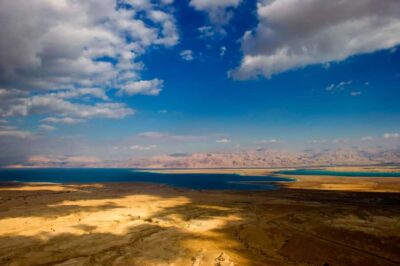
The bus journey through the Judean Desert is part of the experience, not just a way to fill the gap between stops. The desert provides the setting for Masada’s isolation and helps explain why the fortress was so difficult to approach.
You will see a dry, open region shaped by cliffs and sparse vegetation. The tour information does not promise a dedicated viewpoint schedule, so I would think of the drive as a moving introduction rather than a series of planned photo stops.
This is where the guide can add real value. A spoken explanation helps you notice why the fortress was built where it was and how the Dead Sea fits into the region. Without context, the desert may seem empty. With context, its lack of easy water, shelter, and roads becomes part of the story.
Because the excursion is only 270 minutes, the bus transfers also place limits on the pace. You will not have unlimited time to stop, wander, and wait for changing light. If your priority is landscape photography or a long archaeological visit, a dedicated Masada day trip may suit you better.
A different day out, same base:
- Fast Track VIP Service at TLV Ben Gurion airport in Tel Aviv, Israel
★ 3.5 · 14 reviews
Floating in the Dead Sea
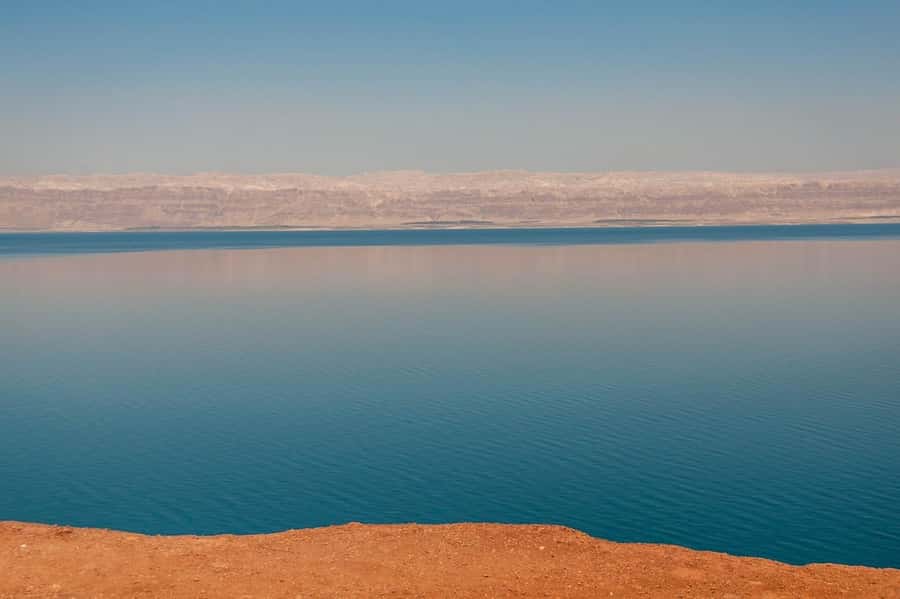
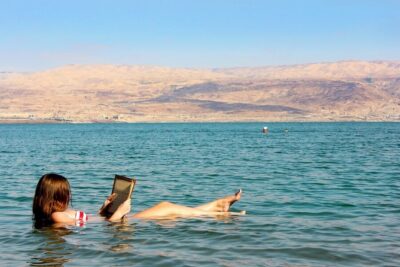
After the fortress, the mood changes at the Dead Sea beach. The stop includes bathing, and this is the playful part of the day. The water is famously dense with salt, so floating comes more naturally than swimming.
A Dead Sea visit is best approached as a short, unusual experience rather than a normal beach session. You are there to feel the water, float, and enjoy the setting. The tour also includes mud treatments, giving you another classic Dead Sea activity.
Use care around your eyes and any cuts, since salty water can sting. That practical point is not a criticism of the tour. It is simply the kind of preparation that lets you enjoy the stop instead of learning the hard way.
The beach stop is described as exclusive, but no specific beach facilities, changing arrangements, or exact bathing time are provided. I would avoid assuming that towels, meals, lockers, or personal supplies are included. The stated inclusions are attendant staff services and bus transfers, while meals are not included.
The Dead Sea is also the lowest place in the world, giving the stop a simple geographic distinction as well as its famous mineral water. After Masada’s height, arriving at this low shoreline creates a memorable visual and physical contrast.
The Dead Sea cosmetics shop
A shop selling Dead Sea cosmetics is included in the route. This can be useful if you want mineral-based creams, mud products, or gifts, but it can also take time from the beach stop.
I recommend treating the shop as optional browsing rather than part of the tour’s main reason for being there. You do not need to buy anything to enjoy Masada or the Dead Sea. If you are interested in local products, it gives you a convenient chance to compare items in one place.
Do not confuse shopping with the included mud treatment. The treatment is part of the Dead Sea experience, while purchases at the cosmetics shop are additional. Since no product prices are provided, set your own spending limit before you enter.
What the $82 price really covers
At $82 per person, the tour offers a practical package for visitors who want transport and a Russian-speaking guide. Bus transfers are included, as are attendant staff services. That removes the need to arrange the route between Masada and the Dead Sea yourself.
The value depends heavily on how you count the funicular. Since the ride is mandatory but excluded, your real cost is closer to $104 to $106 per person if you pay the higher stated fee. Meals are also extra.
That total can still be fair for a short, guided outing, particularly if you are staying in one of the listed pickup areas and would otherwise need to arrange transport independently. The guide adds value by connecting the ruins, the desert, and the Dead Sea instead of presenting them as unrelated stops.
The price is less attractive if you want a long Masada visit, a full meal, or plenty of free time at the beach. This is a convenience-focused excursion. You pay for the route, transport, and interpretation, not for an all-inclusive day.
The free cancellation policy gives you some useful flexibility. You can cancel up to 24 hours in advance for a full refund, and you can reserve now while paying later. Those terms help if your Israel plans are still moving around.
Russian-language guiding and group atmosphere
The live guide speaks Russian, making this a clear choice for Russian-speaking visitors who want more than basic instructions. Historical sites are easier to appreciate when you can follow the explanation without translating every detail in your head.
The strongest praise went to Alexandra, who was credited with covering Masada, the Dead Sea, and Israel more broadly. Her style was described as warm and enthusiastic, with an effort to make the excursion pleasant as well as informative.
That kind of guide can make a short schedule work. You may not have time to read every sign or examine every ruin, but a good explanation helps you focus on what matters.
There is one practical group issue to know before boarding. Seats are not assigned. Some passengers have tried to reserve places by leaving clothes or bags on seats, which conflicts with the stated rules and creates a safety concern. You should not save seats with belongings, and you should expect the group to follow open seating.
This is a small point, but it affects the start of the day. Clear, fair boarding makes the ride calmer for passengers, drivers, and guides. Arrive prepared to take an available seat rather than assuming a bag can hold one for you.
Pickup points and timing
Pickup is included from these listed locations:
- Sderot Haatsmaut 64
- Keren HaYesod and Haim Moshe Shapira
- Hagshama Street 2
- Talpiot Market in Haifa, with departure available only on Saturdays
Check the exact pickup point and operating day before you reserve. The Haifa restriction is especially important. A convenient-looking location does not mean daily departure.
The 270-minute duration is long enough to include both main stops, but short enough that timing matters. Be ready at the pickup point and keep the day free around the stated duration. The schedule may feel quick at Masada if you want to linger over every ruin or slow down for photographs.
Meals are not included. Bring a plan for food, but do not assume a meal stop is part of the schedule. The supplied details do not specify meal timing or an included restaurant.
Who should choose this excursion?
I would recommend it most strongly to:
- Russian-speaking visitors who want live historical commentary
- First-time visitors seeking a compact introduction to Masada and the Dead Sea
- People who prefer organized bus transport
- Anyone who values a guide’s explanation as much as the sights themselves
- Visitors with only part of a day available
- Couples, families, or small groups who want two famous southern Israel stops in one outing
I would be more cautious if you have limited mobility, need a slow pace, or dislike extra mandatory charges. The funicular reduces the need to climb, but the tour still takes place at a major archaeological site and is not recommended for people with limited mobility.
You may also want another option if your main goal is a long Dead Sea spa session. This outing includes swimming and mud treatments, but the entire experience is shared with Masada and the bus journey.
Should you book Masada and the Dead Sea?
Book this tour if you want an efficient Russian-language introduction to two of southern Israel’s most famous sights. The combination is smart, the transport is included, and Alexandra’s praised guiding style suggests that the historical side can feel personal rather than dry.
Before booking, add the funicular fee to the $82 price and remember that meals are extra. Confirm your pickup location, especially if you plan to use Talpiot Market in Haifa, and be realistic about the short schedule.
For a first visit, I think the value is strongest in the pairing: Masada gives you the story and the dramatic setting, while the Dead Sea gives you the strange, memorable pleasure of floating and coating yourself in mud. If that sounds like your kind of half-day, this is a sensible choice.
FAQ
How long does the Masada and Dead Sea tour last?
The tour lasts 270 minutes, which is about four and a half hours.
What language is the tour conducted in?
The live tour guide speaks Russian.
Is transportation included?
Yes. Bus transfers during the tour and attendant staff services are included.
Is the funicular to Masada included in the price?
No. The funicular ride is mandatory and requires an additional payment of approximately $22 to $24, or 80 to 91₪.
Are meals included?
No. Meals are not included unless purchased additionally.
Where does pickup take place?
Pickup is listed at Sderot Haatsmaut 64, Keren HaYesod and Haim Moshe Shapira, Hagshama Street 2, and Talpiot Market in Haifa. The Haifa departure is available only on Saturdays.
Can I cancel for a full refund?
Yes. You can cancel up to 24 hours before the tour for a full refund. You can also reserve now and pay later.
Recently listed in Israel
- Scavengerhunt app, with riddles, take funny pictures, activity to be remembered!★ 5.0 · 2 reviews
- Heritage Of The Holy Land Tour★ 4.5 · 2 reviews
- 8-Night Israel Tour from Tel Aviv: Jerusalem, Dead Sea, Bethlehem, Nazareth, Northern Israel and Petra★ 4.5 · 11 reviews
- Fast Track VIP Service at TLV Ben Gurion airport in Tel Aviv, Israel★ 3.5 · 14 reviews
Dead Sea and Masada Tours, compared.
Masada & Dead Sea Full Day Tour with Pick Up
Read our review →
Masada and the Dead Sea Day Trip from Tel Aviv
Read our review →
Masada and the Dead Sea Day Trip from Jerusalem
Read our review →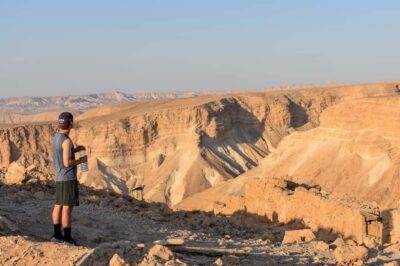
Browse the lists this tour appears in