
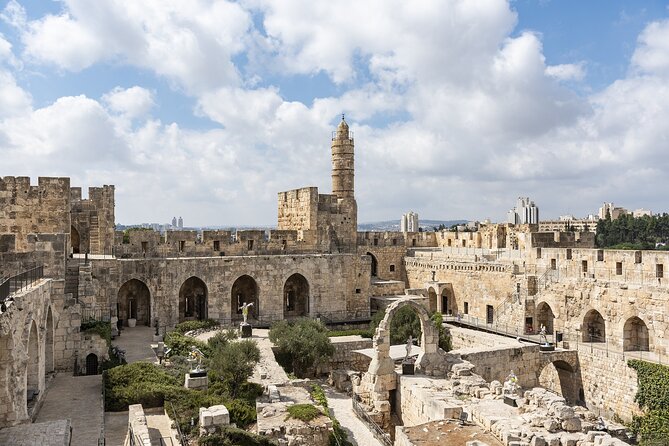
Reviewed · DEAD SEA AND MASADA TOURS
Jerusalem & Dead Sea Private Tour – Visit Holy Jerusalem & Dead Sea Relaxation
Jerusalem and floating in salt water make a memorable pair. This private day trip gives you a broad introduction to Jerusalem’s sacred sites, then carries you through the Judean hills to the Dead Sea for a swim, mud treatment, and a welcome change of pace. I especially like the private vehicle and hotel pickup, which remove much of the day’s transport fuss, and the chance to see both the Old City and the Dead Sea without splitting them across two days.
The guide is a major part of the value. Guides named in the feedback include Enrique, Saul, and Benjamin, with praise for clear storytelling, punctuality, humor, and careful time management. I would still confirm your assigned guide before booking, since the experience may use different members of the team. The main drawback is the schedule: Jerusalem deserves several days, yet this tour tries to cover a great deal before reaching the Dead Sea. Expect a full, active day rather than a slow examination of every site.
In This Review
- Key points to know before booking
- One day, two very different experiences
- Mount of Olives: Jerusalem opens below you
- Gethsemane: a quiet stop with heavy meaning
- Mount Zion: David and the Last Supper
- The Via Dolorosa and the Church of the Holy Sepulchre
- The Cardo: Jerusalem’s Roman street underfoot
- The Western Wall: a close encounter with Jewish prayer
- The road to the Dead Sea
- Floating and using the Dead Sea mud
- Timing, comfort, and the real value of $220
- Who will enjoy this day most
- Should you book the Jerusalem and Dead Sea day trip?
- FAQ
- Where does the tour begin?
- How long does the tour last?
- Is this a private tour?
- What transportation is provided?
- Which Jerusalem sites are visited?
- How much time is spent at the Dead Sea?
- Are food and drinks included?
- What should I bring or wear?
Key points to know before booking
- Mount of Olives first: You begin with one of Jerusalem’s finest city views before entering the Old City.
- Several major holy sites: The route includes Gethsemane, Mount Zion, the Via Dolorosa, the Church of the Holy Sepulchre, the Cardo, and the Western Wall.
- Private touring: Only your group takes part, with an air-conditioned vehicle and hotel pickup and return.
- The Dead Sea provides a change of rhythm: After hours of walking and history, you get about two hours to float and use the mineral-rich mud.
- Expect substantial walking: Comfortable shoes, sun protection, and modest clothing matter.
- Check the timing and fees: The description gives both 8 to 11 hours and about 12 hours, while entrance-fee information is not fully consistent.
One day, two very different experiences
This tour is designed for a common holiday problem: you have only one spare day, but Jerusalem and the Dead Sea are both on your list. The answer is not perfect, since each deserves more time, but the combination makes practical sense.
Jerusalem supplies the drama and detail. You move through viewpoints, churches, ancient streets, Jewish prayer spaces, and sites tied to Christianity and Judaism. Then the Dead Sea offers something physical and lighthearted. You can float with unusual ease, spread mud on your skin, and sit beside the water before returning to Tel Aviv.
The private format matters here. Jerusalem’s Old City can feel confusing on a first visit, and the schedule works better when your group is not waiting for a large coach or a dozen people at every corner. The listed price is $220 per person. That is not a budget outing, but it includes a licensed guide, private group participation, hotel transport, and an air-conditioned vehicle. Food, drinks, and personal purchases are extra.
At that price, I would judge the tour mainly by the quality of the guide and the comfort of the transport. The strongest feedback focuses on guides who explained Jewish, Christian, and modern Israeli subjects clearly, kept the day on time, and adjusted the pace for the group. Enrique was praised for humor and theology, Saul for patient explanations and tight organization, and Benjamin for dependable driving and a pleasant manner.
More Private Tours in Tel Aviv
- Jerusalem Private Full Day Tour
★ 5.0 · 110 reviews - Exclusive Private Tour in The Israel Diamond Exchange
★ 5.0 · 60 reviews - Tel Aviv Airport (TLV) to Tel Aviv Hotels – Private Transfer
★ 4.0 · 59 reviews
Mount of Olives: Jerusalem opens below you
Your first stop is the Mount of Olives, where you get a broad view across Jerusalem. The hill separates the Temple Mount from the Judean Desert and gives you an immediate sense of the city’s position between built-up Jerusalem and the dry country to the east.
This is an especially useful first stop because the Old City can be hard to understand from street level. From above, the major religious center comes into focus, and your guide can point out the city’s relationship to the surrounding hills and desert.
The site carries strong Christian meaning. The New Testament connects the Mount of Olives with Jesus’ route to Bethany, his grief over Jerusalem, and his ascension. Your guide may also explain the mountain’s importance in Jewish tradition and its place in Jerusalem’s long religious story.
You spend about 30 minutes here. That is enough for the view and an introduction, but not enough for a quiet photographic session or a long walk around the hill. Bring a hat and sunglasses. Morning light can be strong, and much of the day takes place outdoors.
Gethsemane: a quiet stop with heavy meaning
At the foot of the Mount of Olives, the Garden of Gethsemane offers a more intimate setting. The four Gospels describe it as the place where Jesus prayed before his arrest. Several small olive groves on church property are associated with the biblical garden, so the setting is tied to tradition rather than a single proven point.
The visit lasts around 30 minutes. That gives you time to pause, look at the old olive trees, and hear the story without turning the stop into a long church visit. Compared with the crowded lanes later in the day, Gethsemane can feel calmer.
I like the contrast between the city view above and this small garden below. Still, you should keep your expectations measured. It is not a large park or a full nature walk. It is a short, meaningful stop within a packed route.
Mount Zion: David and the Last Supper
The tour then moves to Mount Zion, where you visit the traditional Tomb of King David and the Room of the Last Supper, also called the Cenacle. The stop lasts about an hour, making it one of the more substantial visits outside the main Old City walk.
The Tomb of King David is sacred to Jewish worshippers, though there is no certainty that this is the actual burial site. Biblical references place David’s burial in the City of David, at the foot of the Temple Mount. That distinction is worth hearing, since Jerusalem often asks you to hold tradition, faith, and archaeological evidence side by side.
Upstairs, the Room of the Last Supper is traditionally identified as the place where Jesus shared his final meal with his disciples. It is considered one of Christianity’s important holy places in Jerusalem, though the exact historical identification is also based on tradition.
This is a good place to wear clothing that covers shoulders and knees. The tour advises modest dress and head coverings at holy sites. Even if you are not religious, respectful clothing helps you enter these places without unnecessary difficulty.
More Dead Sea and Masada trips from Tel Aviv:
- From Tel Aviv: Masada & Dead Sea Full Day Tour with Pick Up
★ 4.5 · 1,496 reviews - Masada and the Dead Sea Day Trip from Tel Aviv
★ 4.5 · 1,014 reviews - Tel Aviv: Jerusalem, Bethlehem & Dead Sea
★ 4.0 · 881 reviews - From Tel Aviv: Masada, Ein Gedi & Dead Sea Tour
★ 4.2 · 705 reviews
The Via Dolorosa and the Church of the Holy Sepulchre
The Christian Quarter brings you into the busiest and most emotionally charged part of the day. You walk along the Via Dolorosa, the processional route associated with Jesus’ path to crucifixion, and visit the Church of the Holy Sepulchre.
The Via Dolorosa is not a broad ceremonial avenue. It is a narrow stone route through the Old City, lined with shops, doorways, churches, and daily city life. That mix is part of the experience. You are following a sacred route while ordinary Jerusalem continues around you.
The full visit lasts about two hours, including the walk and time at the church. Expect uneven stone underfoot and frequent stops. Comfortable walking shoes are not just a suggestion here.
The Church of the Holy Sepulchre is central to Christian worship because tradition identifies it with Jesus’ crucifixion, burial, and resurrection. Within the church, Calvary, or Golgotha, is linked to the crucifixion, while another area marks the tomb.
The church can be visually overwhelming and crowded, and a short tour cannot explain every chapel or religious community that shares the building. That is where your guide earns his or her keep. The clearest explanations help you understand why this single church matters to different Christian traditions and why its layout can seem confusing.
Do not expect a silent museum visit. This is a working place of worship, with prayer, ritual, movement, and visitors arriving from many countries. Your guide can provide context, but you should also allow a little quiet time to take in the setting.
The Cardo: Jerusalem’s Roman street underfoot
After the church, you enter the Armenian and Jewish quarters and walk along the restored Cardo. This Roman and Byzantine street was uncovered in the Jewish Quarter, with the southern section built during the reign of Emperor Justinian from 527 to 565.
The Cardo helps connect the religious sites with the city’s physical past. Here, Jerusalem is not only a place of pilgrimage. It is also a layered urban center, rebuilt and altered by successive rulers.
You spend about 30 minutes here. The stop is shorter and less emotionally intense than the Holy Sepulchre, but it gives the day useful variety. Look for the contrast between the excavated Roman street and the modern shops and buildings around it.
The Western Wall: a close encounter with Jewish prayer
The Western Wall, also called the Kotel, is one of the most recognizable sites in Jerusalem. It is part of the ancient retaining wall around the Temple Mount, and its closeness to the Temple Mount gives it particular holiness in Judaism.
The visible section is only part of a much longer wall. Because access to the Temple Mount is restricted in ways that vary by circumstance, the Western Wall is the holiest place where Jews are permitted to pray. The tour allows about 30 minutes here.
This stop requires respect and awareness. Modest clothing is important, and head covering may be required. The Wall has separate prayer areas for men and women, and the atmosphere can range from quiet personal prayer to a more social religious gathering.
Your guide can explain the site, but do not treat the prayer area as a photo backdrop. Watch where you walk, follow local instructions, and give people space. The short visit may feel hurried if you want to sit and observe, but it provides a meaningful introduction.
The road to the Dead Sea
After the Old City, you leave Jerusalem and travel through the Judean hills toward the Dead Sea. This transfer is not filler. It shows how quickly the surroundings change, from Jerusalem’s dense stone neighborhoods to dry hills and the broad Jordan Rift Valley.
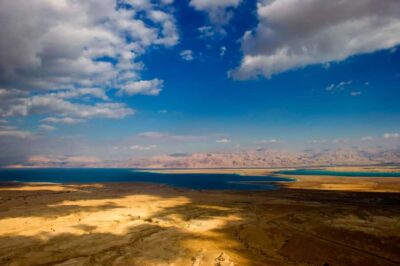
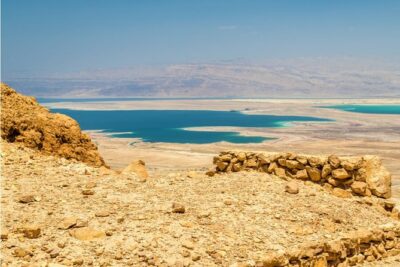
The Dead Sea lies between Jordan and the West Bank and is the lowest place on earth. Its salt concentration makes the water unusually dense, which is why you can float with far less effort than in an ordinary sea.
The tour stops at a resort on the shore for about two hours. The specific resort is not named, so facilities and changing arrangements may vary. Food and drinks are not included, and the description does not list towels among the inclusions. Bring your own towel unless the provider confirms one is supplied.
Floating and using the Dead Sea mud
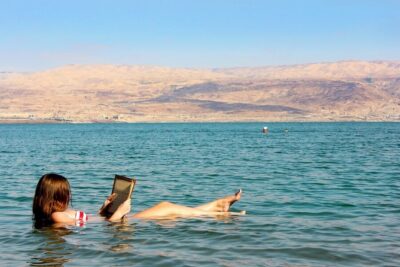
The Dead Sea stop is a welcome release after Jerusalem’s stone streets. You can enter the water, float on the surface, and cover yourself with the famous mineral-rich mud. The experience is simple, unusual, and easy to enjoy even if you are not interested in another guided explanation.
Take care with the salt water. Avoid shaving immediately beforehand, keep the water away from your eyes, and follow the resort’s instructions. The supplied information calls the mud therapeutic, but it is best to treat that as a traditional wellness claim rather than a medical promise.
Two hours is a sensible amount of time for floating, rinsing, and relaxing. It is not a full spa day. If your main reason for booking is the Dead Sea, you may prefer a longer stay at a dedicated resort. If Jerusalem is your priority, the stop gives you enough time to enjoy the novelty without taking over the whole day.
Timing, comfort, and the real value of $220
The tour is described as lasting 8 to 11 hours in one place and about 12 hours in another. That difference matters. Jerusalem traffic, time spent at the holy sites, and the transfer to the Dead Sea can affect your return time, so avoid scheduling a tight evening commitment.
Hotel pickup and drop-off are included, with pickup offered from the Tel Aviv area according to the tour details. The starting location is listed as Tel Aviv, while the overview also refers to Herzliya. Confirm the exact pickup zone when you reserve.
An air-conditioned vehicle is another practical benefit. You spend part of the day walking outside and part of it on the road, so a cool, private vehicle makes the long schedule easier. Only your group participates, which also gives you more control than a large coach outing.
The price includes the licensed guide, vehicle, and transfers. It does not include food, drinks, or personal expenses. There is also a contradiction in the information about entrance fees: the highlights say all entrance fees are included, while the exclusions say entrance fees are not included. Ask the operator to clarify the current policy before paying.
Who will enjoy this day most
I would recommend this tour to a first-time visitor with limited time, families who want a private setting, and anyone who values a guide’s explanation as much as the sights themselves. It is also a sensible choice if you want to avoid arranging separate transport to Jerusalem and the Dead Sea.
It suits people who can walk for several hours, manage uneven stone streets, and stay engaged through a long day. The tour is not a good fit if you want slow museum visits, long meals, or extended time at one religious site.
The feedback gives special weight to the guides’ storytelling. Enrique was praised for making ancient and current Israeli history engaging. Saul received repeated praise for patience, punctuality, religious context, and careful handling of demanding schedules. Benjamin was singled out for dependable driving and a friendly manner. Since guide assignments can vary, confirm who will lead your group if that matters to your decision.
Free cancellation is available if you cancel at least 24 hours before the scheduled start. Changes or cancellations inside that window are not accepted for a refund.
Should you book the Jerusalem and Dead Sea day trip?
Book it if you have one day and want a well-organized introduction to Jerusalem’s major sacred sites followed by a memorable Dead Sea stop. The private format, hotel transport, air-conditioned vehicle, and strong emphasis on guide quality make the $220 price easier to justify than a basic sightseeing transfer.
Do not book it expecting a complete Jerusalem visit. The schedule is ambitious, the timing can run long, and the Dead Sea resort details and entrance fees need confirmation. For a short stay, though, this is an efficient way to see the city from the Mount of Olives, walk the Old City’s key routes, and float in the Sea of Salt before returning to Tel Aviv.
FAQ
Where does the tour begin?
The tour is listed from Tel Aviv, and the overview also refers to pickup from Herzliya. Hotel pickup and drop-off are offered, so confirm that your hotel is within the current pickup area.
How long does the tour last?
The duration is given as approximately 8 to 11 hours, while the overview describes it as a 12-hour day. Allow a full day and avoid arranging a tight evening appointment.
Is this a private tour?
Yes. Only your group participates in the activity.
What transportation is provided?
The tour includes hotel pickup and drop-off in an air-conditioned vehicle.
Which Jerusalem sites are visited?
The route includes the Mount of Olives, Garden of Gethsemane, Mount Zion, the Via Dolorosa, Church of the Holy Sepulchre, Cardo, and Western Wall.
How much time is spent at the Dead Sea?
The planned stop at the Dead Sea region lasts about two hours. You can float and use the mineral-rich Dead Sea mud at a shore resort.
Are food and drinks included?
No. Food and drinks are not included, and personal expenses are also excluded.
What should I bring or wear?
Bring comfortable walking shoes, a hat, towel, sunglasses, and sunscreen. Modest dress and head coverings are required for visits to holy sites in Jerusalem.
Recently listed in Tel Aviv
- Wine Tour North of Israel from Tel Aviv★ 5.0 · 2 reviews
- Private wine tour of Northern Israel★ 5.0 · 4 reviews
- private Full-day Tour to Jericho + the Dead Sea★ 5.0 · 3 reviews
- private Full-Day Tour to Bethlehem and Jerusalem★ 5.0 · 2 reviews
- Package VIP Skip Line Services in BGN Airport with Transfer to Tel aviv Hotels★ 5.0 · 3 reviews
- Jerusalem and Dead Sea Trip from Tel Aviv★ 4.0 · 6 reviews
- Private Transfer from Ben Gurion Airport to Tel Aviv, Bat Yam, Rishon LeZion★ 5.0 · 2 reviews
- VIP Tel Aviv airport Terminal 3 Fast Track Skip Line From plane★ 4.5 · 9 reviews
Dead Sea and Masada Tours, compared.
Masada & Dead Sea Full Day Tour with Pick Up
Read our review →
Masada and the Dead Sea Day Trip from Tel Aviv
Read our review →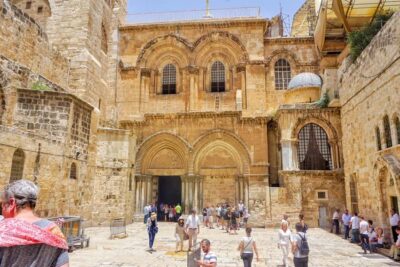
Masada and the Dead Sea Day Trip from Jerusalem
Read our review →
Browse the lists this tour appears in