
Reviewed · DEAD SEA AND MASADA TOURS
Jerusalem and the Dead Sea Tour
Ancient stones, salty water, one long day. This Jerusalem and Dead Sea tour packs two very different experiences into roughly 10 hours, starting with broad views from Mount Scopus and the Mount of Olives before leading you through Jerusalem’s Old City and south to the Dead Sea. I like the mix of major religious sights and a memorable float in mineral-rich water. I also like that hotel pickup, transport, a guide, and entrance fees are included.
The tradeoff is time. Jerusalem deserves several days, but this tour gives you only a brisk introduction before the Dead Sea portion begins. Some departures have also involved complicated transfers, crowded stops, scheduled restaurants, or souvenir shops, so you should book this as a highlights tour, not a slow, deeply personal exploration.
In This Review
- Key points to know before booking
- What this $106 day tour is really offering
- Mount Scopus and the first view of Jerusalem
- Entering the Old City through its quarters
- The Jewish Quarter and Byzantine Cardo
- The Western Wall
- The Christian Quarter and Via Dolorosa
- The Church of the Holy Sepulchre
- The Muslim Quarter and bazaar
- The road to the Dead Sea
- Floating, mud, and practical Dead Sea advice
- Guides, group size, and the human side of the tour
- Clothing, fitness, and family considerations
- When this tour is good value, and when it is not
- Should you book this Jerusalem and Dead Sea tour?
- FAQ
- What is included in the tour price?
- Are food and drinks included?
- What time does the tour start?
- How long does the tour last?
- How long is the Old City portion?
- How much time is planned at the Dead Sea?
- What should I bring to the Dead Sea?
- What should I wear in Jerusalem?
- Is the tour suitable for young children?
- How many people can join the tour?
- Is hotel pickup available?
- Can I cancel for a refund?
Key points to know before booking
- Two headline sights in one day: See Jerusalem’s Old City and the Dead Sea without arranging separate transport.
- Excellent first view of Jerusalem: Mount Scopus provides a broad outlook toward the Old City and the Dome of the Rock.
- Serious walking in the Old City: Expect uneven streets, religious sites, narrow lanes, and a fairly quick pace.
- The Dead Sea visit lasts about two hours on paper: Changing, showering, mud treatments, and transfers can reduce actual time in the water.
- Guides can make the day: Itamar, Norbert, Abishai, Amir, Lorne, Zahi, and others have been praised for strong explanations and energy.
- Bring modest clothing and beach gear: Cover shoulders and knees at holy sites, then pack a swimsuit, towel, hat, sun protection, and flip-flops.
What this $106 day tour is really offering
At $106 per person, the value comes from combining Jerusalem sightseeing with a Dead Sea visit in one organized day. You are paying for hotel pickup and drop-off, an air-conditioned vehicle, a professional guide, and entrance fees. Food and drinks are extra.
That price makes sense if you want to see the headline sights without working out intercity transport, local directions, and Dead Sea access yourself. The day is also useful if you have limited time in Israel and want a broad introduction rather than a specialist tour focused only on Jerusalem.
I would not book it expecting a leisurely schedule. The group can reach up to 40 people, and the Jerusalem portion includes many stops. You may hear a clear explanation at one location, walk to another meeting point, and then move on before you have had time to study every detail.
The tour begins around 8:30 a.m. with pickup from a Jerusalem hotel. Pickup arrangements deserve attention, since some departures have required a taxi to a bus meeting point, while another reported difficulty involved a promised hotel pickup that did not happen. Confirm the pickup instructions carefully before the morning of the tour.
More Dead Sea and Masada trips from Jerusalem:
- From Jerusalem: Masada & Dead Sea Full Day Tour with Pick Up
★ 4.5 · 815 reviews - Masada and the Dead Sea Day Trip from Jerusalem
★ 4.5 · 757 reviews - From Jerusalem: Masada&Dead Sea Tour INCLUDING ENTRANCE FEES
★ 4.3 · 392 reviews
Mount Scopus and the first view of Jerusalem
The opening view from Mount Scopus is one of the day’s best orientation moments. From this high ridge, you can look across Jerusalem toward the Old City and the Dome of the Rock, the famous gold-topped shrine on the Temple Mount.
The scheduled stop is about 30 minutes. That is enough for photographs and a guide’s introduction, but not enough for a long look at every part of the city. The itinerary also refers to the Mount of Olives, the Garden of Gethsemane, the Church of All Nations, and the Kidron Valley.
Here is an important distinction: the tour description presents these places as part of the morning sightseeing, but the exact amount of time on foot can vary. One departure viewed the Mount of Olives mainly from the bus with a short photo stop. If standing at each site is important to you, ask the guide how much time is planned before the group moves on.
The Garden of Gethsemane is traditionally associated with the night before Jesus’ crucifixion. The Church of All Nations sits beside it and is connected with Christian worship at the site. These are meaningful places, but the visit may be brief rather than a long devotional stop.
Entering the Old City through its quarters
The Old City portion lasts about two hours and is the heart of the Jerusalem visit. You will move through several quarters, each with its own religious and architectural character, while walking streets enclosed by Ottoman-era walls built in the 1530s.
I like the fact that the route does not stop at a single landmark. You get a short introduction to the city’s Jewish, Christian, and Muslim areas, along with a look at the Byzantine Cardo in the Jewish Quarter. The lanes can be confusing, so having a guide is useful, especially on a first visit.
The walking is not extreme for most people, but it is steady. Wear shoes with good support and expect uneven paving. The group must stay together, and the guide will usually set meeting points so the day can keep moving.
The Jewish Quarter and Byzantine Cardo
The Jewish Quarter is scheduled for about 40 minutes. The Cardo gives you a sense of Jerusalem’s Roman and Byzantine past, with the remains and reconstructed portions of an old colonnaded street.
This part of the tour often receives a strong Jewish historical emphasis. That can be a good fit if you want context for Jerusalem’s Jewish sites and the city’s long political story. If your priority is a full look at Christian churches or Muslim architecture, the time balance may feel less even.
More Jerusalem tours worth comparing
- From Jerusalem: Nazareth and Sea of Galilee Tour
★ 4.5 · 588 reviews - Nazareth and the Sea of Galilee Day Trip from Jerusalem
★ 4.5 · 446 reviews - Jerusalem: Guided Walking Tour of the Old City
★ 4.7 · 386 reviews - Full Day City Tour of Jerusalem
★ 4.1 · 367 reviews
The Western Wall
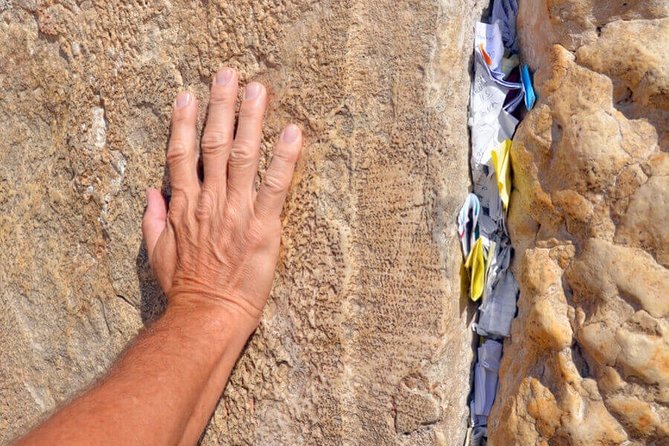
The Western Wall gets about 20 minutes. It is the holiest Jewish prayer site in the tour and one of Jerusalem’s most powerful places to see in person.
Allow time for the practical side of the visit. You may need to follow site rules, respect separate prayer areas, and keep appropriate clothing on. Do not treat this as a quick photo stop. Even with limited time, a quiet moment at the wall can be one of the day’s most affecting experiences.
The short schedule is the main limitation. If you want to pray at length, study the plaza, or return later on your own, a Jerusalem-only tour would give you more room.
The Christian Quarter and Via Dolorosa
The Christian Quarter is scheduled for about 30 minutes, followed by roughly 40 minutes along the Way of the Cross, also called the Via Dolorosa. The route is associated with the 14 stations of the cross and leads toward the Church of the Holy Sepulchre.
In practice, you should expect an overview rather than a complete, unhurried walk through every station. One departure began at the Holy Sepulchre and saw only two stations before continuing elsewhere. The exact route may depend on crowds, access, and the guide’s timing.
The Christian Quarter can be crowded, and narrow streets make it easy to lose sight of a large group. Stay close and pay attention to meeting instructions. A strong guide can make this section far more meaningful. Norbert received repeated praise for clear explanations, while Lorne was credited with keeping the group on schedule and explaining the sites well.
The Church of the Holy Sepulchre
The Church of the Holy Sepulchre is identified with the crucifixion, burial, and resurrection of Jesus. It is one of the most important Christian sites in Jerusalem, but it is also a working place of worship with lines and crowded interior spaces.
The scheduled visit is about 30 minutes. That may allow an introduction and a look inside, but it may not allow time to enter every chapel or wait for access to the tomb area. If you have a strong religious reason for spending time here, I would choose a dedicated Old City tour instead.
A guide may explain the church outside or at the entrance, then give you a short period to look around. That arrangement is efficient for a broad tour, but it can feel rushed if this is the main reason you came to Jerusalem.
The Muslim Quarter and bazaar
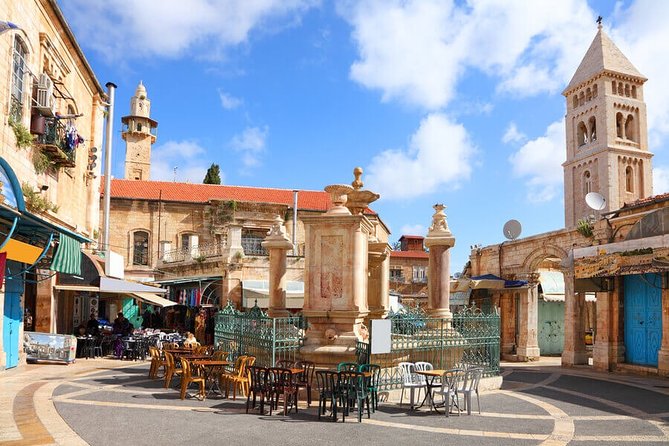
The final Old City section passes through the Muslim Quarter and its bazaar for about 20 minutes. This gives you a quick look at the commercial side of the Old City, with its shops, food stalls, and narrow market streets.
The short stop is enough to get your bearings, but not enough for serious shopping. Some departures have included an organized souvenir shop and a set restaurant stop. If you prefer choosing your own shop or meal, this part may frustrate you.
You may be offered time at an approved shop, and the restaurant arrangement may be set for the wider group. I would bring patience and avoid assuming that the scheduled meal is your only option unless the guide says so. Food and drinks are not included in the tour price.
The road to the Dead Sea
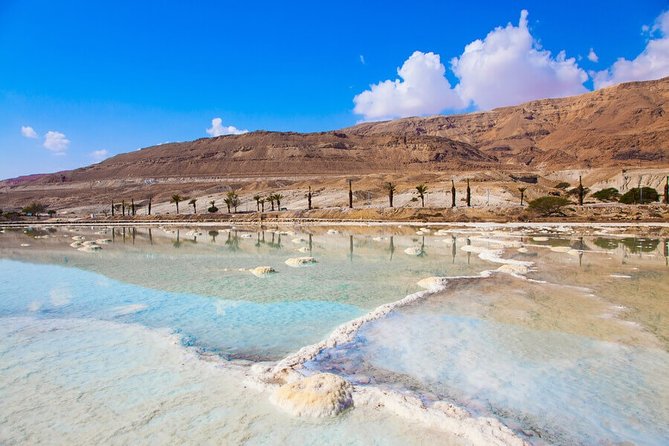
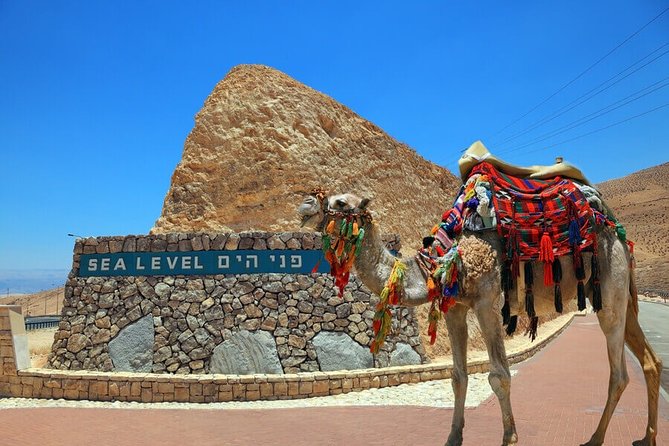
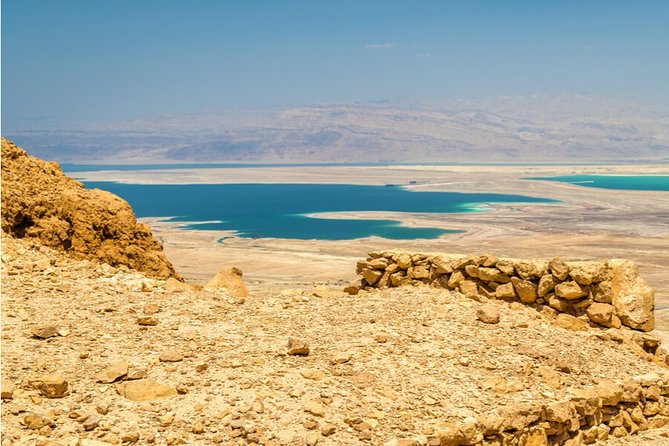
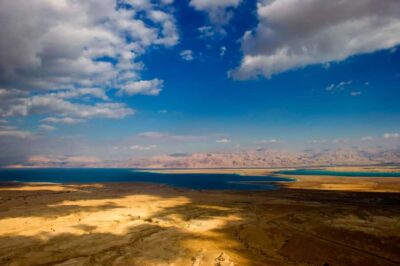
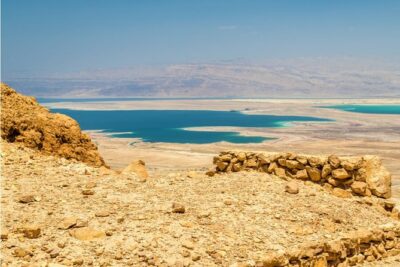
After Jerusalem, the tour heads toward the Dead Sea by air-conditioned coach. The road offers striking views of the Judean desert and the area around the lowest point on earth, about 400 meters below sea level.
This transfer is more than a simple change of scenery, but the quality of the explanation can vary. One guide received praise for the Jerusalem portion, while the driver on the Dead Sea leg offered little commentary. If regional geography interests you, ask questions when the guide is available and keep an eye out the window during the drive.
The day’s organization can also become less clear after lunch. Some departures have involved groups being combined or split, a change of vehicle, or a long wait while transport was arranged. These reports do not describe every departure, but they are a reason to keep your phone charged and pay close attention to the meeting time and bus details.
Floating, mud, and practical Dead Sea advice
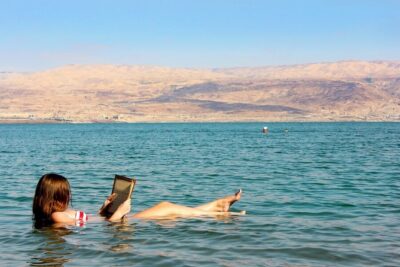
The Dead Sea stop is planned for about two hours and entrance is included. You change into a swimsuit, apply mineral-rich black mud, wash it off, and then enter the salty water for a float or swim.
The floating sensation is the main event. The water is so salt-heavy that you naturally sit high on the surface. You should not treat it like an ordinary swimming pool. Keep the water away from your eyes, avoid shaving immediately before the visit, and follow the facility’s instructions. Those specific cautions are general practical advice for saltwater, not extra services promised by the tour.
The mud treatment is part of the experience and is often described as therapeutic. Think of it as a fun spa-like ritual rather than a medical treatment. You may feel refreshed afterward, but the tour does not promise any clinical benefit.
Bring:
- Swimsuit
- Towel
- Hat
- Sun protection
- Flip-flops or other footwear for the beach area
The facilities are described as reasonably clean, but changing areas can become crowded. This matters because two hours at the site does not equal two hours floating. You may need time to find a changing space, shower, apply mud, wash off, and get back to the coach.
One departure reached the Dead Sea around 3:30 p.m. and required the group to return to the bus at about 4:45 p.m. That left far less than two hours for actual bathing. If the Dead Sea is your main goal, book a dedicated Dead Sea trip instead, or confirm the day’s timing before you commit.
Guides, group size, and the human side of the tour
The strongest part of this experience is often the guide. Itamar was praised for his historical knowledge and professional manner. Norbert was described as friendly, energetic, and willing to answer questions. Abishai was appreciated for his explanations of Jerusalem and the city associated with King David.
Amir was noted for humor and clear commentary, while Lorne was praised for keeping the group moving. Zahi reportedly took people through side lanes and over rooftops for views that were not obvious from the main route. Those are the kinds of touches that can turn a packed schedule into a worthwhile day.
Still, the experience is not guaranteed to have one guide from start to finish. Some departures change groups after lunch, and one language-specific booking was reportedly conducted mostly in English despite being sold with Spanish support. If you need a tour entirely in Spanish or another language, confirm that arrangement in advance.
A maximum of 40 people is fairly large for narrow Old City streets. You will get structure and transport, but not the relaxed feel of a small walking tour. Keep the guide in sight, listen carefully for meeting points, and do not wander off for a quick purchase without permission.
Clothing, fitness, and family considerations
Religious sites require modest clothing. Men and women should cover shoulders and knees, and shorts may lead to refused entry. Lightweight trousers or a longer skirt, plus a shirt with sleeves, will make the day easier.
Comfortable walking shoes are essential. The tour includes the Old City, several quarters, the Via Dolorosa, and market streets. Most people can participate, but you should be ready for a reasonable amount of walking and a long day.
The tour is not suitable for children under four. Older children may enjoy the Dead Sea float, and one family specifically found the wall, the Holy Sepulchre, and the water especially memorable for children. The Jerusalem portion, however, can be tiring if your family needs frequent breaks.
When this tour is good value, and when it is not
I see this as a practical choice for a first visit, a short stay, or a traveler who does not want to arrange separate transport to the Dead Sea. The included hotel transfer, coach, guide, and entrance fees remove much of the day’s planning.
The value drops if you care most about prayer time, photography, independent shopping, or a long Dead Sea visit. A dedicated Jerusalem tour would give you more time in the Old City. A dedicated Dead Sea trip would reduce the pressure on the afternoon.
Lunch and drinks are not included, and organized meal or shopping stops may not suit your taste. You may want to ask when you can buy food and water, since one departure did not explain this clearly before the Dead Sea transfer.
The free cancellation policy allows a full refund if you cancel at least 24 hours before the start time. Changes or cancellations inside that window are not accepted for a refund.
Should you book this Jerusalem and Dead Sea tour?
Book it if you want the biggest headline sights in one day and accept a brisk pace. The combination of Mount Scopus, the Old City, the Western Wall, the Holy Sepulchre, and a Dead Sea float is hard to match for convenience at $106.
Skip it if you want a slow, detailed Jerusalem visit or if the Dead Sea deserves a full afternoon. For the best chance of a smooth day, confirm pickup, language, lunch arrangements, group changes, and the actual Dead Sea schedule before departure. Go prepared with modest clothing and your own beach gear, and treat the tour as an efficient first look rather than the final word on Jerusalem.
FAQ
What is included in the tour price?
Hotel pickup and drop-off, a professional guide, transport in an air-conditioned vehicle, and entrance fees are included.
Are food and drinks included?
No. Food and drinks are not included, so you should plan for those expenses during the day.
What time does the tour start?
The stated start time is 8:30 a.m.
How long does the tour last?
The full experience lasts approximately 10 hours.
How long is the Old City portion?
The scheduled Old City visit lasts about two hours, followed by separate stops in the Jewish, Christian, and Muslim quarters.
How much time is planned at the Dead Sea?
The Dead Sea stop is scheduled for about two hours, though changing, washing, crowds, and transport timing can reduce time in the water.
What should I bring to the Dead Sea?
Bring a swimsuit, towel, hat, sun protection, and suitable footwear such as flip-flops.
What should I wear in Jerusalem?
A moderate dress code is required at places of worship and selected museums. Shoulders and knees must be covered for both men and women, and shorts are not recommended.
Is the tour suitable for young children?
The tour is not suitable for children under four. Most other participants can take part, but the day includes considerable walking.
How many people can join the tour?
The maximum group size is 40 people.
Is hotel pickup available?
Yes, hotel pickup and drop-off are offered. Because pickup arrangements have varied, confirm your exact meeting instructions before the tour.
Can I cancel for a refund?
Yes. You can cancel at least 24 hours before the local start time for a full refund. Cancellations or changes made less than 24 hours in advance are not accepted for a refund.
Recently listed in Jerusalem
- West Bank Tour from Jerusalem and Tel-Aviv – Bethlehem & Jericho★ 5.0 · 6 reviews
- Tour of Jerusalem & Dead sea private tour★ 5.0 · 4 reviews
- One-Day Tour to Bethlehem and Jericho★ 5.0 · 2 reviews
- jerusalem classic tour★ 5.0 · 3 reviews
- full day tour Jerusalem price per van up to 6 people★ 5.0 · 8 reviews
- kosher Israel wine tour★ 5.0 · 4 reviews
- Private Tour: Old City of Jerusalem Christianity Tour★ 5.0 · 5 reviews
- Private Silk Painting Workshop in Jerusalem – Create a scarf –★ 5.0 · 4 reviews
Dead Sea and Masada Tours, compared.
Masada & Dead Sea Full Day Tour with Pick Up
Read our review →
Masada and the Dead Sea Day Trip from Tel Aviv
Read our review →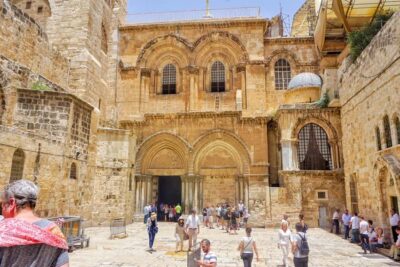
Masada and the Dead Sea Day Trip from Jerusalem
Read our review →
Browse the lists this tour appears in