
Reviewed · PRIVATE TOURS IN TEL AVIV
Exclusive Private Tour in The Israel Diamond Exchange
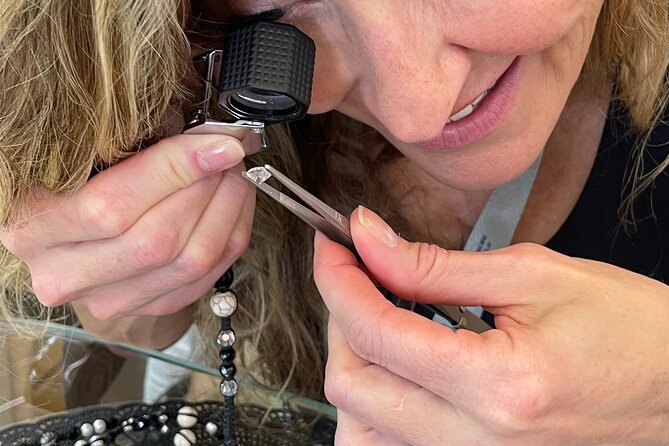
Diamonds reveal a hidden side of Tel Aviv. This private visit takes you inside the Israel Diamond Exchange in Ramat Gan, where you can see diamond cutting, computer-based trading tools, live transactions, and the professional side of buying jewelry. It is a rare chance to enter a working diamond complex rather than simply browse a shop display.
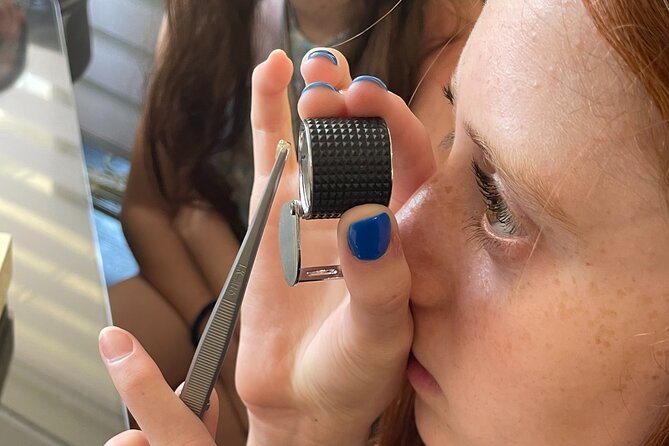
I like the behind-the-scenes access and the chance to watch skilled workers cut and polish stones, including by hand. I also like the practical gemology lesson, especially the explanation of the famous four Cs: cut, color, clarity, and carat.
The main consideration is security. You need your passport to enter, and cameras, sprays, sharp objects, alcohol, and drugs are not allowed. One visitor found the security process annoying, though the guides helped move it along quickly.
In This Review
- Key points before you book
- Why this diamond tour is different from a jewelry store visit
- Pickup from Tel Aviv and the first security check
- Entering the Israel Diamond Exchange complex
- The Tech Area and the business behind the sparkle
- Watching diamonds cut and polished by hand
- Seeing the largest trading hall in action
- The gemology lesson and the four Cs
- Buying diamonds or jewelry during the visit
- How the $60 price measures up
- Who will enjoy this private visit most
- Practical details that can make the visit easier
- Should you book the Israel Diamond Exchange tour?
- FAQ
- Where does the tour take place?
- Is pickup included?
- How does the pickup work?
- What language is the tour offered in?
- Do I need a passport?
- Can I bring a camera?
- Is the tour private?
- Is the tour wheelchair accessible?
- Can I buy a diamond or jewelry during the tour?
- What happens if I need to cancel?
Key points before you book
- You enter a working diamond complex, not just a retail showroom, with access to areas connected to cutting, polishing, technology, and trading.
- The four Cs lesson adds real buying value, especially if you may purchase a diamond or jewelry during your visit.
- A private group makes the experience more personal, with an English-speaking guide and room for questions.
- Pickup and drop-off are included from selected locations in Tel Aviv and nearby areas, using a cab arranged for your scheduled time.
- Bring your passport and leave your camera behind, since both entry rules and security restrictions are strict.
- The tour costs $60 per person, a reasonable price if you care about the diamond business, though less appealing if you only want a quick shopping stop.
Why this diamond tour is different from a jewelry store visit
Most jewelry shopping gives you a polished counter, bright lights, and a sales pitch. This experience takes you into the machinery and business behind the counter. You see how diamonds move from rough stones to finished pieces, then learn how professionals judge and trade them.
That difference matters. A shop can explain the four Cs, but it usually does so while trying to sell you something. Here, the explanation is tied to the actual places where diamonds are processed and traded. You can ask how a stone is assessed, what affects its price, and why two diamonds with similar size can have very different values.
The tour is also private. That gives you more freedom to ask basic questions without feeling rushed or self-conscious. If you already know a little about jewelry, you can ask more detailed questions about quality and pricing. If you know almost nothing, you can start with the basics.
The experience is presented as a rare opportunity, and that claim should be understood in practical terms. You are not simply visiting a museum exhibit. You are entering a large diamond complex with working areas and a trading hall. Access like this is not part of the usual Tel Aviv sightseeing circuit.
More Private Tours in Tel Aviv
- Jerusalem Private Full Day Tour
★ 5.0 · 110 reviews - Exclusive Private Tour in The Israel Diamond Exchange
★ 5.0 · 60 reviews - Tel Aviv Airport (TLV) to Tel Aviv Hotels – Private Transfer
★ 4.0 · 59 reviews
Pickup from Tel Aviv and the first security check
Pickup and drop-off are included from a chosen location in Tel Aviv and surrounding areas. A cab collects you at the scheduled time, and the cab information is sent directly to you. That is useful in a city where unfamiliar business districts can be harder to reach than the main tourist sights.
You will need your passport for entry. This is not optional, so keep it with you rather than in your hotel safe. The complex also bans cameras, weapons or sharp objects, sprays or aerosols, alcohol, and drugs.
The security process can take some patience. One person described it as the only annoying part of the visit, while also noting that the guides helped make it as quick as possible. I would allow extra time mentally, even if the scheduled pickup is precise. Security is part of entering a serious commercial complex, not a sign that the tour is disorganized.
Leave your camera behind. You can still pay close attention to the demonstration and trading areas, but photography is not permitted according to the entry rules. A phone may also be subject to the same restriction, so ask your guide before assuming you can use it.
Entering the Israel Diamond Exchange complex
The first stop introduces you to the Israel Diamond Exchange and the history of diamonds. The setting gives the subject more weight than a standard jewelry presentation because you are learning inside one of the central places where the trade operates.
The explanation helps connect the stone in a ring to the long chain of work behind it. A rough diamond must be assessed, planned, cut, polished, graded, priced, and traded. Each stage affects how much light the finished stone returns and how much money it can command.
You may find this opening section most useful if you want context before seeing the technical areas. Without it, the computers, cutting benches, and trading floor could feel like separate stops. With it, you can follow the path of the diamond through the business.
The tone is educational but still connected to shopping. You are allowed to browse and explore, and you have the opportunity to buy diamonds or jewelry directly. That can be convenient, but it also means you should decide in advance how comfortable you are with making a purchase during a guided visit.
The Tech Area and the business behind the sparkle
The Tech Area shows how professionals use specialized computers to improve their profits. This is one of the more revealing parts of the tour because it shows that the diamond trade is not only about hand skills and old traditions.
Computer tools help professionals study stones and make decisions about how they should be handled. The point is not simply that technology is present. It is that better planning can affect how much finished material comes from a rough diamond and how attractive the final stone appears.
For you, this section offers a useful reminder: diamond value is shaped by decisions made long before a finished ring reaches a shop. A small change in how a stone is cut can affect brilliance, size, waste, and price.
The information provided does not specify the exact software or equipment you will see, so you should treat this as an observation area rather than a technical training session. Your guide can explain what the professionals are doing at the time of your visit, and a private format should make it easier to ask questions.
More Tel Aviv tours worth comparing
- From Tel Aviv: Masada & Dead Sea Full Day Tour with Pick Up
★ 4.5 · 1,496 reviews - From Tel Aviv: Jerusalem and Bethlehem Guided Day Trip
★ 4.3 · 1,316 reviews - Masada and the Dead Sea Day Trip from Tel Aviv
★ 4.5 · 1,014 reviews - Tel Aviv: Jerusalem, Bethlehem & Dead Sea
★ 4.0 · 881 reviews
Watching diamonds cut and polished by hand
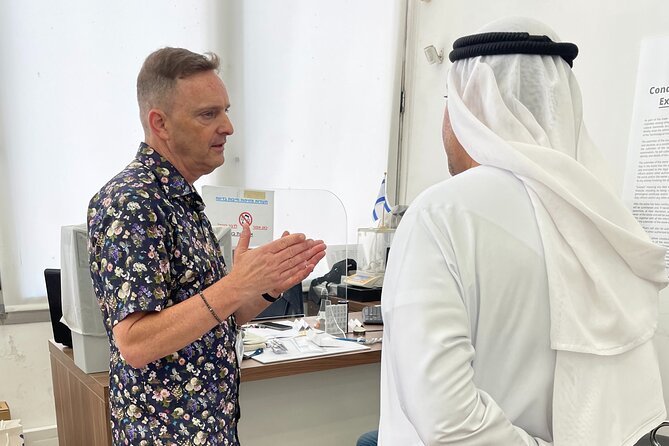
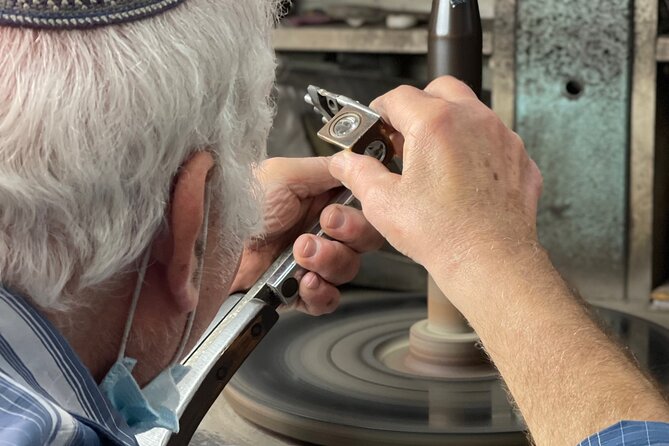
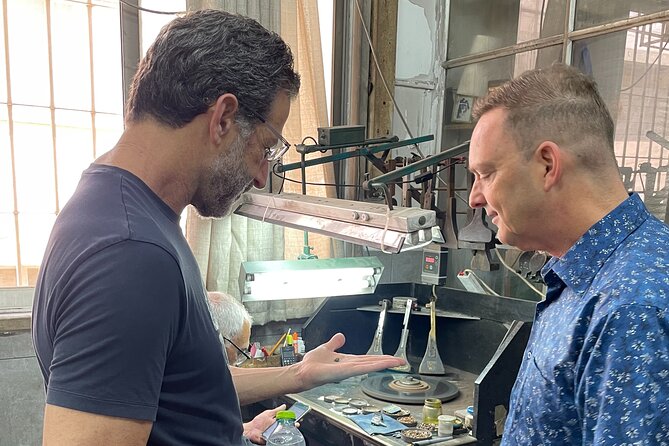
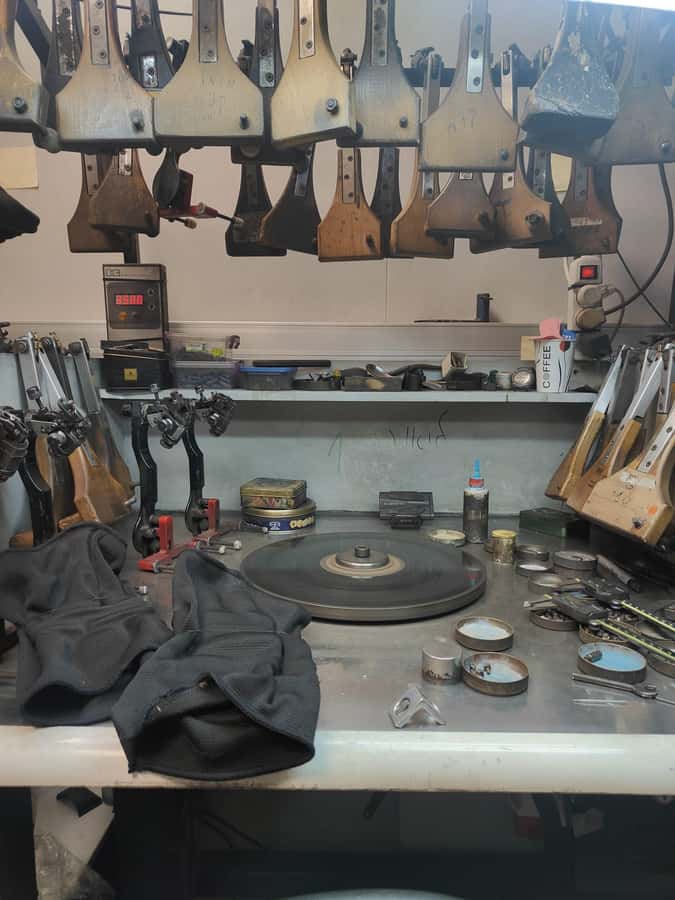
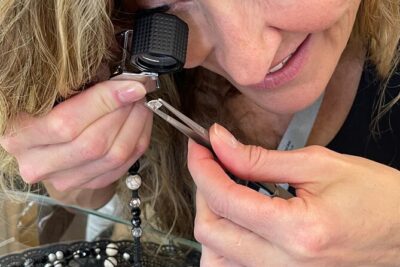
The cutting and polishing factory is likely to be the most tactile stop. Here you get a glimpse of how diamonds are shaped and finished, with work still done by hand.
That detail is easy to miss in a store. A finished diamond looks clean and exact, but the process requires patience and control. The cutter has to work toward the right shape and surface while protecting the value of the stone. The polish gives the diamond its finished look, but the earlier cutting decisions set much of its character.
For you, this part turns a luxury product into a skilled craft. It also helps explain why cut is one of the four Cs. Carat weight alone does not tell you how well a diamond performs. A larger stone can be less appealing than a smaller one if its cut does not handle light well.
You should not expect a full workshop class or a chance to handle valuable stones. The description promises a glimpse into the factory, not a hands-on lesson. Still, watching the process can be more memorable than hearing another general explanation about diamond quality.
Seeing the largest trading hall in action
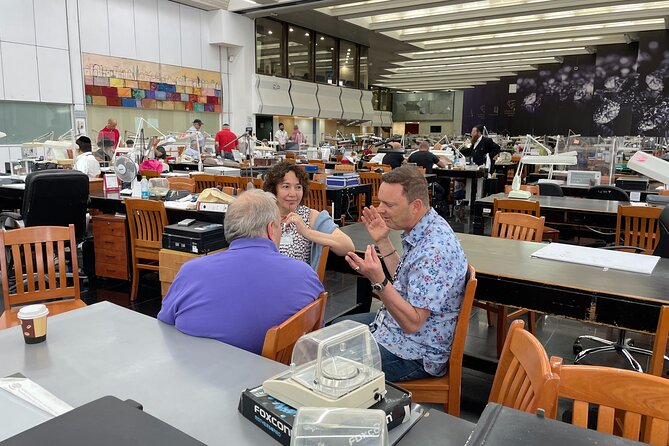
The trading hall shows how diamonds are bought and sold in a professional setting. You can watch transactions in real time and learn about the specific way diamonds are traded.
This is the point where the tour moves beyond craft and into commerce. The diamond business depends on trust, pricing, inspection, and fast decisions. A trading hall makes that system visible in a way a retail display cannot.
The experience may be especially interesting if you enjoy seeing how specialist markets work. You are not just looking at objects. You are watching people negotiate and make decisions about goods with high value and small physical size.
The exact length of time spent in the hall is not specified, and activity may vary during your visit. The tour promises access and explanation, not a guarantee that every moment will feature dramatic deals. That is a fair tradeoff for seeing a real working environment rather than a staged performance.
The gemology lesson and the four Cs
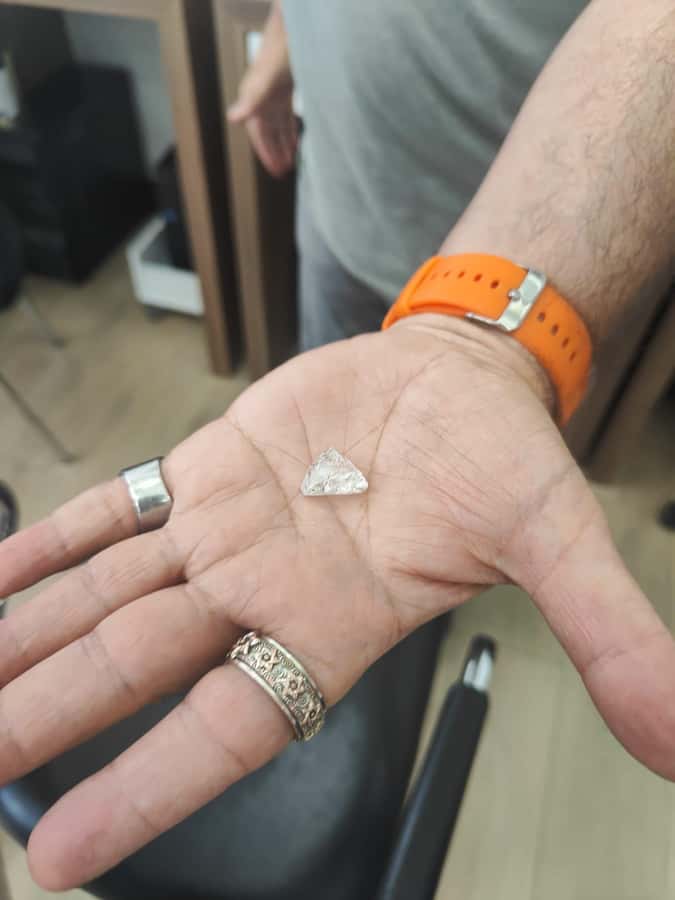
The gemological lesson is the part with the clearest practical use. Professionals explain what to look for when buying diamonds, including the four Cs:
- Cut: How the stone’s proportions and finish affect its sparkle and appearance.
- Color: How much body color a diamond shows.
- Clarity: The presence of internal or external marks.
- Carat: The diamond’s weight, not simply its visible size.
These terms are often used in jewelry shops, but knowing the words is not enough. You want to understand how they work together. A high carat weight does not automatically mean better value. A stone with strong clarity may still disappoint if the cut is poor, while a well-cut diamond can look lively without being the largest option.
The lesson also gives you a chance to ask direct questions before spending money. That is valuable because diamond buying can feel intimidating, especially when prices are not easy to compare at a glance.
I would pay close attention here and take mental notes, since cameras are not allowed. If you are seriously considering a purchase, ask how the four Cs affect the particular stone you are viewing, rather than accepting broad claims about quality.
Buying diamonds or jewelry during the visit
You may purchase diamonds or jewelry directly during the experience. This is a convenience, but it also deserves a level head.
The tour can help you understand what you are looking at, yet an educational visit is not the same as independent price research. If you plan to buy, decide on a budget before pickup. Do not let the unusual setting or the excitement of seeing a working exchange push you beyond it.
Use the gemology lesson to ask clear questions about cut, color, clarity, and carat. You can also ask what documentation or grading information accompanies a stone, but the supplied details do not promise any particular certificate or return arrangement. Confirm the purchase terms before paying.
Some people will find the chance to buy directly a major benefit. Others will prefer to treat the tour as a lesson and shop later. Both approaches make sense. You do not need to purchase anything to get value from the factory, trading hall, and gemology sections.
How the $60 price measures up
At $60 per person, the tour is priced below many specialized private experiences, but value depends on your interest.
I think the price works well if you want private access, included transportation from Tel Aviv, a guide, refreshments, and a lesson that could help you avoid basic mistakes when buying jewelry. The private-group format also matters. You are paying for a focused visit rather than simply entering a public attraction.
The price is less convincing if you have no interest in diamonds and only want a quick look at a famous building. This is a specialist outing. It does not replace Tel Aviv’s beaches, food, markets, or museums, and it may feel too business-focused for someone seeking a broad cultural tour.
The strongest value comes from the combination of access and instruction. You see the cutting and polishing work, observe the trading hall, and learn how to judge a diamond. That gives the visit more substance than a sales appointment.
The tour currently carries a 5 out of 5 rating from seven ratings, with particularly strong praise for the welcome, the guides, and the unusual subject. Several French-speaking visitors found the experience interesting and original. Michael provided information in French for one Belgian visitor, but English is the listed tour language, so do not assume French guidance is guaranteed.
Who will enjoy this private visit most
I would recommend the experience to:
- Anyone considering a diamond or jewelry purchase in Israel.
- People curious about specialist markets and skilled craft.
- Couples looking for an unusual private activity in the Tel Aviv area.
- Visitors who prefer access behind closed doors to another standard sightseeing stop.
- Students, professionals, or hobbyists interested in gemology and the diamond trade.
- Shoppers who want a basic lesson before comparing stones.
I would be more cautious about recommending it to young children or anyone who dislikes security procedures, commercial settings, or technical explanations. The available information does not describe a child-focused format or a playful presentation.
It also suits people who ask questions. You will get more from the visit if you want to know why one stone costs more than another, how cutting affects value, and how trading works. If you prefer to remain a passive observer, the visit may feel less rewarding.
Practical details that can make the visit easier
The activity is offered in English with a live guide. It is wheelchair accessible, and the group is private. Pickup is available from selected locations in Tel Aviv and nearby areas, with a cab assigned for the scheduled time.
The activity is listed as valid for three days, so check available starting times when you book. The stated duration is three days in the supplied details, but the exact on-site tour length is not provided. I would confirm the actual visit time before arranging other plans.
You can reserve now and pay later, which helps if your Tel Aviv schedule is still changing. Cancellation is free up to 24 hours in advance for a full refund.
Bring your passport. Do not bring a camera, sharp object, weapon, spray, aerosol, alcohol, or drugs. Refreshments are included, along with the complex visit, Tech Area, factory viewing, trading hall, gemology lesson, and time to browse.
Should you book the Israel Diamond Exchange tour?
Book it if you want a rare look at the working side of diamonds and appreciate private, question-friendly tours. The factory, trading hall, and four Cs lesson work well together, and pickup makes the outing easy from Tel Aviv.
Skip it if you are not interested in jewelry, buying, craft, or commercial systems. Security restrictions and the no-camera rule may also bother you.
For the right person, $60 is fair. You get more than a showroom visit, and the lesson may prove useful long after the tour ends. Set a spending limit if you plan to shop, bring your passport, and treat the purchase opportunity as optional. The best reason to go is not simply to see expensive stones. It is to understand how they become valuable.
FAQ
Where does the tour take place?
The tour takes place at the Israel Diamond Exchange in the Central District of Israel, near Tel Aviv.
Is pickup included?
Yes. Pickup and drop-off are included from selected locations in Tel Aviv and surrounding areas.
How does the pickup work?
A cab picks you up at the scheduled time. The cab information is sent directly to you.
What language is the tour offered in?
The listed tour language is English. Michael provided information in French during one visit, but French guidance is not listed as guaranteed.
Do I need a passport?
Yes. A passport is required to enter the Israel Diamond Exchange complex.
Can I bring a camera?
No. Cameras are not allowed inside the complex.
Is the tour private?
Yes. The activity is offered for a private group.
Is the tour wheelchair accessible?
Yes. The activity is listed as wheelchair accessible.
Can I buy a diamond or jewelry during the tour?
Yes. You have the opportunity to purchase diamonds or jewelry directly during the visit.
What happens if I need to cancel?
You can cancel up to 24 hours in advance for a full refund. You can also reserve now and pay later.
Recently listed in Tel Aviv
- Wine Tour North of Israel from Tel Aviv★ 5.0 · 2 reviews
- private Full-Day Tour to Bethlehem and Jerusalem★ 5.0 · 2 reviews
- Private wine tour of Northern Israel★ 5.0 · 4 reviews
- private Full-day Tour to Jericho + the Dead Sea★ 5.0 · 3 reviews
- Package VIP Skip Line Services in BGN Airport with Transfer to Tel aviv Hotels★ 5.0 · 3 reviews
- Jerusalem and Dead Sea Trip from Tel Aviv★ 4.0 · 6 reviews
- Private Transfer from Ben Gurion Airport to Tel Aviv, Bat Yam, Rishon LeZion★ 5.0 · 2 reviews
- VIP Tel Aviv airport Terminal 3 Fast Track Skip Line From plane★ 4.5 · 9 reviews
Private Tours in Tel Aviv, compared.
Exclusive Private Tour in The Israel Diamond Exchange
Read our review →
Tel Aviv Airport (TLV) to Tel Aviv Hotels – Private Transfer
Read our review →
Private Tour: Best of Jerusalem and the Dead Sea from Tel Aviv
Read our review →
Jerusalem from Tel Aviv Ben Gurion Airport Private Arrival Transfer
Read our review →
Private Arrival Transfer: From Ben Gurion Airport to Tel Aviv City Center
Read our review →
Fully Inclusive Private Customized Israel Tour
Read our review →
Israel Holy Land Christian Tour Package 7 days – Private Tour Package
Read our review →Browse the lists this tour appears in