
Reviewed · BETHLEHEM AND HOLY LAND TOURS
4-Day Christian Tour from Tel Aviv: Jerusalem, Jericho, Bethlehem and Nazareth
Sacred places, packed into four memorable days. This tour gives you a useful sweep of Israel’s major Christian and Jewish sites, from Jerusalem’s Western Wall and Via Dolorosa to Bethlehem’s Church of the Nativity and the Sea of Galilee. I especially like the three nights in Jerusalem, which save you from changing hotels each evening, and the route’s biblical focus, connecting Jesus’ birth, ministry, death, and resurrection.
I also like the range of guides assigned to the tour, with Dan, Rafa, Amir Call Or, Hezi, and others receiving particular praise for clear, thoughtful explanations. The main drawback is the pace: you cover a great deal of ground, and pickup arrangements or daily schedules may require follow-up calls. If you want a broad first look at Israel’s sacred sites, this is useful. If you prefer long, quiet visits, it may feel rushed.
In This Review
- Key points to know before booking
- What this four-day route is really designed to do
- Day 1: Jerusalem’s Old City, from Mount Scopus to the Holy Sepulchre
- Day 2: Jericho, the Judean Desert, and Bethlehem’s Nativity Church
- Day 3: Mount of Olives, Gethsemane, Bethesda, and the first Via Dolorosa stations
- Day 4: Nazareth and the Sea of Galilee
- Guides, group size, and the daily rhythm
- The Jerusalem hotel and what the price includes
- Who should book this tour?
- Should you book the four-day Christian tour?
- FAQ
- How long is the tour?
- What time does the tour start?
- Is a passport required?
- What should I wear to the holy sites?
- Can I arrange a baptism at the Jordan River?
- Are meals and entrance fees included?
Key points to know before booking
- Two substantial days in Jerusalem: The program covers the Old City, Mount Scopus, Mount of Olives, Via Dolorosa, the Western Wall, Gethsemane, and Yad Vashem.
- A strong biblical route: You visit Bethlehem, Jericho, Nazareth, Capernaum, the Jordan River baptism site, and places linked with Jesus’ ministry.
- Jerusalem hotel base: Three nights in a three-star hotel mean less packing and unpacking during a busy trip.
- Guides make a major difference: Dan and Hezi received especially warm praise for their clear and engaging presentations.
- Expect early starts and long days: The group can include up to 40 people, and some stops are brief.
- Bring your passport: A current passport is required for the visits to Bethlehem and Jericho.
What this four-day route is really designed to do
At $790 per person, this is not a casual sightseeing package. You are paying for four busy days, an air-conditioned vehicle, a professional guide, hotel pickup and drop-off, three nights of accommodation, and three breakfasts. Several entrance fees are included, but not all, and meals other than the stated breakfasts are your responsibility.
The value comes from the geography. Jerusalem, Bethlehem, Jericho, Nazareth, Capernaum, and the Jordan River are spread across different parts of Israel and the Palestinian territories. Arranging this route alone would mean handling transportation, border and access requirements, hotel planning, and site timing. Here, the major work is done for you.
The tradeoff is time. A four-day program can introduce you to many places, but it cannot give every church or archaeological site the attention it deserves. I would see this as a well-organized overview, not a slow pilgrimage. You will leave with a strong sense of the major locations, then you can decide which places deserve a return visit.
The day usually begins around 7:15 a.m. Pickup is offered, but the exact arrangements can change. Keep your phone available and confirm the next day’s plan, especially if you are staying at a hotel outside the main pickup pattern. Some people had to call or email for clearer details, and punctuality was not always perfect.
More Galilee and Nazareth days from Tel Aviv:
- From Tel Aviv: Guided Day Trip to Nazareth & Sea of Galilee
★ 4.4 · 824 reviews - Nazareth and the Sea of Galilee Day Trip from Tel Aviv
★ 4.5 · 541 reviews - From Tel Aviv: Jordan River, Nazareth, & Sea of Galilee Tour
★ 4.2 · 103 reviews
Day 1: Jerusalem’s Old City, from Mount Scopus to the Holy Sepulchre
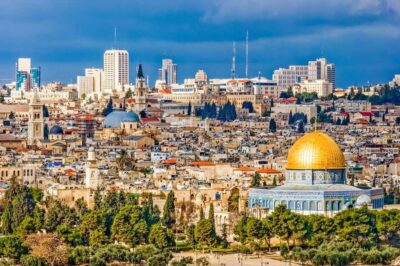
The opening view from Mount Scopus is a smart way to begin. From the Mount Scopus National Botanical Garden, you look toward Jerusalem’s Old City and see the broad shape of the place before entering its narrow lanes. Allow about 30 minutes here. It is a short stop, but the view gives useful orientation.
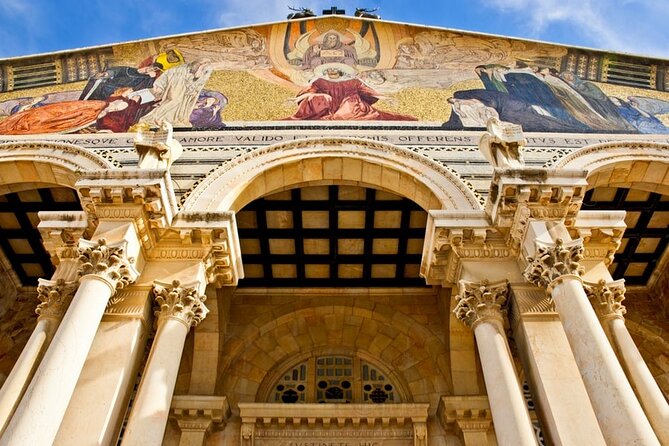
The route then passes the Garden of Gethsemane, the Church of All Nations, and the Kidron Valley. These are important Christian locations, but on this first day they function mainly as an introduction. You may see them from the vehicle or make brief stops, so do not expect a long examination of each site yet.
The Old City receives about two hours. This is where the tour begins to feel most atmospheric and demanding. Streets are narrow, surfaces can be uneven, and the city’s Jewish, Christian, and Muslim quarters sit close together. Your guide’s commentary matters here because the streets can otherwise feel like a maze of stone walls, shops, steps, and doorways.
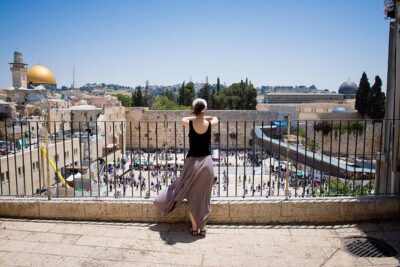
In the Jewish Quarter, you see the Byzantine Cardo, a remnant of Jerusalem’s ancient commercial street. The stop lasts about 30 minutes. The Western Wall follows, with roughly 25 minutes to visit. This is a short window for a site of great importance, so approach it with a clear idea of what you want to see and do.
Dress modestly from the start. Covered knees and shoulders are required at holy sites, and appropriate clothing saves you from trying to improvise later. A hat and water are also sensible, particularly during warm weather.
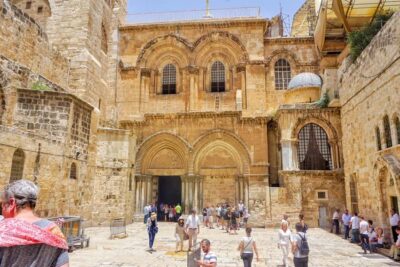
The Christian Quarter leads to the Via Dolorosa and the Church of the Holy Sepulchre. You spend about 30 minutes at the church, with another 30 minutes around the Christian Quarter and the Way of the Cross. These short periods let you identify the key locations, but the church can require patience and quiet attention.
The Church of the Holy Sepulchre is the emotional center of the Jerusalem portion for many Christian visitors. It is associated with the crucifixion, burial, and resurrection of Jesus. The site includes several chapels and traditions, and a good guide helps you understand why different Christian communities share responsibility for the building.
The Muslim Quarter and its lively bazaar provide a different view of the Old City. The market is not just a passage between religious sites. It is a working part of Jerusalem, filled with ordinary commerce alongside pilgrimage. Keep your group in sight, since the lanes can become crowded and the schedule is tight.
Yad Vashem, the World Holocaust Remembrance Center, is also included. This is a serious change of mood from the biblical sites. Plan to give it your full attention. Children under 10 are not permitted because of the sensitive content. The center is not an optional bit of sightseeing to rush through, so families with younger children should consider how this part fits their plans.
Day 2: Jericho, the Judean Desert, and Bethlehem’s Nativity Church
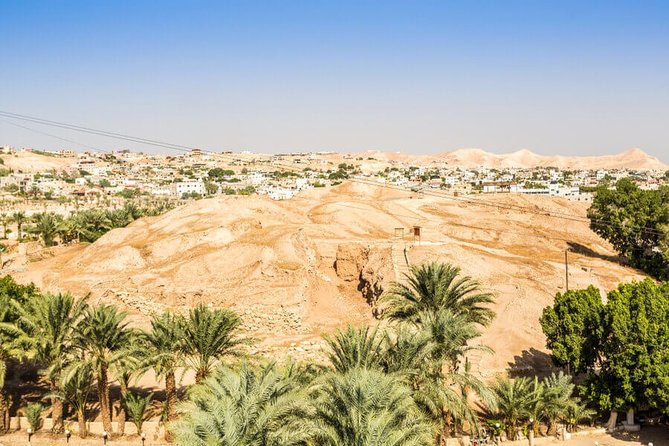
Day two takes you through the Judean Desert toward Jericho, one of the oldest cities in the world. The desert crossing adds important context to the route. You see the dry country associated with biblical journeys and the Mount of Temptation, at least from a distance.
Jericho receives about 90 minutes, followed by around 30 minutes at Zaccheus’ Tree. The tree is linked to the biblical story of Zacchaeus, who climbed a sycamore to see Jesus. The stop is brief, but it gives your guide a natural opening to connect the landscape with the Gospel account.
The bigger practical issue is documentation. You must carry a current valid passport for visits to Jericho and Bethlehem. Do not leave it locked in your hotel room. The tour provider gives this requirement clearly, and it is one of the details you should handle before departure.
Bethlehem receives about two hours, with around 40 minutes at the Church of the Nativity. The church is a UNESCO World Heritage Site and is traditionally identified as the birthplace of Jesus. The most important part of the visit is the Nativity Cave, but access can be limited when visitor numbers are high.
That warning matters. You may reach the church and still have limited time or access at the cave. Try not to measure the value of the stop only by whether you reached one particular spot. The church itself, the setting, and the guide’s explanation help place the story in its physical surroundings.
The Church of St. Catherine of Alexandria is visited or passed by, with about 20 minutes listed for the stop. It is closely associated with the Church of the Nativity complex and adds another layer to Bethlehem’s Christian traditions.
The second day combines open desert views with one of the most important Christian pilgrimage sites in the region. It is also one of the days most affected by lines, traffic, access conditions, and border-related timing. Keep expectations flexible.
Day 3: Mount of Olives, Gethsemane, Bethesda, and the first Via Dolorosa stations
Day three returns to Jerusalem, this time focusing on the Mount of Olives and locations associated with Jesus’ final days. The tour descends the western slopes and pauses for views toward the Old City. The view is one of the best ways to understand the city’s position, walls, and relationship to the surrounding hills.
The Chapel of the Ascension receives about 25 minutes. The Church of the Pater Noster follows, with about 20 minutes. An admission fee is not included for the Pater Noster Church, so carry some extra money for site entries.
Dominus Flevit Church is another short stop, around 20 minutes. Its name refers to Jesus weeping over Jerusalem. The location provides another view over the Old City and links the physical setting with the Christian account of Jesus’ final approach to Jerusalem.
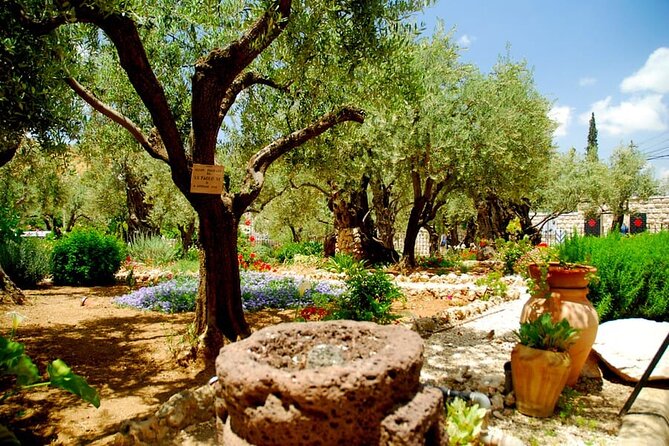
The Garden of Gethsemane and the Church of All Nations come next. You spend about 20 minutes in the garden and 25 minutes at the church. These are not large time blocks, but the pairing works well. The garden offers a quieter setting, while the basilica presents the formal church interior and its traditions.
The Old City walk lasts around 90 minutes. You then visit Saint Anne Church and the Pools of Bethesda, with about 20 minutes at each. An admission fee is not included for Saint Anne Church. The church is known for its connection with the mother of Mary, while the Pools of Bethesda relate to the healing story in the Gospel of John.
The day closes with the first four stations of the Via Dolorosa, taking about 40 minutes. This is more focused than the first day’s general introduction to the route. You follow the opening section of the path while your guide explains the sequence of events and the traditions attached to each station.
I like the structure of this day because it gives Jerusalem a second look instead of trying to squeeze every major place into one long visit. Still, the number of stops means you should expect short visits. Comfortable shoes are essential, and water is worth carrying even if the day does not appear strenuous on paper.
More Bethlehem and Holy Land tours from Tel Aviv:
- From Tel Aviv: Jerusalem and Bethlehem Guided Day Trip
★ 4.3 · 1,316 reviews - Tel Aviv: Jerusalem, Bethlehem & Dead Sea
★ 4.0 · 881 reviews - Day Tour to Jerusalem and Bethlehem from Tel Aviv
★ 4.5 · 720 reviews - Jerusalem, Dead Sea, and Bethlehem from Tel Aviv
★ 4.0 · 299 reviews
Day 4: Nazareth and the Sea of Galilee
The final day moves north to Nazareth and the Sea of Galilee. At Mount of Precipice, you have about 20 minutes at a lookout point connected with the account of Jesus being taken to the brow of a hill. It is a quick stop, but it gives you a wide view before entering Nazareth.
Nazareth receives around 90 minutes, followed by 40 minutes at the Church of the Annunciation. The church is the central Christian site in the city, traditionally associated with the announcement of Jesus’ birth to Mary. The scale of the church and its religious artwork make this one of the day’s main stops.
St. Joseph’s Church receives about 20 minutes. It is associated with Joseph and the Holy Family, and it sits close to the Annunciation complex. The two churches work well together, though the short schedule means you should listen closely to the guide and avoid wandering too far from the meeting point.
The route then follows the shore of the Sea of Galilee, passing Kfar Cana and the Mount of Beatitudes. These are scenic and meaningful transitions between the major stops. The program does not promise long visits at each one, so treat them as views and guide-led context rather than full site tours.
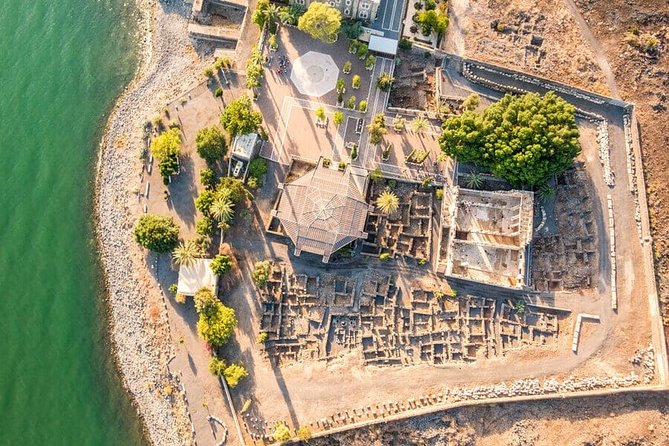
At Kfar Nahum National Park, you visit Capernaum for about 40 minutes. The site includes the remains of an ancient synagogue and is closely tied to the ministry of Jesus. Ruined stone walls can be more revealing than a polished reconstruction, since you can see how the ancient settlement was laid out.
The Church of the Multiplication receives about 20 minutes. It recalls the feeding of the multitude and is another place where the guide’s explanation helps connect the site’s artwork and setting with the biblical story.
The journey continues past Tiberias to Yardenit, the baptism site on the Jordan River. The scheduled visit lasts about 50 minutes, with the expected timing given as roughly 3:30 to 4:15 p.m. If you want to be baptized by a priest, the provider can coordinate it with the site in advance. Arrange this before the tour rather than assuming it can be added at the last moment.
The day also includes views of Mount Tabor, associated with the Transfiguration. These final stops make the northern route feel like a closing chapter, linking Nazareth and Galilee with the stories you have followed since Jerusalem.
Guides, group size, and the daily rhythm
The strongest part of this experience is the guiding. Dan was praised repeatedly, and Hezi also received strong marks for clear explanations. Rafa and Amir Call Or were among the other guides singled out for good work. The best guides on this route do more than recite dates and Bible passages. They explain how the locations relate to Jesus’ life and to Israel’s wider past without forcing one narrow viewpoint.
That balance is valuable. The tour is Christian in subject, but the guiding is described as non-doctrinal, with attention on the historical and geographic setting. You can engage with the religious meaning while still learning about the places themselves.
The group may contain up to 40 people. That is a reasonable size for a coach tour, but it affects everything from getting off the vehicle to regrouping in the Old City. Stay alert for meeting times and keep your guide’s contact information handy.
The company uses an air-conditioned vehicle, and hotel pickup and drop-off are included. Transport is a major benefit here because the route covers long distances. The downside is that transfers and pickups can run late, and the order of visits may change depending on the departure date.
The Jerusalem hotel and what the price includes
Three nights in a three-star hotel in Jerusalem is a practical choice. You get a stable base for the Jerusalem portion and avoid repacking after every excursion. The hotel was described positively, which is important after long days on foot and in the vehicle.
Breakfast is included for all three mornings. Food and drinks beyond that are not included, so budget for meals and carry water each day. Several attractions also charge separate admission, including some of the churches listed on the route. The Pater Noster Church and Saint Anne Church are specifically noted as not included, while Capernaum and Yad Vashem have included admission.
At $790, the package makes the most sense if you value convenience and coverage. A private guide or slower custom pilgrimage would cost more, but you would gain control over timing. A shorter sightseeing trip might cost less, but it would leave out several of the major Christian sites and the three-night hotel stay.
Who should book this tour?
I would recommend it to a first-time visitor who wants the main Christian and Jewish sites without arranging several separate day trips. It also suits someone who prefers a guide to explain biblical connections on location rather than reading about them afterward.
It works best for adults and older children who can manage early starts, walking, short visits, and long drives. It is not suitable for children under four, and children under 10 cannot enter Yad Vashem. Anyone with limited tolerance for a busy schedule should consider a slower program.
Wear modest clothing that covers your shoulders and knees. Bring comfortable shoes, water, a hat, sun protection, and your passport. Keep meals and optional entrance fees in your budget, and confirm pickup details each day.
Should you book the four-day Christian tour?
Book it if your priority is breadth, biblical context, and convenience. In four days, you reach Jerusalem, Bethlehem, Jericho, Nazareth, Capernaum, and the Jordan River, with three hotel nights included. That is a lot of ground for the price.
Skip it if your ideal pilgrimage means lingering inside each church, exploring Jerusalem independently, or setting your own pace. The guides, especially Dan and Hezi, can make the packed schedule rewarding, but organization and punctuality may not always be perfect. For a first visit from Tel Aviv, though, this is a solid way to see the essential sites in one carefully connected route.
FAQ
How long is the tour?
The experience lasts approximately four days and includes three nights of hotel accommodation in Jerusalem.
What time does the tour start?
The stated start time is 7:15 a.m. Pickup is offered from hotels.
Is a passport required?
Yes. A current valid passport is required for visits to Bethlehem and Jericho.
What should I wear to the holy sites?
Modest dress is obligatory. Your knees and shoulders should be covered when visiting holy sites.
Can I arrange a baptism at the Jordan River?
Yes. If you want to be baptized with a priest, the provider can coordinate this with the Yardenit site in advance. The estimated Yardenit visit time is 3:30 to 4:15 p.m.
Are meals and entrance fees included?
Three breakfasts are included. Food and drinks are otherwise not included, and entrance fees to several sites are extra.
Recently listed in Tel Aviv
- Wine Tour North of Israel from Tel Aviv★ 5.0 · 2 reviews
- Private wine tour of Northern Israel★ 5.0 · 4 reviews
- private Full-day Tour to Jericho + the Dead Sea★ 5.0 · 3 reviews
- private Full-Day Tour to Bethlehem and Jerusalem★ 5.0 · 2 reviews
- Package VIP Skip Line Services in BGN Airport with Transfer to Tel aviv Hotels★ 5.0 · 3 reviews
- Jerusalem and Dead Sea Trip from Tel Aviv★ 4.0 · 6 reviews
- Private Transfer from Ben Gurion Airport to Tel Aviv, Bat Yam, Rishon LeZion★ 5.0 · 2 reviews
- VIP Tel Aviv airport Terminal 3 Fast Track Skip Line From plane★ 4.5 · 9 reviews
Bethlehem and Holy Land Tours, compared.
Day Tour to Jerusalem and Bethlehem from Tel Aviv
Read our review →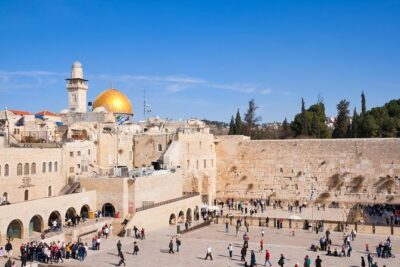
Jerusalem, Dead Sea, and Bethlehem from Tel Aviv
Read our review →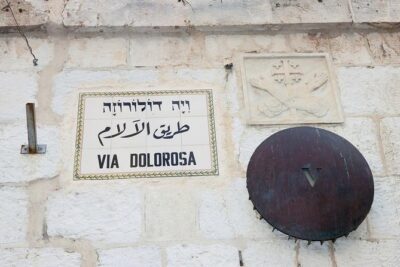
Jerusalem and Bethlehem Day Tour from Jerusalem
Read our review →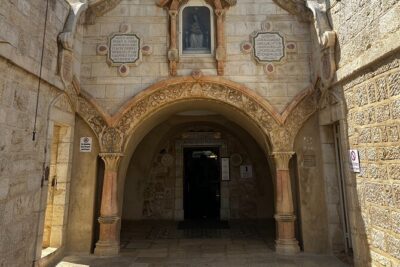
Travel to Bethlehem Half Day Guided Tour from Jerusalem & TelAviv
Read our review →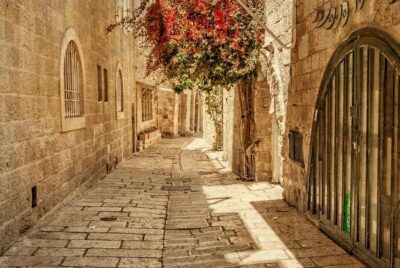
Ashdod Shore Excursion: Jerusalem and Bethlehem – for cruise ship guests only
Read our review →
Travel From Jerusalem To Bethlehem and Dead Sea – Daily Group West Bank Tour
Read our review →Browse the lists this tour appears in